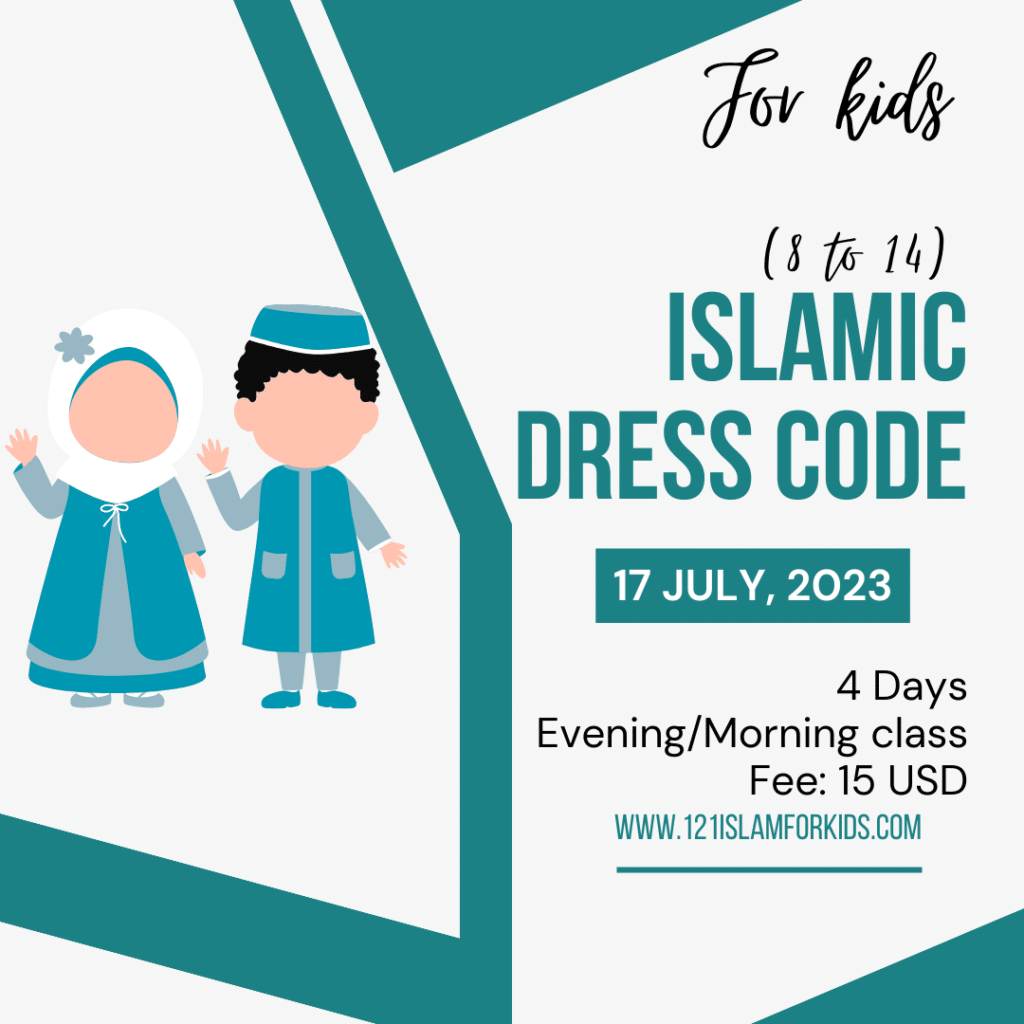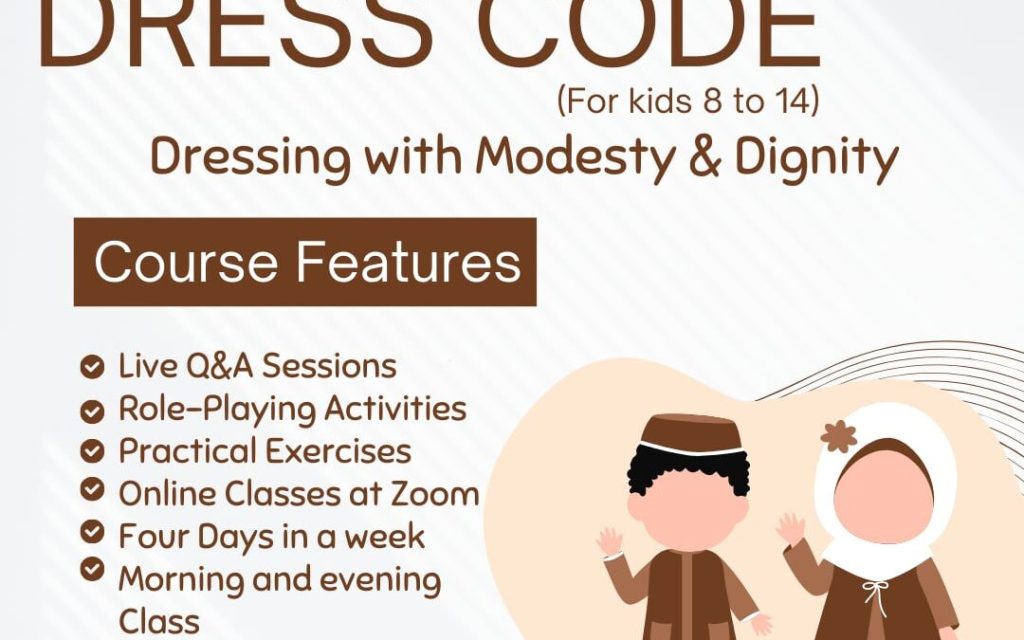
Aurah in Islam refers to the parts of the body that should be covered in modesty. It encompasses both physical and behavioral aspects, emphasizing the importance of maintaining modesty in appearance and conduct. We proudly present a course on the Islamic dress code in Quran.
It is important to note that interpretations of Islamic dress rules may vary among different scholars and cultures. While these guidelines provide a general understanding, individuals may consult their local scholars for specific rulings or variations based on their circumstances and cultural practices.
Certainly! Here are some Quranic verses and hadiths that discuss the concept of Islamic dress and the covering of the body:
These verses and hadiths emphasize the importance of modesty and covering the body, particularly for women. They highlight the obligation to guard one’s private parts, dress in a manner that is not revealing, and use clothing as a means of righteousness and adornment. The specific details of Islamic dress may vary based on cultural customs and interpretations. Still, the underlying principle remains consistent – to dress in a manner that preserves modesty, dignity, and obedience to the commandments of Allah and the teachings of the Prophet Muhammad (peace be upon him).
Provide an overview of the importance of modesty in Islam and the significance of dressing in accordance with Islamic guidelines.
Share Quranic verses and hadiths that emphasize the concept of modesty and the importance of covering the body.
Explain the concept of aurah and its significance in Islamic teachings.
Use visual aids, such as diagrams or illustrations, to depict the body areas that should be covered according to Islamic dress guidelines.
Engage in class discussions to clarify any questions or misconceptions about aurah.
Provide a list of Quranic verses and hadiths that explicitly mention the importance of dressing modestly and covering the body.
Discuss the context and implications of these verses and hadiths to deepen the student’s understanding.
Introduce various styles of Islamic dress, such as hijab, abaya, niqab, and modest clothing from different cultures.
Show visual examples of these styles and discuss their significance and variations across different regions.
Offer helpful guidance on how to incorporate modesty in everyday attire.
Provide suggestions for finding modest clothing that is fashionable, comfortable, and aligns with Islamic guidelines.
Share tips on combining different clothing items to achieve modesty while maintaining personal style.
Emphasize the significance of intention in dressing modestly and adhering to Islamic guidelines.
Encourage students to reflect on their intentions and develop a sincere desire to please Allah in their choice of clothing.
Discuss common challenges and misconceptions related to Islamic dress, such as societal pressures, cultural influences, and stereotypes.
Provide practical advice on how to overcome these challenges and navigate through them while maintaining one’s commitment to Islamic values.
Highlight the positive aspects of modesty, such as promoting self-respect, dignity, and a healthy body image.
Conduct activities and discussions that encourage students to appreciate their bodies as a gift from Allah and embrace their unique qualities.
Share stories of exemplary Muslim individuals who embody modesty and adhere to Islamic dress guidelines.
Discuss the impact of these role models on society and the importance of following their examples.
Assign practical tasks, such as creating modest outfit ensembles, designing modest clothing sketches, or conducting a research project on modest fashion trends.
Encourage students to reflect on their personal journey towards modesty and share their experiences with the class.
Allocate time for Q&A sessions to address any specific questions or concerns raised by the students.
Facilitate class discussions to encourage students to share their perspectives, experiences, and challenges related to Islamic dress and modesty.
Summarize the key points covered in the course and reinforce the importance of adhering to Islamic dress guidelines.
Provide additional resources, such as recommended readings or online platforms, for further exploration of the topic.
By incorporating these teaching methods, students will develop a comprehensive understanding of Islamic dress, modesty, and the significance of covering the body. These methods will not only provide knowledge but also foster a sense of appreciation for the values and principles underlying Islamic dress.