Tag: Surah Al-Balad

  • Story of Surah AL-Balad| Free Islamic story for children

    Story of Surah AL-Balad| Free Islamic story for children

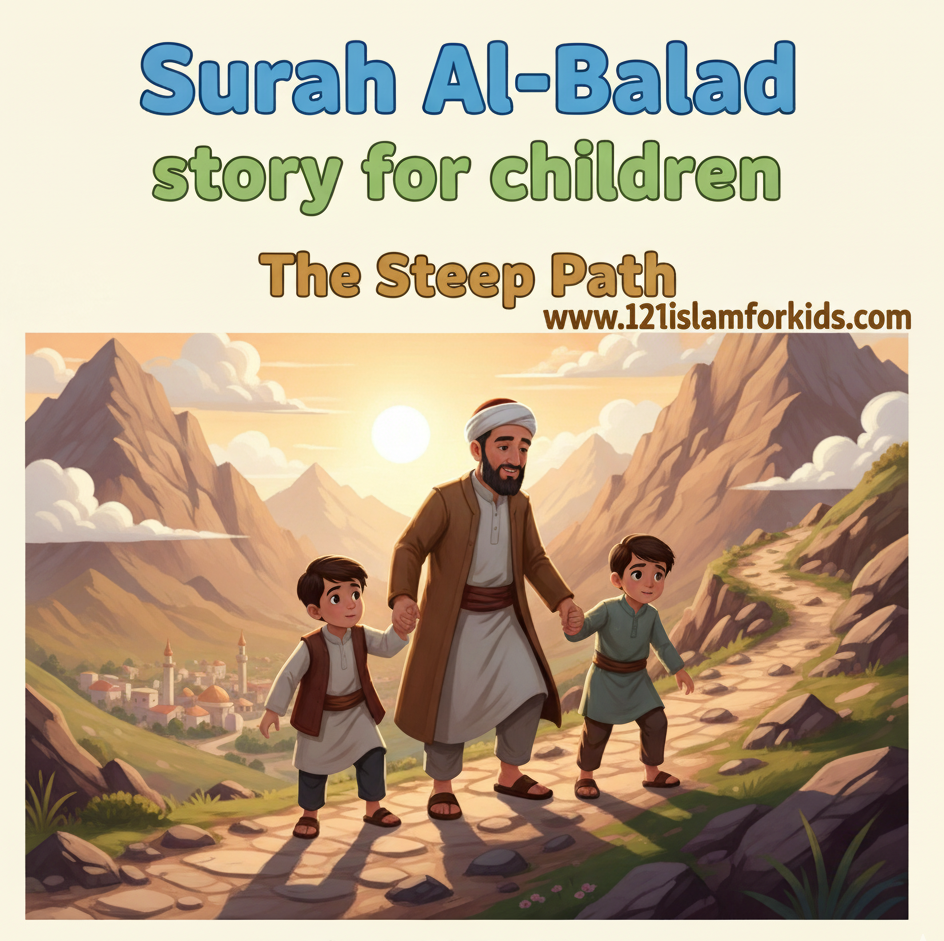
    The Story of Ahmed, Zain, and the Steep Path

    This free Islamic story for children explores the themes of Surah Al-Balad through the journey of Ahmed and Zain.

    In a small village nestled among towering mountains, there lived two best friends, Ahmed and Zain. They were cousins, but more like brothers, as they had grown up together under the care of Zain’s father, Uncle Hamza. Uncle Hamza was not just a father to Zain but a mentor and father figure to Ahmed as well. The three of them shared an unbreakable bond, filled with love, laughter, and adventure.

    Every summer, Uncle Hamza would take Ahmed and Zain on thrilling mountain expeditions. These adventures were not just about fun; they were challenges that tested their strength, patience, and courage. Uncle Hamza believed that these experiences would prepare the boys for the challenges they would face in life.

    One summer, Uncle Hamza announced an ambitious plan. “This year, we’re going to climb the steepest path up the Great Mountain!” he declared, his eyes sparkling with excitement.

    Ahmed was thrilled. “I’ve been waiting for this! The steeper, the better!”

    Zain, who admired his father deeply, was also excited but a little anxious. “Are you sure we’re ready, Dad? The steep path sounds dangerous.”

    Uncle Hamza smiled reassuringly. “It will be tough, but we’ve faced challenges before, and we’ve always come out stronger. Remember, boys, the hardest paths lead to the most beautiful destinations.”

    With that, the boys eagerly prepared for their climb. The journey was challenging—steep slopes, rocky trails, and fierce winds tested their limits. But with Uncle Hamza’s guidance and encouragement, they pushed through every obstacle. There were moments when Zain wanted to turn back, but Ahmed, always the adventurer, urged him on.

    “Zain, we can do this! We’ve trained for this, and we have Dad with us. We never give up, remember?” Ahmed would say, offering Zain a hand whenever he struggled.

    The climb was full of laughter, determination, and the thrill of overcoming the impossible. When they finally reached the summit, the view was breathtaking, and the boys felt a deep sense of accomplishment.

    Uncle Hamza wrapped his arms around them and said, “I’m proud of you both. This journey wasn’t just about reaching the top—it was about how we handled the challenges along the way. Never forget that.”

    The boys cherished this memory, unaware that it would soon become even more meaningful.

    A few months after their triumphant climb, Uncle Hamza suddenly fell ill and passed away. The loss was devastating for both boys, but especially for Zain, who had lost not only his father but his hero. The lively home that was once filled with joy and warmth now felt cold and empty.

    Zain was heartbroken and struggled to find meaning in a world without his father. Ahmed’s family, who had always been close, now had to step in to care for Zain and his mother, who were left with little to support themselves.

    One evening, as they sat quietly in Ahmed’s home, Zain turned to his cousin, his voice trembling. “Ahmed, I don’t know how to go on without Dad. He was everything to us. How can we face life’s challenges now?”

    Ahmed, though grieving himself, remembered the lessons Uncle Hamza had taught them on the mountain. He placed a comforting hand on Zain’s shoulder and said, “Zain, do you remember our climb up the Great Mountain? It was hard, and there were times when we thought we couldn’t make it, but we never gave up. Your dad taught us to be strong, to have faith in Allah, and to keep going even when things are tough.”

    Zain nodded, tears welling up in his eyes. “But this is different, Ahmed. Dad isn’t here to guide us anymore.”

    Ahmed looked out at the mountains, which now seemed even more imposing against the evening sky. “Your dad may not be here physically, but his lessons are. He showed us how to face challenges, and now it’s up to us to carry on his legacy. We’ll take care of each other, just like he took care of us. And we’ll look after your family too. You’re not alone, Zain. We’re in this together.”

    Ahmed’s family, though not wealthy, did everything they could to support Zain and his mother. They shared their meals, helped with daily chores, and made sure Zain felt like part of their family. It wasn’t easy—there were days when the food was scarce, and the weight of responsibility felt overwhelming. But Ahmed kept reminding everyone of Uncle Hamza’s words: “The hard path is the one that makes us stronger.”

    Despite the hardships, Ahmed and Zain grew closer than ever. They faced their new reality with patience, kindness, and unwavering faith in Allah. Ahmed made sure Zain knew that he wasn’t alone, just as they had stood by each other on that mountain.

    One day, while sitting together and reminiscing about their adventure with Uncle Hamza, Zain smiled through his tears and said, “You’re right, Ahmed. We’ll get through this. Just like we did on the mountain.”

    Ahmed nodded, feeling a sense of peace. “Yes, Zain. And as long as we have faith, patience, and each other, we can face any challenge that comes our way.”

    And so, the two cousins continued to live by the lessons that Uncle Hamza had instilled in them. They learned that even in the face of great loss, the steepest paths could be overcome with faith, kindness, and the strength of family.

    Moral of the Story: Life is full of challenges, and sometimes, the hardest paths are the ones we must take. But with faith in Allah, patience, and the support of loved ones, we can overcome any obstacle. The journey may be tough, but it is through these challenges that we grow stronger and closer to those we care about.

    احمد، زین اور دشوار راستے کی کہانی

    ایک چھوٹے سے گاؤں میں، جو بلند و بالا پہاڑوں سے گھرا ہوا تھا، دو بہترین دوست رہتے تھے، احمد اور زین۔ وہ کزن تھے، لیکن ایک دوسرے کے لیے بھائیوں جیسے تھے، کیونکہ وہ زین کے والد، چچا حمزہ کی پرورش میں ایک ساتھ بڑے ہوئے تھے۔ چچا حمزہ نہ صرف زین کے والد تھے بلکہ احمد کے لیے بھی ایک سرپرست اور والد کی طرح تھے۔ ان تینوں کا رشتہ بے پناہ محبت، خوشیوں اور مہمات سے بھرا ہوا تھا۔

    ہر گرمیوں میں، چچا حمزہ احمد اور زین کو پہاڑوں پر سنسنی خیز مہمات پر لے جاتے تھے۔ یہ مہمات صرف مزے کے لیے نہیں تھیں؛ یہ چیلنجز تھے جو ان کی طاقت، صبر اور حوصلے کا امتحان لیتے تھے۔ چچا حمزہ کا ماننا تھا کہ یہ تجربات لڑکوں کو زندگی کے چیلنجز کا سامنا کرنے کے لیے تیار کریں گے۔

    ایک گرمیوں میں، چچا حمزہ نے ایک جرات مندانہ منصوبہ بنایا۔ “اس سال، ہم سب سے دشوار راستے پر چڑھنے والے ہیں!” انہوں نے اعلان کیا، ان کی آنکھوں میں جوش کی چمک تھی۔

    احمد بے حد خوش تھا۔ “میں تو اس کا انتظار کر رہا تھا! جتنا دشوار، اتنا بہتر!”

    زین، جو اپنے والد کی بے حد عزت کرتا تھا، بھی پرجوش تھا لیکن تھوڑا سا فکر مند بھی۔ “کیا آپ کو یقین ہے کہ ہم تیار ہیں، ابو؟ یہ راستہ خطرناک لگتا ہے۔”

    چچا حمزہ نے محبت بھری مسکراہٹ کے ساتھ جواب دیا۔ “یہ مشکل ہوگا، لیکن ہم نے ہمیشہ چیلنجز کا سامنا کیا ہے، اور ہم ہمیشہ مضبوط ہو کر نکلے ہیں۔ یاد رکھو، بیٹو، سب سے دشوار راستے سب سے خوبصورت مقامات کی طرف لے جاتے ہیں۔”

    اس کے ساتھ ہی، لڑکے اپنی چڑھائی کے لیے تیار ہو گئے۔ یہ سفر مشکل تھا — تیز ڈھلوانیں، پتھریلے راستے، اور تیز ہوائیں ان کی حدود کا امتحان لے رہی تھیں۔ لیکن چچا حمزہ کی رہنمائی اور حوصلہ افزائی کے ساتھ، وہ ہر رکاوٹ سے گزر گئے۔ ایسے لمحے تھے جب زین نے واپس جانے کا سوچا، لیکن احمد، جو ہمیشہ ایک مہم جو تھا، نے اسے آگے بڑھنے پر اکسایا۔

    “زین، ہم یہ کر سکتے ہیں! ہم نے اس کے لیے تربیت کی ہے، اور ہمارے ساتھ ابو ہیں۔ ہم کبھی ہار نہیں مانتے، یاد ہے؟” احمد کہتا، جب بھی زین مشکل میں پڑتا، وہ اسے ہاتھ بڑھاتا۔

    یہ چڑھائی قہقہوں، عزم اور ناقابل تصور کو عبور کرنے کے جوش سے بھری ہوئی تھی۔ جب وہ آخر کار چوٹی پر پہنچے تو منظر دیدنی تھا، اور لڑکے ایک گہری خوشی اور فخر محسوس کر رہے تھے۔

    چچا حمزہ نے انہیں اپنے بازوؤں میں لیا اور کہا، “مجھے تم دونوں پر فخر ہے۔ یہ سفر صرف چوٹی تک پہنچنے کے بارے میں نہیں تھا — یہ اس بات کے بارے میں تھا کہ ہم نے راستے میں چیلنجز کا سامنا کیسے کیا۔ اسے کبھی نہ بھولنا۔”

    لڑکوں نے اس یاد کو دل سے لگایا، اس بات سے بے خبر کہ یہ یاد جلد ہی ان کے لیے اور بھی زیادہ معنی خیز بن جائے گی۔

    چند ماہ بعد، چچا حمزہ اچانک بیمار ہو گئے اور انتقال کر گئے۔ یہ نقصان دونوں لڑکوں کے لیے تباہ کن تھا، خاص طور پر زین کے لیے، جس نے نہ صرف اپنے والد کو کھو دیا بلکہ اپنے ہیرو کو بھی۔ وہ گھر، جو کبھی خوشیوں اور گرمی سے بھرا ہوا تھا، اب سرد اور خالی محسوس ہونے لگا۔

    زین دل شکستہ تھا اور اپنے والد کے بغیر زندگی کا مطلب تلاش کرنے کے لیے جدوجہد کر رہا تھا۔ احمد کا خاندان، جو ہمیشہ قریب تھا، اب زین اور اس کی والدہ کی دیکھ بھال کے لیے آگے بڑھا، جو بہت کم وسائل کے ساتھ رہ گئے تھے۔

    ایک شام، جب وہ احمد کے گھر میں خاموشی سے بیٹھے تھے، زین نے اپنے کزن کی طرف دیکھا، اس کی آواز کانپ رہی تھی۔ “احمد، مجھے نہیں معلوم کہ ابو کے بغیر کیسے جیا جائے۔ وہ ہمارے لیے سب کچھ تھے۔ اب ہم زندگی کے چیلنجز کا سامنا کیسے کریں گے؟”

    احمد، جو خود غمزدہ تھا، کو وہ سبق یاد آیا جو چچا حمزہ نے انہیں پہاڑ پر سکھایا تھا۔ اس نے تسلی دیتے ہوئے زین کے کندھے پر ہاتھ رکھا اور کہا، “زین، کیا تمہیں یاد ہے کہ ہم نے کیسے عظیم پہاڑ پر چڑھائی کی تھی؟ یہ مشکل تھا، اور ایسے لمحے بھی آئے جب ہمیں لگا کہ ہم اسے مکمل نہیں کر سکیں گے، لیکن ہم نے کبھی ہار نہیں مانی۔ تمہارے والد نے ہمیں مضبوط بننا سکھایا، اللہ پر ایمان رکھنا، اور جب چیزیں مشکل ہوں تو بھی آگے بڑھنا۔”

    زین نے سر ہلایا، اس کی آنکھوں میں آنسو بھر آئے۔ “لیکن یہ مختلف ہے، احمد۔ ابو یہاں نہیں ہیں ہمیں رہنمائی کرنے کے لیے۔”

    احمد نے پہاڑوں کی طرف دیکھا، جو اب شام کے آسمان کے خلاف اور بھی بلند نظر آ رہے تھے۔ “تمہارے والد یہاں جسمانی طور پر نہیں ہیں، لیکن ان کے سبق ہمارے ساتھ ہیں۔ انہوں نے ہمیں چیلنجز کا سامنا کرنا سکھایا، اور اب ہمیں ان کی میراث کو آگے بڑھانا ہے۔ ہم ایک دوسرے کا خیال رکھیں گے، جیسے انہوں نے ہمارا خیال رکھا۔ اور ہم تمہارے خاندان کا بھی خیال رکھیں گے۔ تم اکیلے نہیں ہو، زین۔ ہم اس میں ایک ساتھ ہیں۔”

    احمد کا خاندان، اگرچہ زیادہ مالدار نہیں تھا، نے زین اور اس کی والدہ کی مدد کرنے کے لیے ہر ممکن کوشش کی۔ انہوں نے اپنے کھانے بانٹے، روزمرہ کے کاموں میں مدد کی، اور اس بات کو یقینی بنایا کہ زین خود کو ان کے خاندان کا حصہ محسوس کرے۔ یہ آسان نہیں تھا — ایسے دن بھی آتے تھے جب کھانا کم ہوتا اور ذمہ داریوں کا بوجھ بھاری محسوس ہوتا۔ لیکن احمد سب کو چچا حمزہ کے الفاظ یاد دلاتا رہا: “مشکل راستہ ہی وہ ہوتا ہے جو ہمیں مضبوط بناتا ہے۔”

    مشکلات کے باوجود، احمد اور زین کا رشتہ اور بھی مضبوط ہو گیا۔ انہوں نے صبر، مہربانی اور اللہ پر ناقابل متزلزل ایمان کے ساتھ اپنے نئے حالات کا سامنا کیا۔ احمد نے یہ یقینی بنایا کہ زین کو یہ احساس ہو کہ وہ اکیلا نہیں ہے، جیسے وہ اس پہاڑ پر ایک دوسرے کے ساتھ کھڑے تھے۔

    ایک دن، جب وہ ایک ساتھ بیٹھے اپنے چچا حمزہ کے ساتھ اپنی مہم جوئی کو یاد کر رہے تھے، زین نے آنسوؤں کے ساتھ مسکراتے ہوئے کہا، “تم صحیح ہو، احمد۔ ہم اس میں کامیاب ہو جائیں گے۔ جیسے ہم نے پہاڑ پر کیا تھا۔”

    احمد نے سر ہلایا، ایک اندرونی سکون محسوس کرتے ہوئے۔ “ہاں، زین۔ اور جب تک ہمارے پاس ایمان، صبر اور ایک دوسرے کا ساتھ ہے، ہم ہر چیلنج کا سامنا کر سکتے ہیں۔”

    اور اس طرح، ان دو کزنز نے چچا حمزہ کی سکھائی ہوئی باتوں کے مطابق زندگی گزارنا جاری رکھا۔ انہوں نے سیکھا کہ بڑی سے بڑی آزمائش کے سامنے بھی، ایمان، مہربانی، اور خاندان کی طاقت سے سب سے مشکل راستے بھی عبور کیے جا سکتے ہیں۔

    کہانی کا سبق: زندگی چیلنجز سے بھری ہوئی ہے، اور کبھی کبھار، سب سے مشکل راستے وہ ہوتے ہیں جو ہمیں لینا ہوتے ہیں۔ لیکن اللہ پر ایمان، صبر اور اپنے پیاروں کی مدد سے ہم کسی بھی رکاوٹ کو عبور کر سکتے ہیں۔ سفر مشکل ہو سکتا ہے، لیکن انہی چیلنجوں کے ذریعے ہم مضبوط ہوتے ہیں اور ان لوگوں کے قریب آتے ہیں جن کا ہمیں خیال ہوتا ہے۔

    If you are looking for another free islamic story for childen click here.

    Teaching method of Surah Al-Balad.

    Watch videos at yourtuube .

    Join our online classes.

    How’s this story? Don’t forget to leave your thoughts.
  • Surah Al-Balad for kids

    Surah Al-Balad for kids

    Surah Al-Balad for kids:

    Surah Al balad is one of the most inspiring chapters of the Quran for young learners. We will learn this surah step by step:

    Here are the detailed word meanings of Surah Al-Balad, for kids.

    Verse by verse words meaning of Surah Al-Balad for kids:

    1. لَاۤ اُقْسِمُ بِهٰذَا الْبَلَدِ

    • لَاۤ (Laa) – No, (or “Indeed” for emphasis)
    • اُقْسِمُ (Uqsimu) – I swear
    • بِهٰذَا (Bihaadha) – By this
    • الْبَلَدِ (Al-Balad) – The city

    2. وَ اَنۡتَ حِلٌّۢ بِهٰذَا الْبَلَدِ

    • وَ (Wa) – And
    • اَنۡتَ (Anta) – You
    • حِلٌّۢ (Hillun) – Free (or permitted)
    • بِهٰذَا (Bihaadha) – In this
    • الْبَلَدِ (Al-Balad) – The city

    3. وَ وَالِدٍ وَّ مَا وَلَدَ

    • وَ (Wa) – And
    • وَالِدٍ (Waalid) – A father
    • وَّ (Wa) – And
    • مَا (Maa) – What (or who)
    • وَلَدَ (Walad) – He fathered (or gave birth to)

    4. لَقَدْ خَلَقْنَا الْاِنْسَانَ فِيْ كَبَدٍ

    • لَقَدْ (Laqad) – Certainly
    • خَلَقْنَا (Khalaqnaa) – We created
    • الْاِنْسَانَ (Al-Insaan) – The human being (or mankind)
    • فِيْ (Fee) – In
    • كَبَدٍ (Kabad) – Hardship (or struggle)

    5. اَيَحْسَبُ اَنْ لَّنْ يَّقْدِرَ عَلَيْهِ اَحَدٌ

    • اَيَحْسَبُ (A-Yahsabu) – Does he think
    • اَنْ (An) – That
    • لَّنْ (Lan) – Not
    • يَّقْدِرَ (Yaqdira) – Anyone can have power
    • عَلَيْهِ (Alayhi) – Over him
    • اَحَدٌ (Ahad) – Anyone

    6. يَقُوْلُ اَهْلَكْتُ مَالًا لُّبَدًا

    • يَقُوْلُ (Yaqoolu) – He says
    • اَهْلَكْتُ (Ahlaktu) – I have spent (or destroyed)
    • مَالًا (Maalan) – Wealth
    • لُّبَدًا (Lubadan) – In abundance

    7. اَيَحْسَبُ اَنْ لَّمْ يَرَهٗۤ اَحَدٌ

    • اَيَحْسَبُ (A-Yahsabu) – Does he think
    • اَنْ (An) – That
    • لَّمْ (Lam) – Not
    • يَرَهٗۤ (Yarahu) – He is seen
    • اَحَدٌ (Ahad) – By anyone

    8. اَلَمْ نَجْعَلْ لَهٗ عَيْنَيْنِ

    • اَلَمْ (Alam) – Have We not
    • نَجْعَلْ (Naj’al) – Made
    • لَهٗ (Lahu) – For him
    • عَيْنَيْنِ (Aynayn) – Two eyes

    9. وَلِسَانًا وَّ شَفَتَيْنِ

    • وَ (Wa) – And
    • لِسَانًا (Lisaanan) – A tongue
    • وَّ (Wa) – And
    • شَفَتَيْنِ (Shafatayn) – Two lips

    10. وَهَدَيْنَاهُ النَّجْدَيْنِ

    • وَ (Wa) – And
    • هَدَيْنَاهُ (Hadaynaahu) – We showed him
    • النَّجْدَيْنِ (An-Najdayn) – The two paths (the good and bad ways)

    11. فَلَا اقْتَحَمَ الْعَقَبَةَ

    • فَلَا (Falaa) – But he has not
    • اقْتَحَمَ (IqtaHama) – Attempted (or crossed)
    • الْعَقَبَةَ (Al-Aqabah) – The difficult pass (obstacle)

    12. وَمَاۤ اَدْرٰىكَ مَا الْعَقَبَةُ

    • وَمَاۤ (Wa Maa) – And what
    • اَدْرٰىكَ (Adraaka) – Will make you know
    • مَا (Maa) – What is
    • الْعَقَبَةُ (Al-Aqabah) – The difficult pass

    13. فَكُّ رَقَبَةٍ

    • فَكُّ (Fakku) – The freeing
    • رَقَبَةٍ (Raqabah) – Of a slave (or a neck)

    14. اَوْ اِطْعَامٌ فِيْ يَوْمٍ ذِيْ مَسْغَبَةٍ

    • اَوْ (Aw) – Or
    • اِطْعَامٌ (Itaa’am) – Feeding
    • فِيْ (Fee) – On
    • يَوْمٍ (Yawmin) – A day
    • ذِيْ (Dhee) – Of
    • مَسْغَبَةٍ (Masghabah) – Severe hunger

    15. یَتِیْمًا ذَا مَقْرَبَةٍ

    • یَتِیْمًا (Yateeman) – An orphan
    • ذَا (Dhaa) – Of
    • مَقْرَبَةٍ (Maqrabah) – Near relationship (relative)

    16. اَوْ مِسْكِينًا ذَا مَتْرَبَةٍ

    • اَوْ (Aw) – Or
    • مِسْكِينًا (Miskeenan) – A needy person
    • ذَا (Dhaa) – Of
    • مَتْرَبَةٍ (Matrabah) – Misery (or covered with dust)

    17. ثُمَّ كَانَ مِنَ الَّذِينَ اٰمَنُوْا وَ تَوَاصَوْا بِالصَّبْرِ وَ تَوَاصَوْا بِالْمَرْحَمَةِ

    • ثُمَّ (Thumma) – Then
    • كَانَ (Kaana) – He was
    • مِنَ (Mina) – Among
    • الَّذِينَ (Alladheena) – Those who
    • اٰمَنُوْا (Aamanu) – Believed
    • وَ تَوَاصَوْا (Wa Tawaasaw) – And advised one another
    • بِالصَّبْرِ (Bis-Sabr) – To patience
    • وَ تَوَاصَوْا (Wa Tawaasaw) – And advised one another
    • بِالْمَرْحَمَةِ (Bil-Marhamah) – To compassion (or mercy)

    18. اُولٰۤىٕكَ اَصْحٰبُ الْمَيْمَنَةِ

    • اُولٰۤىٕكَ (Ulaa’ika) – Those are
    • اَصْحٰبُ (As-haabu) – The companions (or people)
    • الْمَيْمَنَةِ (Al-Maymanah) – Of the right hand (good people)

    19. وَ الَّذِیْنَ كَفَرُوْا بِاٰیَاتِنَا هُمْ اَصْحٰبُ الْمَشْئَمَةِ

    • وَ (Wa) – And
    • الَّذِیْنَ (Alladheena) – Those who
    • كَفَرُوْا (Kafaroo) – Disbelieved
    • بِاٰیَاتِنَا (Bi-Aayaatinaa) – In Our signs
    • هُمْ (Hum) – They
    • اَصْحٰبُ (As-haabu) – Are the companions (or people)
    • الْمَشْئَمَةِ (Al-Mash’amah) – Of the left hand (bad people)

    **20. عَلَیْهِمْ نَارٌ مُّؤ

    ْصَدَةٌ**

    • عَلَیْهِمْ (Alayhim) – Upon them
    • نَارٌ (Naarun) – Is fire
    • مُّؤْصَدَةٌ (Mu’sadah) – Closed in (sealed)

    This breakdown helps students understand the meaning of each word in Surah Al-Balad and supports their comprehension of the surah’s overall message.

    Full Translation (in English) of Surah Al-Balad for kids

    In the name of Allah, the Most Merciful, the Most Compassionate

    1. I swear by this city (Makkah),
    2. And you, [O Muhammad], are free of restriction in this city –
    3. And [by] the father and what he fathered,
    4. We have certainly created man into hardship.
    5. Does he think that no one has power over him?
    6. He says, “I have spent wealth in abundance.”
    7. Does he think that no one has seen him?
    8. Have We not made for him two eyes?
    9. And a tongue and two lips?
    10. And have shown him the two ways?
    11. But he has not broken through the difficult pass.
    12. And what can make you know what is [breaking through] the difficult pass?
    13. It is the freeing of a slave,
    14. Or feeding on a day of severe hunger
    15. An orphan of near relationship,
    16. Or a needy person in misery.
    17. And then being among those who believed and advised one another to patience and advised one another to compassion.
    18. Those are the companions of the right.
    19. But they who disbelieved in Our signs – those are the companions of the left.
    20. Over them will be fire closed in.

    Story and Explanation of Surah Al-Balad

    Hey kids! Today, we will learn about a very special chapter from the Quran called Surah Al-Balad. It’s a story full of lessons that will help us understand life better and how we should live it.

    1. The Sacred City of Makkah (Verses 1-2)

    The surah starts with Allah swearing by a special city, Makkah. This city is where the Kaaba is located, which Muslims face when they pray. Makkah is also the place where our Prophet Muhammad (PBUH) was born. By swearing by Makkah, Allah is showing us how important this city is.

    But that’s not all! Allah also mentions that the Prophet Muhammad (PBUH) is living in this city, and this makes the city even more special. Allah is reminding us of the great honour and responsibility that comes with living in such a blessed place.

    2. The Father and His Child (Verse 3)

    Then, Allah swears by the father and his child. This is to remind us of the strong bond between parents and their children. Parents work hard and make many sacrifices for their children, just like how Allah created us and takes care of us with so much love and mercy.

    3. Life is Full of Challenges (Verse 4)

    Allah tells us that life is full of challenges and difficulties. Every person goes through tough times, whether it’s in school, at home, or with friends. But these challenges are a part of life. They help us grow stronger, just like how exercise makes our muscles stronger.

    4. The Arrogance of Some People (Verses 5-7)

    Some people, when they become rich or powerful, start to think that no one can control them. They might say, “I’ve spent so much money” as if they can do anything they want. But Allah reminds us that He sees everything. No matter how rich or powerful someone is, they can never escape Allah’s watchful eye.

    5. The Gifts from Allah (Verses 8-9)

    Allah reminds us of the gifts He has given us, like our eyes, tongue, and lips. These gifts help us see, speak, and communicate. But with these gifts comes responsibility. We should use our eyes to see good things, our tongues to speak kind words, and our lips to spread smiles and happiness.

    6. The Two Paths (Verse 10)

    Allah has shown us two paths in life: one path leads to goodness and the other to badness. It’s like standing at a crossroads with a choice to make. The good path might be harder, but it leads to Allah’s pleasure and paradise. The bad path might seem easy, but it leads to trouble and sorrow.

    7. The Difficult Pass (Verses 11-12)

    Allah talks about a “difficult pass” – imagine a steep mountain that’s hard to climb. This represents the challenges we face when trying to do good deeds. Climbing this mountain might be tough, but the reward at the top is worth it!

    8. What is the Difficult Pass? (Verses 13-16)

    So, what is this difficult pass? Allah explains that it involves doing good deeds, like:

    • Freeing a slave: In the old days, many people were enslaved, and freeing them was one of the greatest acts of kindness.
    • Feeding the hungry: Imagine how good it feels to give food to someone who is starving.
    • Helping an orphan: An orphan is someone who has lost their parents. Helping them is a big act of kindness.
    • Supporting someone in need: Many people are struggling and need our help.

    These are the good deeds that help us climb the difficult pass in life.

    9. The Right-Handed and Left-Handed People (Verses 17-20)

    Finally, Allah talks about two groups of people:

    The Right-Handed People (Companions of the Right):
    These are the people who do good deeds, believe in Allah, and help others. They advise each other to be patient and kind. On the Day of Judgment, they will receive their book of deeds in their right hand as a sign of success. These people will go to paradise, a place of happiness and peace.

    The Left-Handed People (Companions of the Left):
    These are the people who ignore Allah’s guidance and do bad deeds. They don’t care about others and live only for themselves. On the Day of Judgment, they will receive their book of deeds in their left hand, which is a sign of failure. These people will face severe punishment in the hereafter.

    Conclusion

    Surah Al-Balad teaches us that life is full of challenges, but by choosing the right path and doing good deeds, we can succeed in this life and the next. Allah has given us all the tools we need, like our eyes, tongue, and mind, to make the right choices. We should always try to be among the “right-handed” people who will find success and happiness with Allah.

    So remember, the next time you face a challenge, think of it as a mountain you need to climb. It might be tough, but with patience, kindness, and faith, you can reach the top!

    Here are some short Q/A questions about Surah Al-Balad, designed for kids, including facts and lessons:

    Q/A for Surah Al-Balad for kids

    1. What is Surah Al-Balad about?

    Answer: Surah Al-Balad talks about the challenges of life, the importance of doing good deeds, and the choice between following the right path or the wrong path. It also highlights the significance of Makkah and the qualities of those who are successful in the eyes of Allah.

    2. How many verses are there in Surah Al-Balad?

    Answer: Surah Al-Balad has 20 verses.

    3. What does the surah begin with?

    Answer: The surah begins with an oath by the city of Makkah, emphasizing its importance and the fact that the Prophet Muhammad (PBUH) is living there.

    4. What does Allah swear by in the first verse?

    Answer: Allah swears by the city of Makkah.

    5. Who are the “right-handed” people mentioned in the surah?

    Answer: The “right-handed” people are those who do good deeds, believe in Allah, and help others. They are patient, compassionate, and will be rewarded with paradise.

    6. Who are the “left-handed” people?

    Answer: The “left-handed” people are those who disbelieve in Allah’s signs and do not follow His guidance. They will face punishment in the hereafter.

    7. What does the surah say about the difficult pass (al-‘Aqabah)?

    Answer: The surah describes the difficult past as the challenge of doing good deeds, such as freeing a slave, feeding the hungry, helping orphans, and being patient and compassionate. It’s a hard path but very rewarding.

    8. What are some examples of good deeds mentioned in Surah Al-Balad?

    Answer: Examples include freeing a slave, feeding people on a day of severe hunger, helping an orphan, and supporting those in need.

    9. Why is Makkah special in Surah Al-Balad?

    Answer: Makkah is special because it is a sacred city where the Kaaba is located, and it is the birthplace of Prophet Muhammad (PBUH). The surah begins by swearing an oath by Makkah to emphasize its importance.

    10. What lesson does Surah Al-Balad teach us about hardship?

    Answer: The surah teaches us that life is full of hardships and challenges, but by striving to do good deeds and following the right path, we can overcome these challenges and achieve success.

    11. When was Surah Al-Balad revealed?

    Answer: Surah Al-Balad was revealed in Makkah during the early part of Prophet Muhammad’s (PBUH) prophethood. It is considered a Makki surah.

    12. What does the surah say about the gifts Allah has given us?

    Answer: The surah mentions that Allah has given us eyes, a tongue, and lips, which are blessings to help us see, speak, and communicate. We should use these gifts wisely to follow the right path and do good deeds.

    13. How can we use the lessons from Surah Al-Balad in our daily lives?

    Answer: We can use the lessons by being kind and helping others, staying patient during tough times, making good choices, and striving to do good deeds. This will lead us to be among those who are successful and rewarded by Allah.

    14. What is the meaning of “right-handed” in the context of Surah Al-Balad?

    Answer: In the context of the surah, “right-handed” refers to people who will receive their book of deeds in their right hand on the Day of Judgment, signifying they have lived a good life and will be rewarded with paradise.

    15. What will happen to the “left-handed” people?

    Answer: The “left-handed” people will receive their book of deeds in their left hand and will face punishment in the hereafter because they did not follow Allah’s guidance and disbelieved in His signs.

    These questions and answers are designed to help kids understand and remember the key messages and facts of Surah Al-Balad in a fun and engaging way.

    Here are some multiple-choice questions (MCQs) about Surah Al-Balad with answers provided at the end:


    MCQs of Surah Al-Balad for kids

    1. What is the number of Surah Al-Balad in the Quran?
    • a) 80
    • b) 90
    • c) 100
    1. How many verses are there in Surah Al-Balad?
    • a) 10
    • b) 15
    • c) 20
    1. Where was Surah Al-Balad revealed?
    • a) Makkah
    • b) Madinah
    • c) Jerusalem
    1. What does “Al-Balad” mean?
    • a) The Mountain
    • b) The City
    • c) The River
    1. What is the “City” referred to in Surah Al-Balad?
    • a) Madinah
    • b) Makkah
    • c) Taif
    1. The main theme of Surah Al-Balad is about the:
    • a) Importance of wealth
    • b) Struggles of life and perseverance
    • c) Laws of inheritance
    1. Surah Al-Balad teaches us to help:
    • a) The wealthy
    • b) The needy and orphans
    • c) The rulers
    1. Who are the “Right-handed” people mentioned in Surah Al-Balad?
    • a) The sinners
    • b) The righteous
    • c) The wealthy
    1. Surah Al-Balad encourages us to follow the path of:
    • a) Greed
    • b) Kindness and patience
    • c) Anger
    1. Which challenge is mentioned in Surah Al-Balad as a “steep path”?
      • a) Climbing a mountain
      • b) Feeding the hungry
      • c) Walking through a desert
    2. In Surah Al-Balad, those who reject the steep path are known as:
      • a) The Left-handed
      • b) The Righteous
      • c) The Prophets
    3. What lesson does Surah Al-Balad give about wealth?
      • a) To spend it selfishly
      • b) To share it with the needy
      • c) To hide it

    Answers:

    1. b) 90
    2. c) 20
    3. a) Makkah
    4. b) The City
    5. b) Makkah
    6. b) Struggles of life and perseverance
    7. b) The needy and orphans
    8. b) The righteous
    9. b) Kindness and patience
    10. b) Feeding the hungry
    11. a) The Left-handed
    12. b) To share it with the needy

    step-by-step study method for teaching Surah Al-Balad

    Here’s a step-by-step study method for teaching Surah Al-Balad that includes your original steps, as well as some extra details to make the process easier for others to follow:

    1. Tajweed (Pronunciation of the Letters and Rules of Recitation)

    • Objective: Ensure students pronounce each letter correctly and apply the rules of tajweed.
    • Method:
    • Teach the proper pronunciation of difficult letters in Surah Al-Balad.
    • Explain important tajweed rules like Ikhfa, Idgham, and Ghunna that apply in the surah.
    • Have students repeat after you and correct any mistakes.
    • Make it interactive by asking students to point out tajweed rules as they recite.

    2. Recitation (Tilawah) and Memorization (Hifz)

    • Objective: Help students recite the surah fluently and memorize it.
    • Method:
    • Begin by reciting the entire surah slowly while students listen.
    • Divide the surah into small parts (ayah by ayah or in pairs of verses).
    • Recite each part multiple times, and then ask the students to repeat after you.
    • Encourage them to memorize the divided sections gradually.
    • Check their memorization after each session and ensure revision of previously memorized sections.

    3. Word Meanings and Translation

    • Objective: Teach students the meaning of each word and the overall translation.
    • Method:
    • Go verse by verse and explain the meaning of each word.
    • Use visual aids, flashcards, or even a whiteboard for writing the words and their meanings.
    • After discussing the words, provide the full translation of the verse in English.
    • Ask students to recite the verse, followed by saying the translation, so they can link the words to their meaning.

    4. Calligraphy or LEGO Activity

    • Objective: Engage students creatively and reinforce the surah’s message through art or construction.
    • Method:
    • Calligraphy: Teach students how to write selected ayahs in Arabic calligraphy or let them design their Arabic art related to the surah.
    • LEGO: Alternatively, use LEGO bricks to create scenes or symbols that represent the surah’s themes (like building a city to represent the opening verses about Makkah).
    • This method helps in connecting hands-on learning with Quranic studies.

    5. Storytelling (Tafsir Explanation)

    • Objective: Help students understand the message and lessons of the surah through a story format.
    • Method:
    • Using the tafsir provided earlier, explain the surah step by step as a story.
    • Bring in real-life examples that resonate with children (e.g., challenges in life, choices between right and wrong, helping others).
    • Ask students questions to keep them engaged, like “What do you think it means to help an orphan or a needy person?”

    6. Mind Map

    • Objective: Visually organize the main themes and ideas of the surah.
    • Method:
    • Create a mind map with the surah’s key points (e.g., Makkah, challenges in life, right and left-handed people).
    • Use different colors or drawings to highlight the major ideas.
    • Encourage students to create their mind map, summarizing what they have learned.

    7. Exercise and Worksheets of surah al balad

    • Objective: Review the surah and reinforce understanding through practical exercises.
    • Method:
    • Provide worksheets with questions based on the surah’s translation and tafsir.
    • Create fill-in-the-blank activities using verses of Surah Al-Balad
    • Ask students to match Arabic words with their English meanings.
    • You can also include multiple-choice questions about the story and lessons.

    8. Revisions

    • Objective: Strengthen retention through regular review.
    • Method:
    • At the start of each class, spend a few minutes revising what was learned in the previous session.
    • Conduct quick memorization checks of the verses they have already learned.
    • Ask students to retell the story of Surah Al-Balad and what lessons they took from it.
    • Incorporate fun revision techniques like quizzes, competitions, or group recitations.

    Final Thoughts

    By following these steps, students will gain a deep understanding of Surah Al-Balad, not only through memorization but also by applying its teachings in their lives. This step-by-step approach balances traditional Islamic learning with creative, interactive methods to keep students engaged and help them internalize the surah’s meaning. Check our More short surahs for kids collection to expand your Quranic knowledge!

    Our method combines the power of visual aids, videos, books, and interactive tools to make learning Surah Al-Falaq and Surah An-Naas both fun and effective.

    Visit the links below for our resources and activities:

    Explore our resources and enroll today!

    Tafsir of Short surahs for children