
Translation of Surah Alaq “In the name of Allah, the Most Gracious, the Most Merciful. Here is an English translation of Surah Alaq (Chapter 96) from the Quran: Read! In the Name of your Lord, Who has created (all that exists). He has created man from a clot (a piece of thick coagulated blood). Read! And your Lord is the Most Generous, Who has taught (the writing) by the pen, He has taught man that which he knew not. Nay! Verily, man does transgress all bounds (in disbelief and evil deeds). Because he considers himself self-sufficient. Surely, unto your Lord is the return. Have you seen him who prevents, A slave (Muhammad) when he prays? Tell me if he (Muhammad) is on the guidance (of Allah), Or enjoins piety? Tell me if he (the disbeliever, Abu Jahl) denies (the truth, i.e., this Quran), and turns away? Knows he not that Allah does see (what he does)? Nay! If he (Abu Jahl) ceases not, We will catch him by the forelock, A lying, sinful forelock! Then, let him call upon his council (of helpers), We will call the guards of Hell (to deal with him)! Nay! (O Muhammad)! Do not obey him (Abu Jahl). Fall prostrate and draw near to Allah!” This is the English translation of Surah Alaq, giving an overview of the message contained within the chapter. Let’s incorporate that reflection into the story Story: “From Arrogance to Humility” Once upon a time, in a bustling city, there lived a young man named Ali. Ali was known for his arrogance and his disregard for the importance of knowledge and wisdom. He often mocked those who sought guidance and belittled the idea of spiritual devotion. His arrogance not only affected his own life but also created hurdles for those who aimed to do good in the community. One day, as Ali walked through the busy streets, he came across a gathering of people listening to a wise scholar reciting verses from the Quran. Intrigued, he approached the crowd, curious to hear what they were discussing. The scholar’s words touched the hearts of the listeners, but they seemed to bounce off Ali’s arrogant exterior. He stood at the back, mocking the sincerity of those who were engaged in the spiritual discourse. His mocking laughter echoed through the crowd, causing some to feel discouraged and disheartened. However, as the scholar continued to recite Surah Alaq, something unexpected happened. The verses emphasized the importance of not obeying the disbelievers and instead falling prostrate and drawing near to Allah. The words struck a chord within Ali’s heart, piercing through his arrogance and awakening a sense of humility. Ali realized that his arrogance had distanced him from Allah and prevented him from drawing near to Him. He understood that obeying disbelievers would only lead him astray, and he needed to turn his focus toward his Creator. With a deep sense of remorse and determination, Ali approached the scholar after the gathering. He sought guidance and expressed his sincere desire to change his ways. The scholar, recognizing the sincerity in Ali’s eyes, offered him words of encouragement and advice on the path of spiritual enlightenment. Ali’s journey of transformation took on a new dimension. He actively sought ways to draw near to Allah, to strengthen his connection and devotion. He devoted himself to prayer, spending hours in prostration, seeking forgiveness for his past transgressions, and seeking guidance for his future. As Ali immersed himself in prayer and spiritual reflection, the community witnessed his profound change. They saw his devotion and witnessed the transformative power of drawing near to Allah. Ali’s story inspired them, reminding them of the importance of seeking closeness to Allah and not allowing disbelievers to sway them from the path of righteousness. Word of Ali’s journey spread throughout the community, reaching even those who had once mocked his arrogance. People began to reflect on their own actions and attitudes, realizing the significance of falling prostrate and drawing near to Allah. They embraced the teachings of Surah Alaq, understanding that obedience to Allah and humility were the keys to a meaningful and fulfilling life. And so, Ali’s story became a testament to the transformative power of seeking closeness to Allah. His journey from arrogance to humility and devotion inspired others to reflect on their own relationship with Allah and to draw near Him. It reminded the community of the importance of not obeying disbelievers and instead finding solace and guidance in the act of prostration, strengthening their connection with their Creator. Surah Alaq Teaching Method is here Enrolments Available Teaching through stories is our first priority. Do you like this teaching method? You can enroll your child in our online Zoom class. All courses Please have a look at our group courses continued here. Email Story Books Gallery Facebook. Youtube Urdu Channel Youtube English Channel If this teaching method is helpful for you? leave a comment.
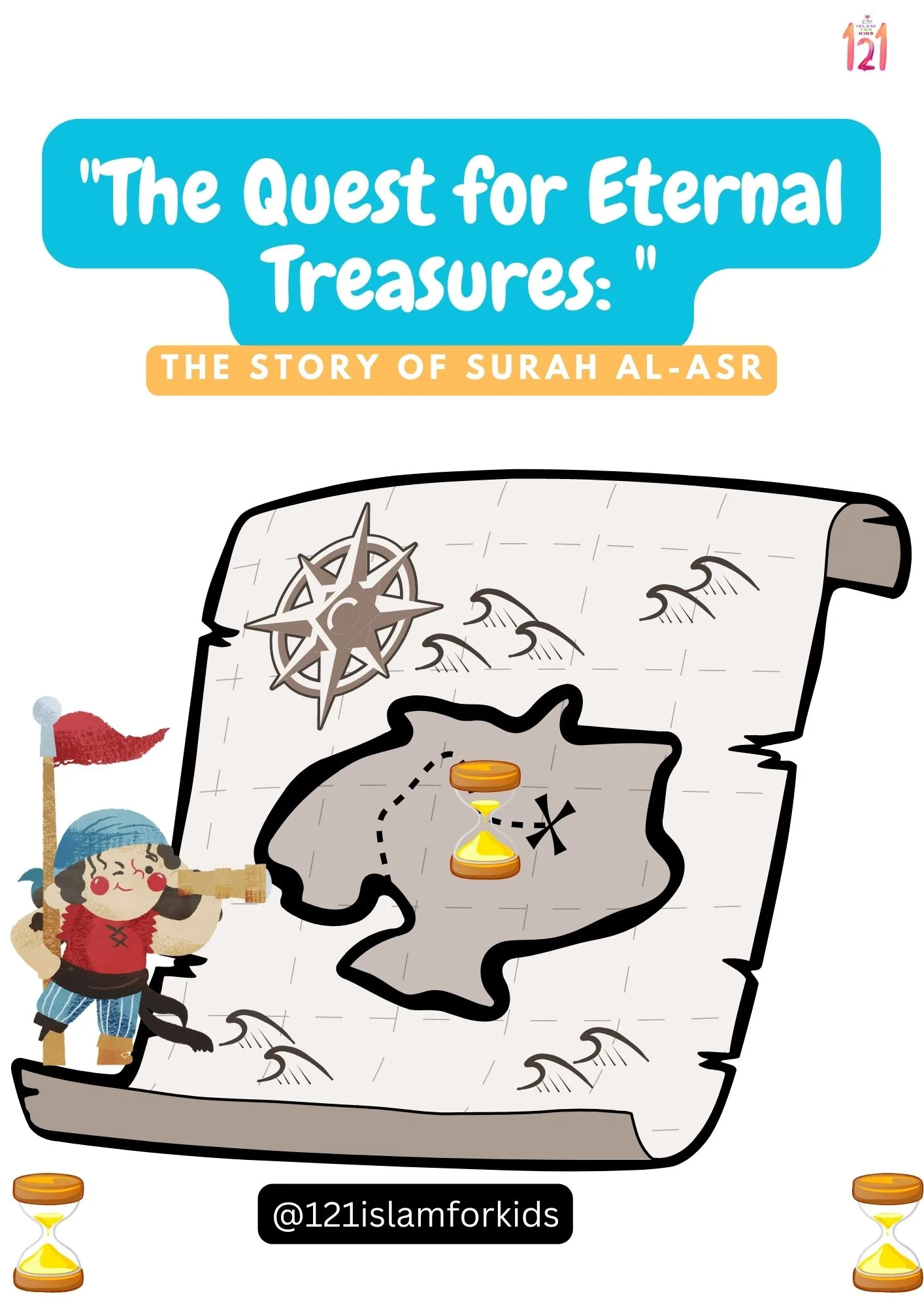
“The Quest for Eternal Treasures:The best story of Surah Al-Asr”
“The Quest for Eternal Treasures is a powerful story written for children to teach them a reflection of Surah Aser with the help of a Story. A reflection of Surah Aser “The Quest for Eternal Treasures” Video of Story Written Story Once upon a time, in a small village nestled amidst lush green fields, lived a group of curious and playful children. One sunny day, as they gathered under the shade of a big, old tree, they noticed an elderly man passing by. His gentle smile and wise eyes captivated their attention. Intrigued, the children approached the elderly man and asked, “Sir, can you share a story with us? We love stories!” The elderly man sat down, his eyes sparkling with delight. “Of course, my young friends. Let me tell you a tale about a Surah in the Quran called Al-Asr.” The children sat eagerly, ready to absorb every word of the story. “Once, in a faraway land, there was a beautiful kingdom ruled by a wise and just king. The king loved his people dearly and wanted them to lead prosperous lives. He had a secret treasure hidden within his palace, a precious hourglass filled with golden sand. One day, the king summoned all the kingdom’s children and told them about the hourglass. He explained, ‘This hourglass holds the essence of time. It reminds us of the value and importance of every moment we have. Whoever understands this and uses their time wisely will be rewarded greatly. The children were excited and wondered how they could prove their worthiness. The king smiled and continued, ‘There are three important keys to unlock the treasure within this hourglass: faith, good deeds, and advising one another towards truth and patience.’ With a determined spirit, the children set out to unlock the treasure. They helped their families, studied hard, and showed kindness to everyone they met. They learned about their faith and prayed sincerely to Allah, seeking His guidance and blessings. As days turned into weeks and weeks into months, the children faced challenges and obstacles. But they remained steadfast, remembering the advice of the king and the words of Surah Al-Asr. They encouraged and supported one another, spreading kindness and love throughout the kingdom. Finally, the day of reckoning arrived. The children gathered before the king, their eyes filled with anticipation. The king looked at them, filled with pride and joy. He handed them the hourglass, and as they turned it, a brilliant light engulfed the room. From the hourglass, a magical aura emerged, surrounding each child. The king announced, ‘You have proven your worthiness. The treasure you have unlocked is not gold or jewels, but a lifetime of success, happiness, and Allah’s eternal blessings.’ The children rejoiced, grateful for the lessons they had learned. They understood that time is a precious gift from Allah, and by using it wisely, they could achieve greatness. They promised to remember Surah Al-Asr and to continue spreading goodness throughout their lives. And so, the children returned to their village as beacons of light and inspiration. They shared the story of Surah Al-Asr with others, encouraging them to make the most of their time and work towards the betterment of humanity. The village transformed into a place of harmony and unity, where people cherished each moment and strived to do good deeds. The story of Surah Al-Asr became a guiding light for generations to come, reminding them that faith, good deeds, and advising one another towards truth and patience were the keys to a purposeful and successful life.” The children sat in awe, their hearts filled with wisdom and determination. They thanked the elderly man for sharing such a beautiful story with them. From that day forward, they embraced the lessons of Surah Al-Asr, making every moment count and working together to create a world filled with love, kindness, and goodness. More Stories Ant’s Amazing Journey to Hajj How To Deal With Fear The Islamic Way: Islamic Book For Kids & Toddlers: What are the 5 Pillars of Islam: Islamic Books for Kids Islamic Kids Best website |Free books download Islamic stories free reading Pinterest
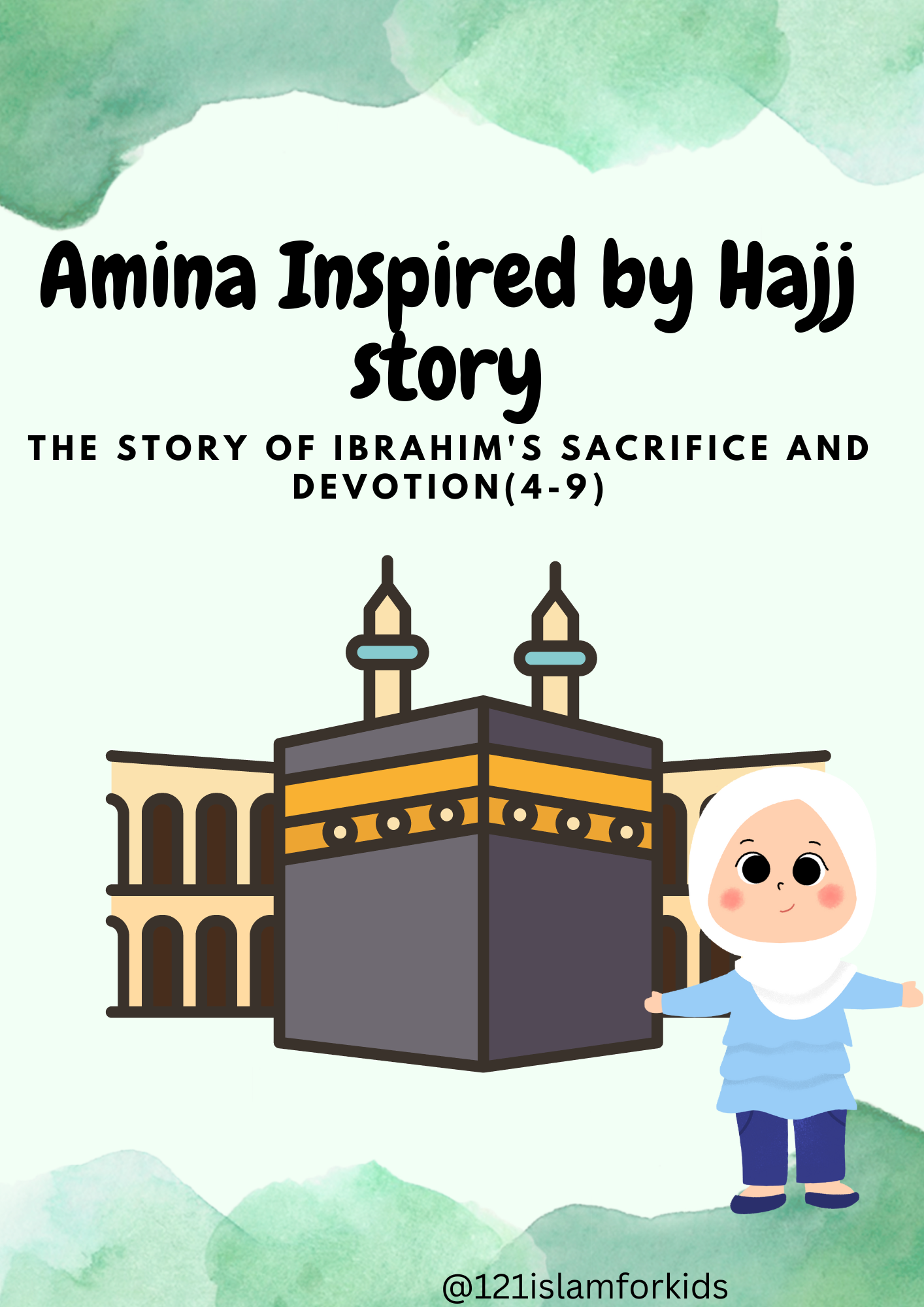
‘Amina Inspired by Hajj story’: New story. 4-9 yrs
A series of Hajj stories for children. Once upon a time, a young girl named Amina lived in a small village nestled among green hills. Amina was full of curiosity and always had a twinkle in her eyes. She loved hearing stories and learning about different cultures and traditions. One day, Amina’s grandmother, Amira, decided to share a special account with her—the story of Hajj. Amira gathered Amina and her friends around her, and with a smile, she began to tell the tale. “Long ago, in a faraway land, a kind and humble man named Ibrahim lived. He loved and believed in one God, whom he called Allah.” “Once, Allah spoke to Ibrahim in a dream and asked him to build a special house, called the Kaaba, as a place of worship. Ibrahim and his son Ismail journeyed to a barren desert to fulfill Allah’s command. Together, they built the Kaaba, a sacred place for all people to come and worship Allah.” Amina’s eyes widened with excitement as she imagined the enormous structure being constructed in the middle of a vast desert. Amira continued, “After building the Kaaba, Ibrahim, and Ismail faced a great trial. Allah asked Ibrahim to sacrifice his beloved son Ismail to test his faith and devotion. Although it was a difficult request, Ibrahim and Ismail submitted to Allah’s will. As Ibrahim was about to sacrifice his son, Allah replaced Ismail with a ram, sparing his life.” Amina and her friends listened attentively, captivated by the story. Amira smiled and said, “As a reward for Ibrahim’s unwavering faith, Allah caused a miraculous spring, known as Zam Zam, to gush forth in the desert near the Kaaba. This blessed water became a source of nourishment and sustenance for people visiting the Kaaba in the years to come.” “Around the Kaaba, a bustling city called Mecca grew, and people from different lands began to visit during the pilgrimage of Hajj. They would walk around the Kaaba seven times as a symbol of unity and devotion to Allah. They would also drink from the sacred well of Zam Zam, remembering the trust of Ibrahim and the miracle bestowed upon them.” Amina’s eyes sparkled with wonder as she imagined the busy city of Mecca and the blessed water of Zam Zam flowing abundantly. Amira concluded, “Hajj is a time of reflection, unity, and spiritual growth. People come from different countries, speak different languages, and have different cultures, but they all come together as one family, devoted to Allah. It teaches us the importance of love, peace, and equality.” The story of Hajj, the miracle of Zam Zam, and the sacrifice of Ibrahim inspired Amina and her friends. They promised always to remember the lessons it taught—to be steadfast in the faith, to trust in Allah’s wisdom, and to cherish the unity of humankind. From that day forward, whenever Amina looked up at the sky and saw a flock of birds flying in perfect formation, or saw water flowing gracefully like a spring, she would be reminded of the incredible journey of Hajj, the blessed water of Zam Zam, and the unwavering devotion of Ibrahim and Ismail to Allah. More Stories 50 Hajj Art and Craft Ideas| A great Event of Islam| I Went for Hajj Hajj Essentials And Umrah Essentials Guide Book Yan’s Hajj: The Journey of a Lifetime Ant’s Amazing Journey to Hajj How To Deal With Fear The Islamic Way: Islamic Book For Kids & Toddlers: What are the 5 Pillars of Islam: Islamic Books for Kids Islamic Kids Best website |Free books download Islamic stories free reading
“Aisha’s Hajj Journey” New Story Hajj 2024: Ibrahim’s Sacrifice and Devotion”
Aisha’s Hajj journey is a new story for Hajj 2024. Let’s see what Aisha will learn about Hajj and its rituals. Aisha’s Hajj Journey Once upon a time, in a small village nestled among green hills, there lived a young girl named Aisha. Aisha was full of curiosity and always had a twinkle in her eyes. She loved hearing stories and learning about different cultures and traditions. One day, Aisha’s grandmother, Amira, decided to share a special account with her—a story that would encompass the wonders of Zam Zam, the sacrifice of Ibrahim, the construction of the Kaaba, and the sacred rituals of Hajj. Amira gathered Aisha and her friends around her, and with a smile, she began to tell the tale of the remarkable journey of Hajj—a journey that holds deep spiritual significance for Muslims worldwide. “Listen closely, my dear children,” Amira began. “Hajj is an annual pilgrimage that takes place in the holy city of Mecca, where the Kaaba stands as a focal point for believers. It is a journey filled with devotion, unity, and obedience to Allah.” Amira paused, her eyes shining with anticipation, as she continued to weave the story. “The journey begins with the special attire worn by the pilgrims, known as Ihram. This simple white garment symbolizes purity, equality, and humility. It serves as a reminder that during this sacred journey, worldly distinctions disappear, and all pilgrims stand as equals before Allah.” Aisha and her friends imagined themselves dressed in white, joining the countless pilgrims in their unified quest for spiritual fulfillment. “The first ritual of Hajj is Tawaf,” Amira explained. “Pilgrims walk around the Kaaba seven times, symbolizing their complete devotion and submission to Allah. As they circle the Kaaba, they recite prayers and seek forgiveness, their hearts filled with the reverence of this sacred act.” Aisha closed her eyes and imagined the swirling crowd of pilgrims, their voices blending harmoniously with the echoes of their prayers. “Another significant ritual is the stoning of the three pillars known as Jamrat,” Amira continued. “Pilgrims symbolically cast stones at these pillars, representing the rejection of evil and the firm stand against temptation. It reminds them of the trials faced by Ibrahim when he was tempted by Satan during his journey.” Aisha’s eyes widened with awe as she envisioned pilgrims engaged in the act of stoning, their determination and resolve to shine through. Amira then turned to the remarkable tale of Zam Zam and Ibrahim’s sacrifice. “In the ancient land of Arabia, amidst the barren desert, a miraculous spring called Zam Zam appeared. Its sweet, gushing waters were a gift from Allah to Hajar, the wife of Ibrahim, and their young son Ismail.” “Aisha, imagine this oasis in the vast desert, where Hajar and Ismail found relief and sustenance. It became a symbol of trust and reliance on Allah’s providence. The well of Zam Zam still flows to this day, quenching the thirst of millions of pilgrims who visit Mecca during Hajj.” Aisha’s eyes sparkled with fascination as she envisioned the precious water flowing abundantly in the desert. “And let us not forget the profound sacrifice of Ibrahim,” Amira said, her voice filled with reverence. “Ibrahim was a righteous man who loved and obeyed Allah. In a test of his devotion, Allah commanded Ibrahim to sacrifice his beloved son Ismail. Both Ibrahim and Ismail showed unwavering submission to Allah’s will.” “Just as Ibrahim was about to fulfill the command, Allah, in His mercy, replaced Ismail with a ram, allowing the father and son to celebrate their unwavering faith.” Aisha’s heart filled with admiration for Ibrahim’s loyalty and the miraculous intervention of Allah. Amira concluded, “Hajj is a pilgrimage that encompasses both physical and spiritual aspects. It is a journey of self-reflection, forgiveness, and gratitude. Through the rituals of Tawaf, Jamrat, the special dress of Ihram, and the remembrance of Zam Zam and Ibrahim’s sacrifice, pilgrims experience a deep connection with Allah and with fellow believers from all corners of the world.” Aisha and her friends listened intently, their hearts stirred by the rich tapestry of stories and rituals that make up the incredible journey of Hajj. They vowed to cherish these traditions, appreciate the profound meaning behind each ritual, and cultivate unity, humility, and devotion in their own lives. From that day forward, whenever Aisha witnessed the circling of birds in the sky, saw stones skipping across water, encountered people dressed in white, or drank water from a pure source, she would be reminded of the sacred rituals of Hajj, the enduring legacy of Ibrahim, the miraculous Zam Zam, and the transformative power of unity and devotion. What are you feeling after reading this story? Would you like to leave your thoughts about this story? More About Hajj 50 Hajj Art and Craft Ideas| A great Event of Islam| I Went for Hajj Hajj Essentials And Umrah Essentials Guide Book Yan’s Hajj: The Journey of a Lifetime Ant’s Amazing Journey to Hajj How To Deal With Fear The Islamic Way: Islamic Book For Kids & Toddlers: What are the 5 Pillars of Islam: Islamic Books for Kids Islamic Kids Best website |Free books download Islamic stories free reading
“The Benevolent Pillar: Unveiling the Profound Zakat Meaning in Islam”
Here we are going to explain what Zakat means in Islam. Rules and Nisab of Zakat as well as What are different types of charity? Different types of charity in Islam: Before learning about Zakat Meaning In Islam, we will see different types of Charity in Islam. In Islam, there are different types of charity and acts of giving, which include both obligatory and voluntary forms. Here are some of the main categories: It is important to note that charity and acts of giving are highly emphasized in Islam, and Muslims are encouraged to engage in all forms of charity within their means and capabilities. The intention behind these acts should be solely for the sake of seeking Allah’s pleasure and benefiting others. Zakat Menaings and Rules in Islam Zakat is an important concept in Islam and refers to the mandatory giving of a portion of one’s wealth to those in need. It is considered one of the Five Pillars of Islam and is intended to purify one’s wealth and promote social welfare and equality. Here is a brief note on Zakat, with references from the Quran, Hadith, and rules of Zakat: It is important to note that the rules and specific details of Zakat can vary among different schools of Islamic jurisprudence and local customs. Muslims are encouraged to consult scholars and reliable sources to ensure they fulfill their Zakat obligations accurately and effectively. Rules of Zakat in Islam Here are the rules of Zakat summarized briefly: Remember that these are general guidelines, and it is advisable to consult scholars or trusted sources to ensure compliance with specific rulings and variations that may exist based on regional or school of thought differences. Nisab refers to the minimum threshold of wealth or assets that a person must possess before Zakat becomes obligatory on them. The nisab amount is determined based on the value of gold or silver. What is Nisab of Zakat? The nisab is calculated by determining the equivalent value of a specific amount of gold or silver. If a person’s wealth exceeds the nisab value, they are obligated to pay Zakat on that wealth. If their wealth falls below the nisab, Zakat is not obligatory on them. The nisab value can vary over time and is based on different interpretations and calculations. It is advisable to consult local scholars or reputable sources to determine the current nisab value in your region or follow the guidance of your Islamic community or organization. Please note that the nisab amount is subject to change due to fluctuations in the value of gold and silver. It is important to stay updated with the current nisab value for accurate Zakat calculation. Importance of Zakat According to the Hadith and Quran, the non-payment of Zakat is regarded as a serious matter, and it carries spiritual and moral consequences. While specific punishments in this life are not mentioned, several references highlight the importance of fulfilling the Zakat obligation and the potential negative effects of neglecting it. Here are a few relevant points: It is crucial to note that the focus should not solely be on punishment, but also on the positive aspects of fulfilling Zakat. Islam encourages Muslims to approach Zakat with a spirit of generosity, compassion, and social responsibility. By fulfilling this obligation, individuals contribute to the betterment of society, alleviate the suffering of the less fortunate, and purify their own wealth and souls. Hadith17| What is Best Charity in Islam|Abu Talha’sR.A great charity Hadith no17| What is the best charity in Islam?Bukhari 1417 Hadith No 28 | What Is Best Charity In Islam? Great doner Usam R.A Islamic Relief USA: The largest Muslim charitable organization
A gentle reminder: New short story for children about Surah Quraish
”A Gentle Reminder” is a story about Quraish and their polytheisms. In this story Islamic and Arab perspectives have been highlighted. Story Islamic: A gentle reminder Once upon a time in the bustling city of Mecca, there lived a powerful and influential tribe known as Quraish. They were the custodians of the Kaaba, the sacred house of worship that attracted countless pilgrims from far and wide The Quraish revealed their status and wealth, but their hearts were veiled by the darkness of idol worship. During this time, Muhammad SAW emerged from the depths of the Quraish tribe. Muhammad SAW was known for his wisdom, honesty, and deep spirituality. He often sought solace in the mountains surrounding Mecca, pondering the universe and its Creator. At the time of the revelation of Surah Quraish, the Prophet Muhammad had begun preaching the message of Islam, calling the people to abandon idol worship and embrace monotheism. The Quraish, however, were deeply entrenched in their polytheistic beliefs and were resistant to change. They viewed the Prophet’s message as a threat to their power and the traditions they held dear. The revelation of Surah Quraish was a gentle reminder to the Quraish of the blessings they enjoyed and the security they experienced in their trade journeys. They had special respect all over Arab due to Kabbah. They were traveling to Al Shaam in summer and to Yemen in winter. They were saved from robbers on the way. It highlighted the fact that it was God, the Lord of the House (referring to the Kaaba), who had protected them and provided for their needs. The Surah invited them to reflect on these blessings and to worship the One true God in gratitude. Over time, the message of Islam spread throughout Mecca, and the Quraish tribe witnessed the truth and beauty of monotheism. Many of its members embraced Islam, transforming the once-polytheistic city into a center of devotion and righteousness. And so, the story of Surah Quraish stands as a testament to the transformative power of divine revelation. It serves as a reminder that true blessings, security, and prosperity lie in recognizing the Creator and submitting to His guidance. The Surah brought light to the hearts of the Quraish, leading them from darkness to enlightenment, and paving the way for a new era of faith in Mecca. How is this story? Do you want to get more stories like this? comment below. Video of this story More stories in English More stories in Urdu Surah Quran Tafsir/Translation
SURAH QURAISH(106) for Children. How to teach? Step-by-Step Guide
Surah: Chapter 106 قُرَيْشٍ (Quraysh): Quraish Introduction: Surah Quraish is the 106th chapter of the Quran, composed of 4 verses. It is named after the tribe of Quraish, the Prophet Muhammad’s own tribe, who inhabited the city of Makkah. This Surah highlights the blessings and favors that Allah bestowed upon the tribe of Quraish, particularly in the context of their trade and their secure journeys for trade in the winter and summer. قُرَيْشٍ (Quraysh): Quraish: Word to word Translation: Quraish: The name of the tribe of Quraish Verse by verse Tafsir (interpretation) of Surah Quraish: Verse 1: “For the accustomed security of the Quraish.” This verse acknowledges the special care and protection Allah granted to the Quraish tribe, providing them with a sense of peace and security. It is said that the Quraish enjoyed peace and safety due to their role as the custodians of the Kaaba, the sacred house of worship in Makkah. Verse 2: “Their accustomed security [in] the caravan of winter and summer.” This verse emphasizes the safe travels of the Quraish during their winter and summer journeys for trade. It highlights their ability to conduct business without fear of attacks or disruptions during these seasons. Verse 3: “So let them worship the Lord of this House.” Here, the Surah encourages the Quraish to recognize and worship the Lord of the Kaaba, emphasizing that it is Allah who provides them with security, sustenance, and blessings. It reminds them of their duty to worship and submit to the One who bestows favors upon them. Verse 4: “Who has fed them, [saving them] from hunger and made them safe, [saving them] from fear.” This verse reiterates the blessings Allah bestowed upon the Quraish, including providing them with sustenance, protecting them from hunger, and granting them security, shielding them from fear and harm. In summary, Surah Quraish highlights the blessings and security that Allah granted to the Quraish tribe, particularly in their trade and safe travels. It serves as a reminder to the Quraish and all believers to recognize and worship the Lord of the Kaaba, who provides them with sustenance, security, and countless other blessings. Mindmap: The reflection and implications of Surah Quraish include: Overall, the reflection and implications of Surah Quraish revolve around gratitude, trust in Allah’s provision, worship, ethical commerce, and the pursuit of peace and security. It encourages believers to acknowledge Allah’s blessings, rely on Him, worship Him sincerely, engage in lawful economic activities, and contribute to a harmonious society. Teaching method of Surah Quraish step by step: Introduction, Recitation and Tajweed: Tafsir of Surah Quraish with infographics: Story telling: Reflection and Discussion: Memorization: Application and Integration: Mindmap: Revision and Assessment Actvities: Resources My First Quran Picture Book My First Quran Stories Book Islamic education By Molvi Abdula Aziz Grade 6 Home Work Photo Gallery Lectures videos in English Lectures videos in Urdu Courses Quran classes: We have online quran tajweed, recitation, and Quran Hifz classes for children. One-on-one classes with Qualified teachers. Quran Tafseer classes: Short and Easy to understand Quran translation and tafseer will be taught to the young learners. Infographics, mindmaps, work by word tajweed and meanings, stories, and duas are included in these classes. Hadith with Stories course consists of 30 short hadith It’s a personality development course for children with interesting stories. 30 short hadiths would be taught with stories. We have worksheets to solve after learning hadiths for implications. Prayer for kids course : A short course to teach about taharat, Gusal, wudu, times of prayers, number and names of prayers, pillars, conditions of prayer, and method of prayer. Kindness to Parents: 1-week course to teach the rights of parents with practical work. Dua and how to be kind to parents is included in this course. 6 articles on the Muslim faith: Faiths/Muslim beliefs would be taught one by one with the help of mind maps and stories in the Quran. Islamic dress code: Islamic rules of dressing, Aurah/covering body rules, and modesty dressing will be included in this one-week course. Ramzan Boost course: 1 month before Ramzan we start this course. Everything about fasting rules and supplication with the Ramzan checklist and daily to-do list is included in this course. Faith boosts course in December to say NO MARYY CHRISTMAS: Stories of faith by the Quran will be added in this course with basic articles of faith in this course. Enrolments Available All courses Are available to start as in one on one classes. Please have a look at our group courses continued here. Email Facebook. Youtube Urdu Channel Youtube English Channel If this teaching method is helpful for you? leave a comment.
What Is The Role And Names Of Islamic Dawah Centers
Title: Islamic dawa centers: Promoting Understanding and Education Introduction : The Islamic Dawah Centers serve as a vital institution within the Islamic community, dedicated to spreading knowledge, fostering understanding, and promoting dialogue about Islam. Operating as a platform for dawah, which refers to the act of inviting others to embrace Islam, these centers play a significant role in engaging with diverse audiences, addressing misconceptions, and nurturing a peaceful coexistence. This article will delve into the essential aspects of Islamic Dawah Centers, their objectives, activities, and the impact they have on both Muslims and non-Muslims. Understanding Dawah: Dawah, derived from Arabic, means “invitation” or “call.” It is a central concept in Islam that emphasizes the duty of Muslims to share the message of Islam with others. Islamic Dawah Centers act as vehicles for this mission, providing a platform to convey the teachings and values of Islam while engaging in interfaith dialogue. Objectives of Islamic Dawah Centers : Islamic Dawah Centers have several primary goals: Activities and Programs: Islamic Dawah Centers offer a range of activities and programs to achieve their objectives: Impact and Significance: Islamic Dawah Centers have a profound impact on individuals and communities: a) Empowering Muslims: These centers equip Muslims with knowledge, confidence, and skills to articulate their faith, fostering a sense of empowerment and identity among Muslim communities. b) Dispelling Misconceptions: Dawah Centers play a critical role in dispelling misconceptions and stereotypes about Islam, contributing to a more accurate and nuanced understanding of the religion. c) Promoting Peaceful Coexistence: Dawah through interfaith dialogue and community engagement. Here is a list of Islamic dawah centers in the United Kingdom: Islamic Cultural Centre & London Central Mosque – Website: http://iccuk.org/ East London Mosque & London Muslim Centre – Website: https://www.eastlondonmosque.org.uk/ Birmingham Central Mosque – Website: https://www.centralmosque.org.uk/ Al Manaar – The Muslim Cultural Heritage Centre – Website: https://almanaar.org.uk/ Madina Masjid & Islamic Centre, Leicester – Website: http://www.madinamasjid.org.uk/ Bradford Central Mosque – Website: http://www.bradfordmosque.org.uk/ Al-Maktoum Institute for Arabic and Islamic Studies, Dundee – Website: https://www.almi.abdn.ac.uk/ The Islamic Cultural Centre of Northern Ireland – Website: https://www.iccni.co.uk/ Glasgow Central Mosque – Website: https://www.centralmosque.co.uk/ Edinburgh Central Mosque – Website: https://www.edinburghcentralmosque.co.uk/ A list of Islamic dawah centers in Europe. Here is a list of Islamic dawah centers in the United States: Here is a list of Islamic dawah centers in Australia: Do you want to add any other Dawa center? Comment below the link and introduction of dawa centers in your area. Islamic Relief USA: The largest Muslim charitable organization What are the 4 obligatory acts of Wudu? How to perform Wudu? Is Muslim a Religion? Exploring the Diversity of Islam
How to teach Surah Aser step by step? 9 Ways
. This step-by-step teaching method of Surah Aser word meanings Translation, tafsir, and activities. Introduction Surah Al-Asr is the 103rd chapter of the Quran, the holy book of Islam. It is a short but powerful surah, consisting of only three verses, and is considered one of the most profound and impactful surahs in the Quran. The word “Asr” in Arabic means “time” and the surah emphasizes the importance of utilizing time wisely. It serves as a reminder to believers that time is a precious and finite resource and that they must use it wisely in the pursuit of their spiritual goals and in doing good deeds. The surah also emphasizes the importance of faith, good deeds, and patience. It reminds believers that these are the key ingredients for success in both this life and the hereafter. Surah Aser Word-by-word Meanings and Translation: Here are the Arabic words in Surah Al-Asr, along with their English translations: Verse 1: وَالْعَصْرِ (Wal-‘Asr) – By the time Verse 2: إِنَّ (Inna) – Indeed الْإِنسَانَ (al-insana) – mankind لَفِي (lafi) – is in خُسْرٍ (khusr) – loss, Verse 3: إِلَّا (Illa) – Except الَّذِينَ (alladhīna) – those who آمَنُوا (āmanū) – have believed وَعَمِلُوا (wa ‘amilū) – and done الصَّالِحَاتِ (al-ṣāliḥāti) – righteous deeds وَتَوَاصَوْا (wa tawāṣaw) – and advised each other بِالْحَقِّ (bi-al-ḥaqqi) – to truth وَتَوَاصَوْا (wa tawāṣaw) – and advised each other بِالصَّبْرِ (bi-aṣ-ṣabr) – to patience. Here’s the complete translation of Surah Al-Asr: Verse 1: وَالْعَصْرِ (Wal-‘Asr) – By the time Verse 2: إِنَّ الْإِنسَانَ لَفِي خُسْرٍ (Inna al-insana lafi khusr) – Indeed, mankind is in loss, Verse 3: إِلَّا الَّذِينَ آمَنُوا وَعَمِلُوا الصَّالِحَاتِ وَتَوَاصَوْا بِالْحَقِّ وَتَوَاصَوْا بِالصَّبْرِ (Illa alladhīna āmanū wa ‘amilū al-ṣāliḥāti wa tawāṣaw bi-al-ḥaqqi wa tawāṣaw bi-aṣ-ṣabr) – Except for those who have believed and done righteous deeds and advised each other to truth and advised each other to patience. “By the time, Indeed, mankind is in loss, Except for those who have believed and done righteous deeds and advised each other to truth and advised each other to patience.” Each word in Surah Al-Asr carries significance and contributes to the overall meaning of the chapter, emphasizing the importance of faith, good deeds, and mutual guidance toward truth and patience. Tafsir: Surah Al-Asr is a short but powerful surah that carries a deep message about the importance of time and the consequences of wasting it. Here’s a brief tafsir (explanation) of each verse: Verse 1: “By the time, The first verse of Surah Al-Asr highlights the importance of time and the value of every moment. The phrase “By the time” refers to the fleeting nature of time, and how quickly it passes by. Verse 2: Indeed, mankind is in the loss.” The verse then goes on to state that humanity is in a state of loss or ruin, emphasizing that time is a precious resource that should be used wisely to seek Allah’s pleasure and to do good deeds. Verse 3: “Except for those who have believed and done righteous deeds and advised each other to truth and advised each other to patience.” The third verse of Surah Al-Asr offers hope to those who have faith and do good deeds. It emphasizes that those who believe in Allah, perform righteous deeds, and encourage each other to truth and patience will be exempt from the state of loss mentioned in the first verse. The verse highlights the importance of working towards the betterment of humanity, promoting truth and justice, and encouraging each other towards good deeds and righteousness. “Indeed, Allah is with the patient.” The final verse of Surah Al-Asr emphasizes the importance of patience in the face of adversity. It reassures believers that Allah is with those who show patience and perseverance and that He will reward them in this life and the hereafter. The verse reminds us that life is full of challenges and difficulties, but with patience and faith in Allah, we can overcome them and attain success and happiness. Overall, Surah Al-Asr reminds us that time is a precious resource and that every moment should be used wisely to seek Allah’s pleasure and to do good deeds. It encourages us to have faith in Allah, perform righteous deeds, and encourage each other toward truth and patience. The surah is a powerful reminder of the ultimate purpose of our existence and the importance of working toward the betterment of humanity. Step by Step teaching method: Tajweed and Recitation: It is necessary to read Quran with perfect Tajweed. Children need to memorize this surah with good recitation and proper tajweed rules. So our quran teacher will start to teach them this surah in Quran class. We also provide Tajweed videos to children. Within 2 or 3 weeks, while we will complete the translation and tafsir of the surah and other activities, students will be able to recite this surah with good recitation. In sha Allah Word by word Translation of My first Quran with pictures book: From ”my first quran with Picture” book, we will do word-by-word translations of the Surah. Word-by-word translation will be done online from the soft book and children will write meanings on their copies or Quran notebooks. word by word translation and verse-by-verse translation are compulsory to memorize by heart. So daily revision and class work will make it easy to learn by heart. (More pictures in Gallery) Tafsir and explanation from Islamic education book Tafsir and explanation are done during word meanings and translation of the surah from the picture book. For the deep study, we get help from the book ‘Islamic Education’ by ‘Darusslam for more detail and complete understanding. The tafsir in this book is pretty easy and age-appropriate. You can download this book form here. Infographics: My first QUran with pictures has the best infographics for children. It is quite easy to draw the important graphics from the book. But we appreciate our children using their creativity. So children may draw, or create with the help of
The first surah revealed by Prophet Muhammad: Surah ALAlaq
_ The first Surah reveald in Makkah on Prophet Muhammad SAW when he was 40 yrs old. This is a very important surah which was revealed in two parts. Both parts have different thems. Surah Alaq can be taught step by step using an approach that encompasses understanding the meaning of the verses and memorizing the surah. Here is a suggested teaching method for Surah Alaq: Step 1: Introduction and Background Step 2: Recitation and Listening Step 3: Translation and Tafsir (Exegesis) Step 4: Reflection and Discussion Step 5: Memorization Step 6: Application and Integration Step 7: Revision and Assessment Step 8: Mindmap and Infographic Step 9: Activities. Step 10: Story By following this step-by-step teaching method, students can develop a comprehensive understanding of Surah Alaq, memorize its verses, and internalize its timeless teachings, allowing them to apply its wisdom in their lives. Resources My First Quran Picture Book My First Quran Stories Book Islamic education By Molvi Abdula Aziz Grade 6 Home Work Photo Gallery Lectures videos in English Lectures videos in Urdu Courses Quran classes: We have online quran tajweed, recitation, and Quran Hifz classes for children. One-on-one classes with Qualified teachers. Quran Tafseer classes: Short and Easy to understand Quran translation and tafseer will be taught to the young learners. Infographics, mindmaps, work-by-word tajweed and meanings, stories, and duas are included in these classes. Hadith with Stories course consists of 30 short hadith It’s a personality development course for children with interesting stories. 30 short hadiths would be taught with stories. We have worksheets to solve after learning hadiths for implications. Prayer for kids course : A short course to teach about taharat, Gusal, wudu, times of prayers, number and names of prayers, pillars, conditions of prayer, and method of prayer. Kindness to Parents: A 1-week course to teach the rights of parents with practical work. Dua and how to be kind to parents is included in this course. 6 articles on the Muslim faith: Faiths/Muslim beliefs would be taught one by one with the help of mind maps and stories in the Quran. Islamic dress code: Islamic rules of dressing, Aurah/covering body rules, and modesty dressing will be included in this one-week course. Ramzan Boost course: 1 month before Ramzan we start this course. Everything about fasting rules and supplication with the Ramzan checklist and daily to-do list is included in this course. Faith boosts course in December to say NO MARYY CHRISTMAS: Stories of faith by the Quran will be added in this course with basic articles of faith in this course. Enrolments Available All courses Are available to start as in one on one classes. Please have a look at our group courses continued here. Email Facebook. Youtube Urdu Channel Youtube English Channel If this teaching method is helpful for you? leave a comment.
Discover the Fascinating World of Islamic courses online in the UK
Discover the Fascinating World of Islamic courses online: Islamic Studies and Quran Tajweed/Tafseer with 121 Islam for Kids for children of all ages living in UK.! Are you searching for a comprehensive and engaging online learning experience for your children to explore the beauty of Islamic teachings UK? Look no further! 121 Islam for Kids proudly presents its Online Islamic Studies Classes and Quran Tafseer specifically designed for children of all ages and time zones. Our interactive and dynamic classes offer a rich curriculum that covers a wide range of topics, ensuring a well-rounded understanding of Islam. From the pillars of faith to the stories of the prophets, your child will embark on an enlightening journey through the core principles and values of our beautiful religion. What sets 121 Islam for Kids apart is our focus on Quran Tafseer, unraveling the deep meanings and wisdom behind the verses of the Holy Quran. Our experienced and qualified instructors guide students through interpreting Quranic passages, allowing them to develop a profound connection with the words of Allah. Convenience is key, and we understand the importance of accommodating different time zones. That’s why our classes are available in both morning and evening time slots, ensuring that every child can participate at a suitable time. We strive to make learning accessible and flexible for students from all around the world. What to Expect from our Online Islamic Studies Classes and Quran Tafseer: Don’t miss this opportunity for your child to embark on a remarkable journey of Islamic knowledge and Quranic understanding. Enroll them in 121 Islam for Kids’ Online Islamic Studies Classes and Quran Tafseer today! Together, let’s nurture their love for Islam and empower them with a strong foundation that will guide them throughout their lives. Courses Quran classes: We have online quran tajweed, recitation, and Quran Hifz classes for children. One-on-one classes with Qualified teachers. Quran Tafseer classes: Short and Easy to understand Quran translation and tafseer will be taught to the young learners. Infographics, mindmaps, work by word tajweed and meanings, stories, and duas are included in these classes. Hadith with Stories course consists of 30 short hadith It’s a personality development course for children with interesting stories. 30 short hadiths would be taught with stories. We have worksheets to solve after learning hadiths for implications. Prayer for kids course : A short course to teach about taharat, Gusal, wudu, times of prayers, number and names of prayers, pillars, conditions of prayer, and method of prayer. Kindness to Parents: 1-week course to teach the rights of parents with practical work. Dua and how to be kind to parents is included in this course. 6 articles on the Muslim faith: Faiths/Muslim beliefs would be taught one by one with the help of mind maps and stories in the Quran. Islamic dress code: Islamic rules of dressing, Aurah/covering body rules, and modesty dressing will be included in this one-week course. Ramzan Boost course: 1 month before Ramzan we start this course. Everything about fasting rules and supplication with the Ramzan checklist and daily to-do list is included in this course. Faith boosts course in December to say NO MARYY CHRISTMAS: Stories of faith by the Quran will be added in this course with basic articles of faith in this course. Enrolments Available All courses Are available to start as in one on one classes. Please have a look at our group courses continued here. Email
How to teach 5 Rights of Parents in Islam? Online Islamic Courses
The Rights of Parents in Islam: A Comprehensive Understanding through Online Islamic Courses. Introduction online course Rights of Parents: Islam places great emphasis on the rights and respect due to parents. The Quran, hadiths (sayings of Prophet Muhammad, peace be upon him), and scholarly opinions provide a comprehensive framework for understanding and fulfilling these rights. Let us delve into the various aspects of the rights of parents in Islam, supported by references from the Quran, hadiths, and notable quotes. Kindness and Respect: The foundation of parental rights lies in showing kindness and respect to parents. Allah commands in the Quran: “And your Lord has decreed that you not worship except Him, and to parents, good treatment. Whether one or both of them reach old age [while] with you, say not to them [so much as], ‘uff,’ and do not repel them but speak to them a noble word” (Quran 17:23). Prophet Muhammad (pbuh) further emphasized this in a hadith: “Paradise lies beneath the feet of mothers.” This highlights the elevated status of mothers and emphasizes the importance of respecting and caring for them. Obedience and Compliance: Islam emphasizes obedience to parents unless they command something against Islamic teachings. The Quran states: “But if they (both) strive with you to make you join in worship with Me others of which you have no knowledge, then obey them not” (Quran 29:8). This verse highlights the exception to obedience when it comes to matters of shirk (associating partners with Allah). Prophet Muhammad (pbuh) affirmed the significance of obedience to parents in a hadith: “The pleasure of Allah is in the pleasure of the parents, and the anger of Allah is in the anger of the parents.” This underscores the importance of seeking parental satisfaction as a means to earn Allah’s pleasure. Financial Support: Children have a responsibility to provide financial support to their parents when needed. Allah says in the Quran: “And do well to parents, and near of kin, and orphans, and the needy, and the neighbor from among your own people” (Quran 2:83). This verse emphasizes the duty to support parents alongside other obligations. Dua and Prayers for Parents: Islam encourages children to make dua (supplication) and pray for the well-being, forgiveness, and guidance of their parents. The Quran mentions: “And lower to them the wing of humility out of mercy and say, ‘My Lord, have mercy upon them as they brought me up [when I was] small’” (Quran 17:24). Honor their loved Ones: In Islam, honoring the relatives of parents is highly encouraged. Muslims are urged to maintain good relations with their extended family, treating them with kindness, respect, and support. Visiting and assisting relatives, especially after the passing of parents, is considered a virtuous act. Prophet Muhammad (pbuh) affirmed the significance of praying for parents in a hadith: “When a person dies, all their deeds come to an end except three: Sadaqah Jariyah (ongoing charity), beneficial knowledge, or a righteous child who prays for them.” Conclusion: The rights of parents in Islam encompass various aspects such as kindness, respect, obedience, financial support, and prayers. The Quran, hadiths, and Islamic scholars provide guidance on fulfilling these rights, emphasizing the importance of cherishing and honoring parents. As Muslims, it is our duty to understand and fulfill these rights, recognizing that the love and care we receive from our parents is a blessing from Allah. By upholding these rights, we contribute to building strong family bonds, fostering a harmonious society, and earning the pleasure of Allah. In the words of Imam Ahmad ibn Hanbal, a renowned Islamic scholar, “The best of deeds after the obligatory acts are those done to please one’s parents.” May Allah bless us all with the ability to fulfill the rights of our parents and strengthen the ties of kinship. Teaching Methods for Online Islamic Courses. Exploring the kindness towards Parents in Islam to Children, including Duas and Activities: Introduction to Parental Rights Dua: Begin each session with a dua seeking Allah’s blessings and guidance to understand parental rights. Activity: Discuss real-life scenarios where children can identify examples of fulfilling parental rights. Assessment: Ask children to write or draw about a time when they showed kindness and respect to their parents. Understanding Parental Responsibilities Dua: Teach children specific duas for seeking Allah’s forgiveness for any shortcomings towards their parents. Activity: Have children create a “Parental Responsibilities” chart listing tasks they can help their parents with. Assessment: Ask children to write a short paragraph on why it is important to obey and respect parents. Practicing Kindness and Respect Dua: Teach children duas for seeking Allah’s blessings on their parents and seeking forgiveness for any mistakes. Activity: Role-play scenarios demonstrating acts of kindness, respect, and helpfulness towards parents. Assessment: Ask children to create a poster illustrating ways to show kindness and respect to parents. Communication and Appreciation Dua: Teach children duas for seeking Allah’s blessings on their parents’ health, happiness, and wellbeing. Activity: Guide children in writing thank-you letters or cards expressing gratitude to their parents. Assessment: Have children share a story or personal experience where they communicated effectively with their parents. Seeking Parents’ Guidance Dua: Teach children duas for seeking Allah’s guidance and wisdom to understand and follow their parents’ advice. Activity: Engage children in a discussion about seeking parents’ opinions and advice in decision-making. Assessment: Ask children to create a collage or drawing representing a valuable lesson learned from their parents. Honoring Parents in All Circumstances Hadith: Teach them one short hadith about the father and one about Mother. Activity: Tell them a story about the rights of the Father and mother in stories. (Two hadiths are included in our hadith course) Assessment: Have children write a reflective journal entry about a time when they overcame a challenging situation by honoring their parents. (We have worksheets on it) Dua for Parents Dua: Teach children a special dua for their parents’ well-being, forgiveness, and success. Activity: Have children create personalized dua cards for their parents, expressing love and