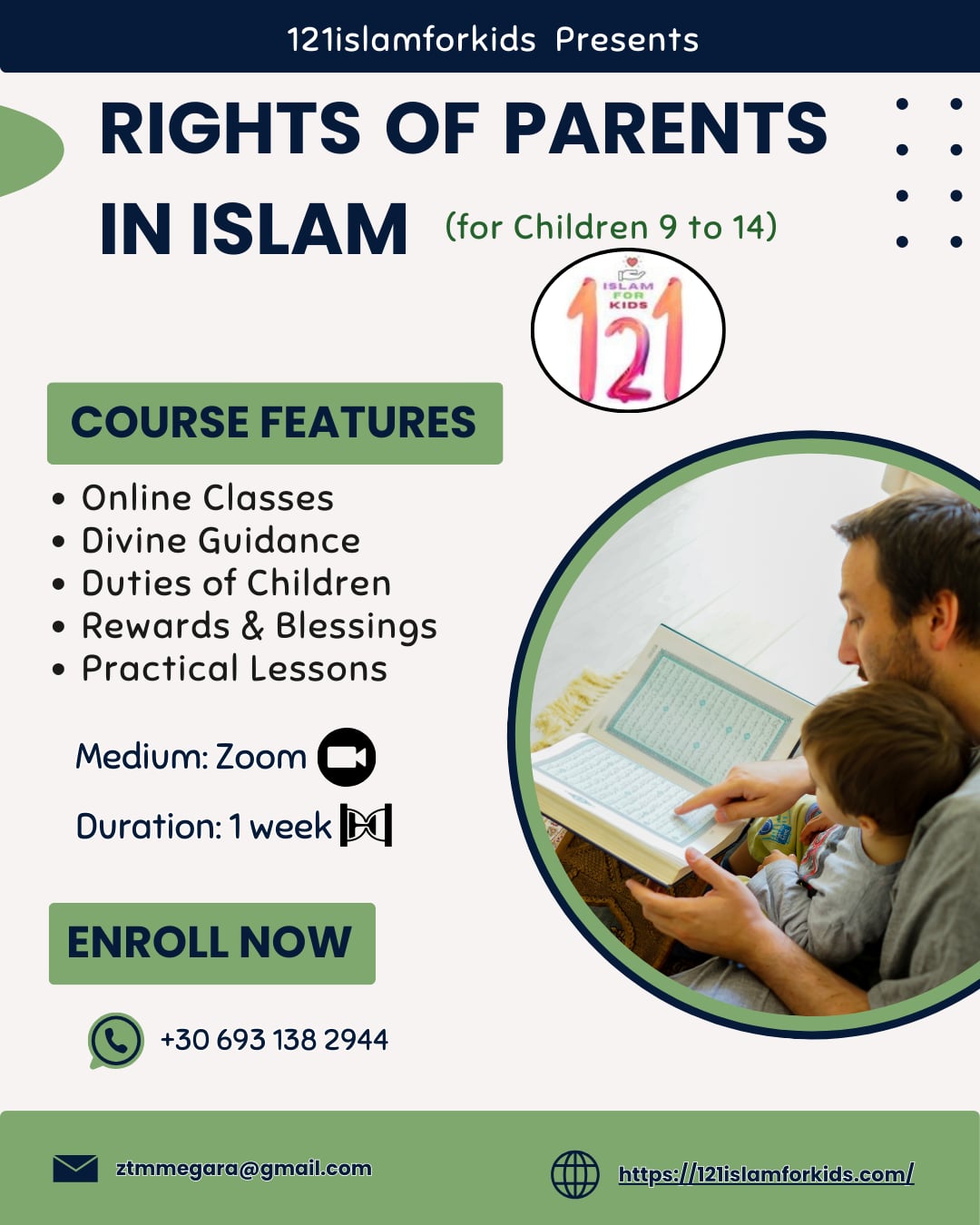
The Rights of Parents in Islam: A Comprehensive Understanding through Online Islamic Courses.
Table of Contents
Introduction online course Rights of Parents:
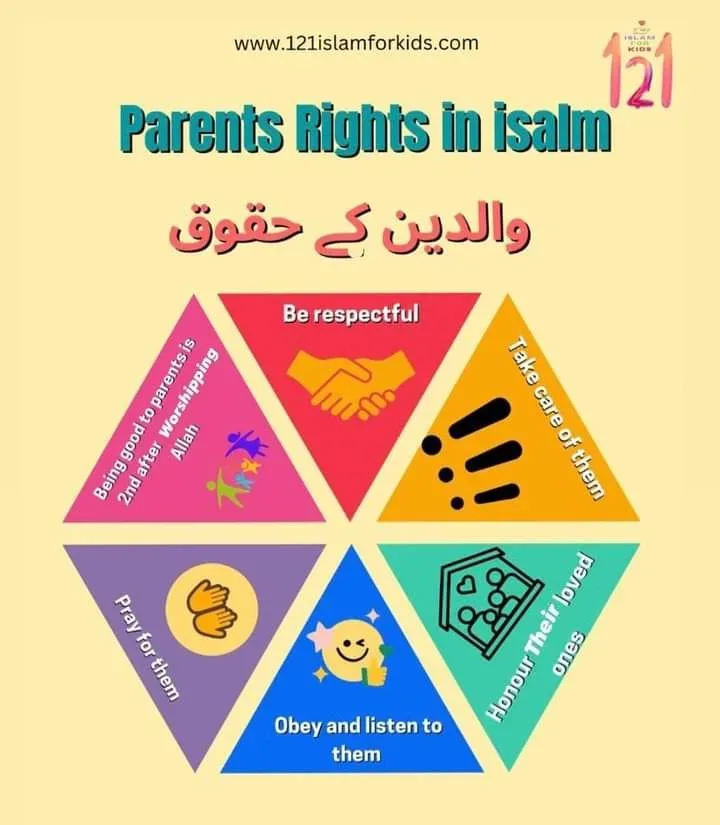
Islam places great emphasis on the rights and respect due to parents. The Quran, hadiths (sayings of Prophet Muhammad, peace be upon him), and scholarly opinions provide a comprehensive framework for understanding and fulfilling these rights. Let us delve into the various aspects of the rights of parents in Islam, supported by references from the Quran, hadiths, and notable quotes.
Kindness and Respect:
The foundation of parental rights lies in showing kindness and respect to parents. Allah commands in the Quran: “And your Lord has decreed that you not worship except Him, and to parents, good treatment. Whether one or both of them reach old age [while] with you, say not to them [so much as], ‘uff,’ and do not repel them but speak to them a noble word” (Quran 17:23).
Prophet Muhammad (pbuh) further emphasized this in a hadith: “Paradise lies beneath the feet of mothers.” This highlights the elevated status of mothers and emphasizes the importance of respecting and caring for them.
Obedience and Compliance:
Islam emphasizes obedience to parents unless they command something against Islamic teachings. The Quran states: “But if they (both) strive with you to make you join in worship with Me others of which you have no knowledge, then obey them not” (Quran 29:8). This verse highlights the exception to obedience when it comes to matters of shirk (associating partners with Allah).
Prophet Muhammad (pbuh) affirmed the significance of obedience to parents in a hadith: “The pleasure of Allah is in the pleasure of the parents, and the anger of Allah is in the anger of the parents.” This underscores the importance of seeking parental satisfaction as a means to earn Allah’s pleasure.
Financial Support:
Children have a responsibility to provide financial support to their parents when needed. Allah says in the Quran: “And do well to parents, and near of kin, and orphans, and the needy, and the neighbor from among your own people” (Quran 2:83). This verse emphasizes the duty to support parents alongside other obligations.
Dua and Prayers for Parents:
Islam encourages children to make dua (supplication) and pray for the well-being, forgiveness, and guidance of their parents. The Quran mentions: “And lower to them the wing of humility out of mercy and say, ‘My Lord, have mercy upon them as they brought me up [when I was] small’” (Quran 17:24).
Honor their loved Ones:
In Islam, honoring the relatives of parents is highly encouraged. Muslims are urged to maintain good relations with their extended family, treating them with kindness, respect, and support. Visiting and assisting relatives, especially after the passing of parents, is considered a virtuous act.
Prophet Muhammad (pbuh) affirmed the significance of praying for parents in a hadith: “When a person dies, all their deeds come to an end except three: Sadaqah Jariyah (ongoing charity), beneficial knowledge, or a righteous child who prays for them.”
Conclusion:
The rights of parents in Islam encompass various aspects such as kindness, respect, obedience, financial support, and prayers. The Quran, hadiths, and Islamic scholars provide guidance on fulfilling these rights, emphasizing the importance of cherishing and honoring parents.
As Muslims, it is our duty to understand and fulfill these rights, recognizing that the love and care we receive from our parents is a blessing from Allah. By upholding these rights, we contribute to building strong family bonds, fostering a harmonious society, and earning the pleasure of Allah.
In the words of Imam Ahmad ibn Hanbal, a renowned Islamic scholar, “The best of deeds after the obligatory acts are those done to please one’s parents.”
May Allah bless us all with the ability to fulfill the rights of our parents and strengthen the ties of kinship.
Teaching Methods for Online Islamic Courses.
Exploring the kindness towards Parents in Islam to Children, including Duas and Activities:
Introduction to Parental Rights
Dua: Begin each session with a dua seeking Allah’s blessings and guidance to understand parental rights.
Activity: Discuss real-life scenarios where children can identify examples of fulfilling parental rights.
Assessment: Ask children to write or draw about a time when they showed kindness and respect to their parents.
Understanding Parental Responsibilities
Dua: Teach children specific duas for seeking Allah’s forgiveness for any shortcomings towards their parents.
Activity: Have children create a “Parental Responsibilities” chart listing tasks they can help their parents with.
Assessment: Ask children to write a short paragraph on why it is important to obey and respect parents.
Practicing Kindness and Respect
Dua: Teach children duas for seeking Allah’s blessings on their parents and seeking forgiveness for any mistakes.
Activity: Role-play scenarios demonstrating acts of kindness, respect, and helpfulness towards parents.
Assessment: Ask children to create a poster illustrating ways to show kindness and respect to parents.
Communication and Appreciation
Dua: Teach children duas for seeking Allah’s blessings on their parents’ health, happiness, and wellbeing.
Activity: Guide children in writing thank-you letters or cards expressing gratitude to their parents.
Assessment: Have children share a story or personal experience where they communicated effectively with their parents.
Seeking Parents’ Guidance
Dua: Teach children duas for seeking Allah’s guidance and wisdom to understand and follow their parents’ advice.
Activity: Engage children in a discussion about seeking parents’ opinions and advice in decision-making.
Assessment: Ask children to create a collage or drawing representing a valuable lesson learned from their parents.
Honoring Parents in All Circumstances
Hadith: Teach them one short hadith about the father and one about Mother.
Activity: Tell them a story about the rights of the Father and mother in stories. (Two hadiths are included in our hadith course)
Assessment: Have children write a reflective journal entry about a time when they overcame a challenging situation by honoring their parents. (We have worksheets on it)
Dua for Parents
Dua: Teach children a special dua for their parents’ well-being, forgiveness, and success.
Activity: Have children create personalized dua cards for their parents, expressing love and prayers for them.
Assessment: Ask children to share a dua they made for their parents and explain why they chose those specific words.
Conclusion and Recap
Dua: End the course with a dua seeking Allah’s blessings for parents and their children.
Activity: Encourage children to reflect on the lessons learned and set goals for applying them.
Assessment: Ask children to create a “Rights of Parents” pledge, committing to fulfill their parents’ rights.
By incorporating duas and engaging activities, children will develop a deeper understanding of the rights of parents in Islam and actively apply them in their lives. These methods will instill a sense of gratitude, respect, and love for parents, fostering a strong bond within the family.