Tag: quran teachers

  • Best Online Quran Classes for Kids – Interactive Islamic Learning with Affordable Tutors121 Islam for Kids, online Quran class. We do things differently.

    Best Online Quran Classes for Kids – Interactive Islamic Learning with Affordable Tutors121 Islam for Kids, online Quran class. We do things differently.

    Online Quran Classes for Kids: The Communication Problem in Traditional LearningThe problem in the online Quran class. Lack of Parent Communication

    Online Quran classes for kids face a major challenge: most providers offer poor parent communication. When searching for the best online Quran teachers or affordable Quran tutors for kids, parents often discover that many programs focus solely on students during interactive Quran learning sessions while neglecting to keep parents informed.

    This lack of communication in Islamic studies online creates significant problems—children miss classes, forget homework, and struggle to maintain progress while parents remain unaware of their child’s development in learning Quran at home.

    At 121 Islam for Kids, we understand the importance of comprehensive Islamic education that involves the entire family.At 121 Islam for Kids, we understand the importance of comprehensive Islamic education that involves the entire family.Online Quran classes for kids face a major challenge: most providers offer poor parent communication. When searching for the best online Quran teachers or affordable Quran tutors for kids, parents often discover that many programs focus solely on students during interactive Quran learning sessions while neglecting to keep parents informed. This lack of communication in Islamic studies online creates significant problems—children miss classes, forget homework, and struggle to maintain progress while parents remain unaware of their child’s development in learning Quran at home. At 121 Islam for Kids, we understand the importance of comprehensive Islamic education that involves the entire family.Online Quran classes for kids face a major challenge: most providers offer poor parent communication. When searching for the best online Quran teachers or affordable Quran tutors for kids, parents often discover that many programs focus solely on students during interactive Quran learning sessions while neglecting to keep parents informed. This lack of communication in Islamic studies online creates significant problems—children miss classes, forget homework, and struggle to maintain progress while parents remain unaware of their child’s development in learning Quran at home.

    Whether you’re seeking Quran lessons for beginners or advanced Islamic education for children, effective parent-teacher communication remains crucial. Many families prefer one-on-one Quran classes for personalized attention, while others choose group sessions for Quran study online.

    For quality Islamic education resources, parents often turn to established institutions like Islamic Online University and platforms such as Quran.com for additional Quranic resources. Regardless of the format, most virtual Quran academy for kids providers fail to establish proper communication channels with parents.For quality Islamic education resources, parents often turn to established institutions like Islamic Online University and platforms such as Quran.com for additional Quranic resources. Regardless of the format, most virtual Quran academy for kids providers fail to establish proper communication channels with parents.Whether you’re seeking Quran lessons for beginners or advanced Islamic education for children, effective parent-teacher communication remains crucial. Many families prefer one-on-one Quran classes for personalized attention, while others choose group sessions for Quran study online. For quality Islamic education resources, parents often turn to established institutions like Islamic Online University and platforms such as Quran.com for additional Quranic resources. Regardless of the format, most virtual Quran academy for kids providers fail to establish proper communication channels with parents.Whether you’re seeking Quran lessons for beginners or advanced Islamic education for children, effective parent-teacher communication remains crucial. Many families prefer one-on-one Quran classes for personalized attention, while others choose group sessions for Quran study online. Regardless of the format, most virtual Quran academy for kids providers fail to establish proper communication channels with parents.

    One of the most overlooked mistakes in online Qur’an teaching is neglecting regular and clear communication with parents. Many teachers focus only on the student during class time and fail to keep parents informed and engaged.

    As a result, children may miss classes, forget to complete homework, and struggle to stay on track—while parents remain unaware of their child’s actual progress. This communication gap affects both Muslim children’s Quran tutoring effectiveness and overall learning outcomes in Islamic education for children.As a result, children may miss classes, forget to complete homework, and struggle to stay on track—while parents remain unaware of their child’s actual progress. This communication gap affects both Muslim children’s Quran tutoring effectiveness and overall learning outcomes in Islamic education for children.One of the most overlooked mistakes in online Qur’an teaching is neglecting regular and clear communication with parents. Many teachers focus only on the student during class time and fail to keep parents informed and engaged. As a result, children may miss classes, forget to complete homework, and struggle to stay on track—while parents remain unaware of their child’s actual progress. This communication gap affects both Muslim children’s Quran tutoring effectiveness and overall learning outcomes in Islamic education for children.One of the most overlooked mistakes in online Qur’an teaching is neglecting regular and clear communication with parents. Many teachers focus only on the student during class time and fail to keep parents informed and engaged. As a result, children may miss classes, forget to complete homework, and struggle to stay on track—while parents remain unaware of their child’s actual progress. This communication gap affects both Muslim children’s Quran tutoring effectiveness and overall learning outcomes in Islamic education for children.One of the most overlooked mistakes in online Qur’an teaching is neglecting regular and clear communication with parents. Many teachers focus only on the student during class time and fail to keep parents informed and engaged. As a result, children may miss classes, forget to complete homework, and struggle to stay on track—while parents remain unaware of their child’s actual progress. This communication gap affects both Muslim children’s Quran tutoring effectiveness and overall learning outcomes in Islamic education for children.Online Quran classes for kids face a major challenge: most providers offer poor parent communication. When searching for the best online Quran teachers or affordable Quran tutors for kids, parents often discover that many programs focus solely on students during interactive Quran learning sessions while neglecting to keep parents informed. This lack of communication in Islamic studies online creates significant problems—children miss classes, forget homework, and struggle to maintain progress while parents remain unaware of their child’s development in learning Quran at home.One of the most overlooked mistakes in online Qur’an teaching is neglecting regular and clear communication with parents. Many teachers focus only on the student during class time and fail to keep parents informed and engaged. As a result, children may miss classes, forget to complete homework, and struggle to stay on track—while parents remain unaware of their child’s actual progress.One of the most overlooked mistakes in online Qur’an teaching is neglecting regular and clear communication with parents. Many teachers focus only on the student during class time and fail to keep parents informed and engaged. As a result, children may miss classes, forget to complete homework, and struggle to stay on track—while parents remain unaware of their child’s actual progress.One of the most overlooked mistakes in online Qur’an teaching is neglecting regular and clear communication with parents. Many teachers focus only on the student during class time and fail to keep parents informed and engaged. As a result, children may miss classes, forget to complete homework, and struggle to stay on track—while parents remain unaware of their child’s actual progress.One of the most overlooked mistakes in online Qur’an teaching is neglecting regular and clear communication with parents. Many teachers focus only on the student during class time and fail to keep the parents informed and engaged. As a result, children may miss classes, forget to complete homework, and struggle to stay on track—while parents remain unaware of their child’s actual progress.

    At 121 Islam for Kids, we firmly believe that Qur’an education is not a one-way process between teacher and child. Instead, it’s a triangle of cooperation where the child, teacher, and parent work closely together to build a strong, faith-centered learning journey. That’s why we’ve designed a thoughtful and highly effective communication strategy for every enrolled family.


    Our Communication System: How We Keep Parents Informed and Involved

    1. Dedicated WhatsApp Group for Every Student
    We create a private WhatsApp group for every student, which includes the child, their parent or guardian, and the teacher. This group becomes the central hub for all communication—announcements, feedback, reminders, class summaries, and file sharing. Parents never feel disconnected or left out. Everything is documented and organized in one place, creating transparency and mutual trust.

    2. Timely Reminders Before Every Class
    We understand that families have busy schedules, and children often juggle school and other activities. To support regular attendance and punctuality, we send two reminders for every class. The first is sent a day in advance, and the second is sent a few hours before the class begins. This double reminder system helps parents and children prepare mentally and practically—no more missed or forgotten sessions.

    3. Early Notification in Case of Emergency or Schedule Changes
    If, for any reason, a class has to be rescheduled or delayed, we never wait till the last minute. Our team ensures that parents are notified well in advance—usually several hours before class. This respect for parents’ time has helped us build strong, appreciative relationships with families across different time zones.

    4. Daily Class Summaries and Progress Sharing
    At the end of each class, we provide a concise and clear summary of the material covered. This includes the Qur’anic verses covered, key vocabulary, any moral or emotional lessons discussed, and details of in-class activities. Parents appreciate knowing what their child is learning without having to ask. It also helps them reinforce the lesson at home or review it if needed.

    5. Clear Homework and Revision Instructions
    We make sure students and parents know exactly what needs to be revised or prepared before the next class. Homework instructions are sent in the group with due dates and any extra help or notes if needed. Parents can help ensure the work is done on time, and children feel more confident coming to class prepared.

    6. Encouraging Feedback and Positive Reinforcement
    Children thrive when their effort is recognized. After checking each child’s homework or class activity, we send personal responses to appreciate their work. We use kind words, gentle encouragement, and positive phrases that build their self-esteem. This simple yet powerful practice keeps motivation high and builds a positive connection between the child and their teacher.

    7. Zoom Class Access Made Simple
    Our Zoom classes run on a consistent, recurring schedule using the same Zoom link every time. We pin this link at the top of each WhatsApp group so it’s always easy to find. Children don’t waste time searching for links or dealing with last-minute confusion. They log in quickly and confidently, and our classes start on time.

    8. Small Group Sizes with Big Benefits
    We intentionally keep our class groups small. This allows for more personal attention, individual feedback, and a calm, focused learning environment. With fewer students per group, the teacher can manage time better, correct recitation carefully, and address each child’s emotional and educational needs. And despite this quality-focused model, we keep our fees affordable to support more families.


    Why Parents Love This Approach

    Many of our parents have told us they’ve never seen such consistent and respectful communication from any other online program. They know exactly what their child is learning, what to revise, and how their child is progressing. They feel like true partners in their child’s Islamic education. That’s why they stay committed and encourage their children to do the same.

    This system has led to excellent results:

    • High class attendance and punctuality
    • Strong parent-teacher relationships
    • Confident, motivated children
    • A happy and supportive learning environment

    Conclusion

    At 121 Islam for Kids, we don’t just teach Qur’an—we build a supportive bridge between child, parent, and teacher. Our communication strategy is thoughtful, respectful, and proven to work. This is one of the key reasons our classes are so successful, and our students and parents are always satisfied, Alhamdulillah.

    If you’re looking for a comprehensive virtual Quran academy for kids where your child receives excellent Islamic education for children, we welcome you to join us. Whether you need Quran lessons for beginners, one-on-one Quran classes, or Muslim children’s Quran tutoring, our program combines quality Quran study online with exceptional parent communication—exactly what your family deserves.

    If you’re looking for a Qur’an program where your child is loved, guided, and understood—and where you as a parent are included every step of the way—we welcome you to join us.If you’re looking for a Qur’an program where your child is loved, guided, and understood—and where you as a parent are included every step of the way—we welcome you to join us.If you’re looking for a comprehensive virtual Quran academy for kids where your child receives excellent Islamic education for children, we welcome you to join us. Whether you need Quran lessons for beginners, one-on-one Quran classes, or Muslim children’s Quran tutoring, our program combines quality Quran study online with exceptional parent communication—exactly what your family deserves.If you’re looking for a comprehensive virtual Quran academy for kids where your child receives excellent Islamic education for children, we welcome you to join us. Whether you need Quran lessons for beginners, one-on-one Quran classes, or Muslim children’s Quran tutoring, our program combines quality Quran study online with exceptional parent communication—exactly what your family deserves.If you’re looking for a Qur’an program where your child is loved, guided, and understood—and where you as a parent are included every step of the way—we welcome you to join us.
  • 5 Common Mistakes Qur’an Teachers Make When Teaching Young Children Online

    5 Common Mistakes Qur’an Teachers Make When Teaching Young Children Online


    5 Common Mistakes Qur’an Teachers Make When Teaching Young Children Online

    — and How to Avoid Them —

    Enhancing Online Qur’an Education for Children

    Teaching the Qur’an to young children online presents unique challenges and opportunities. While technology offers incredible reach, it also requires adapting traditional teaching methods to keep young minds engaged and inspired. This post highlights five common pitfalls online Qur’an teachers encounter and provides practical solutions to transform your virtual classroom into a vibrant, effective learning space.

    By understanding these mistakes and implementing the suggested strategies, teachers can foster a deeper connection to the Qur’an in their young students, ensuring a joyful and meaningful learning journey.

    1. Lack of Engagement and Visual Tools

    Mistake:

    Simply reading or repeating the Qur’an without using any visual aids, stories, or interactive tools.

    Solution:

    Make lessons more engaging by using slides, colorful flashcards, digital whiteboards, or interactive tools like Kahoot or Wordwall. These resources help children enjoy learning and retain what they learn more effectively.

    2. Focusing Only on Memorization Without Meaning

    Mistake:

    Emphasizing rote memorization without helping children understand the meanings or connect emotionally to the Qur’an.

    Solution:

    Introduce simple explanations (tafsir), stories of the prophets, and real-life examples that help children appreciate and love the words of Allah from an early age.

    3. Ignoring Emotional and Behavioral Needs

    Mistake:

    Being too strict or formal and not recognizing when a child is tired, shy, or feeling anxious.

    Solution:

    Begin the class with a warm and friendly approach—perhaps a light conversation or a short nasheed. Creating a safe and caring environment makes learning easier and more enjoyable for children.

    4. Overloading Lessons with Long Sessions or Too Much Content

    Mistake:

    Teaching for extended periods or covering too much material in a single session.

    Solution:

    Keep lessons short and focused. Divide the time into clear parts: revision, new learning, and a brief review. End with something light and enjoyable, such as a short quiz or a story.

    5. Weak Communication with Parents

    Mistake:

    Failing to keep parents informed or involved in their child’s Qur’an learning journey.

    Solution:

    Send a short weekly update, a voice message, or invite parents to observe a session occasionally. Strong parent-teacher communication greatly supports the child’s progress.

    Empowering Qur’an Teachers for Success

    By being mindful of these common mistakes and actively implementing these solutions, online Qur’an teachers can significantly enhance the learning experience for young children. Creating an engaging, meaningful, and supportive environment is key to nurturing their love for the Qur’an and ensuring their continued spiritual growth.


  • Step-by-Step deep study of Surah Al-Humazah (Chapter 104)

    Step-by-Step deep study of Surah Al-Humazah (Chapter 104)

    Surah Humazah (Chapter 104) of the Quran in Arabic along with English translation and word-to-word meanings and various activities:

    surah humazah

    Surah Humazah (Chapter 104)

    Arabic:

    بِسْمِ اللَّهِ الرَّحْمَٰنِ الرَّحِيمِ

    وَيْلٌ لِكُلِّ هُمَزَةٍ لُمَزَةٍ

    الَّذِي جَمَعَ مَالًا وَعَدَّدَهُ

    يَحْسَبُ أَنَّ مَالَهُ أَخْلَدَهُ

    كَلَّا ۖ لَيُنبَذَنَّ فِي الْحُطَمَةِ

    وَمَا أَدْرَاكَ مَا الْحُطَمَةُ

    نَارُ اللَّهِ الْمُوقَدَةُ

    الَّتِي تَطَّلِعُ عَلَى الْأَفْئِدَةِ

    إِنَّهَا عَلَيْهِم مُّؤْصَدَةٌ فِي عَمَدٍ مُّمَدَّدَةٍ

    English Translation:

    1. Woe to every scorner and mocker
    2. Who collects wealth and [continuously] counts it.
    3. He thinks that his wealth will make him immortal.
    4. No! He will surely be thrown into the Crusher.
    5. And what can make you know what is the Crusher?
    6. It is the fire of Allah, [eternally] fueled,
    7. Which mounts directed at the hearts.
    8. Indeed, it [i.e., Hellfire] will be closed down upon them
    9. In extended columns.

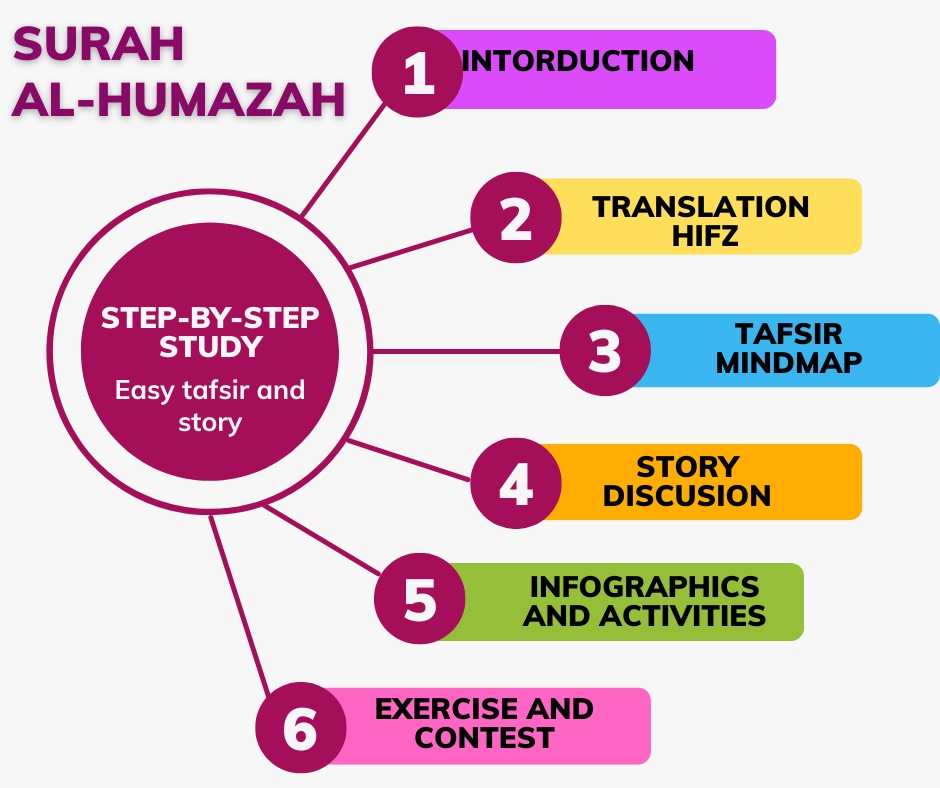
    Step-by-Step teaching method

    Teaching Surah Al-Humazah (Chapter 104) comprehensively can be done through a structured step-by-step approach that incorporates various methods to engage learners. Here’s a suggested plan:

    1. Introduction:

    • Begin by introducing the Surah’s name, Al-Humazah, and its significance.
    • Discuss the theme of the Surah, which focuses on the consequences of backbiting, slander, and arrogance.

    2. Word Meaning and Tafsir:

    • Break down each verse, explaining the meanings of keywords and phrases.
    • Use resources like Ibn Kathir’s Tafsir to provide deeper insights into the context and interpretation of the Surah.
    • Encourage students to ask questions and engage in discussions to enhance their understanding.

    3. Memorization:

    • Provide techniques for memorizing the Surah, such as repetition, visualization, and listening to recitations.
    • Break the Surah into smaller sections for easier memorization.
    • Encourage regular practice and revision to reinforce memorization.

    4. Infographics and Mindmaps:

    • Create visually appealing infographics that summarize the key themes and messages of each verse.
    • Use mind maps to organize the main ideas and connections within the Surah, aiding in comprehension and retention.

    5. Storytelling:

    • Narrate stories or anecdotes related to the theme of the Surah to make it more relatable and memorable.
    • Highlight examples from the life of Prophet Muhammad (peace be upon him) or other historical incidents that illustrate the consequences of backbiting and arrogance.

    6. Activities:

    • Role-playing: Divide students into groups and assign roles to act out scenarios involving backbiting and its consequences, followed by discussions on alternative positive behaviors.
    • Art/crafts projects: Have students create artwork or posters depicting the Surah’s message using symbols and imagery. Like making a heart with wounds and stitching it or bandaging it.
    • Writing exercises: Ask students to write reflections or journal entries on how they feel when they get bad remarks. make a list of the sentences or words, you never like to hear for you.

    7. Quiz and Exercises:

    • Create quizzes or worksheets to assess students’ understanding of the Surah’s content, including its meanings and lessons.
    • Incorporate interactive exercises such as fill-in-the-blank, matching, or true/false questions.
    • Provide feedback and review any areas where students may need clarification or additional support.

    By following this structured approach, learners can gain a comprehensive understanding of Surah Al-Humazah while also developing their memorization skills, critical thinking abilities, and moral awareness.

    Let’s start Surah Al-Humazah Step-by-step study

    1.Intorduction

    Surah Al-Humazah was revealed in Makkah during the early period of Prophet Muhammad’s mission. Its revelation came as a response to the widespread mockery, slander, and arrogance prevalent among the Quraysh, particularly towards the Prophet and his followers.

    According to Tafsir and Seerah books, some of the prominent figures in Makkah who were known for their mockery and slander against the Prophet and the early Muslims included:

    1. Abu Lahab: He was the uncle of Prophet Muhammad and one of his staunchest opponents. Abu Lahab and his wife Umm Jamil were notorious for their hostility towards Islam and their relentless persecution of the Prophet and his followers.
    2. Abu Jahl (Amr ibn Hisham): He was one of the leaders of the Quraysh and a fierce enemy of Islam. Abu Jahl was known for his arrogance, hostility, and relentless opposition to the Prophet and his message.
    3. Muhammad ibn Ishaaq said: We continue to hear that this surah was revealed about Umayyah ibn Khalaf: He was a wealthy and influential figure in Makkah who openly opposed Islam and mistreated the early Muslims. Umayyah was known for his cruelty and disdain towards the Prophet and his followers.
    4. ‘Ata and Al-Kalbi said: This surah was revealed about Al-Akhnas ibn Shariq, who used to criticize people and gossip about them, especially the Messenger of Allah.
    5. Muqatil said: This surah was revealed about Al-Walid ibn Al-Mughira, who used to gossip about the Messenger of Allah in his absence and mock him to his face.
    6. Ibn Ashour said: This surah encompasses all polytheists who engaged in this act, whether their names are known or not.”

    These individuals, along with others from the Quraysh tribe, actively engaged in mocking, ridiculing, and slandering the Prophet and his followers, seeking to discredit Islam and undermine its message. The Prophet Muhammad (peace be upon him) continued his mission undeterred, guided by the light of truth and compassion, while those who had opposed him were left to face the consequences of their deeds in the Hereafter Surah Al-Humazah was revealed to condemn their behavior and warn them of the consequences of their actions in the Hereafter.

    2. Word-by-Word meaning and translation

    بِسْمِ اللَّهِ الرَّحْمَٰنِ الرَّحِيمِ

    In the name of Allah, the Entirely Merciful, the Especially Merciful.

    Verse 1:

    Arabic: وَيْلٌ لِكُلِّ هُمَزَةٍ لُمَزَةٍ

    English: Woe to every scorner and mocker

    • يْلٌ (Woe)
    • لِكُلِّ (to every)
    • هُمَزَةٍ (scorner)
    • لُمَزَةٍ (mocker)

    Verse 2:

    Arabic: الَّذِي جَمَعَ مَالًا وَعَدَّدَهُ

    English: Who collects wealth and [continuously] counts it.

    • الَّذِي (Who)
    • جَمَعَ (collects)
    • مَالًا (wealth)
    • وَعَدَّدَهُ (and [continuously] counts it)

    Verse 3:

    Arabic: يَحْسَبُ أَنَّ مَالَهُ أَخْلَدَهُ

    English: He thinks that his wealth will make him immortal.

    • يَحْسَبُ (He thinks)
    • أَنَّ (that)
    • مَالَهُ (his wealth)
    • أَخْلَدَهُ (will make him immortal)

    Verse 4:

    Arabic: كَلَّا ۖ لَيُنبَذَنَّ فِي الْحُطَمَةِ

    English: No! He will surely be thrown into the Crusher.

    • كَلَّا (No!)
    • لَيُنبَذَنَّ (He will surely be thrown)
    • فِي (into)
    • الْحُطَمَةِ (the Crusher)

    Verse 5:

    Arabic: وَمَا أَدْرَاكَ مَا الْحُطَمَةُ

    English: And what can make you know what is the Crusher?

    • وَمَا (And what)
    • أَدْرَاكَ (can make you know)
    • مَا (what)
    • الْحُطَمَةُ (is the Crusher)

    Verse 6:

    Arabic: نَارُ اللَّهِ الْمُوقَدَةُ

    English: It is the fire of Allah, [eternally] fueled,

    • نَارُ (fire of)
    • اللَّهِ (Allah)
    • الْمُوقَدَةُ (eternally fueled)

    Verse 7:

    Arabic: الَّتِي تَطَّلِعُ عَلَى الْأَفْئِدَةِ

    English: Which mounts directed at the hearts.

    • الَّتِي (Which)
    • تَطَّلِعُ (mounts directed)
    • عَلَى (at)
    • الْأَفْئِدَةِ (the hearts)

    Verse 8:

    Arabic: إِنَّهَا عَلَيْهِم مُّؤْصَدَةٌ

    English: Indeed, it [i.e., Hellfire] will be closed down upon them

    • إِنَّهَا (Indeed, it)
    • عَلَيْهِم (upon them)
    • مُّؤْصَدَةٌ (will be closed down)

    Verse 9:

    Arabic: فِي عَمَدٍ مُّمَدَّدَةٍ

    English: In extended columns.

    • فِي (in)
    • عَمَدٍ (columns)
    • مُّمَدَّدَةٍ (extended)

    3. Easy Tafsir of surah humazah

    You’re correct, the Bismillah is not included in Surah Al-Humazah (Chapter 104) of the Quran. Here’s a detailed Tafsir of Surah Al-Humazah according to Ibn Kathir’s interpretation:

    Verse 1: The word “Woe” is a severe warning from Allah to those who habitually engage in backbiting and slander. They are constantly looking for faults in others to mock and ridicule them.

    “Woe” is a warning of punishment for those who habitually ridicule and mock others. This indicates that mocking and making fun of people is a serious offense in the sight of Allah. Imagine if you worked hard on a drawing and someone laughed at it. That’s not nice, right?

    Verse 2: Allah describes the habit of such people, who amass wealth through any means possible and constantly count and hoard it as if their entire existence revolves around their wealth.

    Verse 3: These individuals have the false belief that their wealth will grant them eternal life and happiness as if they will never face any consequences for their actions.

    This verse talks about people who love to collect money and keep counting it all the time, thinking it’s the most important thing. It’s like someone who collects a lot of toys but never shares them with their friends.

    Verse 4: Allah refutes this false belief with a resolute “No!” They will not live forever in luxury; rather, they will be cast into the Crusher, a place of severe punishment in the Hereafter.

    Such a person believes that their wealth will make them immortal, showing their arrogance and false sense of security in their riches. But that’s not true because life is about more than just money. Even if you have lots of toys, you still need friends to play with.

    Verse 5: The severity of this punishment is emphasized, prompting reflection on its terrifying nature.

    This false belief is shattered by the reality of death and the Hereafter. They will be thrown into a crushing punishment Keep in mind, punishment is not just because of a lot of money or more toys. But it’s because of your arrogant behavior and showing off and denying to share it with others. It’s like when you build a sandcastle at the beach and then a big wave comes and washes it away.

    Just suppose you have a variety of dishes to eat. And someone in your neighbor is very hungry. The aroma of food is spread. But instead of sharing food, you are being rude to him. How would you feel if it happened to you?

    Verse 6: The Crusher is described as a fire kindled by Allah Himself, symbolizing the intense and unrelenting nature of the punishment awaiting the wrongdoers.

    Verse 7: This fire will leap onto the hearts of the offenders, causing them unbearable agony and distress.

    This fire burns so hot that it reaches right into people’s hearts, causing them pain and sadness. As they cause pain and sadness in the worldly life.

    Verse 8: They will be trapped in this torment, unable to escape or find any relief from its heat and pain.

    Verse 9: They will be confined in long columns in Hell, indicating the severity and permanence of their punishment, with no hope of reprieve.

    Once they’re in this place, there’s no escaping it. It’s like being stuck in a room with no doors or windows. They will be stuck there in long lines, waiting and unable to leave. It’s like waiting in line for a ride at an amusement park, but this ride never ends, and it’s not fun at all.

    In summary, Surah Al-Humazah serves as a stern warning against the sins of backbiting, slander, and arrogance, highlighting the severe consequences they entail in the Hereafter. It reminds believers to be mindful of their words and actions and to avoid harming others with their tongues or through their pursuit of worldly wealth.

    4. Infographics/ Hifz(Memorization)

    After covering two or three verses. children would be asked to make infographics of the verses. My first Quran with pictures has good infographics. Children can copy them or add their creativity and explain the theme of the verse with the help of drawing objects. (Please visit gallary to see the pictures made by our students.) During this children will start to memorise the verses by heart. We have verse-by-verse tajweed recitation videos. Children will practice and memorize with the help of these videos. (visit the youtube playlist for Tajweed recitation videos)

    5. Mindmap

    Here is a mindmap of the Surah Humazah

    Surah Al-Humaza

    Meaning

    The mockers

    Mindmap

    KEY FACTS!!

    Surah Al-Humazah

    It is in juzz 30

    It has 9 verses. 

    It is Makki Surah.. 

    Three topics have been discussed in this Surah 

       Warning to mockers

       Vanity of wealth

       Punishments of Jahanam

    V. 1 warning to mockers.

    Woe to the one woe goal is to speak about other people.

    ONE OF THE ETTIQUETTES OF ISLAM IS TO MIND YOUR BUN BASINESS. QURAN CRITICISES THE ONE WHO IS ALWAYS GOSSIPING

    Verse 2-5 

    Vanity of wealth

    He, who counts his own money and he thinks that his money will cause him to live forever.

    THE PEOPLE WHO THINK LIFE IS PURELY TO A MALS HEALTH THEY DON’T THINK ABOUT DEATH

    Verse 4-9:

    Punishment of Jahanam.

    That person will be thrown into the crushing fire.

    Points to remember:. 

    Never look down on anyone..

    Mocking is not allowed by anyone. 

    Keep a balance between earning and spending money. 

    Do not count money with greed. 

    Remember it!!!

    If we will mock others and hurt others, hellfire will burn our hearts, as we were hurting others by mocking. 

    Let’s make an intention. 

    No Mocking

    No gossips 

    No greed for more

    We need to pray to seek the protection of Allah

    Let’s pray.

    Dua for evil and protection from shaitan

    أَعُوذُ بِكَلِمَاتِ اللهِ التَّامَّةِ مِنْ شَرِّ مَا خَلَقَ

    Transliteration
    The dua is transliterated as A’udhu bi kalimat-illah il-tammati min sharri ma khalaq.

    Meaning in English
    The meaning of the dua for protection from the evil eye is I seek refuge in the perfect words of Allah from the evil of that which He has created.

    6. Story of surah humazah:

    There are two stories to explain this surah. The first story is the revelation story of the surah. This story can help students, why this surah was revealed. And how mocking and slandering and greedy habits of disbelievers of the Makkah were answered.

    2nd story is crafted for children. The theme of the story is How mocking and greed of more can leave us alone. You can read this story at our site or watch the video of the story. The Link is down in resources.

    Exercise based on Surah Al-Humazah:

    Quiz:

    1. What is the theme of Surah Al-Humazah?
      a) Mercy and forgiveness
      b) Backbiting and slander
      c) Gratitude and generosity
    2. What does “Woe” in verse 2 signify?
      a) Happiness
      b) Warning
      c) Comfort
    3. In verse 3, what do people mentioned collect excessively?
      a) Toys
      b) Wealth
      c) Knowledge
    4. What false belief do the wrongdoers have in verse 4?
      a) Their wealth will make them immortal
      b) Their friends will protect them
      c) They will never face consequences
    5. What is the Crusher mentioned in verse 5?
      a) A tool for building
      b) A punishment in the Hereafter
      c) A type of food

    Exercise:

    1. Memorize the Arabic text of Surah Al-Humazah.
    2. Write a summary of the Surah’s message in your own words.
    3. Reflect on a time when you may have engaged in backbiting or gossip. Write about how you felt afterward and what you learned from the experience.
    4. Create an infographic or poster illustrating the consequences of backbiting and slander mentioned in the Surah.
    5. Role-play a scenario where someone is being mocked or ridiculed. Discuss alternative ways the situation could have been handled with kindness and respect.
    6. Write a short story or poem inspired by the theme of Surah Al-Humazah.
    7. Discuss with a friend or family member how you can apply the lessons from Surah Al-Humazah in your daily life to avoid backbiting and arrogance.

    (FAQs) about Surah Al-Humazah along with short answers:

    1. What is the main theme of Surah Al-Humazah?

    • The main theme is the consequences of backbiting, slander, and arrogance.

    2. What does “Woe” signify in verse 2?

    • “Woe” signifies a severe warning or impending punishment from Allah.

    3. What do people mentioned in verse 3 collect excessively?

    • They collect wealth excessively and count it repeatedly.

    4. What false belief do the wrongdoers have in verse 4?

    • They believe that their wealth will make them immortal and protect them from any harm.

    5. What is the “Crusher” mentioned in verse 5?

    • The Crusher refers to a severe punishment in the Hereafter for those who engage in wrongdoing.

    6. What is the punishment described in verse 7?

    • The punishment described is like a fire kindled by Allah Himself, symbolizing intense and relentless torment.

    7. How can we apply the lessons from Surah Al-Humazah in our daily lives?

    • We can avoid backbiting, slander, and arrogance, and instead strive to be kind, respectful, and considerate towards others.

    Story of Surah Humazah Video

    Gallery

    Video Playlist English

    Video Playlist Urdu

    Books (Shop)

    My First Quran Picture Book

    My First Quran Stories Book

    Islamic education By Molvi Abdula Aziz Grade7

    Free Books (pdf)

  • Online skilled, Muslim teacher for children and beginners

    Online skilled, Muslim teacher for children and beginners


    Adiba Anwar Online Teacher

    Education

    M.A Urdu
    B.Ed. , M.Ed.
    Diploma in IT
    Quran Translation
    Tafseer (Student)
    Children writer/Educationist

    Introduction

    This is Adiba Anwar. She is From Sialkot, Pakistan. She is living n Europe more then 15 years. She is the online teacher of Urdu and Islamic studies and Islamic courses , tafsir and founder of 121 Islam for kids.

    Skills

    She teaches tafseer of short surahs Amma juzz. If you want to see her work as online teacher of tafsir and teaching method then click this link.

    She had designed courses for kids like

    Hadith with stories,

    As an online teacher she had designed a course 30 short hadiths. This is a short course with 30 hadiths and stories designed by Adiba Anwar online teacher. If you want to see her Hadith course then click this link.

    Prayer for kids course.

    This is a course designed for kids age 8 to 14 years to teach online. In this course puberty, Taharat, wudu, Gusal, times and names of prayers, conditions of prayers and method of prayers has been added. Visit this link to see the method of teaching.

    Ramzan boost course

    This course is for The month of Ramzan you can see this course detail in link

    Faith boost IN December

    This is only 5 days short course for Muslim kids by online teacher Adiba Anwar.. This course will boost their faith and teach, them how to say no to Christmas. The story of Maryem A.S and Isa .A.S is also included in this course.

    Urdu language online teacher for kids.

    She is online Urdu language teacher as well. she can teach Alphabets, Urdu writting, speaking, and Urdu stories. As

    She is a well trained and master in teaching children under 8. Here teaching style is creative and activity base, She is teaching online from many years.

    As well she is the creator and founder of website and channels 121 Islam for kids. You can see her method of teach at her social media and website.

    She is a multilingual. So she can teach both in Urdu and English languages. She has group classes for children. Her students are from all over the world. If you want her to teach your children. Contact her at given Number.

    (Online teacher)ادیبہ انور

    ادیبہ انور شہر اقبال سیالکوٹ کی رہنے والی ہیں۔ اس وقت یونان میں رہائش پذیر ہیں ۔ مرے کالج سے اردو میں ماسٹرز کیا۔ اور پھر بی ایڈ، ایم ایڈ کر کے کچھ عرصہ ایک کالج میں پڑھایا ۔ بیرون ملک جانے کے بعد کافی عرصہ بچوں کی تربیت میں مشغول رہیں۔ ہوم سکولنگ بھی کی۔ اور ساتھ ساتھ خود بھی اپنی ماہرانہ صلاحیتوں کو نکھارتی رہیں۔
    مصروفیات کی بنا پر بہت کم لکھتی ہیں۔ چند انعامی مقابلوں میں حصہ لے کر انعامات حاصل کر چکی ہیں۔ ان کی کہانیاں ملک کے نامور رسالوں میں چھپ چکی ہیں۔ بچوں کی تربیت اور تعلیم میں دلچسبی رکھنے کی بناء پراب پھر سے آن لائن پڑھانے کے ساتھ ساتھ بچوں کے لئے کہانیاں اور چند کالم لکھ رہی ہیں۔

    چونکہ درس و تدریس سے تعلق ہے تو تمام تعلیمی سرگرمیاں اور کورسس خود ترتیب دیتی ہیں۔ بچوں کے لئے اب تک حدیث کہانیوں کے ساتھ ‘ رمضان کورس’ نماز کورس، اور تفسیر کی سرگرمیاں ترتیب دے چکی ہیں۔ اس سلسلہ میں تمام مواد اور کورسس ان کی ویب سائٹ
     پر موجود ہے۔
    اس کے ساتھ ساتھ بچوں کی ابتدائی تعلئم، حروف،رنگوں ، نمبر اور تواسمبلی پہچان کروانے کے لئے کئی سرگرمیاں بنا چکی ہیں۔ ان کی کہانیوں اور تعلیمی مواد کی وڈیوز ان کے انگلش چینل یو ٹیوب چینل پر موجود ہے۔ 
    اور اردو بچوں کے لئے ان کا تمام کام اور کورسس کی وڈیوز ان کے اردو چینل پر موجود ہے۔

    آن لائن پرھانے کے خواہش مند استاتذہ کی تربیت بھی کر رہی ہیں۔ جس میں جدید طریقہ تعلیم سکھانے کے ساتھ ساتھ ٹیکنالوجی کا بہتر استعمال کر کے بچوں کو

    آن لائن کلاسس میں بہترین تعلیم دینے کے کئی ذرائع کا استعمال دکھاتی ہیں۔تمام کام سرگرمیوں اور کہانیوں کے ذریعے کرنے پر یقین رکھتی ہیں۔

    Follow Online teacher Adiba Anwar

    Face Book

    Twitter

    Youtube

  • “How To Explain Surah Al-Fatiha(10)?A Great Method Of Teaching.

    “How To Explain Surah Al-Fatiha(10)?A Great Method Of Teaching.

    Adiba Anwar Quran tutors online are here

    Outline of a full lesson on Surah Al-Fatiha

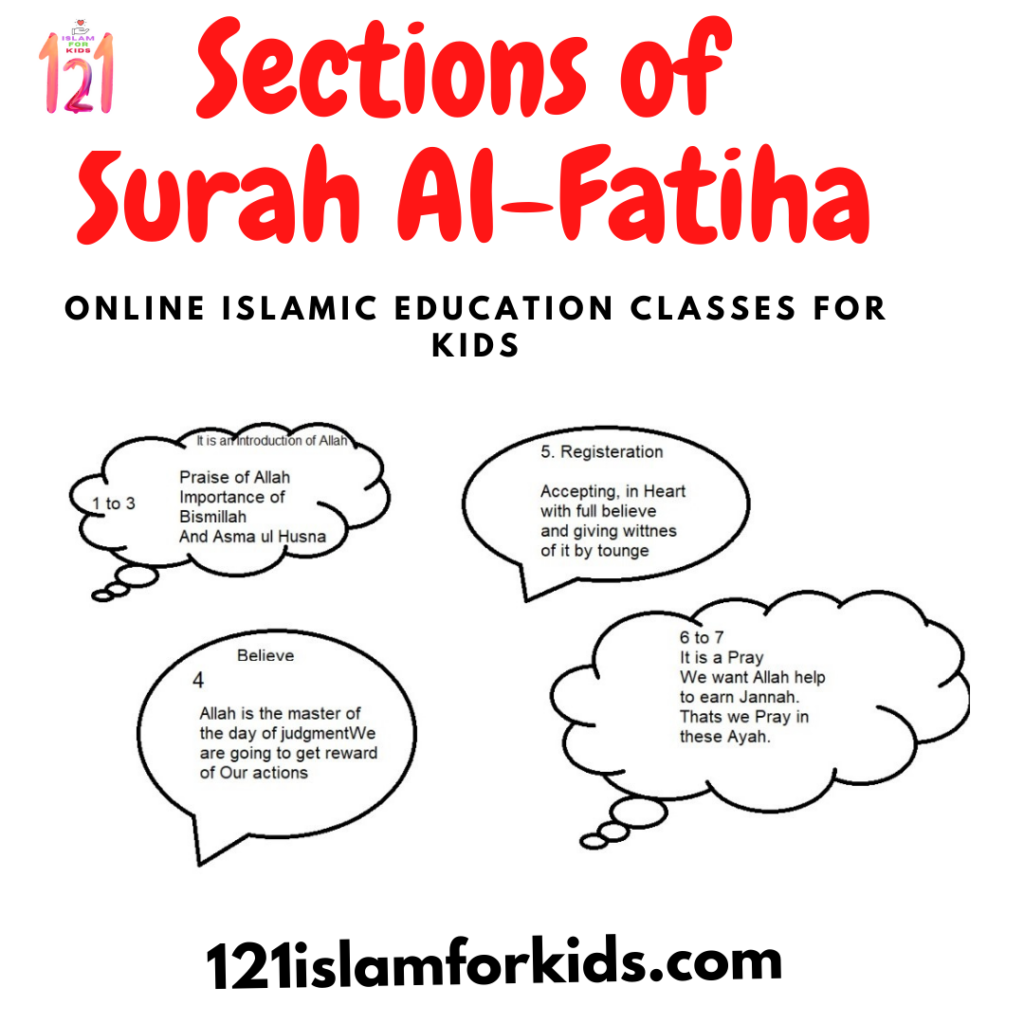
    Surah Al Fatiha. This is how I will divide this surah into 4 sections and explain it to my students.

    The first part verse no 1 to 3 is full of praise of Allah. So We will explain the meaning of Asma-ul-Hhasna mentioned in this part. A total of 5 Asma_ul_husa are described in this surah including the real name *Allah*.

    So after Hamad-o-Sana, of the lord, the next section, Verse no 4 Is about belief in getting a reward for every action. It’s one of the pillars of the Muslim faith, faith on the day of judgment. It urges believers to obey their lord.

    Verse 5 Is registration of accepting Islam With heart contentment. We are born Muslims. In spite of this, we don’t know much about our lord, the creator. But after knowing our lord very well we accepted His teachings and gave witnessing that will obey Allah.

    Verses 6 and 7 are Prayers. To be a good Muslim, to earn Jannat, and to walk on a straight path we need Allah’s help. Because shytan is here to mislead us. So we learn to pray.

    Surah Al-Fatiha Verse 1

    First lesson About Tasmia.

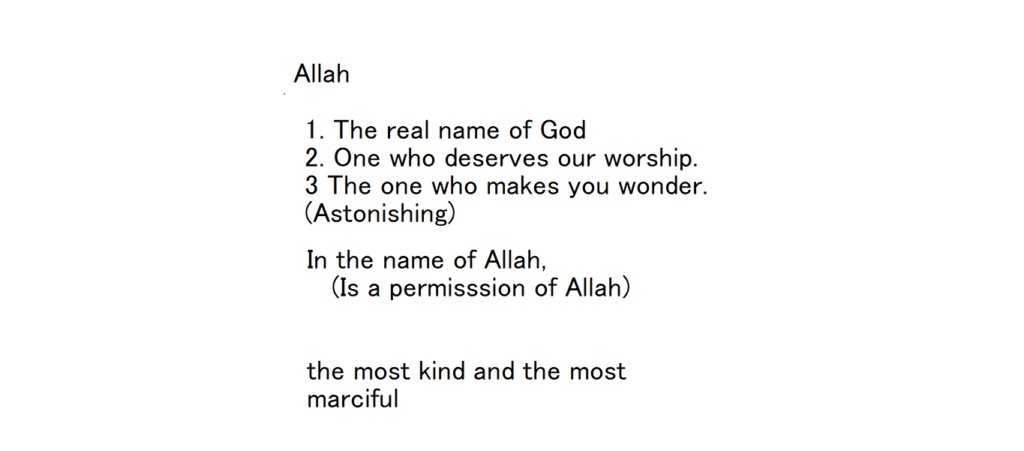
    Bismillah Means,

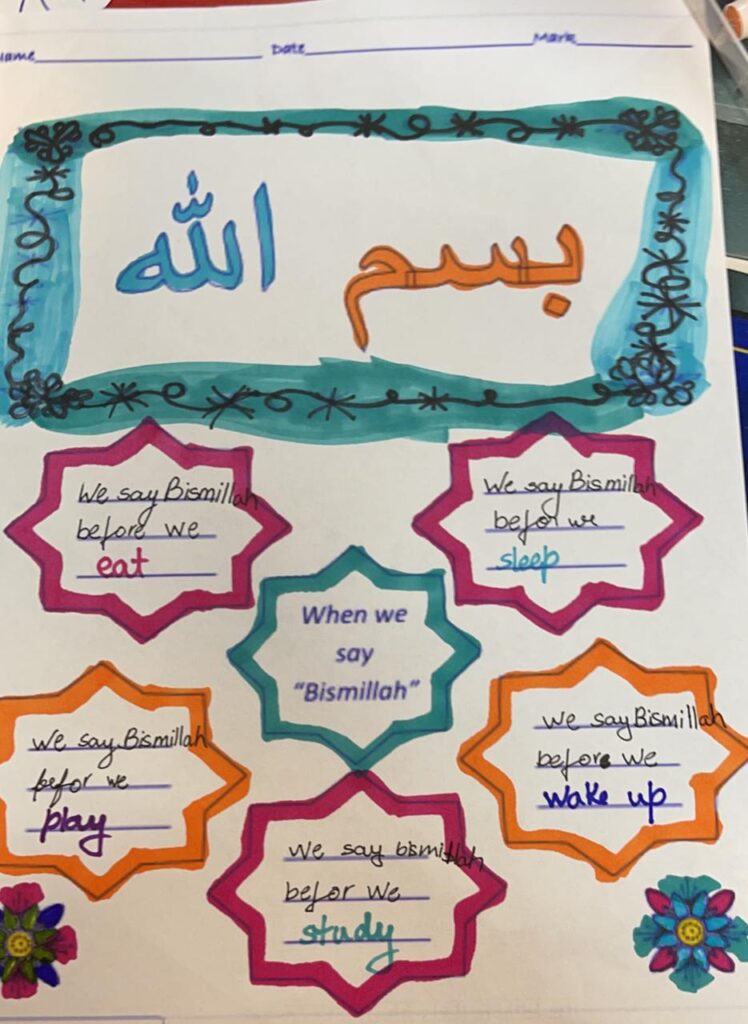
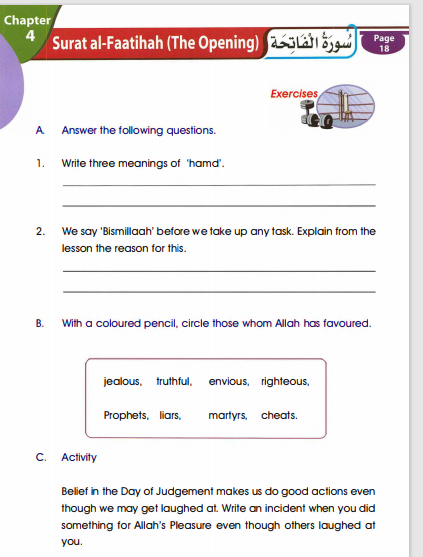
    In the name of Allah Most kind and merciful.. Starting Quran with Bismillah is also recommended and it is also Brakah It is also a Prayer, We should start every good deed with Bismillah. Why?

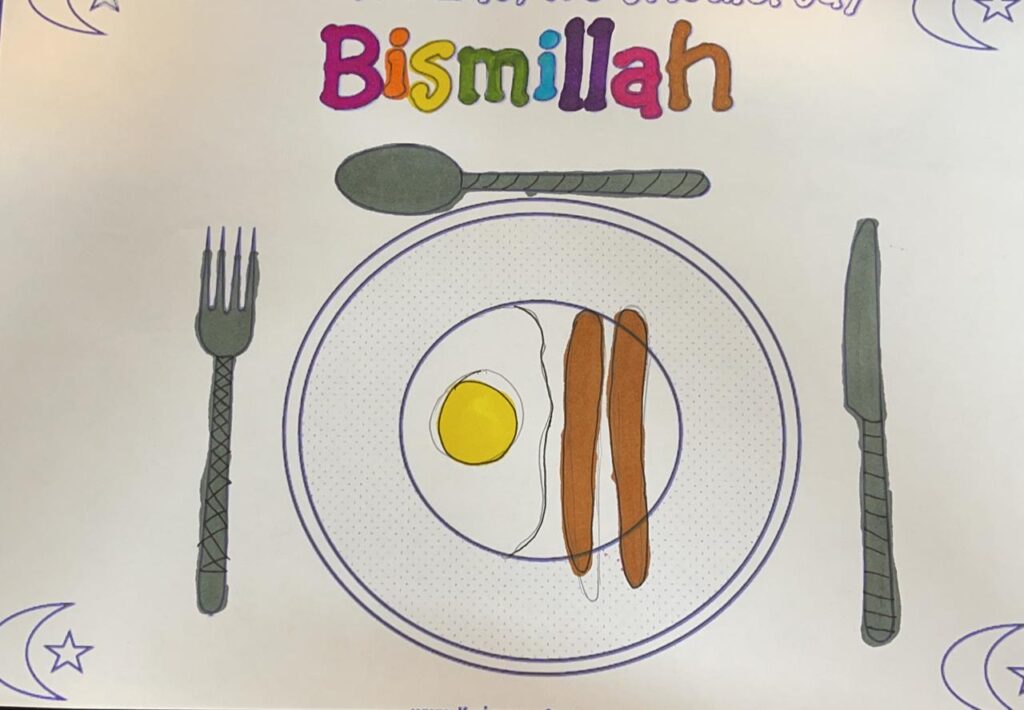
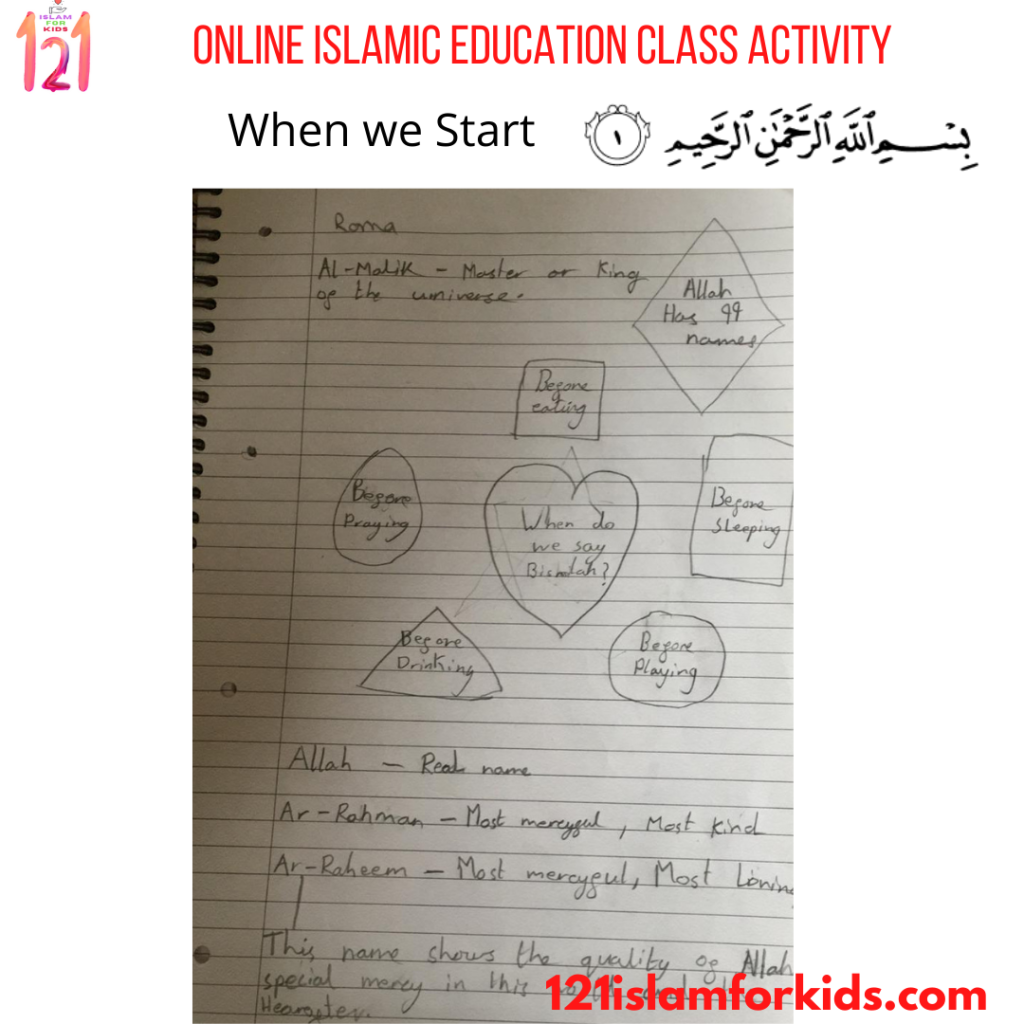
    To make it easy for kids to understand, I tell them, Bismillah is permission of Allah for using blessings and creations of Allah. We should say Bismillah who granted us food, as he is Rehman and Raheem. (It’s my personal thought)

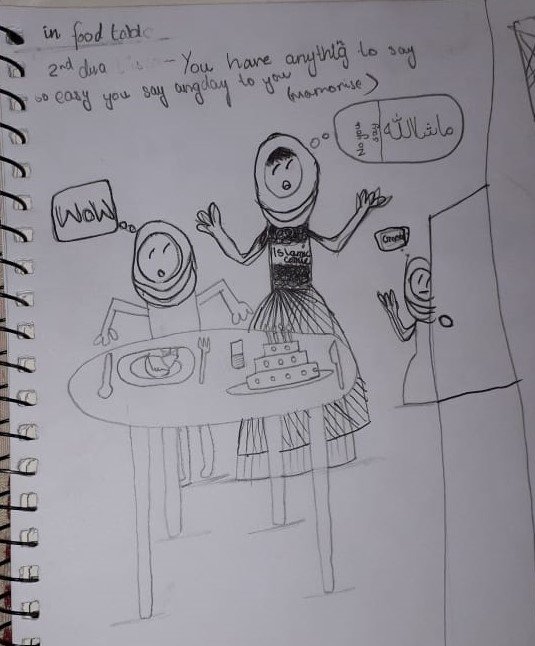
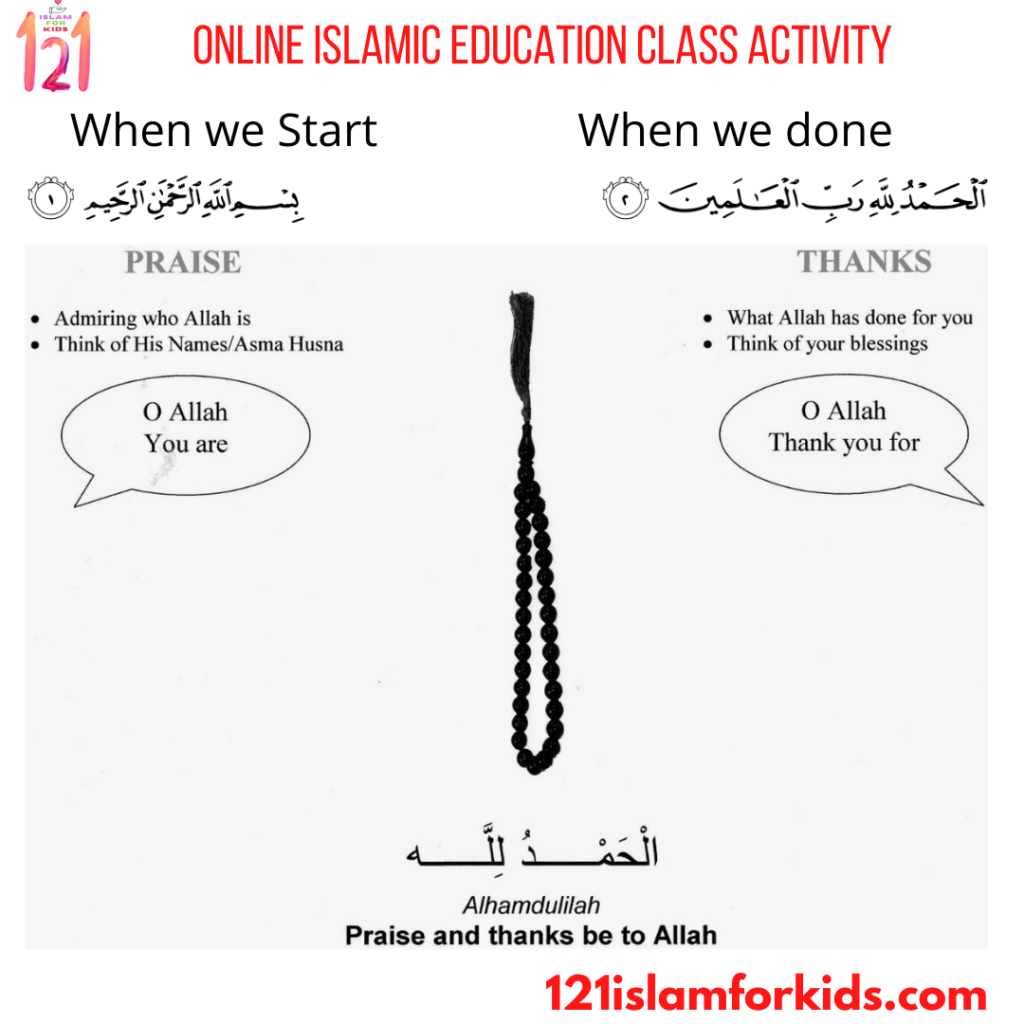
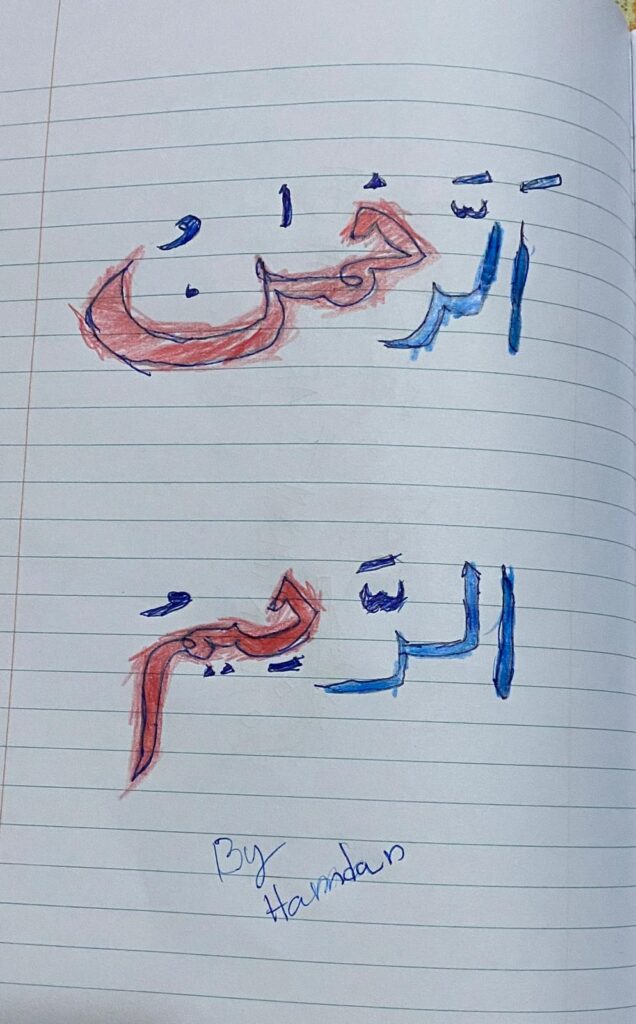
    Bismillah before sleeping, as He provided us night and peace to sleep in the night on so comfortable beds. Same as before reading, playing, going outside, and doing every good deed we should say Bismillah. So here are some worksheets I got from the internet. We are also doing Calligraphy of Bismillah.

    An explanation of Ar-Rahmaan and AR-Raheem is in the next Verse. So with the explanation of Bismillah, we read a Story of the Building of Kabah. When both prophets prayed while building.

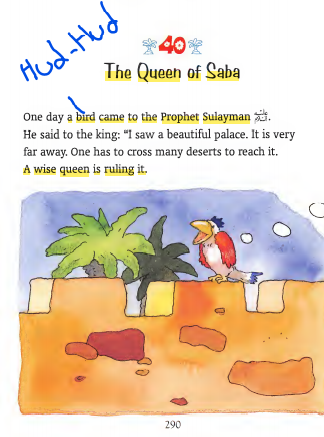
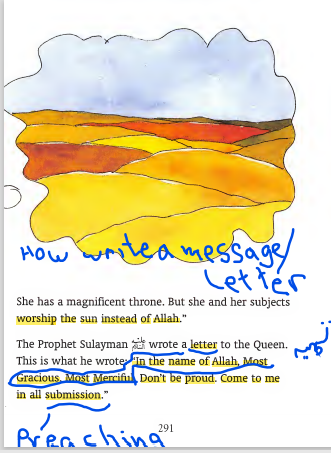
    Their prayer was fulfilled and Allah granted them all the Barakah and blessings. We should also start our all good works with the name of Allah and with prayers. so that May Allah accepts our good deeds and increases Barakah. See the story of Queen Saba in the pictures.

    بسم اللہ اصل میں اللہ کی چیزوں کے استعمال سے پہلے مالک حقیقی کی اجازت اور اللہ کی مدد طلب کرنا ہے۔ عملی کام۔۔۔۔۔۔ بسم اللہ کیلی گرافی، جن کاموں سے پہلے بسم اللہ پڑھیں ہے اس کی ایکٹیوٹیز وغیرہ۔

    Surah Al-Fatiha Verse no 2

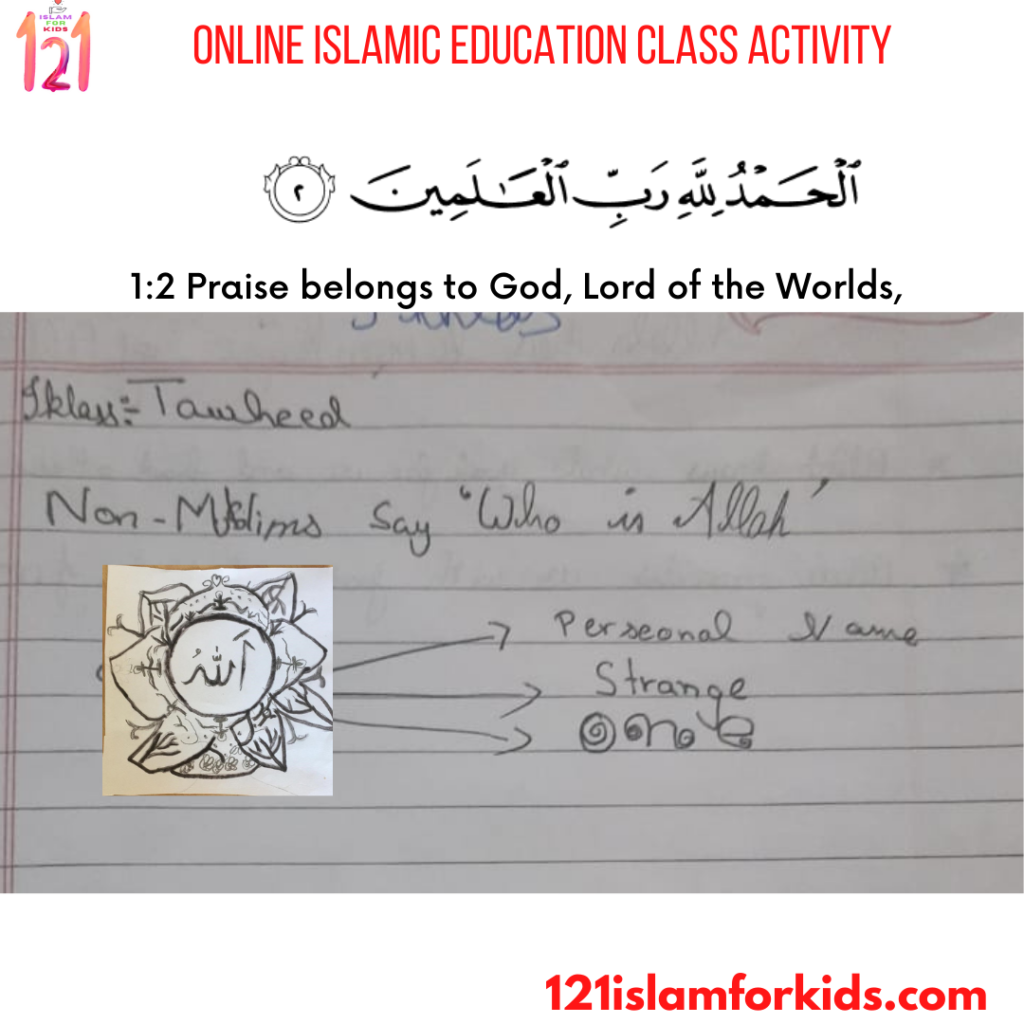
    Praise belongs to Allah, The lord of the worlds.

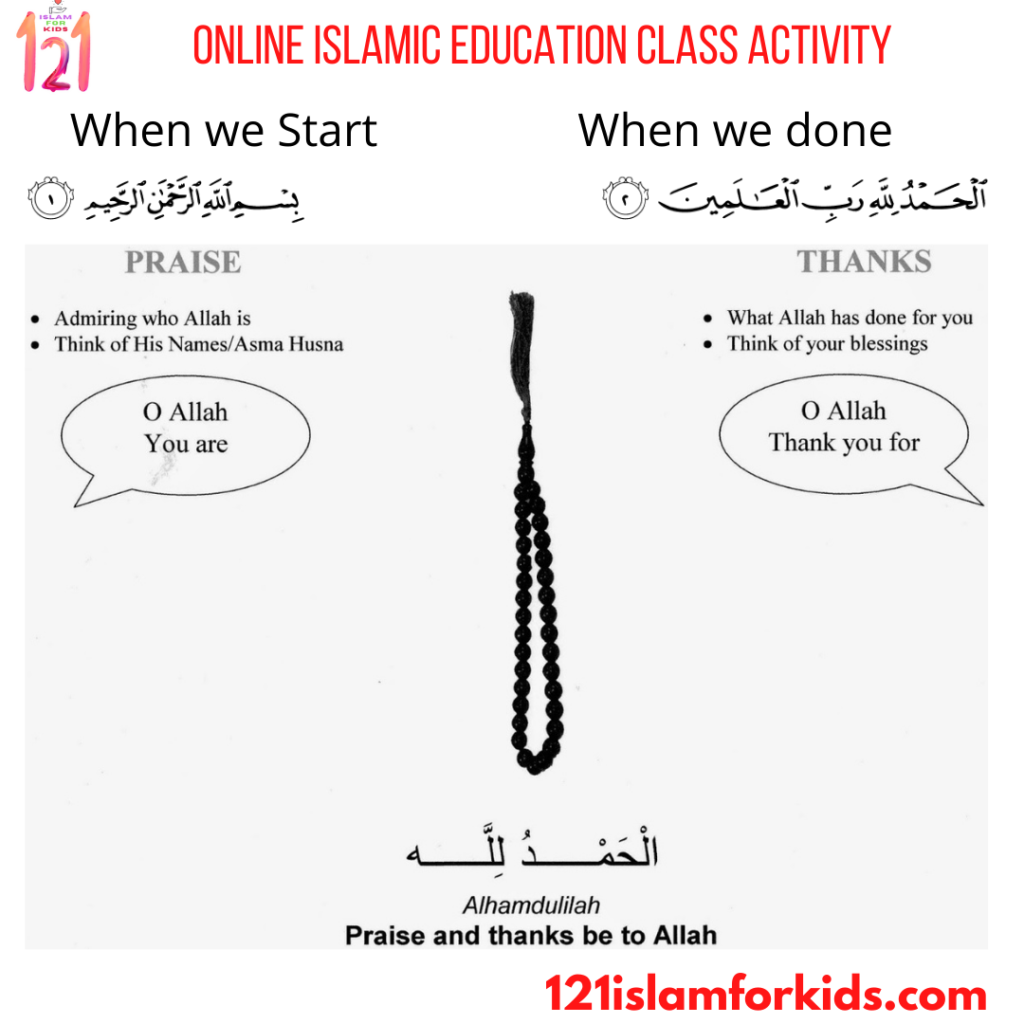
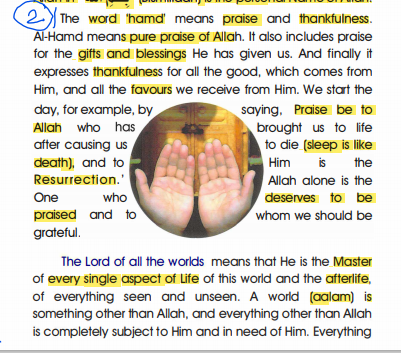
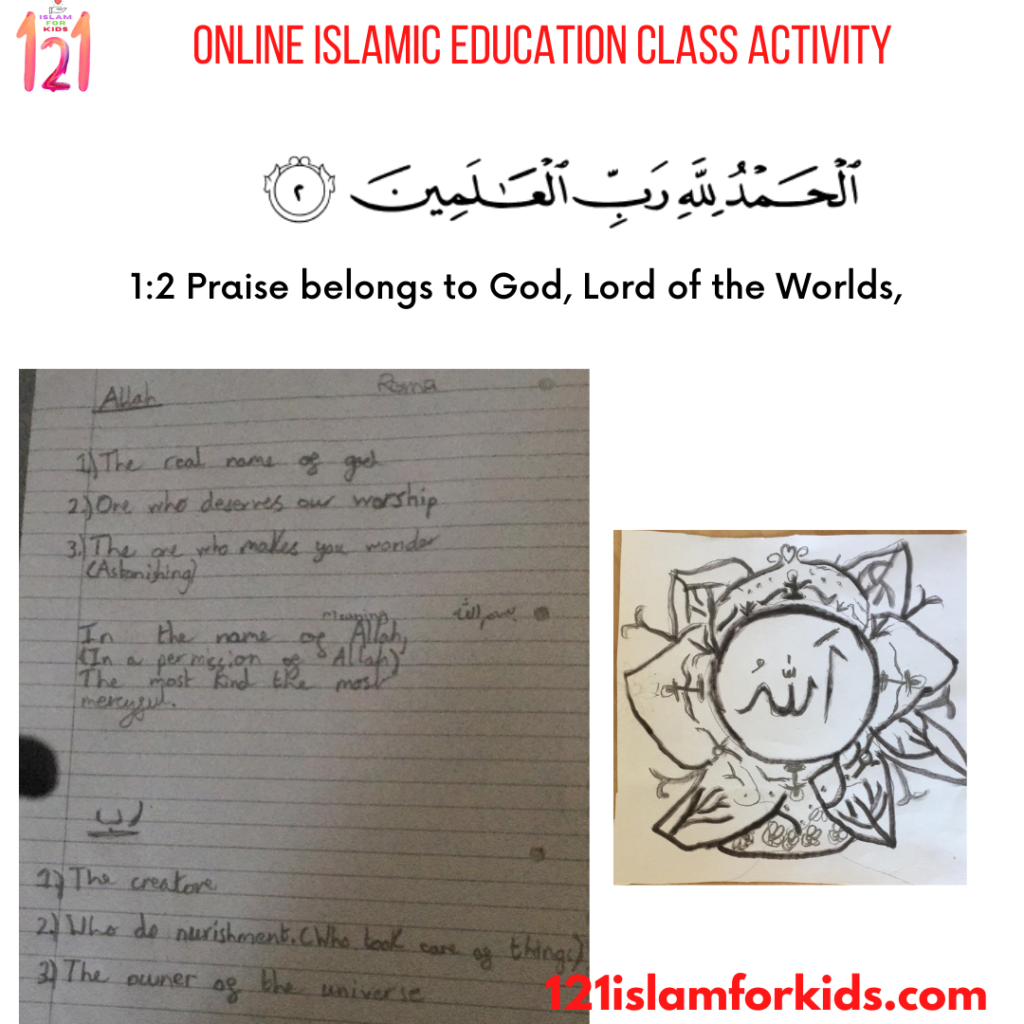
    Alhamdulillah is a very important Kalima for Muslims. . Alhamdolilah means Praise of Allah, and being grateful To Rub. In this Part, There is the real name of Allah SWT. So we work on it. See the Asma-ul-husna section.

    And to be Grateful to Allah and Love our Lord we need to know who is lord. And what is the power of our Lord? So we worked on Allah’s attribution ‘RUB.’ See the detail In Asma-ul-husna Section. So what is Hamad and how/when to do Praise of Allah? So making it easy for the children I told them,

    Bismillah is asking for permission from Allah and Allah’s Help. We should be grateful and thankful to Allah as we do say Thank you to others. see detail in the worksheet, So an activity on when we will say Alhamdolilah was done. as Hamad is also a praise so, when we do Pray to Allah we praise him to admit his power.

    So Story of Firwoon was done for kids. See the lesson of that story in The picture.

    1۔ الحمد سے کیا مراد ہے ۔ کب اور کیوں الحمدوللہ کہنا ضروری ہے۔

    Surah Al-Fatiha Verse no 3

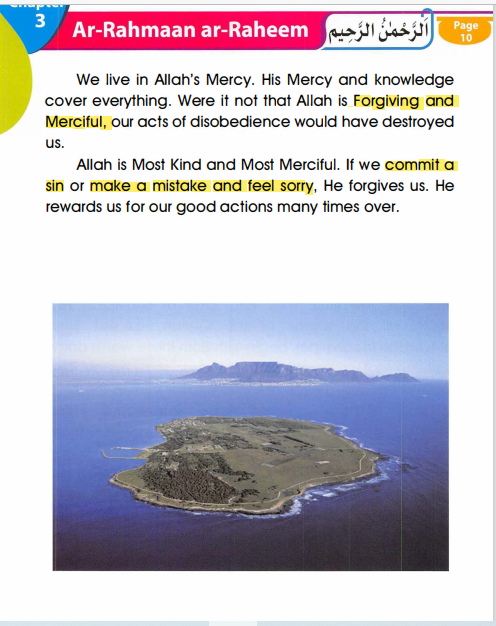
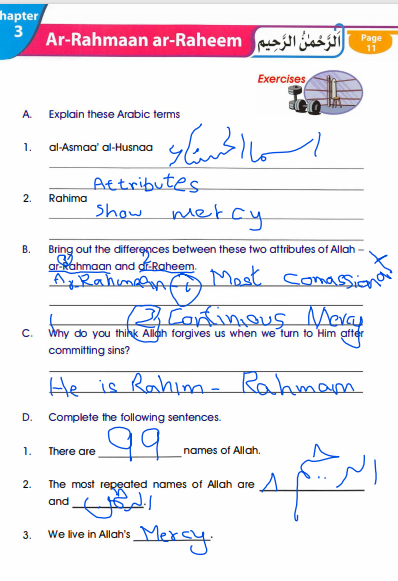
    Asma-ul-Husna Ar-Rahamaan and Ar-Rahim. These are very Important Attributions of Allah. So we did a chapter about these names.. Allah’s blessings are permanent and some are overflowing. But if we would be ungrateful to Allah, He may turn our blessing into a punishment. Detail Of these names would we in Asma-ul-Husan section.

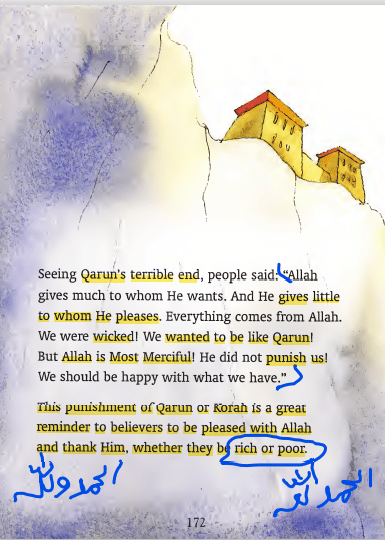
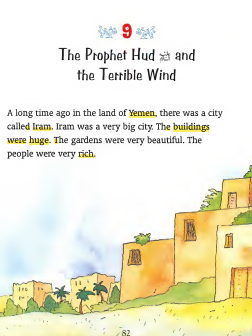
    We had a story of Qaroon (The treasure house)This story reveals that Allah is not cruel He is kind and Merciful But he does not like disobedient and cruel people. Activates for These 1. chapter 2.Exercise 3. Calligraphy of Asma-ul-Husna

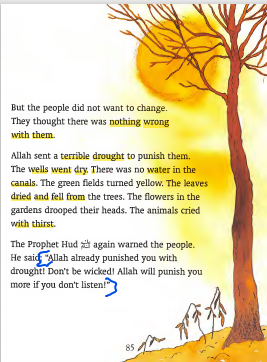
    The story of Prophethood A.S AND TERRIBLE WIND was also told. Let’s see the calligraphic work and stories we did for these names.

    Surah Al-Fatiha verse 4

    مَالِكِ يَوْمِ الدِّينِ Maliki Yawmi-Deen Ayah 4. Master of the Day of Judgment


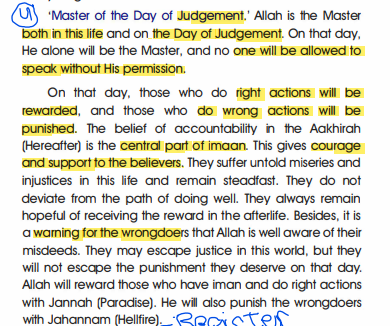
    This verse Is about Muslim faith, Faith on the Day of judgment. It believes in getting a reward for every action. It urges believers to obey their lord.

    Allah is the Master of the day of judgment. He will see our deeds on the day of judgment. We will get back whatever good or bad we did in this life.

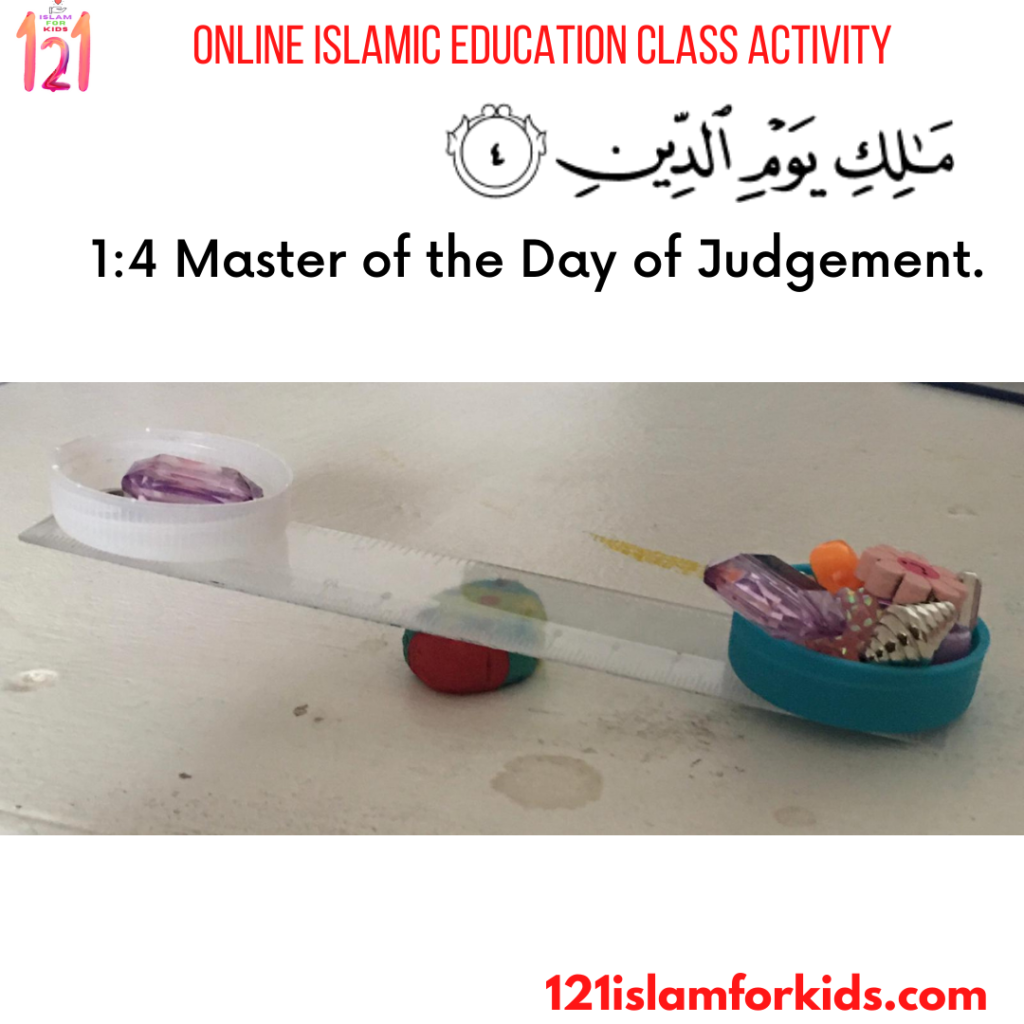
    As a practical work, Children were supposed to make a scale of their good and bad deeds. It was 2 weeks or 1-month activity. They added pebbles or beans to collect More and more good deeds and try to avoid bad deeds. This is a practice for kids. So that they would realize, one day our good/bad deeds will bring to us and we will see what we had earned. and they will get a reward for it.

    And at the end of the activity, a reward should be given to kids for collecting good and avoiding bad deeds. 🌸🌸So the story of two Gardens is the best story for kids. In this story, it is stated that what we get is from Allah. he is the owner. He gives rewards for our deeds and intentions.

    We should say Ma Sha Allah for having blessings. Like that garden one day, everything in this world will be destroyed and then people will regret it.

    ‘There is a day our all deeds will be put into a scale. This life is like an examination hall and the Day of judgment is the result day. Our book of actions will be open that day like our examination paper, And we will see what we are writing in that book. Then what will be our feeling? will we feel Happy? or sad?

    ‘To see this feeling, we made this Scale. for one week every child is putting some stones, pearls, or anything into it. One cup is for good deeds, second is for bad deeds. Every child is eager to increase good deeds. I hope this will help them to stop doing bad things, they would try to avoid making mistakes.

    We read story of Hazrat Uzayr A.S to understand life after death.

    .مالک یوم الدین سے عقیدہ آخرت سمجھانا۔ اعمال کا بدلے کا دن۔ اچھے برے اعمال کا بدلہ کیسے ملے گا۔ عملی کام۔۔۔۔۔۔۔۔۔ بچوں سے ایک ترازو بنوایا جائے گا جس میں وہ ایک مہینہ یہ ایکٹیویٹی کریں گے کہ دن میں ہر اچھے کام کا ایک موٹی اور ہر خراب کام کا ایک موٹی ڈالیں گے۔ مہینے کھ آخر میں اعمال کے مطابق بدلک ملے گا۔

    If you are interested to know what was the result and reaction of my students after doing this activity read this paragraph.

    So Final of Our Action scale. Child #1Mam I have 12 good Deads and 10 Bad dead’s. Why Hamdan? In a week you earned only 12 good deeds? His mother’s voice from the backside ”’ Mam actually he did many bad deeds, but he didn’t let us count his all bad deeds. ”” Ha ha ha😘

    child 2I have 3 good deeds and 3 bad deeds. Why Ariz? You had many days, And you prayed 5 times, you do Recitation, and also many other things. He: Mam My younger sister was not letting me include more good deeds, Actually, she started to cry when I do add any good deeds and finally she took out my 3 good deeds. (she is in the same class and had a competition with him) 😍

    Child 3The youngest student. The sister of student no 2Mam I have 3 good deeds and 2 bad deeds. Afra why? where are your good deeds of reciting supplications and helping mom and other things?

    Mam my mother said to me that I will put it. But she forgot. that’s why I have fewer deeds☹️. 😍(His brother from the other device)Mam whenever my mom tried to put her bad deed she started to cry.

    So interesting. I was enjoying it. Then I told them that, it is human nature that they don’t want to count their bad deeds. So you were feeling guilty after a very bad deed. But this was just a trail. Don’t worry. Here are tips. So to do more good deeds and decrease your bad deeds,

    1. Whenever you intend to do a good deed, your virtue would be counted so you can fill the good deeds cup with making many good intentions and also doing small virtues.

    2. If you do make any mistake you can say sorry to the person who was affected and then recite Astagfirullah (youngest, mam what should I do if I forget Astagfirullah?)(Another student, Mam if I forget to recite Astagfirlullah, May I say again Astagfirullah for Forgetting Astagfirullah ?😌)

    3. If you forget to perform any fardh, Offering Prayer, You have to Say sorry to Allah. And to say sorry to Allah you have to recite Astagfirullah many times and also you should make a promise in your heart that you will not do it again.

    4. When you would say sorry and stop doing mistakes, your bad deeds would turn into good deeds. So you can pick a bad deed from the cup and put it into the good deeds cup. ( Boy: Mam our good deed also could go into bad deeds cup ever?) Subhan Allah. No never. Our good deeds would never be wasted.

    Then there was another thing. For young children, angels do write their mistakes with an led pencil. and angles erase their bad deeds when they feel sorry.

    But after turning 11 yrs, Mistakes would be written with an ink pen. It could not be erased. But stop. We have another option. We can use a whitener. And that whitener would have a spot that would remind us of our promise of not doing it again. And if We would commit that mistake again, Whitener would be scratched and that spot would look dirtier. Allah O Akber.

    Surah Al-Fatiha Verse 5

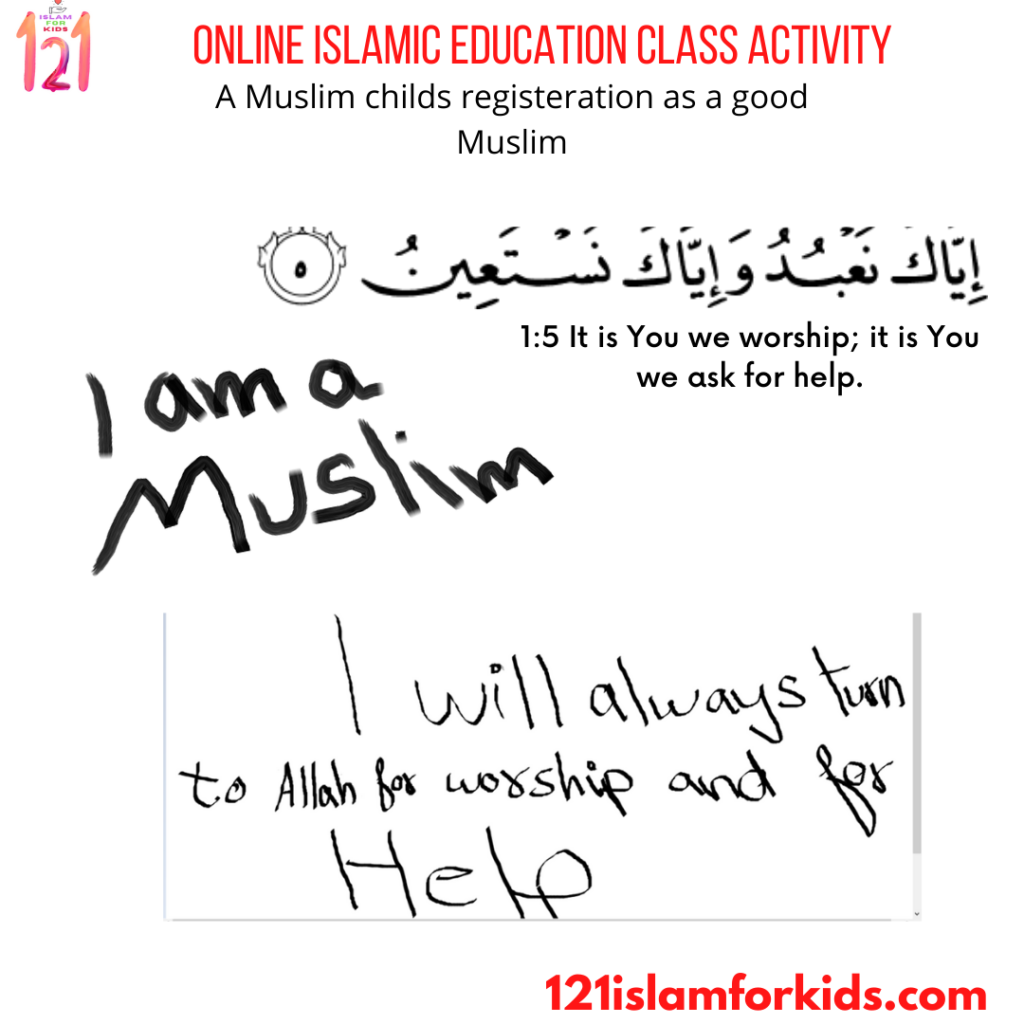
    Our registration !!! Iyaka Na’abodo, Wa iyaka Nasta’aeen.

    So we Named This verse as A registration of a good Muslim.

    Is registration of accepting Islam, With heart contentment. We were born Muslims. But after knowing our lord we accepted His teachings and gave witnessing that will obey Allah. So a Question was asked by all students.

    Why are Muslim? Some said it was because we were born Muslim, and some said it, Because Allah made us Muslim. Some said it because we offer prayers, and some said our Parents told us.

    So we discussed it after knowing Allah. According to our previous lesson on Surah AL-Fatiha, know you are able to decide. Do you think being a Muslim is an honor? And Allah is our Lord? Do you want to be Muslim? They said. So i said them to bear witness with full believe that, we are Muslim, We are Muslim see pictures

    مالک حقیقی سے تعلق قائم کرنے کے لئے با شعور مسلمان کی طرح اپنی رجسٹری کروائی جائے۔ جس میں ہم اردو کریں گے کہ ہم اللی کا کہنا مانیں گے۔ عملی کام۔۔۔۔۔۔۔۔ ڈرائنگ یا لکھ کر کہا جائے گا کہ۔ I’m Muslim. I’m Musljm.

    Surah Al-Fatiha Verse 6

    اهْدِنَا الصِّرَاطَ الْمُسْتَقِيمَ Ihdinas Siraatal MustaqeemAyah 6

    . In these verses we do Prayers. To be a good Muslim, to earn Jannat, and to walk on a straight path we need Allah’s help. Because shytan is here to mislead us. Do pray more and more. Guide us to the straight path –We Pray to Allah to help us in understanding and follow a straight path.

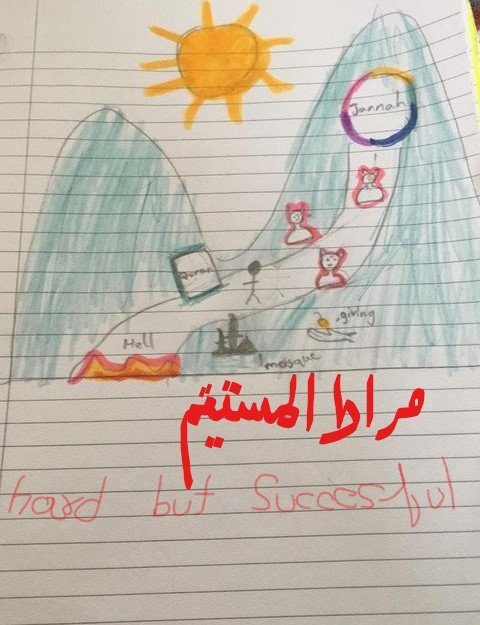
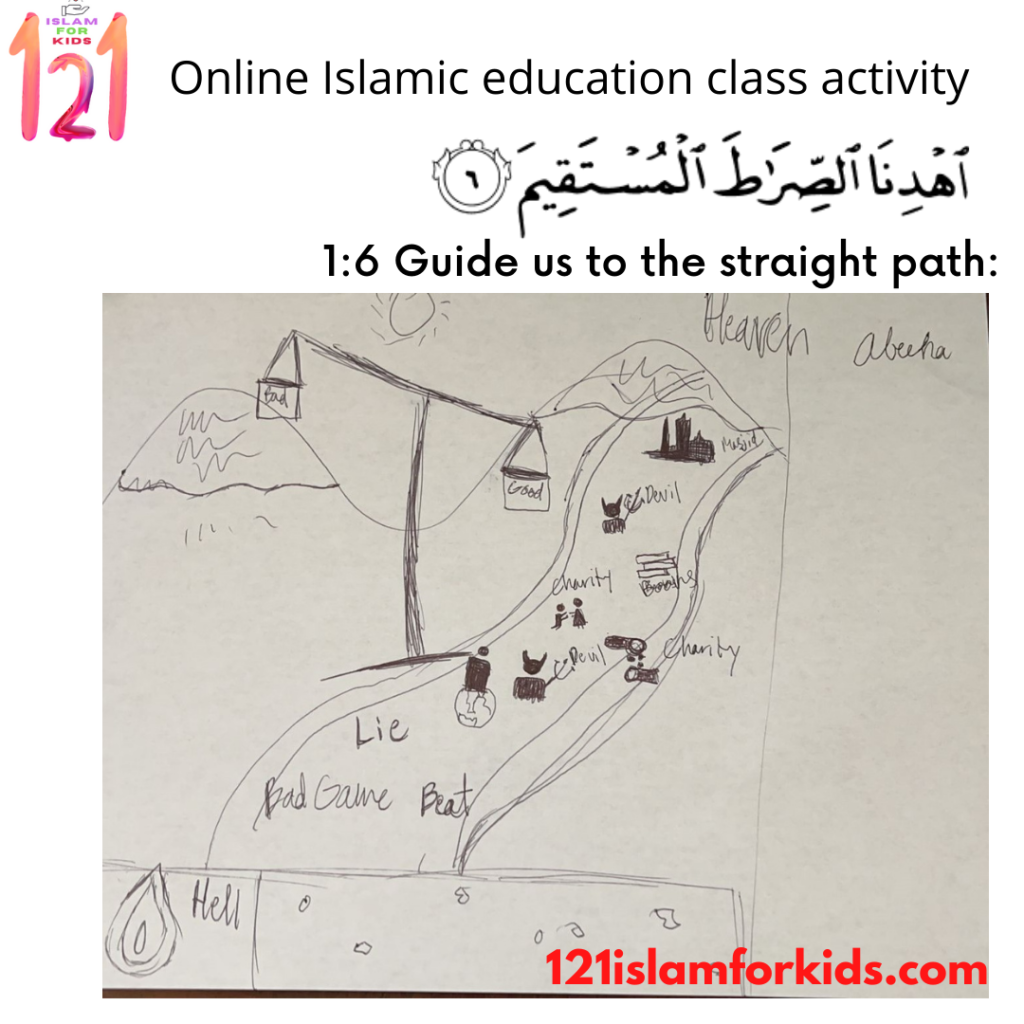
    The right path, there are many hurdles to the right path. There are many shyateen on the right path. They mislead us. They make hurdles in our right path. So we ask Allah. We need Allah. O, Allah! Make it easy for us. See the pictures How I explained the Straight path and wrong Path?

    The straight path is doing good. And devils are sitting in our way of good deeds. They invite us to change our path. They give us trouble to go upward like a way off the hill. But if we will be steadfast.

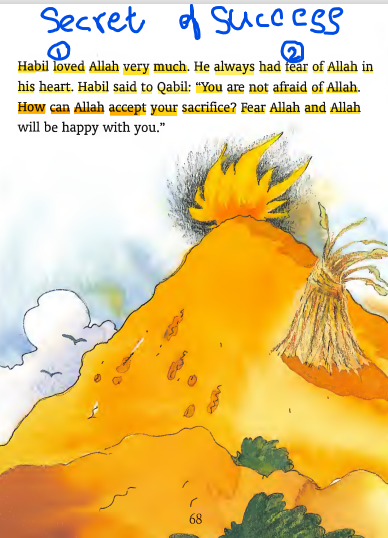
    We will get high status and get Jannah as a reward. A bad path is easy to walk. devils are making it beautiful and easy. But it will lead one to hellfire. We have to escape from this. The story of Habeel and Qabeel is best for this. See picture.

    ۔ اللہ کا کہنا کیسے مانیں گے؟اللہ ہم سے کیا چاہتا ہے۔ دعا کے زریعے اللہ سے مدد مانگی جائے گی کہ اللہ ہمیں سیدھا راستہ دکھا۔ انعام یافتہ لوگ کون ہیں ؟ اللہ کے نبی، صحابہ، اور تمام نیک لوگ

    Surah Al-Fatiha Verse no 7

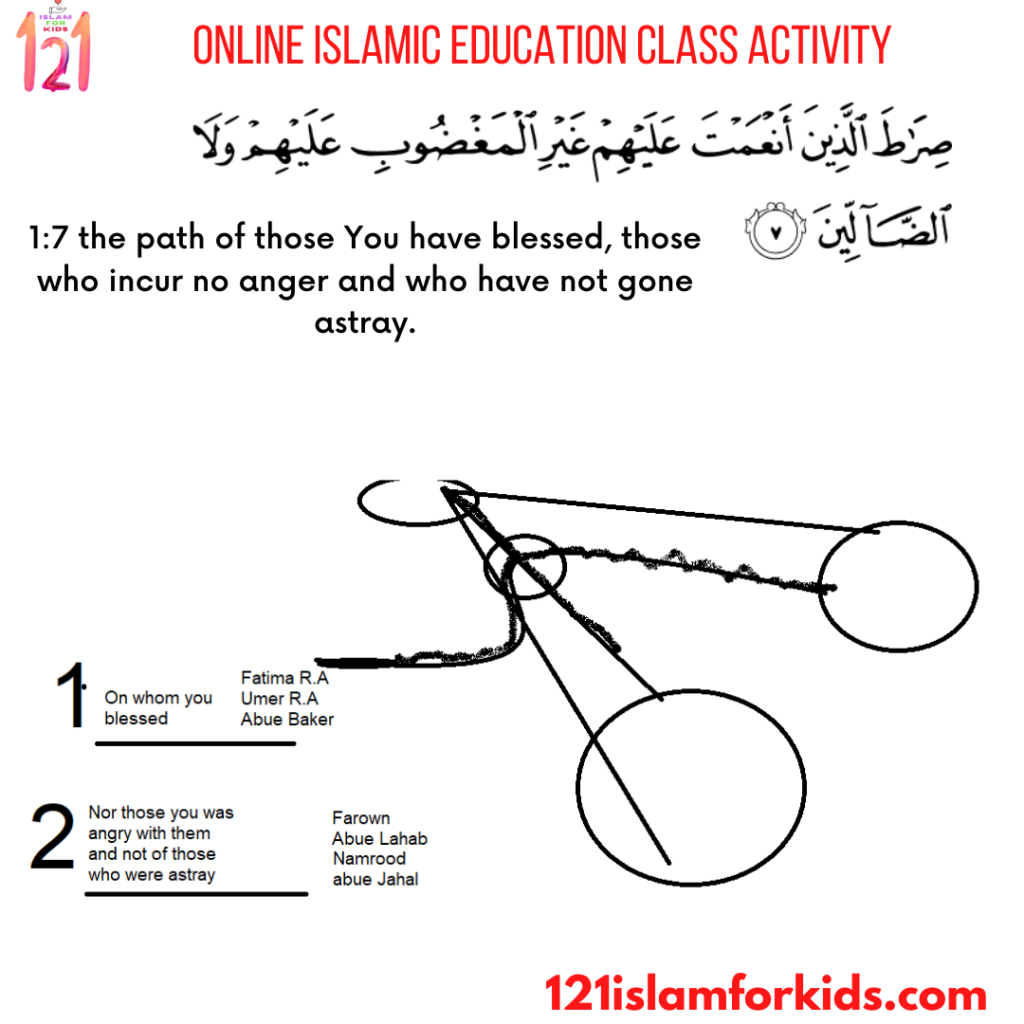
    صراط الذین انعمت علیھم۔ غیر المغضوب علیھم والضالین

    The people that are in blessings of Allah all Prophets, companions, and true believers and cursed people who got Allah’s anger Firaoon, Namrood, and all disbelievers. Alhamdulillah. Explained with the help of a drawing. see the picture down.

    Story Of Ibraheem we told. He was the most blessed Prophet. So enjoy the story of Ibraheel A.S.

    ۔انعام یافتہ لوگ کون ہیں ؟ اللہ کے نبی، صحابہ، اور تمام نیک لوگ ۔ عذاب یافتہ لوگوں کے خلاف اللہ کی مدد مانگنا۔ یہ کون ہیں ؟ جن سے اللہ ناراض ہوا۔ مثلا ابو جہل، ابو لہب وغیرہ۔ عملی کام ۔۔۔۔۔۔۔ دو راستے بنا کر نشاندہی کی جائے گی صحیح راستہ کون سا ہے؟ اور غلط کو ن سا۔؟ اور شیطان کس راستے پر بیٹھتا ہے؟

    Names of Surah

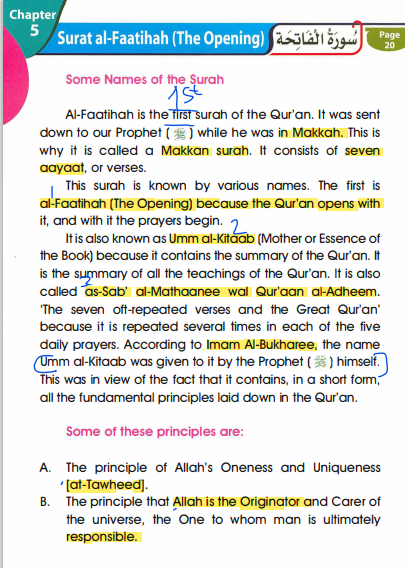
    Why Surat Fatiha is Um-ul-Kitab?The principles of this Surah Are narrated below. These principles show us that the Quran is all about these principles. So this is so easy to explain to kids with the help of this book Alhamdolilah.

    online quran tutors

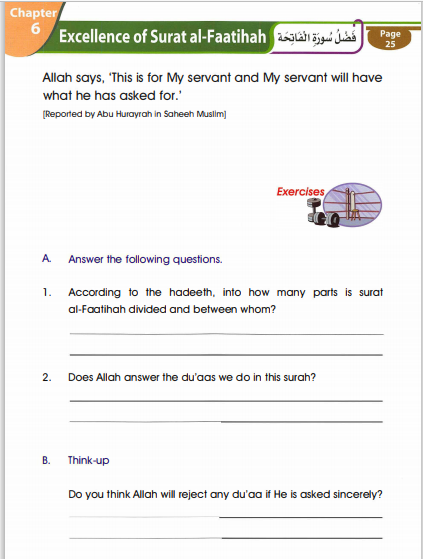
    Conversation with Allah(excellence of this Surah)

    This part of Surat Al-Fatiha is the most beautiful Part. This looks like a talk with Allah. Best way to teach children, How to talk with Allah and how to Pray? The youngest girl was interested to choose the story of the day. So She choose this one” The Kind Queen ”So There was a very beautiful Pray of Mother of Musa A.S

    Details in Surah Fatiha Chapter 3

    Exercises and Homework of Students

    Mind Maps.

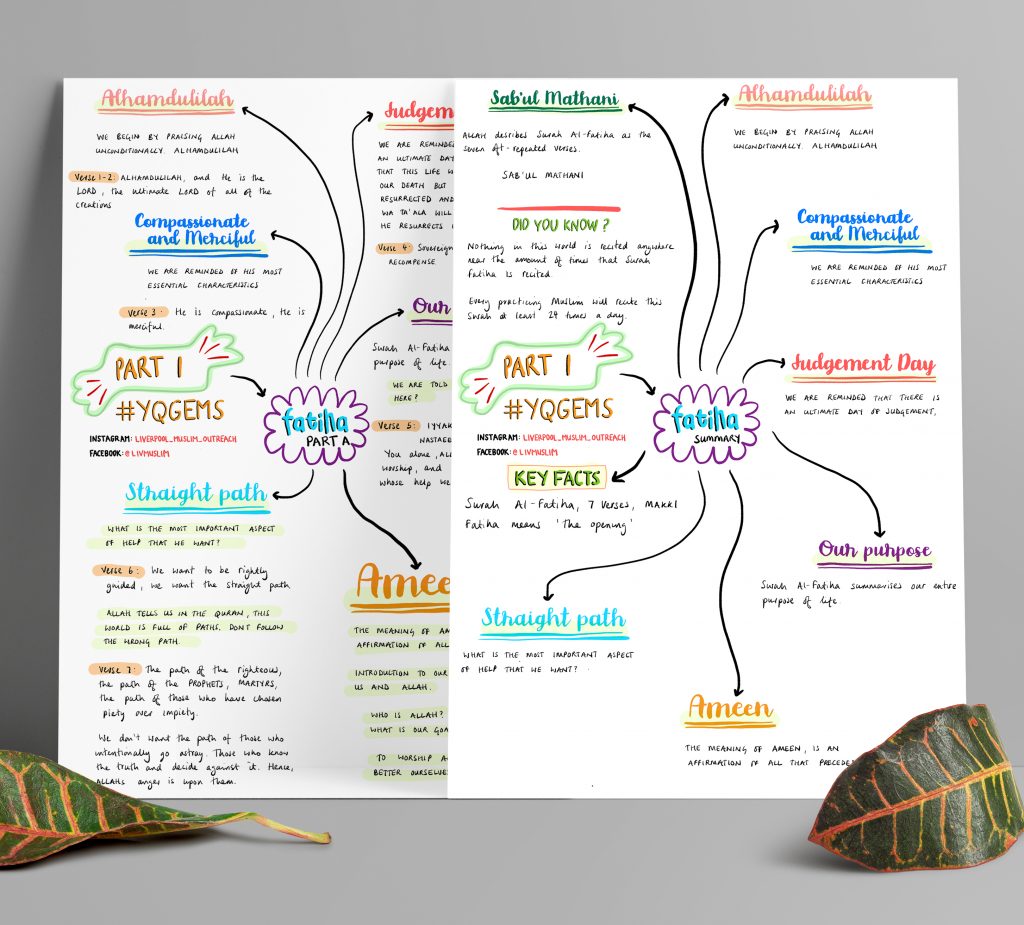
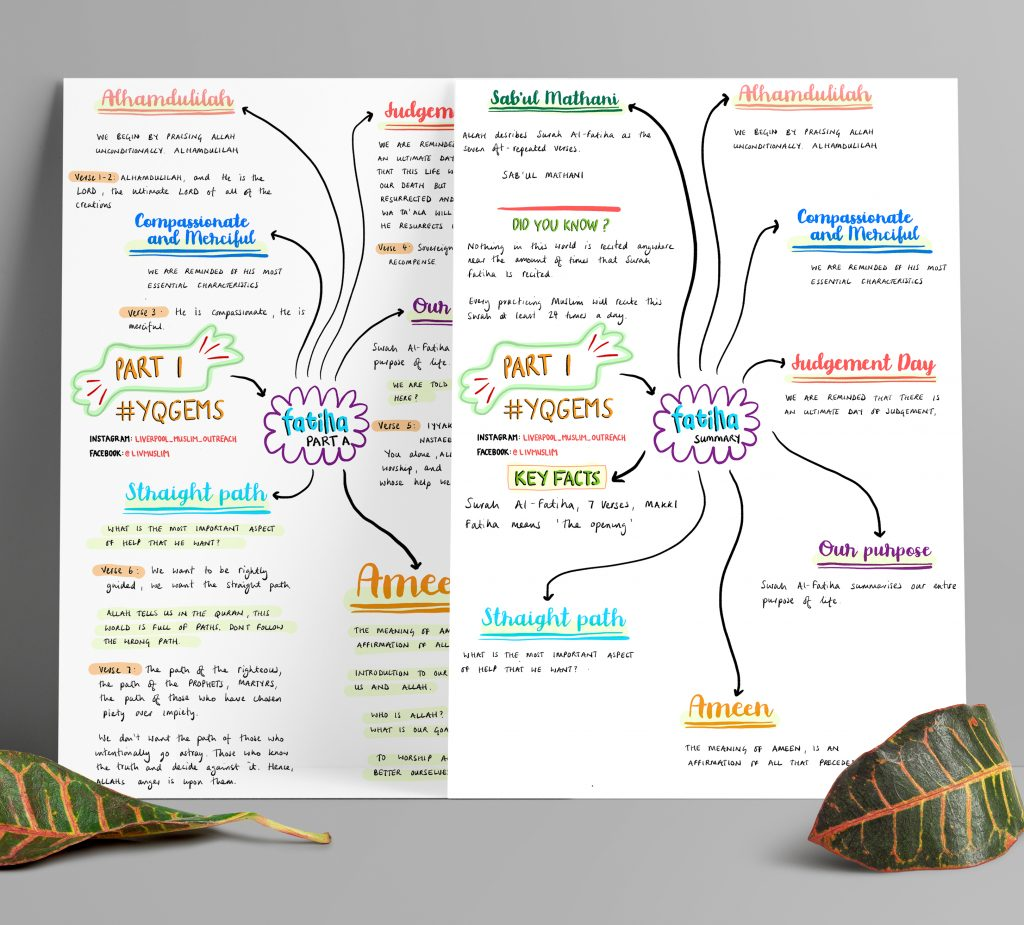
    So we do a mind map after completing the Surah. We collect our information and points from the Surah to make mind map. We also do use mind maps from LiveIslam.org here are some points from the mind map.

    Surh Al-fateha is makki surah. Its first and opening Surah of Quran.

    Online quran tutors

    Tafseer for other Surahs

    Other courses Quran tutors online have

    Hadith with stories course consists of 30 short hadith for children with interesting stories you can see that course in my hadith course tab.
    Prayer for kids courses, a short course to teach about taharat, Gusal, wudu, times of prayers, number and names of prayers, pillars and conditions of prayer, and method of prayer. Search as Prayer for kids course on the search bar.
    Kindness to Parents
    Ramzan Boost course
    Faith boost course in December to say NO MARYY CHRISTMAS

    Enrolments Available

    Tafseer for kids’ group classes is available online for all time zones. Recommended age for the class tafseer for kids is 9+. These classes are available in English and Urdu. If you want to enroll your child in our classes contact us via.
    email: bhallitaha@gmail.com

    Facebook.

    Youtube Urdu Channel

    Youtube English Channel

    or leave a comment.

  • Story 8 Urdu|Hadith about How To Teach Eating Manners To Kids?

    Story 8 Urdu|Hadith about How To Teach Eating Manners To Kids?

    Welcome to Our Hadith with stories course for Kids. You are going to Start a short course for your child. After this course, your children would have their own mini -Kitab -UL-Hadess (For a Description of this Free online course scroll down)Here is the “First Hadees and story of Our hadith with stories course for kids

    hadith on Eating manners in Islam in Urdu

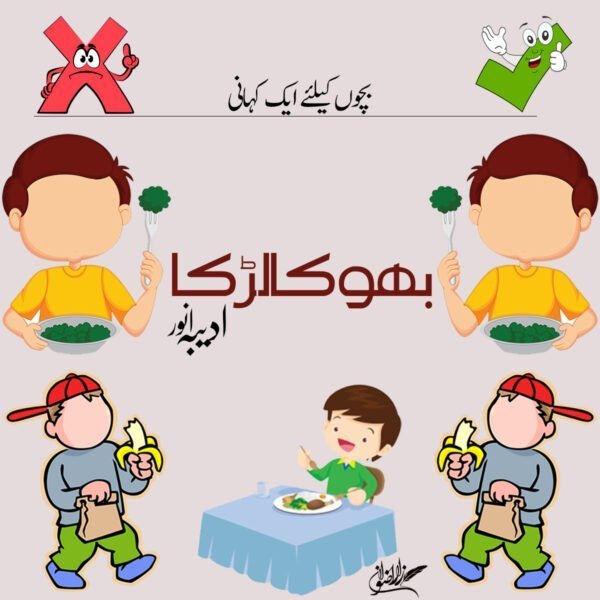
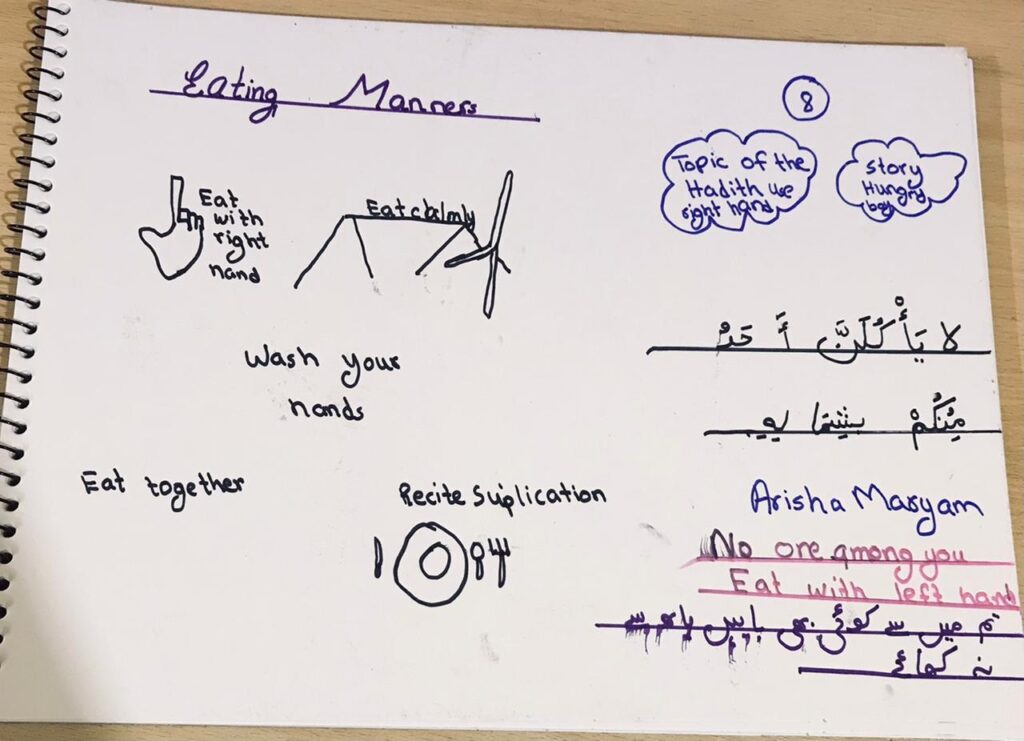
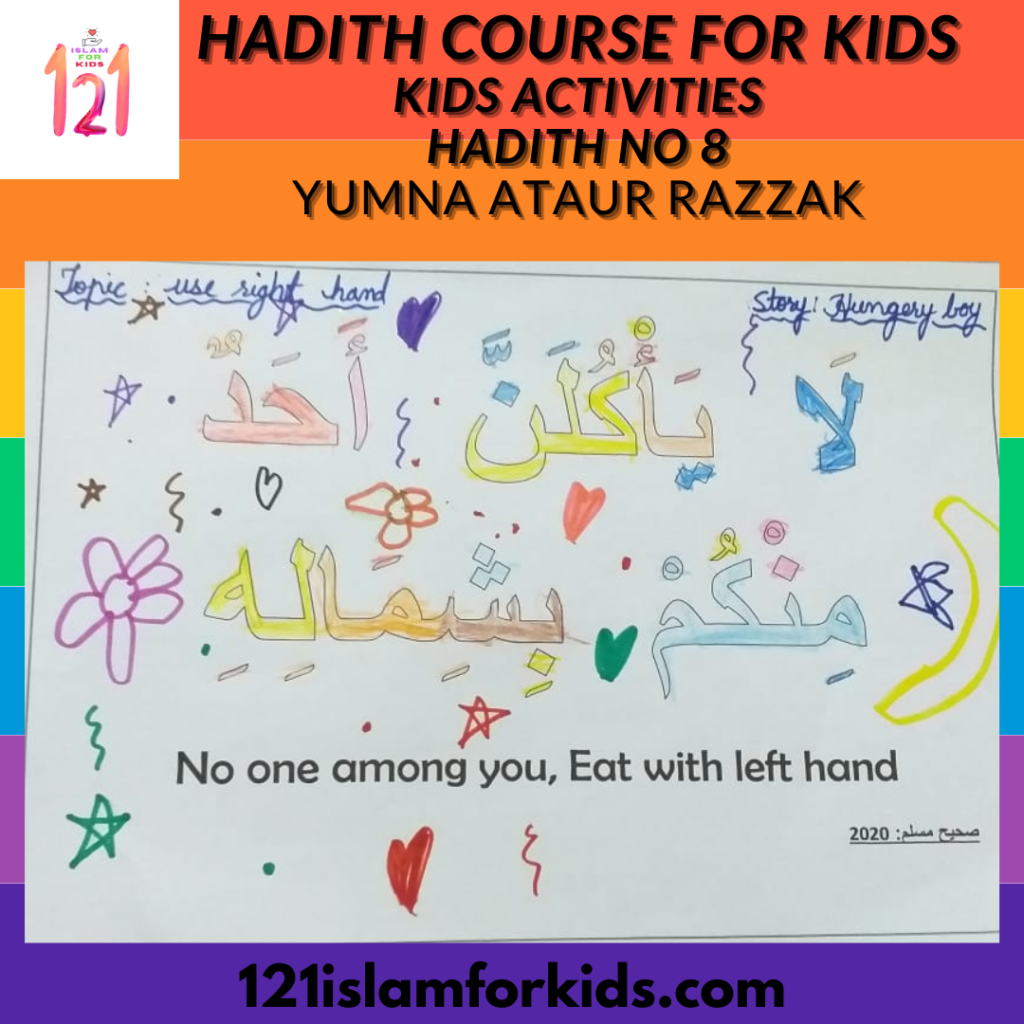
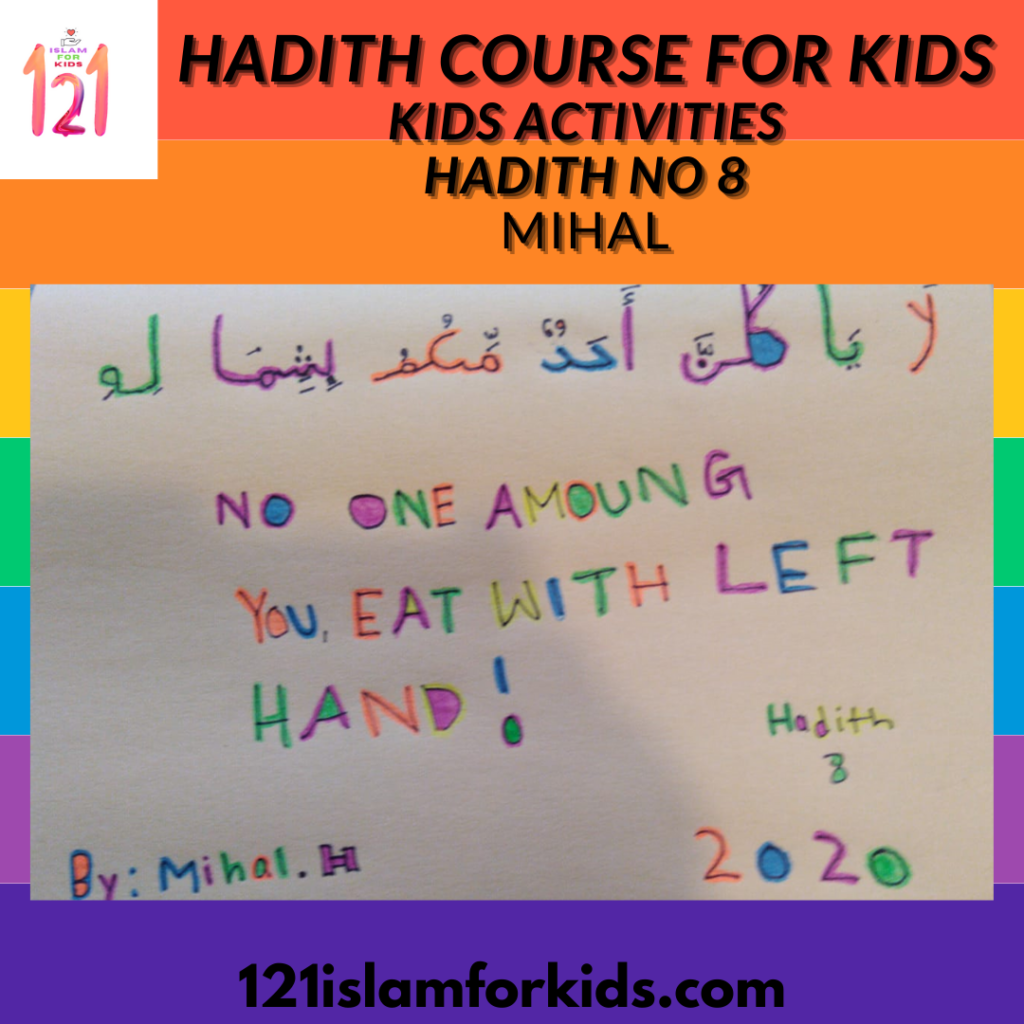
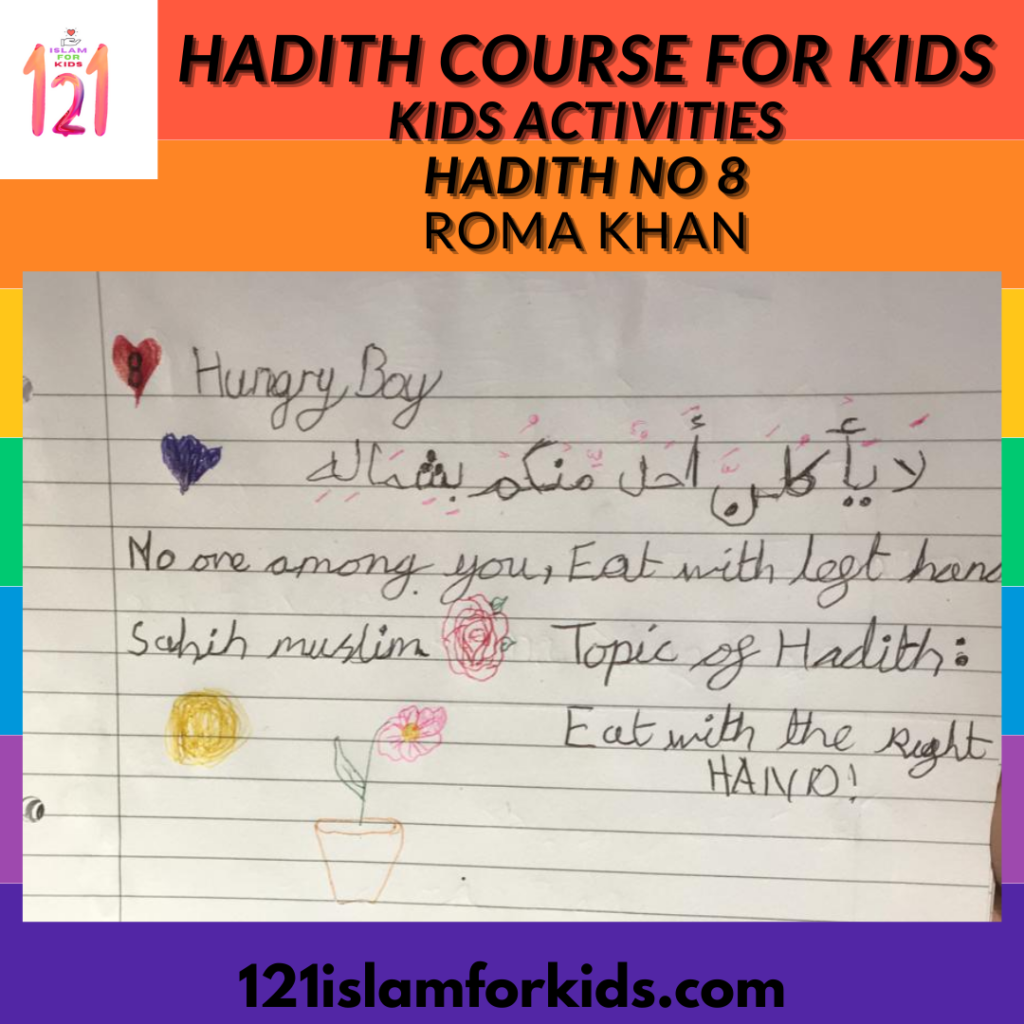
    This is a story of a hungry boy who started to eat with his left hand. This story will teach hadith on the Eating manners in Islam and the use of the right hand.

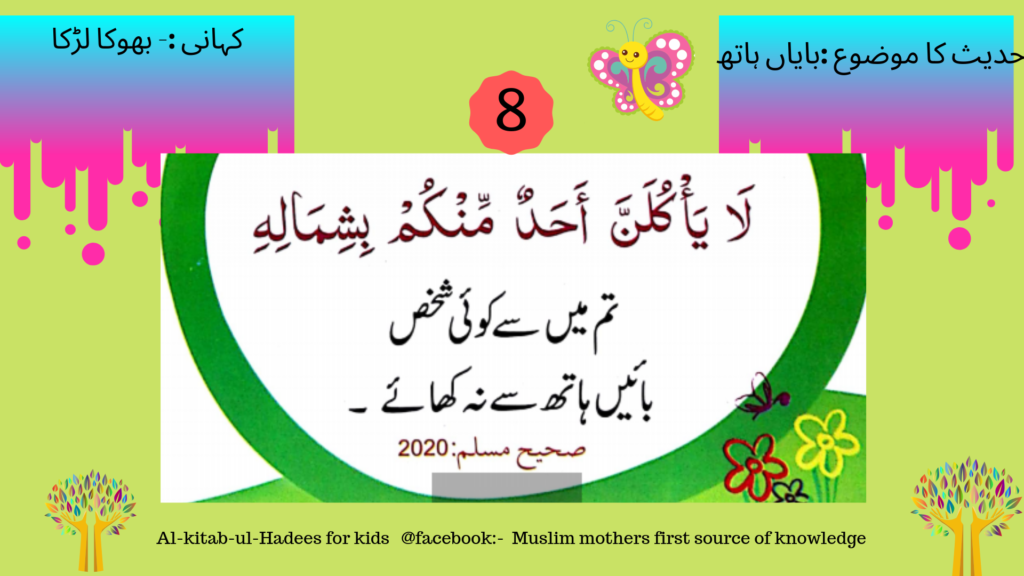
    پیارے بچوں، ہمیشہ کی طرح، میں ایک خوبصورت حدیث اور ایک دلچسپ کہانی آپ سب کے ساتھ شیئر کرنے جا   رہی  ہوں-  آج کے لئے ہماری حدیث مندرجہ ذیل باتوں پر مبنی ہے: ‘تم میں سے کوئی بھی اپنے بائیں ہاتھ سے نہ کھائے۔


    hadith on Eating manners in Islam in Urdu

    پیارے بچوں، اس حدیث کو پڑھنے کے بعد آپ کو پتہ چل جائے گا کہ ہمیں اپنے بائیں ہاتھ سے کھانا نہیں کھانا چاہئے۔ آپ کے بائیں ہاتھ سے کھانے کے مضر اثرات کیا ہیں اور ہمیں اس عادت سے کیوں گریز کرنا چاہئے؟ آئیے اس موضوع کے بارے میں مزید جاننے کے لئے ایک کہانی سنتے ہیں۔

    hadith on Eating manners in Islam in Urdu
    Hadith on Eating manners in Islam in Urdu with story

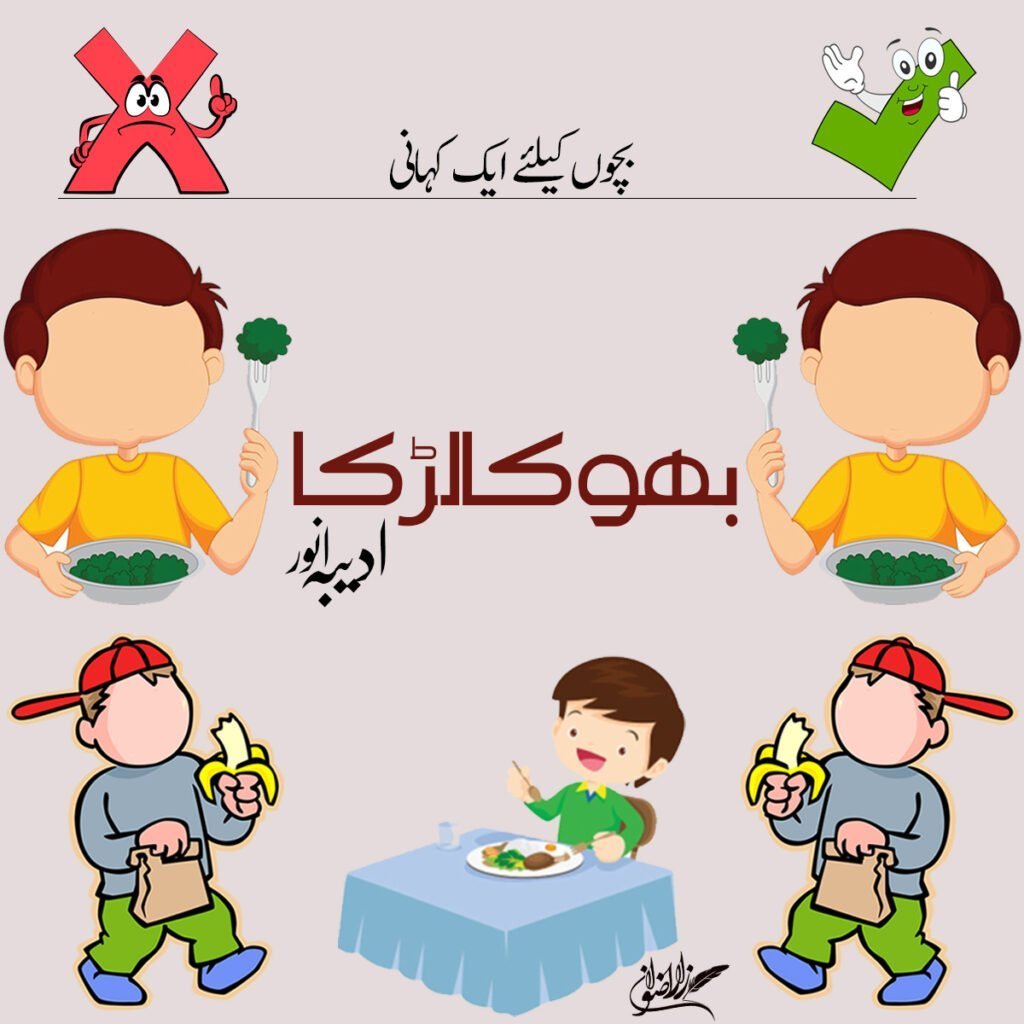
    بھوکا لڑکا

     کہانی ایک لڑکے کے بارے میں ہے جس کا نام علی تھا۔ علی ایک اچھا اور خوش اخلاق بچہ تھا۔ وہ ہمیشہ اچھا برتاؤ کرتا تھا اور دوسروں کا احترام کرتا تھا۔ وہ وقت پر کھیلتا اور تعلیم حاصل کرتا تھا۔ سب اس کی تعریف کرتے   تھے- لیکن پیارے بچوں، کچھ عرصے بعد، علی کی عادات تبدیل ہونے لگیں۔اب ایسا ہوا کہ علی نے کھیل کھیلنے میں زیادہ وقت گزارنا شروع کیا۔ وہ کھانا کھاتے ہوئے بھی اپنے کھلونوں سے کھیلتارہتا تھا۔ اس کے ہاتھ میں ہمیشہ کھیلنے کے لئے کچھ نہ کچھ ہوتا تھا۔  پیارے بچوں، علی جب بھی کھانا کھاتا، یا توموبائل فون اس کے ہاتھ میں  ہوتایا کھانے کے دوران کھیلنے کے لئے اس کے ہاتھ میں کھلونا ہوتا تھا۔اس طرح اس نے اپنے بائیں ہاتھ سے کھانا شروع کردیا تاکہ وہ اپنے دائیں ہاتھ سے کھیل سکے۔ پیارے بچوں، کیا آپ جانتے ہیں کہ شیطان ان لوگوں کے ساتھ کھاتا ہے جو اپنے بائیں ہاتھ سے کھاتے ہیں، اور اگر بائیں ہاتھ کو کھانے کے لئے استعمال کیا جاتا ہے تو کھانے کی برکت شیطان کے پیٹ میں جاتی ہے۔ ایک دن علی کی والدہ نے اسے مشورہ دیا کہ وہ اپنے بائیں ہاتھ سے کھانا نہ کھائے کیونکہ یہ ایک بری عادت تھی، لیکن علی اس پر عمل کرنا بھول جاتا۔ جلد ہی، یہ اس کی عادت بن گئی کہ وہ  ہمیشہ اپنے  بائیں ہاتھ سے کھانا کھاتا- لیکن جب بھی وہ اپنے بائیں ہاتھ سے کھانا کھاتا تو ایک شیطان اس کےکھانے سے برکت چھین لے جاتا اور یہ شیطان کے پیٹ میں چلا جاتا۔جب بھی علی اپنے بائیں ہاتھ سے کھانا کھایا کرتا تو اس کی بھوک مطمئن نہ ہوتی اور وہ خالی محسوس کرتا۔ وہ دن بدن کمزور ہوتا گیا۔ اس نے زیادہ کھانا کھا نا  شروع کیا لیکن یہ کبھی کافی نہیں ہوتا تھا کیونکہ وہ کھانے کے آداب بھول گیا تھا۔

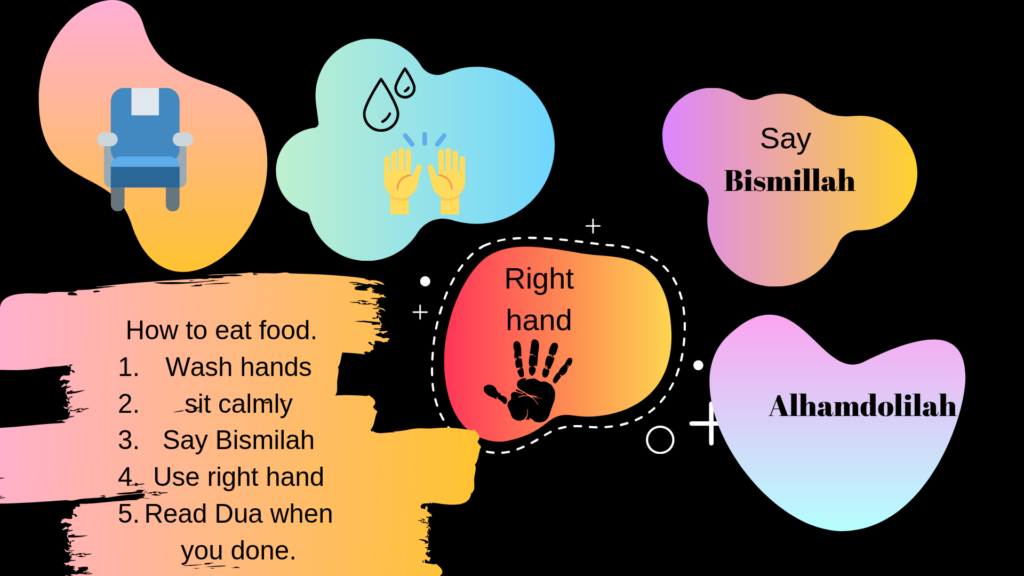
     وہ اپنے ہاتھ نہیں دھوتا تھا۔

    وہ  کھانے سے پہلےبسم اللہ نہیں پڑھتا تھا۔

    وہ اپنے دائیں ہاتھ سے نہیں کھاتا  تھا۔ 

    اور ہمیشہ کھاتے وقت کھیلتا   رہتا  تھا

    اس  پر شیطان واقعی خوش تھا کیونکہ وہ علی کی بری عادات کی تعریف کرتا تھا۔ وہ موٹا ہو رہا تھا کیونکہ وہ علی کے کھانے سے ساری توانائی لے رہا تھا۔علی پہلے کی طرح نہیں کھیل سکتا تھا کیونکہ جب بھی وہ کھیلنے کے لئے باہر جاتا تھا تو اسے بھوک لگتی تھی۔ اسے اپنا پیٹ بھرنے کے لئے گھر واپس جانا پڑتاتھا ۔ لہذا، وہ زیادہ تر اپنی کھڑکی سے کھیلتے ہوئے بچوں کو دیکھتا تھا-پیارے بچوں، اس کے والدین اس کے بارے میں بہت پریشان ہو گئے لیکن علی نے ان کی بات نہیں سنی اور اس کے بجائے جب بھی وہ اس سے بات کرنے کی کوشش کرتے تو ان پر غصہ کرتا تھا۔وہ اب قابو سے باہر ہو گیا تھا. اکثروہ اپنے بھائی اور بہن کا حصہ بھی کھا جاتا تھا- پھر بھی وہ بھوکا رہتا تھا۔ اس کی بھوک کی کہانی ہر طرف پھیل گئی۔ اس کے رشتہ دار اور خاندان کے افراد اسے مطمئن نہیں کر سکے چاہے وہ اسے کتنا کھانا ہی کیوں نہ دیں۔ آخر کار کسی نے اس  کے والدین کو مشورہ دیا کہ وہ کسی اچھے علم والے سے سے ملاقات کر کے مشورہ کریں جو اللہ کا نیک بندہ اور نبی صلی اللہ علیہ وسلم کی سنت پر عمل کرنے والا  ہو اور اس کا علاج کرے ۔ علی کے والدین اسے ایک عالم بندے کے پاس لے گئے۔ اس نے ا ن کا مسئلہ سنا اور کہا، ‘فکر نہ کرو، علی کو کوئی مسئلہ نہیں ہے۔ ان شاء اللہ علی چند دنوں میں ٹھیک ہو جائے گا۔ اس شخص نے علی کو اپنے ساتھ رکھ لیا-اور اس کے لئے کھانے کا انتظام کیا۔ جب علی کھانے لگا، تو اس شخص نے علی سے کہا کہ کھانا کھانے سے پہلے اسے ایک شرائط ماننی ہوگی۔ علی کافی عرصے سے بھوکا تھا لہذا اس نے اس سے کہا کہ وہ اسے شرائط بتائے تاکہ وہ اس پر عمل کرسکے۔اس نیک عالم نے علی کو پہلے ہاتھ دھونے کو کہا۔ علی نے فورا تعمیل کی۔ پھر علی سے بسم اللہ پڑھنے کو کہا۔ علی نے ہدایات پر عمل کیا اور بسم اللہ پڑھی۔ جب وہ کھانے جا رہا تھا تو اس نے اپنا بائیاں ہاتھ استعمال کرنا چاہا۔انہوں نے وضاحت کی کہ ہمیں ہمیشہ کھانے کے لئے اپنے دائیں ہاتھ کا استعمال کرنا چاہئے چاہے اس میں کتنا ہی وقت کیوں نہ لگے۔علی نے بسم اللہ پڑھی .. اور پھر دائیں ہاتھ سے کھانا شروع کیا لیکن اسے مشکل پیش آئی کیونکہ وہ بائیں ہاتھ سے کھانے کا عادی تھا۔ یہ اس کے لئے بہت تکلیف دہ تھا لیکن چونکہ یہ ایک نصیحت تھی جس کے بارے میں دانشمند نے زور دیا تھا، اس لئے وہ آہستہ آہستہ اپنے دائیں ہاتھ سے کھاتا رہا۔  پیارے بچوں، اس بار شیطان کو اس کے کھانے سے حصہ نہیں مل سکا۔ وہ علی کے بائیں ہاتھ سے کھانے کا انتظار کرتا رہا تاکہ اسے علی کے کھانے کا حصہ مل سکے۔ لیکن وہ شخص علی کے ساتھ بیٹھا تھا اور اس نے اس بات کو یقینی بنایا کہ علی بائیں ہاتھ سے کھانا نہ کھائے اور اپنا کھانا ٹھیک سے ختم کرے۔ ہر دفعہ ایسا کرنے سے علی مطمئن اوراپنا  پیٹ بھرا ہوا محسوس کرتا تھا۔ شیطان بھوکا رہتا. پیارے بچوں، جب بھی عقیدت مند شخص علی کو کھانا دیتا، وہ اسے اپنے دائیں ہاتھ سے کھاتا تھا۔ ایک نیک آدمی کی دانش مندی کی وجہ سے شیطان چلا گیا-علی نے اپنی بھوک کے مطابق اور وقت پر کھانا کھانا شروع کر دیا۔  علی کے والدین اس شخص کے شکر گزار تھے۔  علی نے اپنے آپ سے یہ وعدہ بھی کیا تھا کہ وہ دائیں ہاتھ سے کھانے کی اپنی عادت کو کبھی تبدیل نہیں کرے گا۔ پیارے بچوں، آپ دیکھ رہے ہیں کہ علی اپنی بری عادات کی وجہ سے شیطان کے ہاتھوں کیسے پھنس گیا؟ 

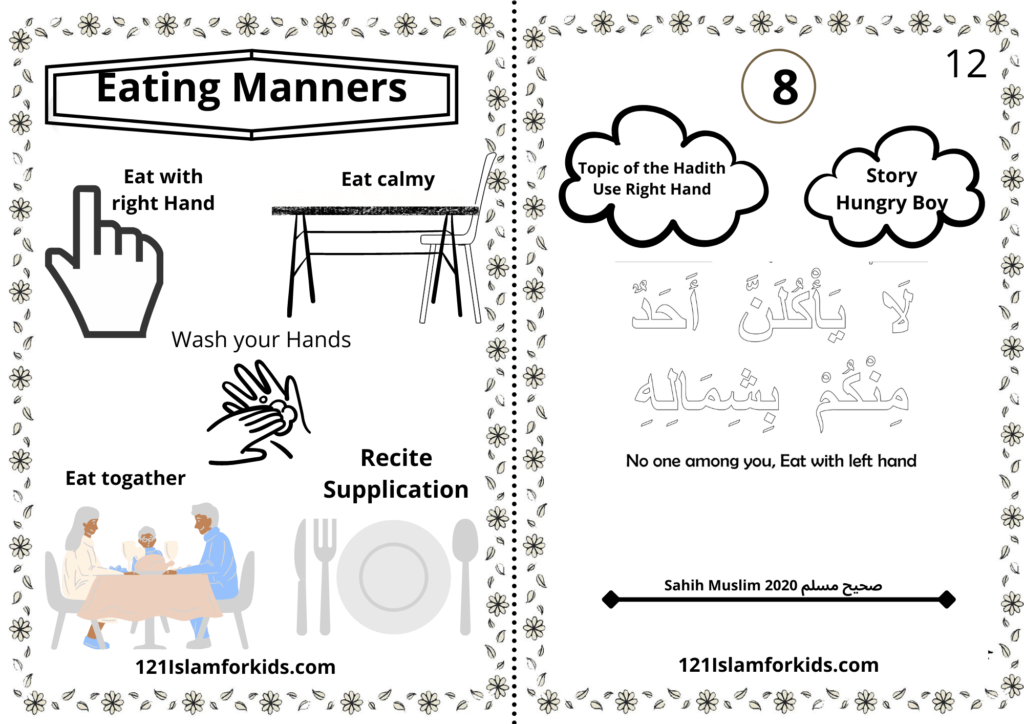
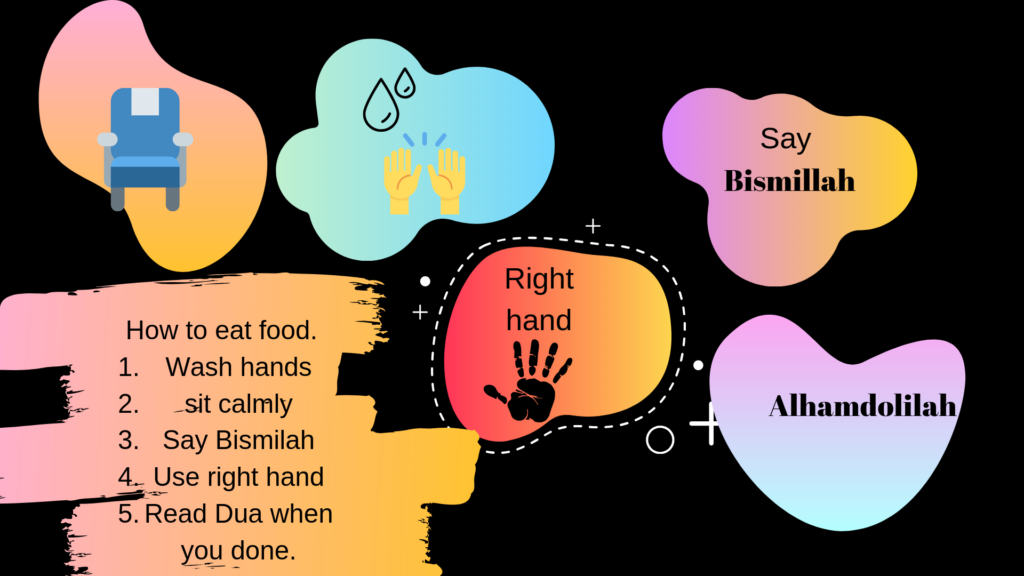
    تو پیارے بچوں، ہمیشہ کھانے کے آداب کو یاد رکھیں جیسے: بسم اللہ پڑھتے ہوئے ہاتھ دھوئیں… دائیں ہاتھ سے کھانا کھانا’ کھانے کے دوران بات نہ کرنا (یا صرف اچھی چیزوں کے بارے میں بات کرنا)’ آرام سےبیٹھ کر  کھانا کھانا’کھانا ٹھیک سے ختم کرنا ‘کھاناکھانےکے بعد الحمداللہ کہنا – پیارے بچوں مجھے امید ہے کہ آپ ان اصولوں پر عمل کریں گے۔ اب آپ کو اس حدیث کو یاد رکھنا ہوگا اور یہ معلومات دوسروں تک بھی پھیلانی ہوں گی۔ 

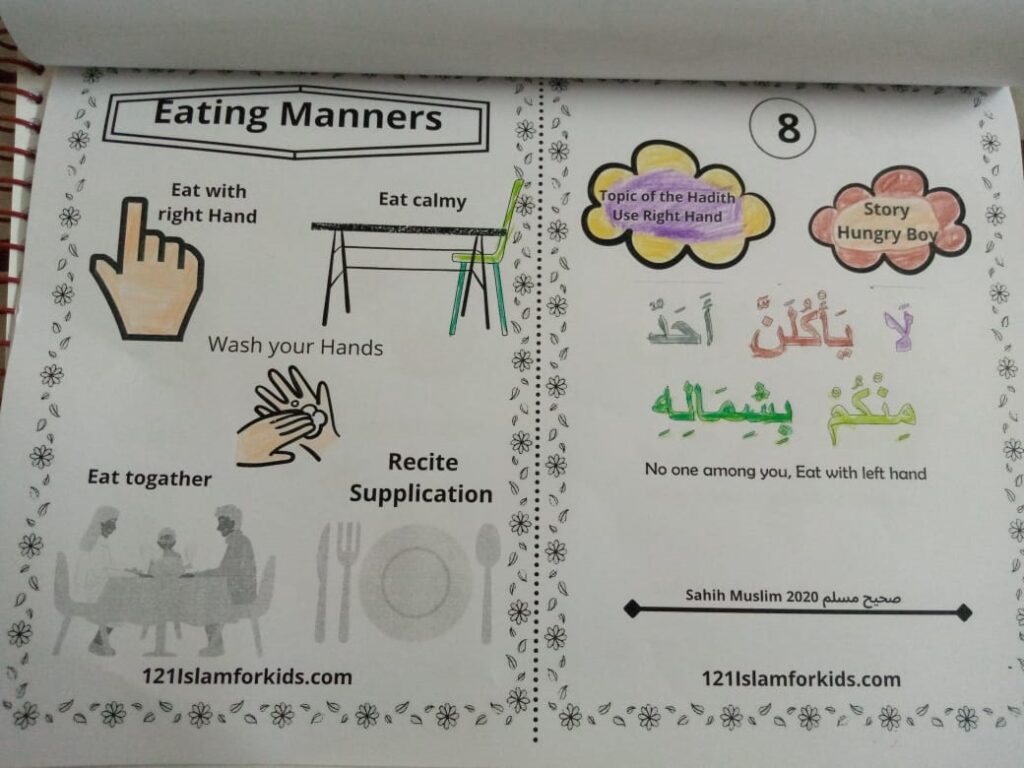
    Eating manners poster

    hadith on Eating manners in Islam in Urdu

    Click the link for the Video of this Story

    Hadith worksheet about hadith on Eating manners in Islam in Urdu

    hadith on Eating manners in Islam in Urdu

    Enrolments Available

    This is a short course of hadith and stories from My 30 short hadith with stories course. My hadith course is very much liked and appreciated by parents and students. Online group classes are available online for all time zones. Recommended age for the class Hadith for kids is 7+. These classes are available in English and Urdu. If you want to enroll your child in our classes contact us via.

    Other courses we have

    • Easy Tafseer for kids with exciting stories you can see that course in my hadith course tab.
    • Prayer for kids course is a short course to teach about taharat, Gusal, wudu, times of prayers, number and names of prayers, pillars and conditions, and prayer method. Search as Prayer for kids course on the search bar.
    • Ramzan boost course we do start 2 weeks before Ramzan.
    • Faith boos course In December to say No To Marry Christmas.
    • Kindness to Parents

    If you want to start this course with me then leave a comment, Email me or enroll your child here.

    Download your free copy of 30 short Hadith book pdf in Urdu/Eng from the Posts tab.

    Worksheet for this Hadith and story. (Buy This worksheet book here)

    A child is telling about eating manners and This story after learning this hadith.

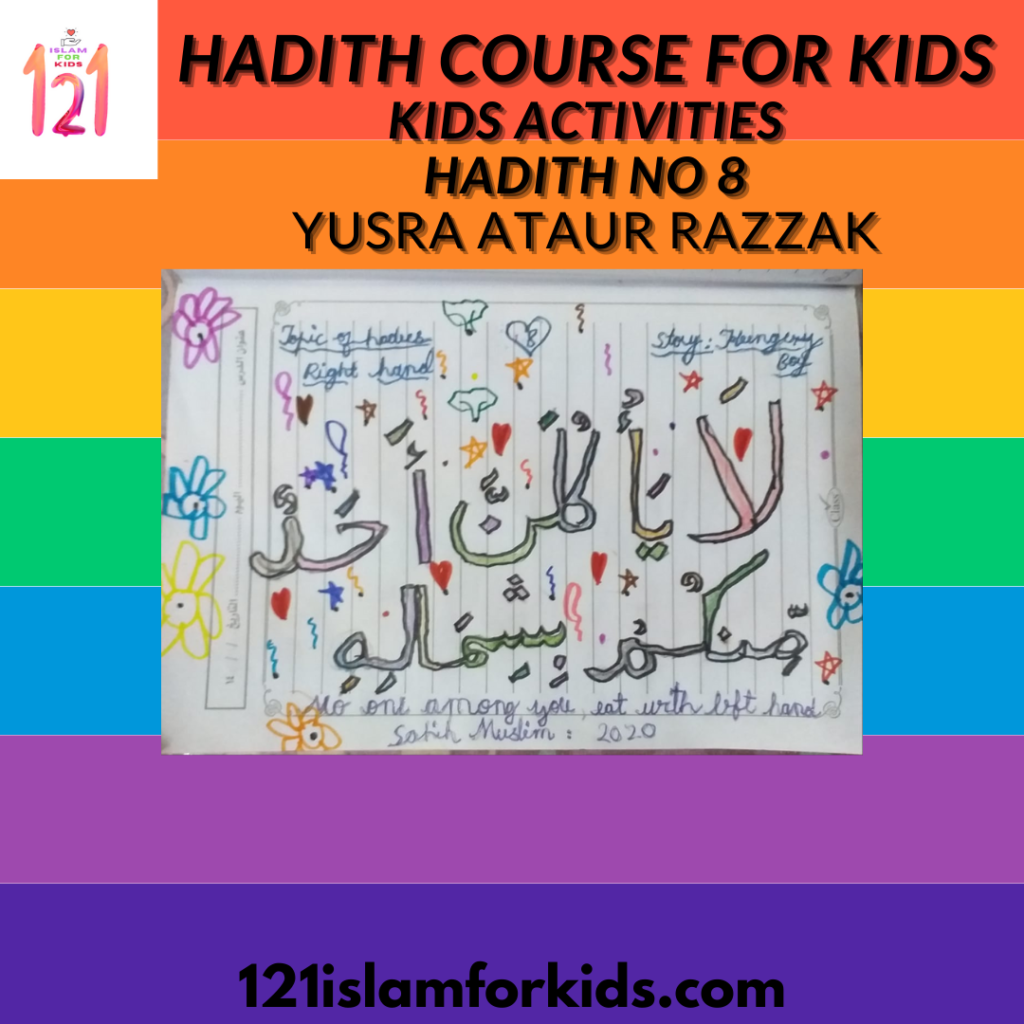
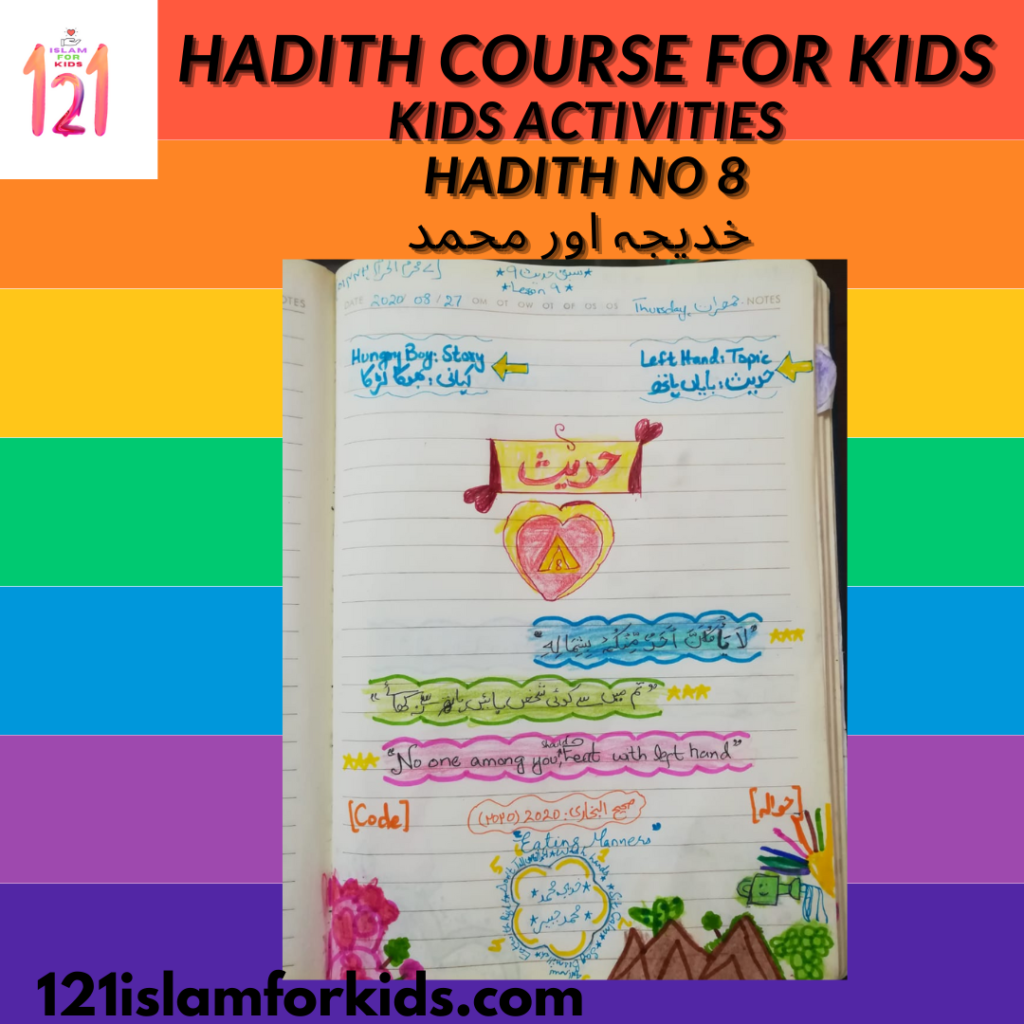
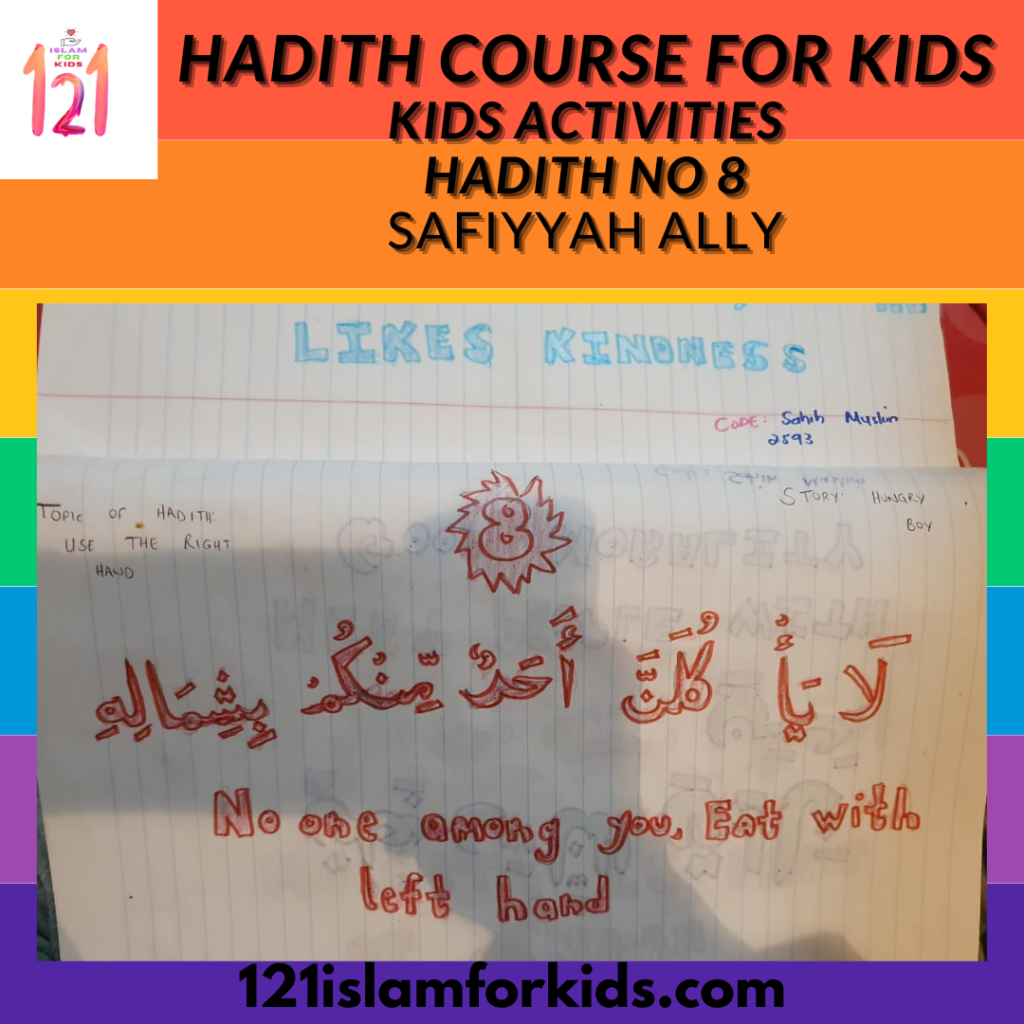
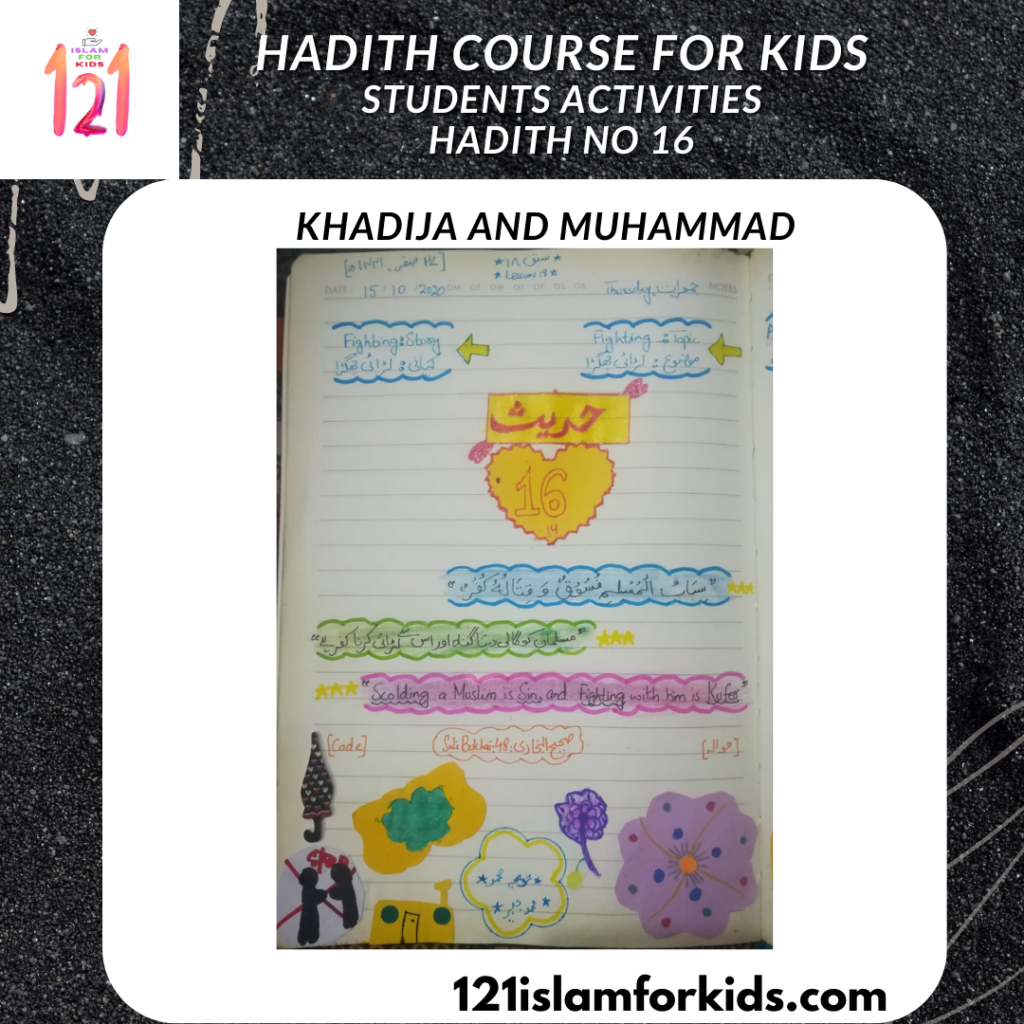
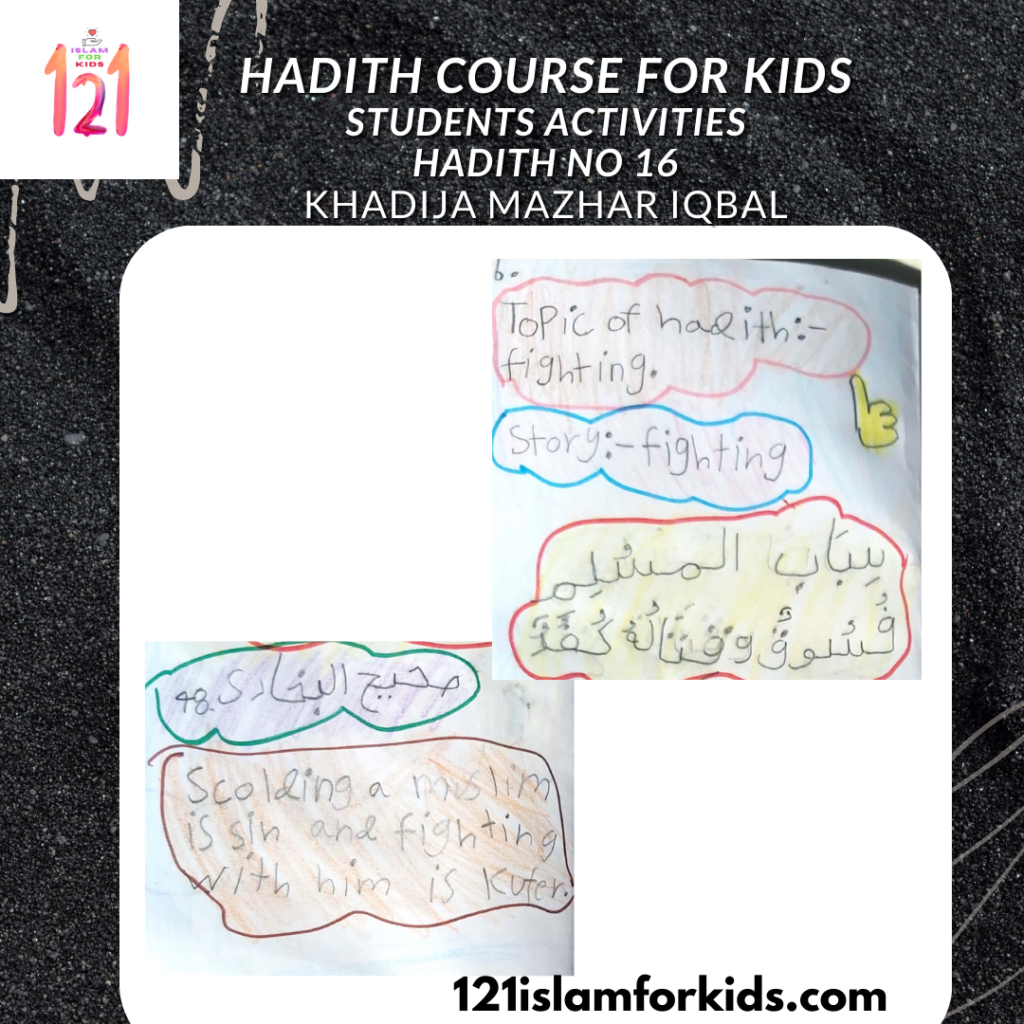
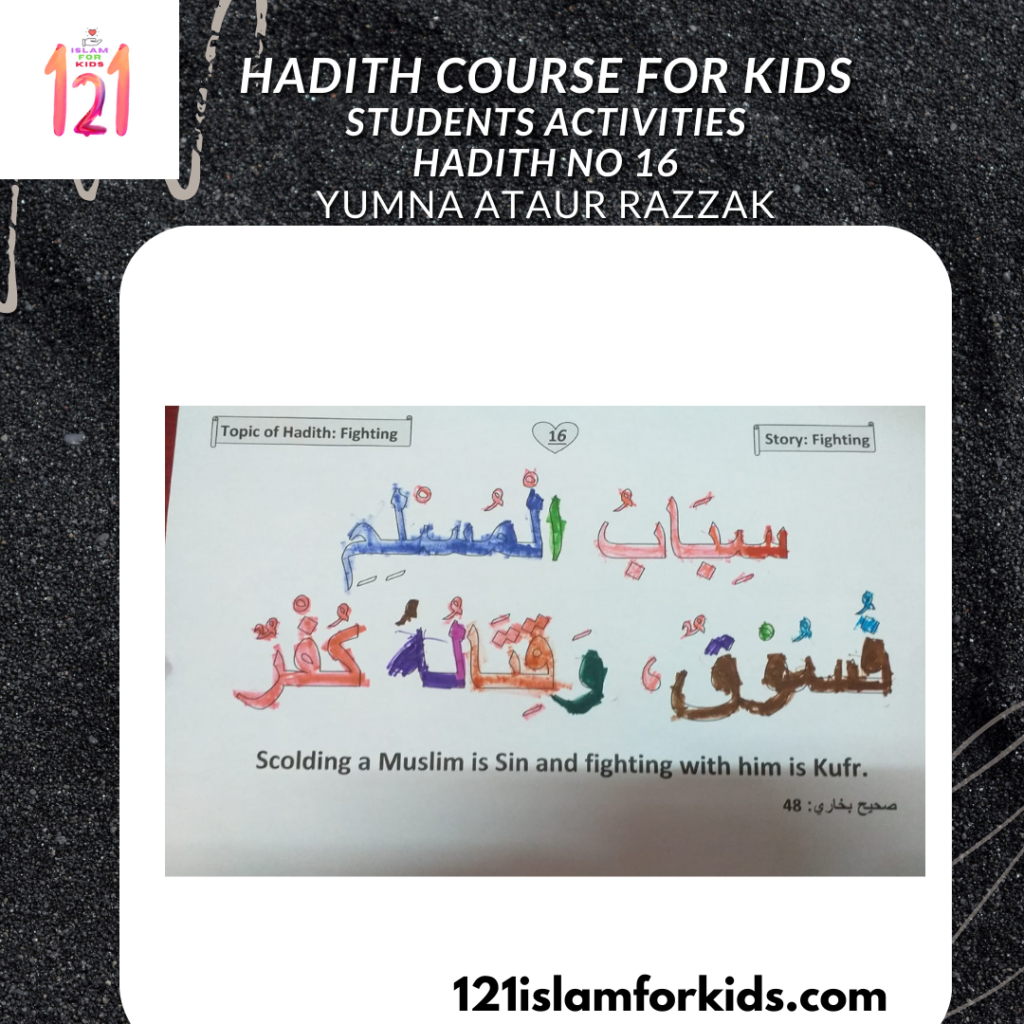
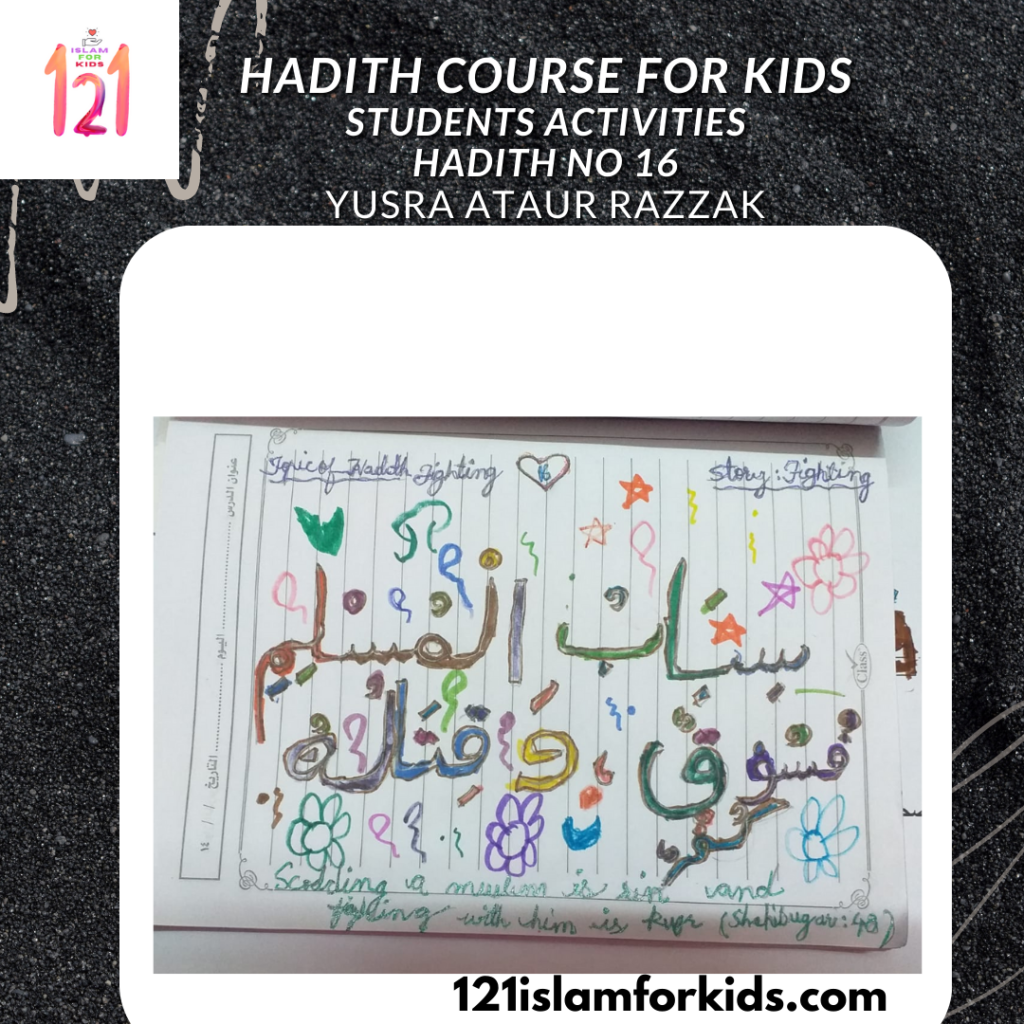
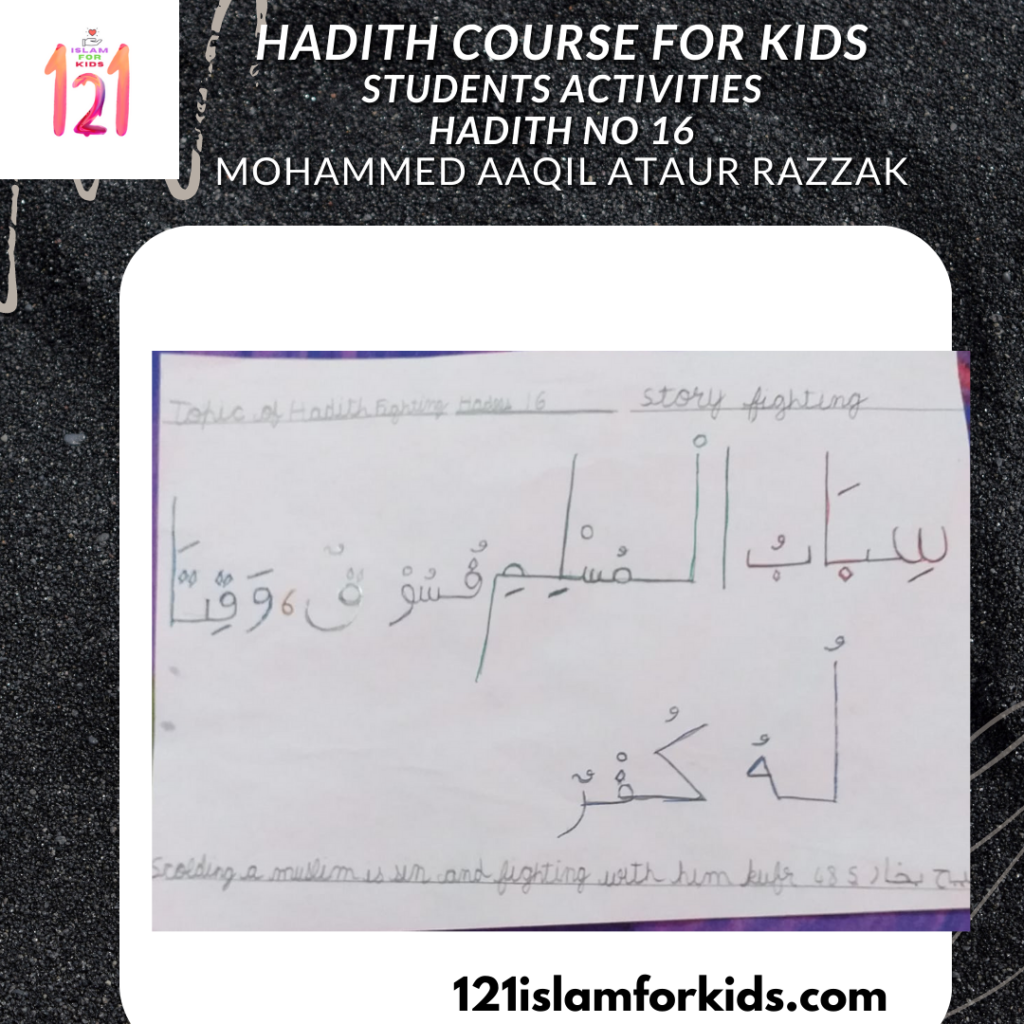
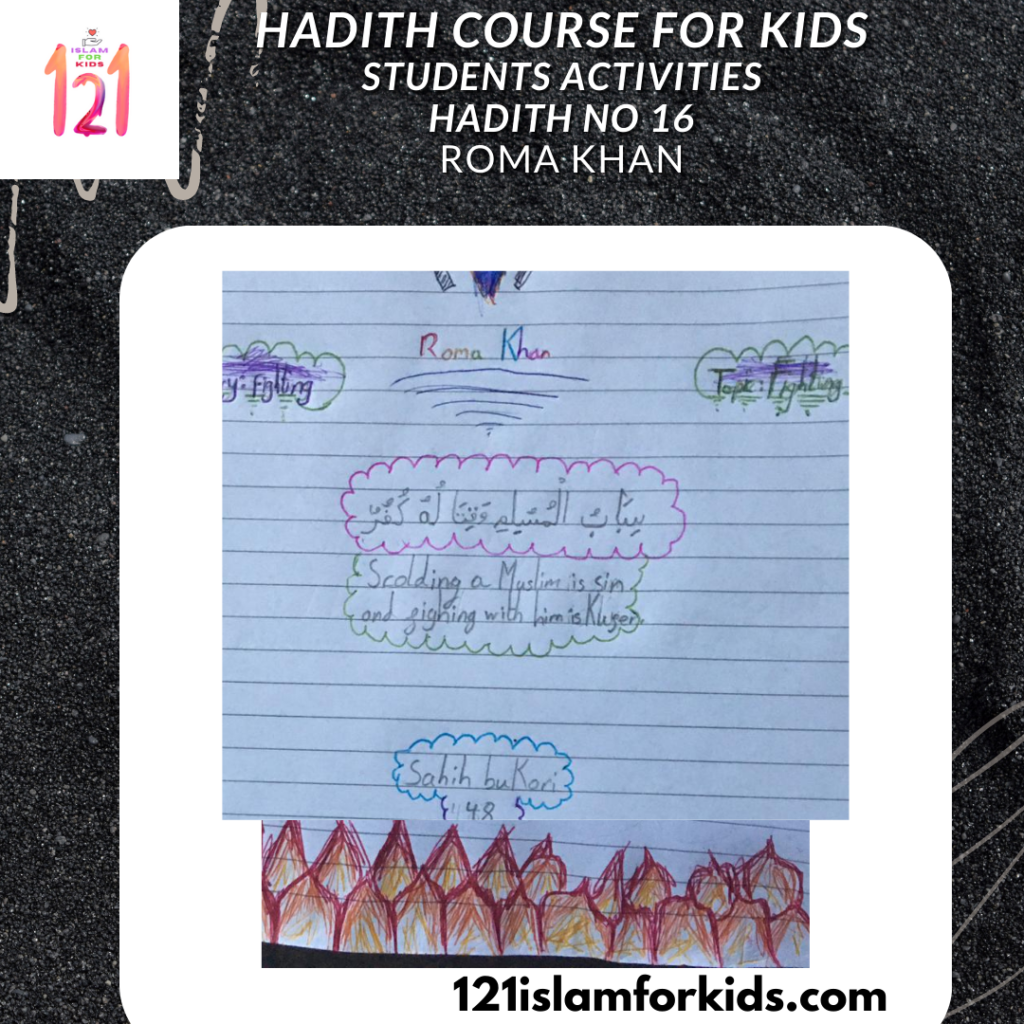
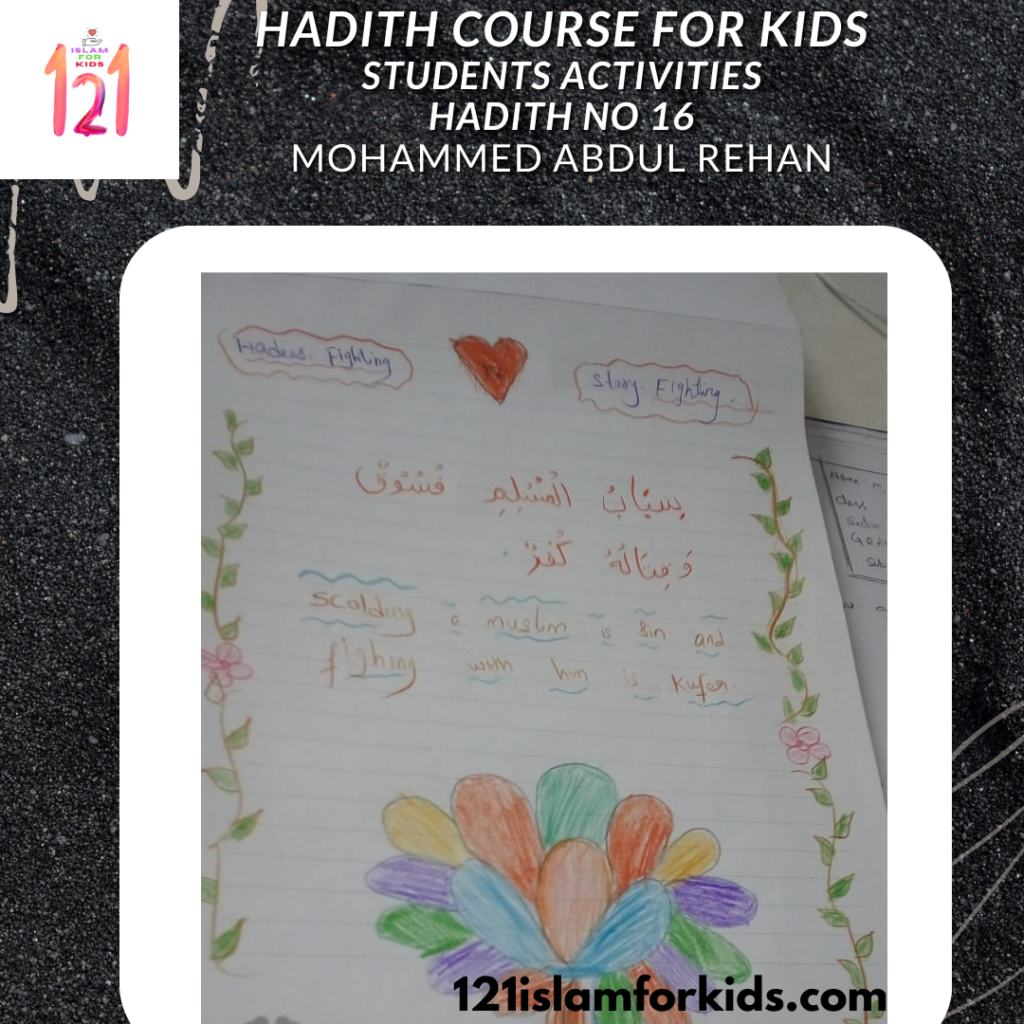
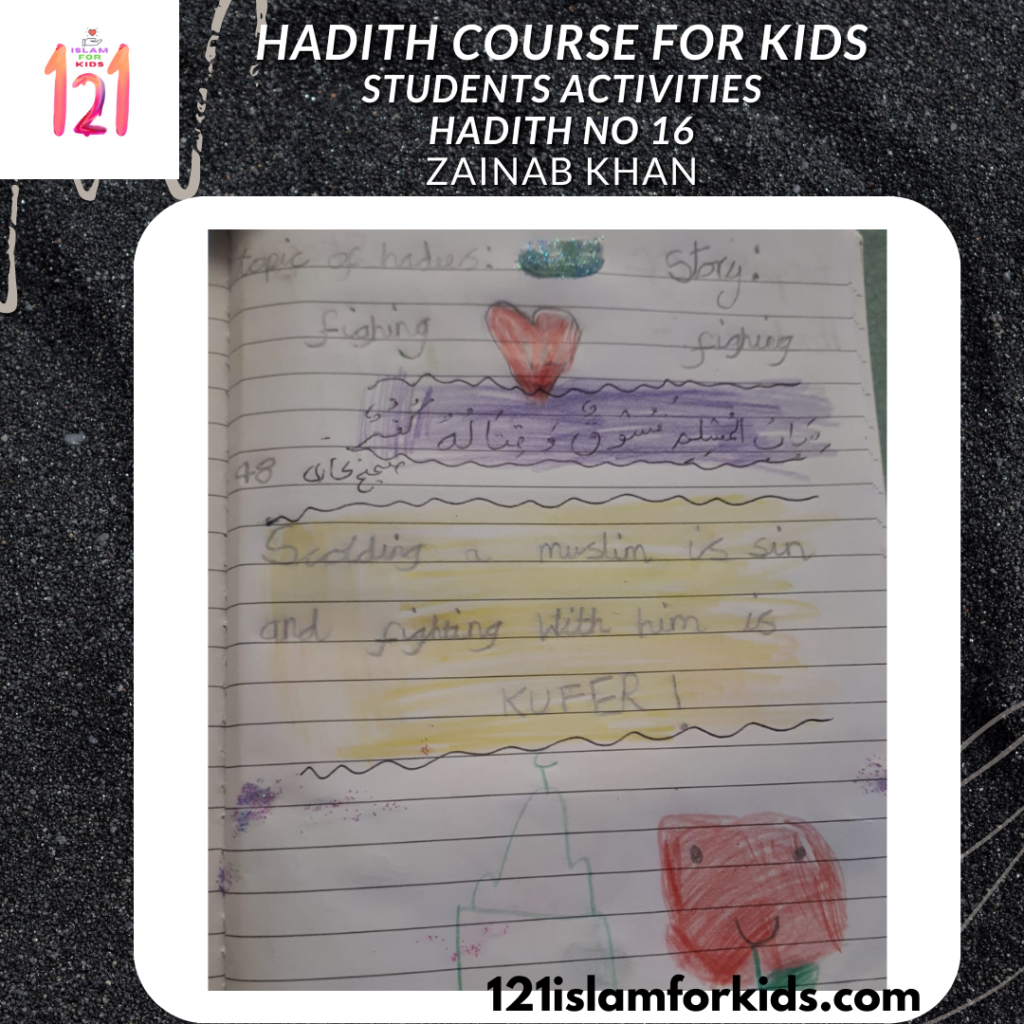
    Students activities

    https://youtu.be/RvXRqIK4NjQ

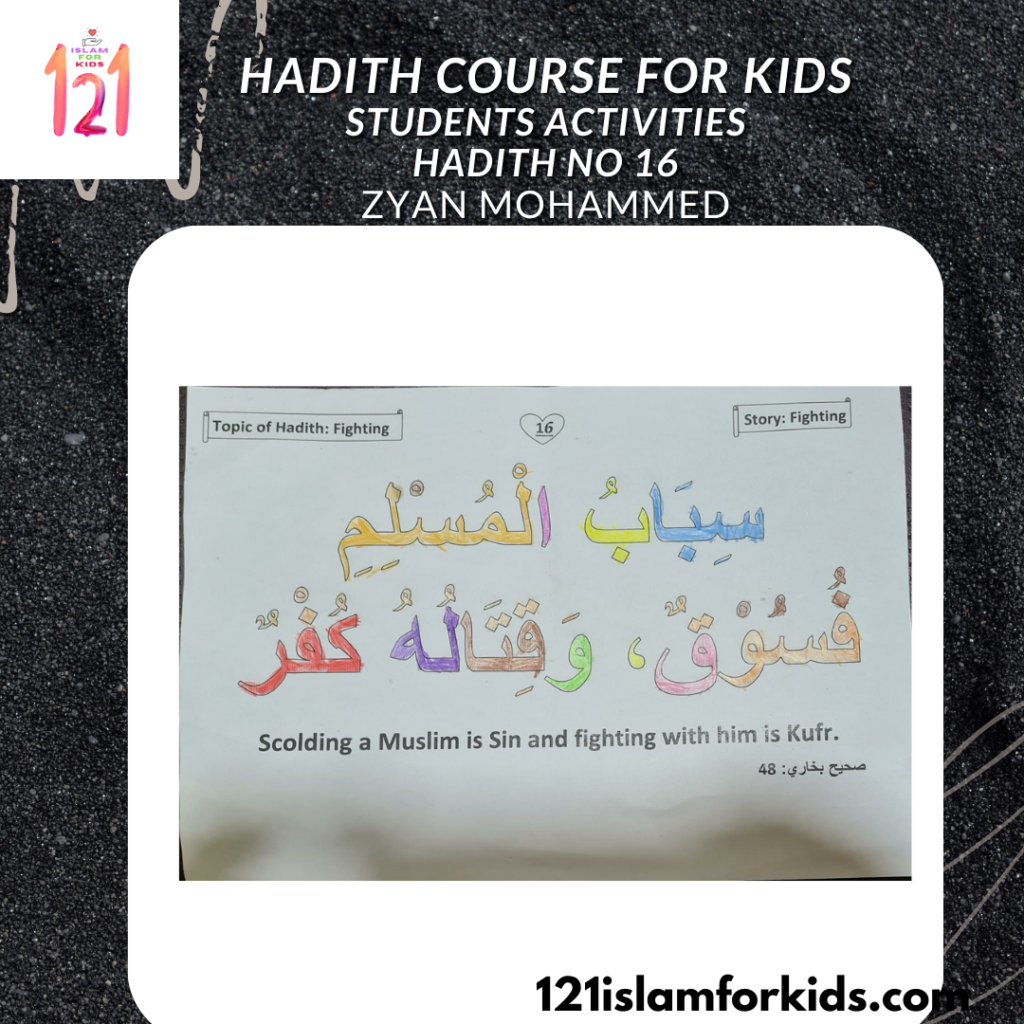
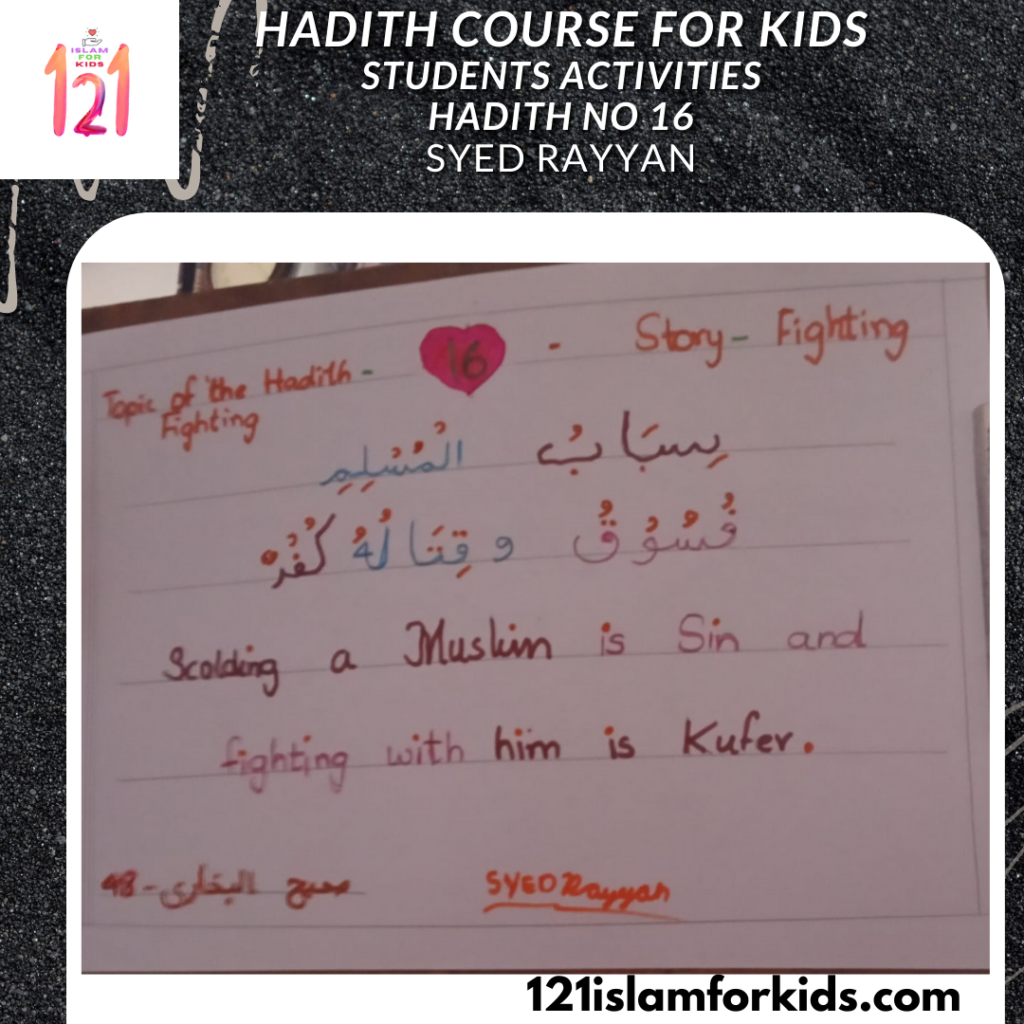
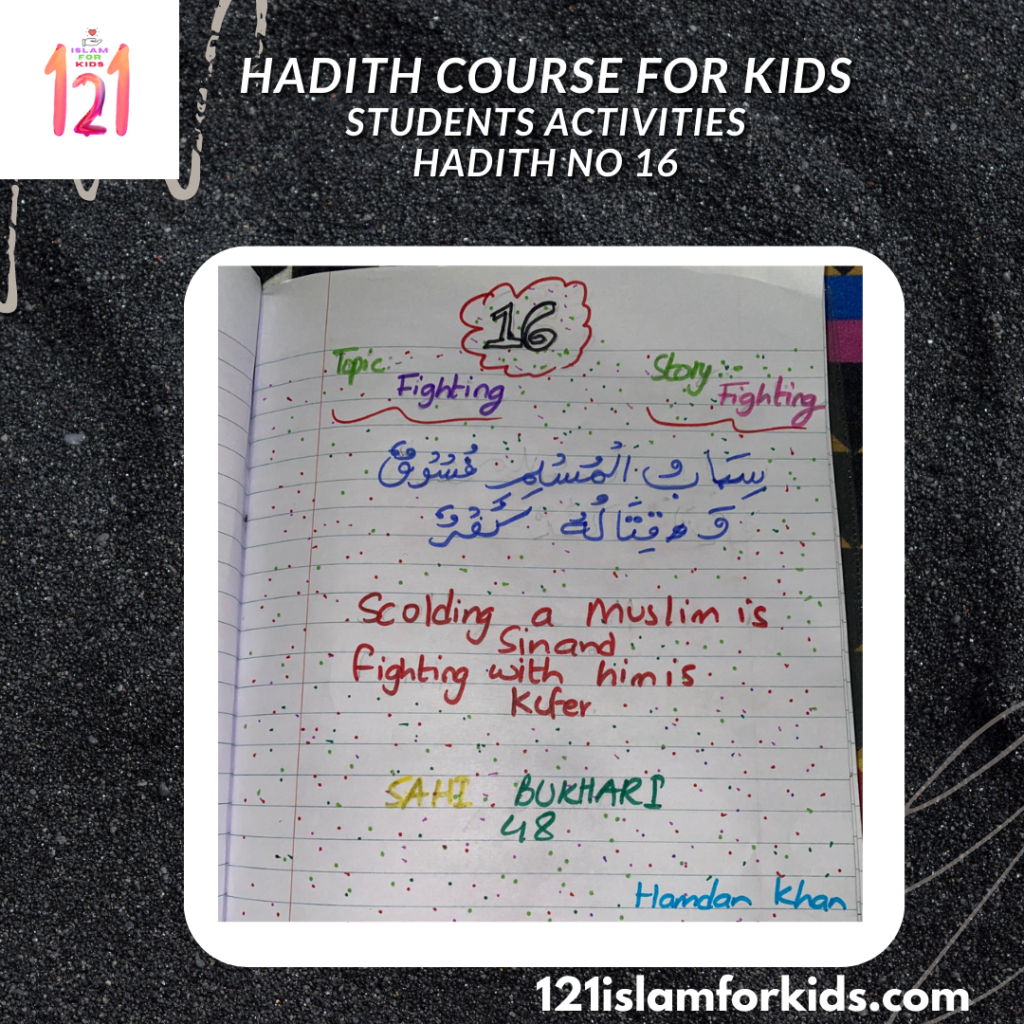
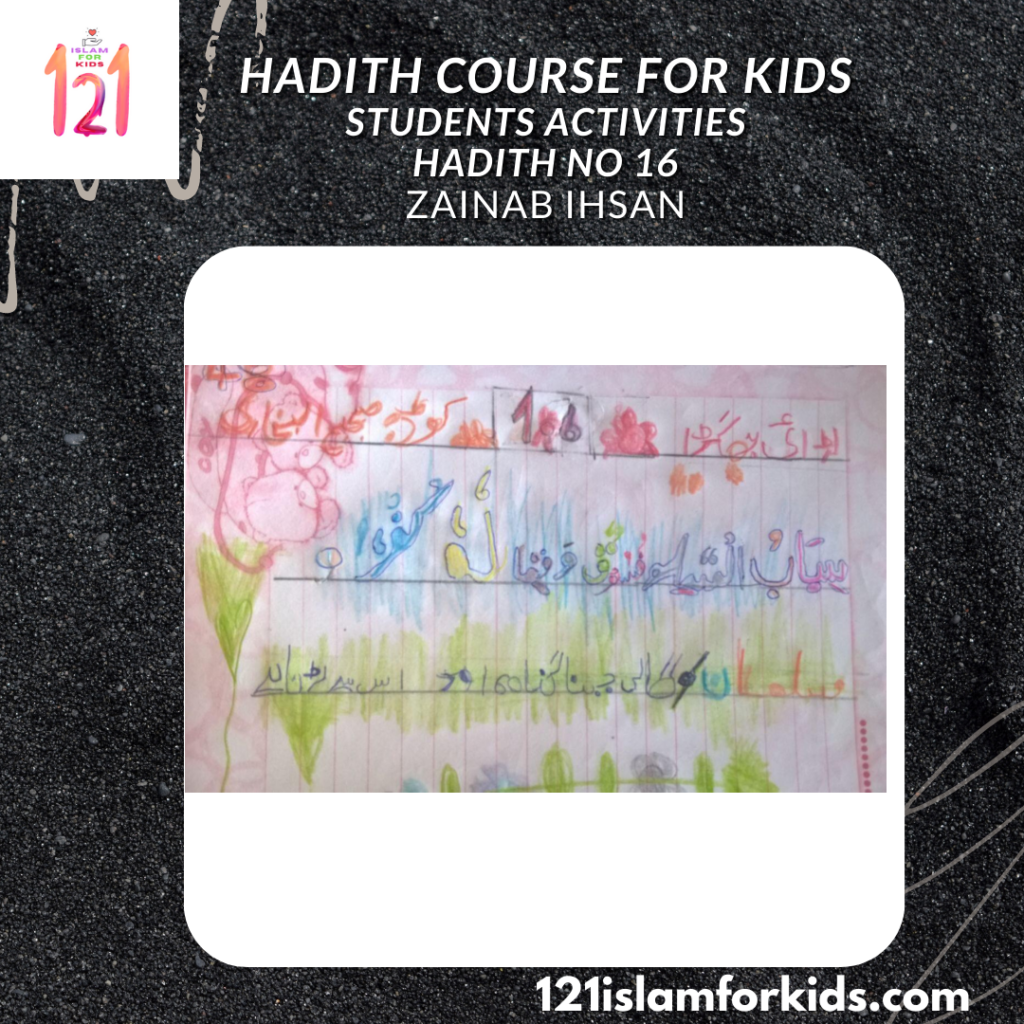
  • Hadith No 16|How To Stop Fight and Scolding? Best hadith

    Hadith No 16|How To Stop Fight and Scolding? Best hadith

    Welcome to our online hadith courses. This is a 30-short hadith with stories course(Teaching method). We have free stories, and videos to teach these hadiths online. You can also get a soft worksheets book to get more benefits from this course.

    Scroll down to get whatever you more from the site.

    Kitab-Ul-Hadees🌷   

    Day .17…Hadees No 16 English/URDU👇🏃‍♂️  

    🌷Aslam-O-Alaikum Dear members.🌷  

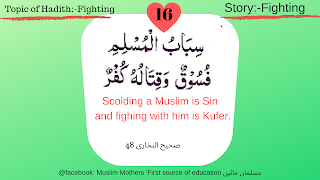
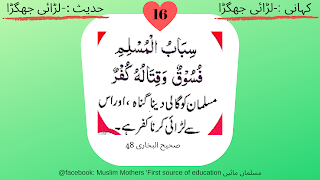
    The Topic of the Hadees of the Day is ‘Fighting with Muslims’.

    2. stories: Bilal R.A and Abu Daherr / Jews trick to conflict Muslims

    For English members:-

    hadith,

    Introduction:

    The topic of today’s hadith is about Abusing others, calling bad names, and fighting with other Muslim brothers, In Islam, it is a big sin to bully others and Kufer to fight with Muslims.

    Today, people behave more impatiently. So in this environment where people are not ready to bear others or forgive others, this hadith will teach them to forgive others, say sorry, and keep away from any kind of quarrel.

    In this session, we are presenting two important incidents/stories from the Life of Muhammad SAW and Shabah.

    1. The first is about scolding and calling names and the second is about fighting. In the concept of fights of the age of ignorance, we will show children the losses and negative impacts of fighting on daily life. They will learn to say sorry and forgetting of all the previous mistakes of others to make a strong Muslim brotherhood.

    2. Jews trick to conflict Muslims, Please read the full story from the link. I’m giving an outline of the story. In this story, a Jew who was actually a Munafiq invited some Muslims for dinner.

    During this, he raised some points that would make them remember their era of enmity. The wounds were re-opened, memories revived and a call to armed ensued. They choose a place and they fight again.

    When Prophet come to know this, he said, you were Jahlil Allah had guided you and honored you and escaped you from hellfire and reunite you. You will fight when I’m here with you.

    They realized that they are being trapped. People on both sides cried and begged for forgiveness. Now You can read the story yourself also.

    Written Stories of scolding and fight in english

    Video of the Hadith and story

    For Urdu members:-

    hadees,

      ہماری آج کی حدیث مسلمان کا آپس میں لڑناجھگڑنا اور برا بھلا کہنے کے متعلق ہے- آج کل کے بے صبرے پن اور عدم برداشت کے ماحول میں بچوں کو یہ حدیث معاف کرنا، معذرت کرنا اور لڑائی جھگڑے سے بچنا سکھاۓ گے..

    اس کہانی میں سیرت کے دو واقعیت پیش کے گیے ہیں. جن میں سے ایک دوسروں کو برا کہنے یا برے نام سے پکارنے اور لڑائی سے روکنے کے متعلق ہے-اور دوسرا زمانہ جاہلیت کی خاندانی لڑائیوں کے تناظر میں لڑائی کے نقصانات بتایے گے ہیں اور ساتھ میں معافی مانگنے ا ور پرانی رنجشوں کو دل سے نکل کر بھائی چارہ قائم کرنے کا سبق ملتا ہے

    اس حادث کو ترجمہ اور اس سے متعلق کہانی کے ساتھ نیچے دے گئی ویڈیو میں جمع کر دیا گیا ہے بچوں کو وڈیو دیکھیں اور ساتھ ساتھ ان  کے سوالوں کا جواب  دیں. اگر اس واقعہ کو تفصیل سے پڑھنا ہے موجودلنک میں پڑھ سکتے ہیں

    براہ مہربانی بچوں کو ویڈیو لگاکر دکھاتے ہوۓ ساتھ بیٹھیں اور ان کی توجہ اہم نقاط پر ڈالیں.اس کے بعد حدیث لکھنے میں بچوں کی مدد کریں ا ور حدیث یاد کروائیں اس کے ساتھ ساتھ پچھلی احادیث بھی دوہرائیں-بچوں کی حدیث کی تصویر نام کے ساتھ پوسٹ کریں. تا کہ اس سیشن کے آخر میں وہ سرٹیفکیٹ حاصل کر سکیں .اگر بچوں کی احادیث سناتے ہوۓ ویڈیوبھیجنا چاہیں تو وہ بھی بھیج سکتے ہیں.شکریہ  

          Recommended Book for Hadith activities
          Recommended Book for Hadith activities


    Video of this story in Urdu

    The written stories about scolding and fighting in Urdu

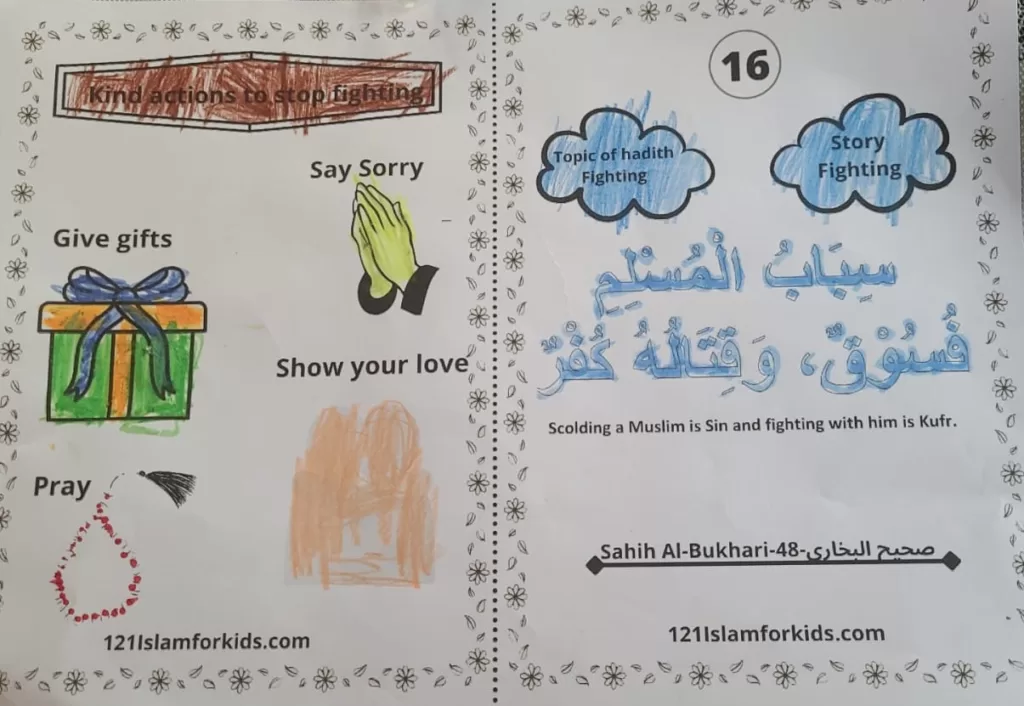
    Worksheet to stop fighting

    Hadith worksheets,

    Buy or view the workbook here

    Enrolments Available

    This is a short course of hadith and stories from My 30 short hadith with stories course. My hadith course is very much liked and appreciated by parents and students. Online group classes are available online for all time zones.

    Recommended age for the class Hadith for kids is for all. These classes are available in English and Urdu. If you want to enroll your child in our classes contact us via.

    Other courses we have

    • Online Quran classes for all levels.
    • Easy Tafseer for kids with interesting stories you can see that course in my hadith course tab.
    • Prayer for kids course is a short course to teach about taharat, Gusal, wudu, times of prayers, number and names of prayers, pillars and conditions, and prayer method. Search as Prayer for kids course on the search bar.
    • Ramzan boost course we do start 2 weeks before Ramzan.
    • Faith boos course In December to say No To Marry Christmas.
    • Kindness to Parents
    • Urdu classes for kids and beginners
    • Urdu Tutions for Matric and 0 levels/A level

    If you want to start this course with me then leave a comment, Email me or enroll your child here

    Students activities.

    https://www.youtube.com/watch?v=4WfvtkesqN8&t=6s
    https://www.youtube.com/watch?v=vkq2V17TIpE
    https://www.youtube.com/watch?v=6F9jqOOMhZY
    https://www.youtube.com/watch?v=qnQH9my91hs
  • How to teach 30 short Hadiths? Interesting stories with worksheets

    How to teach 30 short Hadiths? Interesting stories with worksheets

    Welcome to our Hadith Classes Online

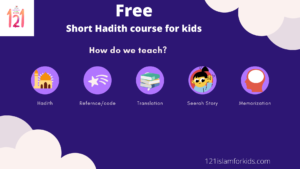
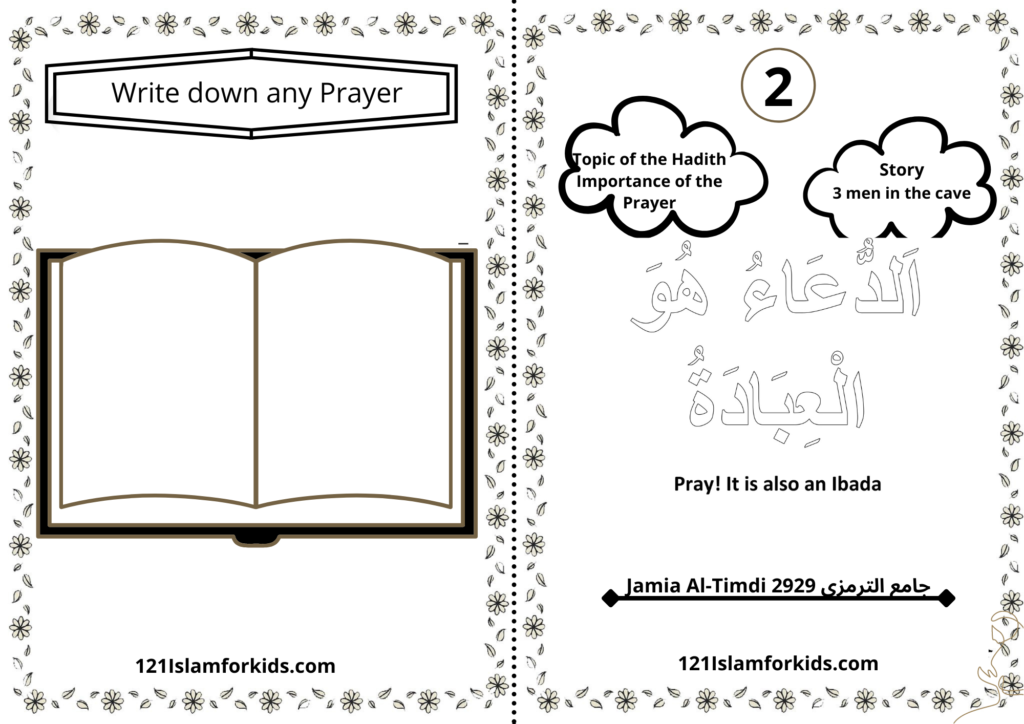
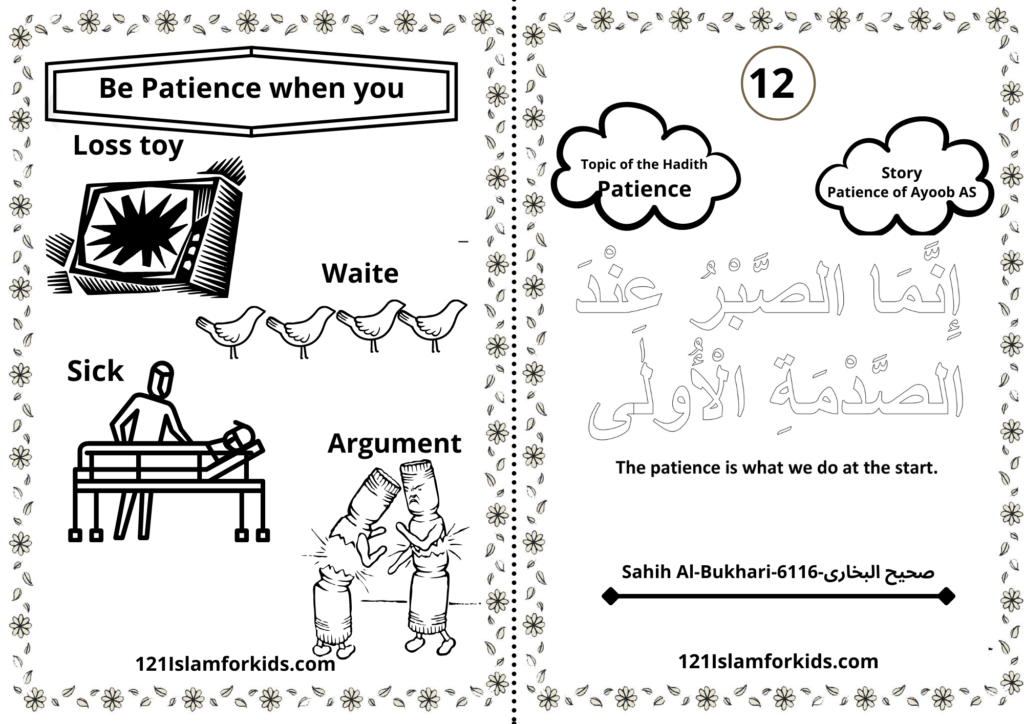
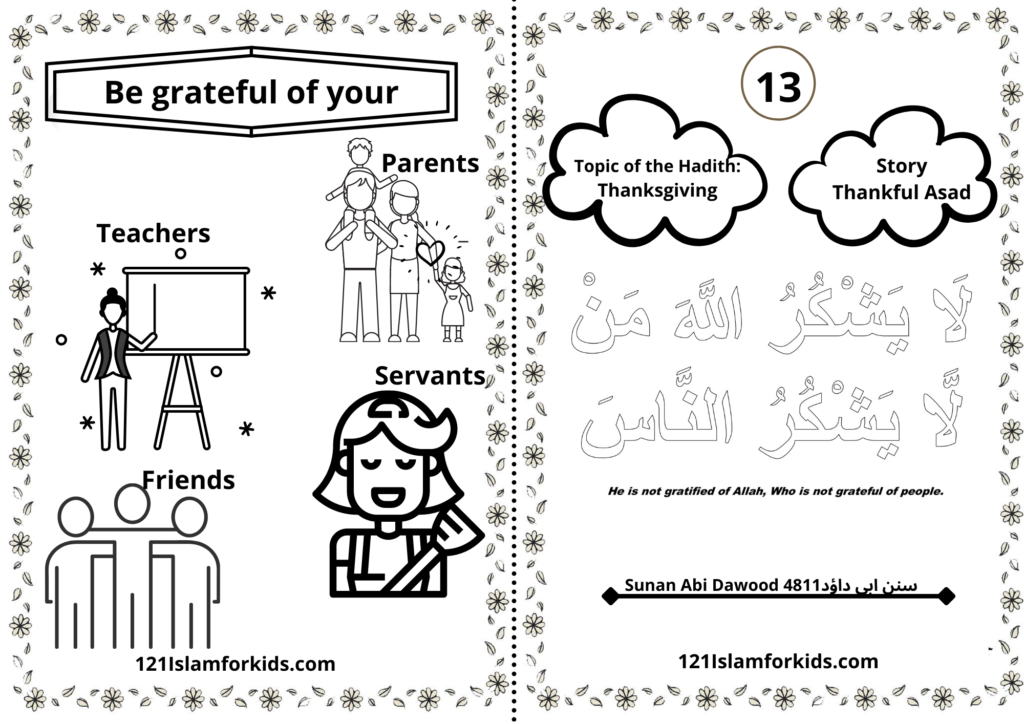
    We will provide you free 30 short Hadiths course with the introduction, stories, videos tips to teach, and worksheets


    Kitab-ul-Hadith for Kids.

    30 short Hadiths

    Overview
    30 short hadiths in Urdu and English were done with translation, references, and interesting stories/ videos. Age 5+ to 12 yrs.

    Goals
    Our goal is to teach hadiths with long-term memory. And to rebuild a love for Prophet Muhammad SAW  in the hearts of our children.

    Specifications
    All these hadiths are in attractive graphics. These all hadiths are authentic and taken from sahih books. To make it easier, the topic is also highlighted with a hadith translation. Every topic has a story we did in this session. Stories are available in pdf and youtube videos. Visit my page to subscribe to my website and channels.
    Milestones

    Activity at home
    June 2019 summer vacation. I started to teach short hadiths to my kids at home.

    We started as a storytime. Whiteboard was used to write hadith, code, and translation. Then after a little discussion, an interesting story would be told to the kids. And then they wrote these hadiths into their Alkitab-ul-Hadith.(Children’s personal journal).

    Group work.
    My online students and some mothers asked me to share this online with their kids. So I started to make videos of all hadiths with stories. I started to share 1 hadith weekly. And kids were also sharing their hadiths activities in my group.so we completed these hadiths in 30 weeks. You can join our group to learn and teach hadiths where I will keep sharing hadith weekly.

    Tips to teach.

    Hadith Classes Online
    Free hadith worksheets


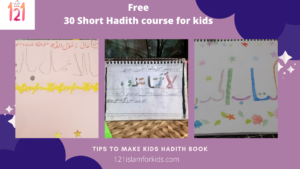
    Make a small journal, or handbook(sketchbook) (Or Use our worksheet book designed for kids. scroll down to see the book.)
    Write the title cover of  Alkitab-ul-hadith and the name of the child.
    Use my hadith video(Urdu/English) or write this hadith yourself on the whiteboard.
    Watch videos for the story or tell stories yourself (stories would be according to the topic. Visit my site for written stories)
    Ask your child to write hadith into their book.
    Design the book and hadith with colors.
    Revise hadiths many times and try to memorize them. According to the age of children.
    For the children under 8, write hadiths yourself in their book and ask them to color. During this, they will repeat hadiths to understand it.

    Day 1 – The introduction of Hadees.

    Hadith Classes Online

    • For English Members.
      Hadees means talks or words of someone.
      Hadees-i-Nabi means words, talks, and actions of our Prophet Muhammad SAW. Where he explained the verses of the Quran, told us does and forbidden in Islam, and guided us on how to live life and he also gave us news of Gaib.
      All the words of Our Nabi SAW are from Allah and are true.
      In Quran Allah SWT says, “and the life of Muhammad SAW is the best role model for you. “That’s why we are starting to learn Hadees. And we will also get Ajer and a good reward from Allah if we learn and forward Ahadees.
      Prophet of Allah said,
      Allah will enlighten the face of those who will learn and forward my Hadees to others.
      The Books of Ahadees are Sahi Bukhari, Sahi Muslim, Ahmad bin Hanbal, Ibn-i-Maja, Jamia Termizi, etc. We will choose some short parts from the Hadith and then do the translation, Tafseer, and a moral/Seerah story with the topic of the hadith.I will provide the Hadith and Story about the Topic with some explanation of Hadith.
      Tips to make this book:-
      Let’s start the First step
      This is a child-parent activity.
      All you have to do is …
      Please make (A Hadees Book) KITAB-UL-HADEES for your child.
    • Make a lap book of hands/heart-shaped craft book with colored papers..(Sample)
    • Take any mini sketchbook. (My kids are using this one)
    • Make a book of yourself with Some  A4 paper, cut them in half, and then step again.
    • Make its cover. (my kids mostly make these books for their drawing collections. (let me know if you want to see it.
      Use any kid’s dairy. (sample)
    • 30 short Hadiths

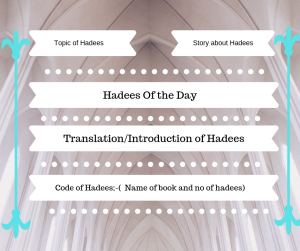
    Template of Hadith book:-
    1. Please make a cover page of books with the name of the book and the child.

    2. Design the template of the next page for your kid to help to make themselves in the future. (you can watch the video in the last sharing)

    Here down is the template of our Hadees Journal.

    30 short Hadiths

    Or You can Buy My Hadith with stories course worksheets. Watch the worksheet photos down or video

    As described above, we will cover 1 Hadees in three days. (Maximum 6 days)

    Day 1. To teach Hadees with Translation/definition of Hadees, the code of Hadees, and a good story related to the topic of Hadees.

    Day 2. Children will write Hadees in a calligraphic style and good template design in their books and learn Hadees with code, story, and topic of Hadees.

    Day 3. Kids will revise and you will listen to the Hadees from children.

    Revision/listening All previous Ahadiths is compulsory.

    You could share your picture of every hadith activity.

    30 short Hadiths


    30 short Hadiths in Urdu,

    اسلام وعلیکم

    آج سے ہم بچوں کو حدیث سکھانے کا آغاز کرتے ہیں اور اس کے لیے ہم حدیث کے طرف سے شروعات کریں گے. بچوں کے لیے یہ جاننا بہت ضروری ہے  کہ حدیث کیا ہوتی ہے اور ہم یہ کیوں سیکھ رہے ہیں

    یہ ساری معلومات میں نے نیچے دے گئی ویڈیو میں ڈال دے ہیں. خود بھی سنیں اس میں دلچسبی لیں اور بچوں کو بھی سنائیں میں اپنے انداز میں میں بچوں کوحدیث سیکھانے کے لیے ہلکا پھلکا انداز اور ساتھ میں تفریح کے لیے کچھ کہانیاں سنایا کروں گے. جس سے بچے اگلی حدیث کا انتظار کریں گے. اور شوق سے سنتے سنتے بہت کچھ سیکھ لیں گے. پھر جب وہ حدیث سن کر لکھ لیا کریں گے اور ان کی دوہرا ی ہو گی تو وہ اور بھی اچھی طرح سیکھ لیں گے

    آپ سب کے لیے اس میں بہت آسانی ہو گی انشااللہ. آپ کے ذمہ صرف یہ ہے کہ میں ہر سوموار کو حدیث اپلوڈ کر دیا کروں گے آپ نے بچوں کے لیے کوئی یا خاص دن یا ان کا فارغ وقت دیکھ کر ویڈیو چلانی کرنی ہے.

    ساتھ الکتاب الحدیث اور بچوں کےکلر پنسل  وغیرہ رکھ دیا کریں اور جو بچے چھوٹے  ہیں ان کی ڈیزائنگ میں اور لکھنے میں مدد کریں. اگر آپ کا بچہ لکھ نہ سکے تو حدیث ٹریس کر دیا کریں.اگر بچہ اردو لکھ نہیں سکتا تو انگلش میں بھی لکھ سکتا ہے

    لیکن اس بات کو یقینی بنائیں کہ بچہ لکھیے ضرور چاہے تھوڑی تھوڑی کر کے پورے ہفتے میں

    اس کے کچھ فائدے ہیں. حدیث  لکھتے ہوۓ یاد ہو جایے گی

                                                                                یا آپ حدیث کورس کی ورک بک خرید لیں -جس پر احادیث لکھی ہویی ہیں

    حدیث شئیر کریں گے تو فکر سے لکھا کرے گا اور خوش ہو گا.

    یہ چیز بھی خوشی دے گی کہ اس کی اپنی کتاب الحدیث ہے

    اور آخر میں حدیث ختم ہونے پر سرٹیفیکٹ اور انعام بھی ملے گا..

    جزاک اللہ


    New edition

    I’m also providing Hadith course worksheets to children now. You can buy this soft book Here
    https://www.youtube.com/watch?v=9wgN8Fl8nn4

    A video for children to Understand what is Hadith.

    To Download a Pdf of these 30 Hadiths in Urdu and English. Comment Below.(Or download from here )

    Search All 3o hadiths with stories, videos, and Pictures in the Search box or scroll down.

    Online classes, Hadith course and Islamic studies for kids are Available. If you are interested then contact me for details.

    Tafseer for short Surahs

    Other courses we have

    Hadith with stories course consists of 30 short hadith for children with interesting stories you can see that course in my hadith course tab.
    Prayer for kids courses short courses to teach about taharat, Gusal, wudu, times of prayers, number and names of prayers, pillars and conditions of prayer, and method of prayer. Search as Prayer for kids course on search bar.
    Kindness to Parents
    Ramzan Boost course
    Faith boost course in December to say NO MARYY CHRISTMAS

    Enrolments Available

    Tafseer for kids’ group classes is available online for all time zones. Recommended age for the class tafseer for kids is 9+. These classes are available in English and Urdu. If you want to enrol your child in our classes contact us via.
    email: bhallitaha@gmail.com

    Facebook.

    Youtube Urdu Channel

    Youtube English Channel

    or leave a comment.

    Students activities

    https://youtu.be/jlWfixkPF4c
    https://www.youtube.com/watch?v=5UOT5Dyc66U
    https://www.youtube.com/watch?v=1jEXuHFKxsM
    https://www.youtube.com/watch?v=RvXRqIK4NjQ