
Every parent wants their children to develop healthy manners, discipline, confidence and affinity towards Islam. Introducing early learning of the Quran is one of the most effective ways of developing these attributes. The mind gobbles up knowledge like a sponge when it is young and habits gathered during childhood can remain for a lifetime.
In the modern era, the education of the Quran is approached with special significance along with the studies conducted in the schools. They know that their learning of the Quran is something more than just reading Arabic words. It also instills in the child the concept of patience, respect, focus, and responsibility.
The availability of modern learning techniques has simplified and globalized children’s learning of the Holy Quran. Even if families stay in Muslim countries or anywhere else in the world, they can now offer quality Islamic education at home, without any big difficulties.
There is no doubt that young children adapt to a new language and the sounds thereof faster than mature ones. They have better memory than other children and can easily recall and remember new words.
Hence, it is underscored by most Islamic scholars to begin early the education of the Quran for children. Further, children who start studying Noorani Qaida and basic Arabic pronunciation are likely to acquire fluency and tajweed at a later stage of their life.
Early learning also introduces children to the pronunciation of Arabic letters and it’s help to enter them into the recitation of Quran before they reach higher grades in school when the learning pressure will start.
The ones that study Quran on a continuous basis tend to get a sense of self-discipline in other aspects of their lives as well. Their Fixed-Time Class of Quran helps them to learn time management and consistency.
It’s easy to establish a good routine with even small daily lessons. Children value the Quran learning when learning this within their normal course of the day as this makes learning the Quran their natural course and not a burden.
This is important in the teen years when there are more distractions and hectic schedules.
Parents are instrumental in forming the character of their child. Children adopt good Islamic values at an early age when they are educated at home.
They learn wonderful values like honesty, kindness, respect to the parents, the patience and good behavior. These teachings impact on their mannerisms, speech patterns and relationships with others.
When a child’s overall exposure to Quran recitation and remembrance of the Quran is gradual and regular, then the emotion attached to Islam grows whilst in the womb.
Many parents used to have trouble finding qualified teachers in their areas to attend classes, or they would have to rely on their other school options.Many parents had difficulty finding a qualified teacher in their area to attend class or finding other school options. Online Learning has addressed many of these issues today.
The families now have flexibility to make one to one Quran classes at their home and any time they like. For parents with packed schedules, and children who go to school throughout the day, this is particularly useful.
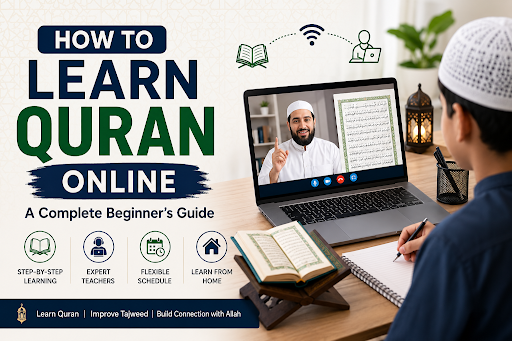
There are various reasons why many parents are now choosing an online Quran academy, including the flexibility of time and location, personalized attention, and the ability to access experienced quran teachers from around the globe. One of the advantages of opting for an online quran tutor is the convenience of flexibility, allowing for custom schedules, personal attention, and the availability of qualified quran instructors from all over the world.
There can be children who are intimidated by the classroom environment and are not inclined to ask questions in a group classroom. The one-on-one online classes help to establish a more relaxed learning setting.
The teacher can assume the right to dedicate himself to the thoughts and habits of the child’s pronunciation, errors and learning rate. Children’s practice goes into an accelerated and confident direction with this individual attention during recitation.
Personalized learning also provides a mechanism for teachers to adapt lessons based on being too young or not mature enough for the student.
Being taught proper tajweed does need practice and correction. Early attention provides children more time to gradually and naturally develop their pronunciation.
Under proper instructions, children with regular practice over the years will become accurate and fluent in quran recitations.
Teachers can spot Makharij errors from the get-go, before the errors become a way of life. This makes learning from the Quran easier in the future.
Kids spend a considerable amount of time on their phones, tablets and computers today. There are a lot of concerns raised in relation to the usage of screens and too much entertainment content.
Booking online classes of the Quran can enable technology to be productive and beneficial. Children can be reading and learning on digital devices about the religion of Islam as well, instead of playing games and watching videos.
This balance enables parents to steer children in the right direction in their use of the Web.
It is best to build children up when they feel appreciated and encouraged. The positive gestures of teachers and parents can make the learning of the Quran more interesting to them.
Children stay motivated by simple encouragement, frequent appreciation and measurable results. Students get very delighted to see their improvement in recitation or in memorization.
Develop a positive learning atmosphere more effectively than a tight pressure or compulsory way.
All children learn in their own unique way. Some students learn this very fast and others respond to this through additional iterations of time and repetition.
It is not a good idea for parents to make comparisons between children. Learning the Quran is a continuous process which takes time and patience.
The aim is not just speed but the understanding, good recital and love of the Quran.
A place nurtures a positive attitude to learning rather than fear of failure.
The positive effects of learning the Quran in childhood are often passed on from one generation to the next. As the children get acquainted with the Quran well at an early stage, they are likely to have better Islamic practices when they grow up.
Later in life, they are more likely to engage in religious practices, including returning to recitation, praying, learning about Islam, and practising good character.
The education of the Quran also helps the children to feel emotionally calm and connected spiritually, which is beneficial for them during challenging times in their lives.
Learning the Quran at a tender age is one of the best and most valuable investments parents can make for their children. This fortifies both Islamic knowledge and one’s own personality.
Today, families have more opportunities than ever before to deliver excellent Quran learning within the home through the use of the internet’s latest learning technologies.
Consistency, guidance and encouragement can help maintain a child’s awareness of the Quran and Islamic values for years of benefit.
© Copyright 2026 121 islam for kids. All rights reserved.