
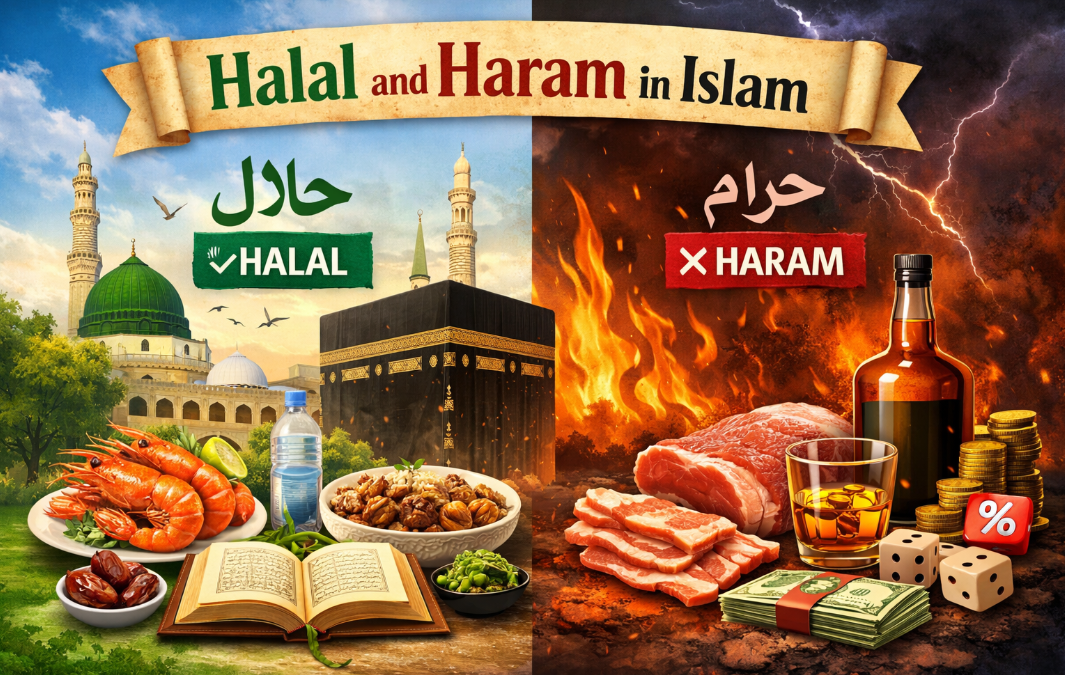
Halal and Haram in Islam define the moral and legal boundaries that guide a Muslim’s daily life. From food and finance to behavior and lifestyle choices, Islam provides clear principles to help believers distinguish between what is permissible (Halal) and what is forbidden (Haram). Understanding Halal or Haram in Islam is essential for practicing faith with sincerity and consciousness of Allah.
Islamic rulings are derived from the Qur’an, authentic Hadith, and scholarly consensus (Ijma). These sources ensure that Muslims follow a balanced and ethical way of life that promotes spiritual purity, physical well-being, and social justice.
What Does Halal and Haram Mean in Islam?
Meaning of Halal in Islam
The word Halal means lawful or permissible according to Islamic law (Shariah). Anything declared Halal is allowed for Muslims without sin or hesitation. Halal commonly applies to food and drink but also includes earning methods, clothing, relationships, and daily conduct.
Meaning of Haram in Islam
Haram refers to actions or items that are strictly prohibited in Islam. Engaging in Haram knowingly is considered sinful. Common examples include consuming alcohol, pork, interest (riba), theft, and dishonesty.
Importance of Halal or Haram in Islam
Understanding Halal or Haram in Islam helps Muslims:
- Maintain spiritual cleanliness
- Strengthen obedience to Allah
- Protect physical and mental health
- Promote ethical and moral living
Allah commands believers to consume what is pure and lawful and to avoid doubtful matters that may lead to sin.
Halal and Haram Foods in Islam
Food is one of the most discussed aspects of Halal and Haram in Islam, especially when it comes to seafood and non-vegetarian items.
General Rules for Halal Food
- The food must be clean and pure
- It must not contain forbidden substances
- Animals must be slaughtered according to Islamic guidelines
- It must not be harmful to health
Prawns Halal or Haram in Islam?
Scholarly Opinions on Prawns
The ruling on prawns halal or haram in Islam varies slightly among Islamic schools of thought:
- Hanafi School: Some scholars consider prawns Makruh or Haram, as they classify them as insects rather than fish.
- Shafi’i, Maliki, and Hanbali Schools: These schools generally consider prawns Halal, as they live in water and fall under permissible seafood.
Conclusion on Prawns
Most contemporary scholars and Islamic authorities consider prawns Halal, especially according to the majority opinion. However, Muslims are encouraged to follow the ruling of their school of thought.
Crab Is Halal or Haram in Islam?
Different Scholarly Views on Crab
The question “crab is halal or haram in Islam” also has differing opinions:
- Hanafi School: Generally considers crab Haram because it is not classified as a fish.
- Other Schools of Thought: Permit crab as Halal since it is a sea creature, and the Qur’an allows seafood.
Final Ruling on Crab
According to the majority of scholars, crab is Halal. However, followers of the Hanafi school may avoid it based on their jurisprudence.
How to Avoid Doubtful (Makruh) Matters
Islam encourages Muslims to stay away from doubtful matters that fall between Halal and Haram. When unsure:
- Consult reliable Islamic scholars
- Follow authentic references
- Choose what brings peace to the heart
Avoiding doubtful things strengthens faith and protects a believer from falling into Haram.
Conclusion
Halal and Haram in Islam are not restrictions but divine guidance meant to protect humanity and nurture spiritual growth. By understanding Halal or Haram in Islam, Muslims can make informed choices in food, lifestyle, and daily actions. Whether discussing seafood like prawns and crab or broader life matters, seeking knowledge ensures a life lived in obedience to Allah and peace of mind.