Welcome to our online hadith courses. This is a 30-short hadith with stories course(Teaching method). We have free stories, and videos to teach these hadiths online. You can also get a soft worksheets book to get more benefits from this course.
On this page, we are only introducing the meaning of charity in Islam, the best ways to give charity, and the teaching method of this hadith.
You can click down to get whatever you want from the site. stories, videos and Worksheets are also available.
The Topic of the Hadees of the Day is Sadqa(Charity)
Introduction of charity in English
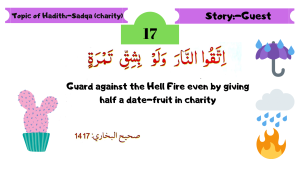
This a very important topic and it is revealed many times in many Ahadith and verses of the Quran. These Hadith peruse us to give charity so that we could guard ourselves against the hellfire.
In daily life, we may commit many mistakes and sins knowingly or unknowingly. And Our charity is the best form to vapor our sins. The important part of this hadith for kids is that they should know what is the best charity. Allah’s Prophet guided us in this case that we may give very little things in charity.
In another hadith, he said that picking a throne from the footpath is also a Sadqa. So we may not fear if we have nothing, we can give a good smile to others to get Ajer on that.
When I pursue my kids to give to charity, I always motivate them to share personal things with others. Because it is really a hard job to do so for kids as well as adults.
But if you do practice and overcome your greed and selfishness you may donate anything at any time for the sake of Allah. Once our Prophet said’ the best charity is food.’ So we should motivate our kids to share their lunch boxes, and their daily eatable things as well as they may donate other personal things.
In the subject of the story of this Hadith, I choose the story of one of the Companions of Prophet Muhammad SAW Hazrat Abu-Talha RA. He was one of the great men.
Once a guest visited him at night when there was very little food in his home. He asked his wife to extinguish the candlelight when they were eating so that the guest would think they were also eating. This is how they slept hungry that night. And Allah told his Prophet about this incident through a revelation.
You can teach this hadith with a story to your kids with the help of story or video. Please open the video of My story or tell the story to your kids yourself. In the end, don’t forget to write Hadith in the Hadees book. And share the picture of the Hadith for other activities you did for this Hadith(Comment).
You can make a video of any story of your Morality and send us. Share this story with your Grandparents.
If your child will complete 30 short hadith, We will provide a certificate of completing 30 short Ahadith. May Allah make it easy for you.
Note: -Spread this Hadees with your family and friend so that more people would get benefit from it.
ہماری آج کی حدیث صدقہ کی اہمیت کے بارے میں ہے.صدقہ کا موضوع قرآن اور حدیث میں متعدد بار آیا ہے
صدقہ ہماری نیکیوں میں اضافہ کرتا ہے اور گناہوں کو مٹاتا ہے-اس حدیث میں بھی یہی بتایا جا رہا ہے کہ چھوٹے سے چھوٹا صدقہ بھی ہماری لیے جہنم کی آگ سے بچاؤ کا ذریعہ بن سکتا ہے
آج کی حدیث کے ساتھ جو کہانی پیش کی جا رہی ہے وہ بھی اسی موضوع پر ہے
قابل عمل بات یہ ہے کہ صرف کہانی سنا دینا اور حدیث یاد کر لینا ہے مقصد نہیں بلکہ عملی زندگی میں بچوں کو زیادہ سے زیادہ صدقہ کرنے کی عادت ڈالیں
بچوں کے ہاتھ سے رقم دلوانے کی بجایے کھانا تقسیم کروائیں، ان کے پسندیدہ کھلونوں میں سے کچھ کھلونے دوسروں کو دینے کی ترغیب دیں . اور اس کے علاوه بچوں کو اپنی چیزیں دوسروں کے ساتھ مل کر استعمال کرنے کی عادت ڈالیں
مثلا اپنا لنچ دوستوں کے ساتھ مل کر کھانا اور بہن بھائیوں کے ساتھ مل کر کھیلیں. وغیرہ
یاد رکھیں ھمارے بچے ہماری جنت بھی ہیں اور جہنم بھی- ہمیں ان کی تربیت کو معاشرے کے ہاتھوں میں نہیں دینا کہانی اور حدیث کا ترجمہ اور تفسیر نیچے دیا جا رہا ہے.بچوں کو وڈیو دیکھیں اور ساتھ ساتھ ان کے سوالوں کا جواب بھی دیں. اگر اس واقعہ کو تفصیل سے پڑھنا ہے تو آاپ انگلش والے سیکشن میں موجودلنک میں پڑھ سکتے ہیں
This is a short course of hadith and stories from My 30 short hadith with stories course. My hadith course is very much liked and appreciated by parents and students. Online group classes are available online for all time zones.
Recommended age for the class Hadith for kids is for all. These classes are available in English and Urdu. If you want to enroll your child in our classes contact us via.
Easy Tafseer for kids with interesting stories you can see that course in my hadith course tab.
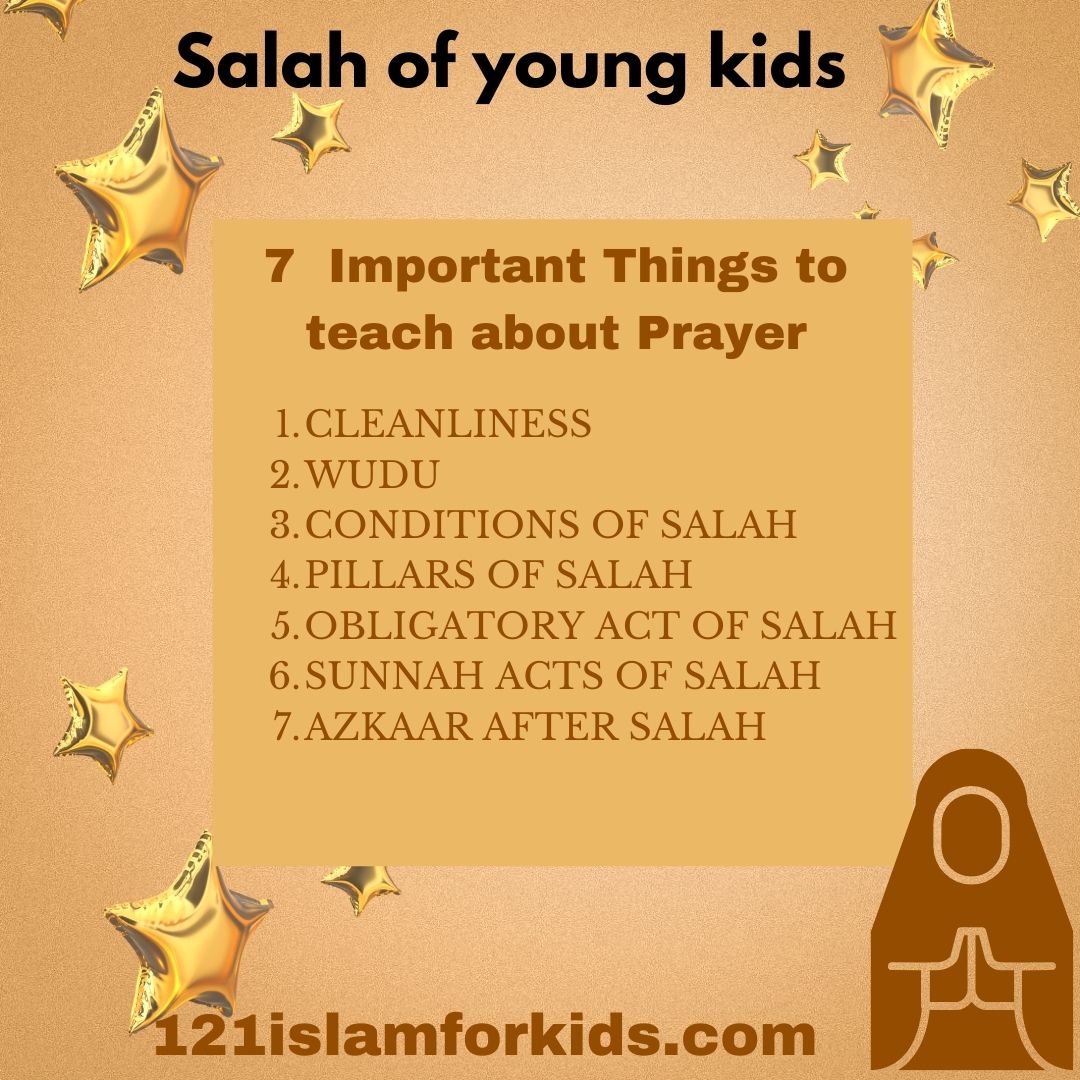
Prayer for kids course is a short course to teach about taharat, Gusal, wudu, times of prayers, number and names of prayers, pillars and conditions, and prayer method. Search as Prayer for kids course on the search bar.
Welcome to our online hadith courses. This is a 30-short hadith with stories course(Teaching method). We have free stories, and videos to teach these hadiths online. You can also get a soft worksheets book to get more benefits from this course.
What is a patience in Islam and how we can teach this to our kids? We have stories, videos, and worksheets to teach. In this post, the teaching method has been discussed in Urdu and English. Scroll down to get stories and worksheets.
Table of Contents
30 SHORT HADITH COURSES ONLINE.
Hadith and story of the Day.
DAY .13…HADITH NO 12 👇🏃♂️ 🌷Aslam-O-Alaikum Dear members.🌷 Our today’s Hadeestaken from Sahih al-Bukhari 1238. The Topic of the Hadees of the Day is– Patience.
The best story on the Patience is, Story of Prophet Ayob A.S
🌈🌸 Hadith course in English 🌈🌸
What is Patience?
💦💦Getting hurt or losing anything is a routine thing for children. But how does your child reacts to this? He makes noise, cries, and tries to hurt others too. This is the behavior we need to overcome. This Hadith and story will teach the children, how we can show patience towards our hardships. And worksheet will help them to learn patience. .
It’s up to parents that they read the full story of The hardships of Ayub A.S. or play the video in English or Urdu. His patience and gratitude towards Allah. My request to parents is, Please practice your first and be patient when you are in trouble and then expect your child to do so.
.💦children can write the hadith in their hadith journal or solve worksheets and send us pictures. An E. certificate will be provided if any child would complete this course. Share the picture of the Hadith and worksheet within the comment box.
بچوں کو چوٹ لگنا ان کا کھلونا ٹوٹ جانا یا پھر چیزیں گم جانا ایک روز مرہ کی بات ہے – مگر اس صورت میں بچوں کا رویہ کیا ہوناچاہنے ؟یہ ایک اہم بات ہے-بچوں میں صبر کا جذبہ موجود نہ ہو تواس کا اظہار بہت غلط طریقے سے کرتے ہیں اور بچے رو دھوکرا ور چیخ چلا کر اپنی جذبات کا اظہار کرتے ہیں-آج کی حدیث بچوں کوہر حال میں صبر اور شکر کرنا سکھائے گی
.مگر ہم سب کو یاد رکھنا چاہے. کہ تعلیم کے ساتھ ساتھ تربیت بھی ضروری ہے.لہذا یہ حدیث بچوں کو سیکھاتے ھوے خود بھی حضرت ایوب کی زندگی پر غور و فکر کریں -ہماری زندگی میں بھی ایسے بہت سے لوگ آتے ہیں جو ہمدردی کے نام پر ہم سے اللہ کی ناشکری کرواتے ہیں. ہمیں چاہئیے کہ شیطان کے وار سے بچیں اور اپنے اندر بھی صبر و برداشت لائیں .تا کہ بچہ اس چیز کو قبل عمل سمجھے
💦💦 حدیث اس کا ترجمہ ،تفسیر اورحضرت ایوب کی کہانی پر اثر تصویروں کے ساتھ اس ویڈیو میں جمع کر دی گئی ہے💦💦 🌈🌈براہ مہربانی بچوں کو ویڈیو لگاکر دکھاتے ہوۓ ساتھ بیٹھیں اور ان کی توجہ اہم نقاط پر ڈالیں.اس کے بعد حدیث لکھنے میں بچوں کی مدد کریں ور حدیث یاد کروائیں اس کا ساتھ ساتھ پچھلی احادیث بھی دوہرائیں
This is a short course of hadith and stories from My 30 short hadith with stories course. My hadith course is very much liked and appreciated by parents and students. Online group classes are available online for all time zones.
Recommended age for the class Hadith for kids is for all. These classes are available in English and Urdu. If you want to enroll your child in our classes contact us via.
Easy Tafseer for kids with interesting stories you can see that course in my hadith course tab.
Prayer for kids course is a short course to teach about taharat, Gusal, wudu, times of prayers, number and names of prayers, pillars and conditions, and prayer method. Search as Prayer for kids course on the search bar.
Welcome to our online hadith courses. This is a 30-short hadith with stories course(Teaching method). We have free stories, and videos to teach these hadiths online. You can also get a soft worksheets book to get more benefits from this course.
Scroll down to get whatever you more from the site.
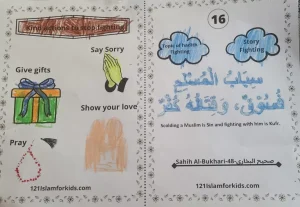
The topic of today’s hadith is about Abusing others, calling bad names, and fighting with other Muslim brothers, In Islam, it is a big sin to bully others and Kufer to fight with Muslims.
Today, people behave more impatiently. So in this environment where people are not ready to bear others or forgive others, this hadith will teach them to forgive others, say sorry, and keep away from any kind of quarrel.
In this session, we are presenting two important incidents/stories from the Life of Muhammad SAW and Shabah.
The first is about scolding and calling names and the second is about fighting. In the concept of fights of the age of ignorance, we will show children the losses and negative impacts of fighting on daily life. They will learn to say sorry and forgetting of all the previous mistakes of others to make a strong Muslim brotherhood.
2. Jews trick to conflict Muslims, Please read the full story from the link. I’m giving an outline of the story. In this story, a Jew who was actually a Munafiq invited some Muslims for dinner.
During this, he raised some points that would make them remember their era of enmity. The wounds were re-opened, memories revived and a call to armed ensued. They choose a place and they fight again.
When Prophet come to know this, he said, you were Jahlil Allah had guided you and honored you and escaped you from hellfire and reunite you. You will fight when I’m here with you.
They realized that they are being trapped. People on both sides cried and begged for forgiveness. Now You can read the story yourself also.
ہماری آج کی حدیث مسلمان کا آپس میں لڑناجھگڑنا اور برا بھلا کہنے کے متعلق ہے- آج کل کے بے صبرے پن اور عدم برداشت کے ماحول میں بچوں کو یہ حدیث معاف کرنا، معذرت کرنا اور لڑائی جھگڑے سے بچنا سکھاۓ گے..
اس کہانی میں سیرت کے دو واقعیت پیش کے گیے ہیں. جن میں سے ایک دوسروں کو برا کہنے یا برے نام سے پکارنے اور لڑائی سے روکنے کے متعلق ہے-اور دوسرا زمانہ جاہلیت کی خاندانی لڑائیوں کے تناظر میں لڑائی کے نقصانات بتایے گے ہیں اور ساتھ میں معافی مانگنے ا ور پرانی رنجشوں کو دل سے نکل کر بھائی چارہ قائم کرنے کا سبق ملتا ہے
اس حادث کو ترجمہ اور اس سے متعلق کہانی کے ساتھ نیچے دے گئی ویڈیو میں جمع کر دیا گیا ہے بچوں کو وڈیو دیکھیں اور ساتھ ساتھ ان کے سوالوں کا جواب دیں. اگر اس واقعہ کو تفصیل سے پڑھنا ہے موجودلنک میں پڑھ سکتے ہیں
براہ مہربانی بچوں کو ویڈیو لگاکر دکھاتے ہوۓ ساتھ بیٹھیں اور ان کی توجہ اہم نقاط پر ڈالیں.اس کے بعد حدیث لکھنے میں بچوں کی مدد کریں ا ور حدیث یاد کروائیں اس کے ساتھ ساتھ پچھلی احادیث بھی دوہرائیں-بچوں کی حدیث کی تصویر نام کے ساتھ پوسٹ کریں. تا کہ اس سیشن کے آخر میں وہ سرٹیفکیٹ حاصل کر سکیں .اگر بچوں کی احادیث سناتے ہوۓ ویڈیوبھیجنا چاہیں تو وہ بھی بھیج سکتے ہیں.شکریہ
Recommended Book for Hadith activities Recommended Book for Hadith activities
This is a short course of hadith and stories from My 30 short hadith with stories course. My hadith course is very much liked and appreciated by parents and students. Online group classes are available online for all time zones.
Recommended age for the class Hadith for kids is for all. These classes are available in English and Urdu. If you want to enroll your child in our classes contact us via.
Easy Tafseer for kids with interesting stories you can see that course in my hadith course tab.
Prayer for kids course is a short course to teach about taharat, Gusal, wudu, times of prayers, number and names of prayers, pillars and conditions, and prayer method. Search as Prayer for kids course on the search bar.
Sunan Nisai 9889|Darood on Prophet Muhammad| Darood is a part of prayer| Why it is so important and we should always recite it? Read story.
Welcome to our online hadith courses. This is a 30-short hadith with stories course(Teaching method). We have free stories, and videos to teach these hadiths online. You can also get a soft worksheets book to get more benefits from this course.
Table of Contents
Let’s start
🌷Aslam-O-Alaikum Dear members.🌷
Our today’s Hadees with explanation and video is added here in Urdu and English. If you want to read this story in English Udu visit our stories tab. 👇
Day .15…Hadees No 14 👇🏃♂️
The Topic of the Hadees of the Day –Darood.
The story: Excellamncy of Prophet Ibrahim and Darood I Ibrahim.
For English Members:
Hadith Explained_ Importance of Darood Prophet Muhammad SAW
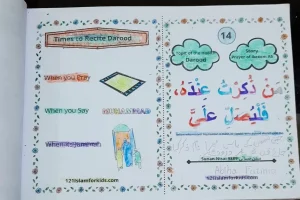
With the Hadees about Darood, we will teach our kids about the importance of Darood. All of us sent Darood when we listen or say The name of our prophet Muhammad SAW.
But many of us don’t know that this is actually a prayer for the prophet and His Family. So our story of this Hadees will explain the background of Darood, Darood Ibrahim, and Salwat.
As regards the story about the Hadith, there is no story that fits exactly our topic of the Hadees.
So I decided to write it myself. In this story I will give some information about the Darood and prayers of Prophet Ibrahim and Prophet Muhammad SAW for their children, family, and for their deen.
Here is the outline of the story. Our prophet Muhammad SAW asked His Companions and His Ummah to send prayers because he wished he could get the Barakah in his children and his Deen like the Prophet Ibraheem was given.
In the second step, The story explains that Ibraheem was a very noble man and Allah gave him Barak in children. Bayt-ul-Allah was also built by him. Allah was happy with him. But he got all this nobility and barakah after many hardships and trials from Allah.
He was pushed into the fire, he left his house and father for sake of Allah. He was also asked to leave his infant boy in a desert, and then sacrifice his young son.
After so many hardships Allah found him so sincere with his God and his deen. So Allah accepts all his sacrifices and prayers and sent many prophets into his family. Till the day of judgment, his footsteps will be followed by all Muslims during Haj and Umrah.
And it is a compulsory part of our prayers to read Darood Ibraheem. Our prophet Muhammad SAW ordered all his Ummahs to send Darood(prayers)on him so that he may get that much barakah and nobility from Allah.
And our prophet also wished to have a big number of Ummah so that he would get pride in having the largest Ummah of all prophets. So now it’s our duty to send Darood on our prophets as well as preach to others to accept Islam so that Muslim Ummah would increase in number and It would make our prophet proud.
Please help your kids to understand the Hadith. If you have any story related to this topic, read them. n the end, don’t forget to write Hadith in the Hadees book. Or solve worksheets.
You can share the picture of the Hadith for other activities you did for this Hadith. So that your kids would get the certificate of completing their Ahadith.
May Allah make it easy for you. Note: -Spread this Hadees with your family and friend so that more people would benefit from it.
ہماری آج کی حدیث بھی بہت پیاری ہے -آج کی حدیث کا موضوع درود اور اس کی اہمیت کے بارے میں ہے -ہم سب پیارے نبی کا نام لیتے ہیں تو ان پر صلوات ضرور بھیجھتے ہیں
.لیکن ہم سب اس کی اہمیت اور اصل کے بارے میں بہت کم جانتے ہیں. یہ درود اصل میں ایک دعا ہے جو ہم اپنے نبی کے لیے مانگتے ہیں کہ الله انہیں ا ور ان کی اولاد کو ویسی ہی برکت اورفضیلت عطا فرمایے جیسی کی ابراہیم کو عطا فرمائی
آج کی کہانی میں حضرت ابراہیم کی آزمائشیں اور ان کی ثابت قدمی کے بارے میں مختصر بتا کر ان کو ملنے والی برکتوں کے بارے میں بتایا گیا ہے. اور ساتھ یہ بھی کہ ہمیں اپنے نبی پر درود کیوں پڑھنا ہےباقی تفصیل کہانی میں ہے.
راہ مہربانی بچوں کو ویڈیو لگاکر دکھاتے ہوۓ ساتھ بیٹھیں اور ان کی توجہ اہم نقاط پر ڈالیں.اس کے بعد حدیث لکھنے میں بچوں کی مدد کریں ا ور حدیث یاد کروائیں اس کے ساتھ ساتھ پچھلی احادیث بھی دوہرائیں بچوں کی حدیث کی تصویر نام کے ساتھ پوسٹ کریں.
تا کہ اس سیشن کے آخر میں وہ سرٹیفکیٹ حاصل کر سکیں .اگر بچوں کی احادیث سناتے ہوۓ ویڈیو بیجھنا چاہیں تو وہ بھی بیجھ سکتے ہیں.شکریہ
This is a short course of hadith and stories from My 30 short hadith with stories course. My hadith course is very much liked and appreciated by parents and students. Online group classes are available online for all time zones.
Recommended age for the class Hadith for kids is for all. These classes are available in English and Urdu. If you want to enroll your child in our classes contact us via.
Easy Tafseer for kids with interesting stories you can see that course in my hadith course tab.
Prayer for kids course is a short course to teach about taharat, Gusal, wudu, times of prayers, number and names of prayers, pillars and conditions, and prayer method. Search as Prayer for kids course on the search bar.
Welcome to Our Hadith with stories course for Kids. You are going to Start a short course for your child. After this course, your children would have their own mini 🌷🌷-Kitab -UL-Hadess🌷🌷 (For a Description of this Free online course scroll down)
Here is the “First Hadees of Our hadith with stories course for kids
Day 2. Lesson No 2
Hadith no 1.
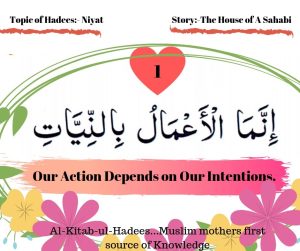
Hadith on Intentions(Niyat)
Download a Free Pdf Book of 30 short Hadith from Here
For English Students🌷🌷:-
This is the first Hadith of Sahi Bukhari. It has a deep meaning in it. All deeds and life goals are depended on our intentions. So our purpose of learning, devoting ourselves to Islam and our actions could not be separated from our intentions. Nobody knows but Allah knows.
With Hadith translation and meanings we will explain to kids that they will get a reward for their intentions. And that we will get what we will intend to do. So doing every little deed we should set our intentions for the sake of Allah.
For Example, Our education, learning Hadith, eating, sleeping, traveling, and every single step of the day should be to please Allah. So when we will make an intention we will get help from Allah to complete that work.
The best tip to make good intentions is that always say supplications before doing anything. According to our topic of this Hadith, I suggested the story of a man who built a house. Which is one of the Seerat stories.
The outline of the story is here…..
The House of A Sahabi RA.
The theme of this story is that Once a sahabi RA built a house and built a window in it. The Prophet SAW asked the man, Why you built this window?
He(RA) Replied: For fresh air and light.
Nabi SAW said,; if you wish to hear the voice of the Adhan(Azan) you will get Ajer on this window forever. And the fresh air and light will be supplied to you also.
Story written in Urdu and English is available at the site in the Urdu stories tab and English stories tab.
We have a Video of this Hadith with a story for children. Play a video for your kids or Tell a story and Hadith yourself if your kids don’t use Devices..
🌷Best Of Luck👍🌷
The kids will write the Hadees with the template shared in the Introduction post of the hadith with stories course.(Hadith Introduction and tips to Teach 30 short Hadith with Stories.) Or you can buy a workbook for your child from us. The introduction of that book with a picture of the Worksheet is given below.
Revise the Hadees many times to Learn by heart. To complete these 30 hadiths in this course, You have to complete this task in Three Days. Then IN SHA Allah, this course will be complete in less than 5 months.
Don’t forget to share the picture/audio/video of your Hadith work/ activities in the comment box.
یہ صحیح بخاری کی سب سے پہلی حدیث ہے. اس سے اس کی اہمیت کا پتا چلتا ہے. ہم مسلم ہیں اس پر ہم خوش ہیں یا تنگ-ہم نماز روزہ صدقہ دل کی خوشی سے سے کرتےہیں -کیا ہم صفائی ، دوسروں کا خیال اور بچوں کی تربیت الله کا حکم سمجھ کر ثواب حاصل کرنے کے لیے کرتے ہیں
اب بچوں کی طرف آئیں اور ذرا غور کریں ہماری یہی نیتیں ھمارے بچوں کے اعمال اور ان کی تربیت پر بھی اثر ڈالتی ہیں ہمیں اپنے بچوں کو یہ بتانا ضروری ہے کہ والدین کی عزت کرو- اس لیے کے اس سے اللہ خوش ہو گا تعلیم حاصل کرو یہ اللہ کا حکم بھی ہے ا ور اس سے تمہیں اپنی تخلیق کا مقصد اور اللہ کی معرفت ہو گے.
اچھا صاف پاک کھانا کھاؤ تا کہ تمہاری صحت اچھی رہے ا ور تم دین اور نیکی کے کام کر سکو – اچھا صاف ستھرا لباس اور جسم رکھو تا کہ سنت کا ثواب بھی ملے اور اللہ کی برکت بھی ہو. بہنوں کام وہی ہیں جن کے لیے والدین دن رات محنت کرتے ہیں.اورزیادہ سے زیادہ والدین کھانا،لباس اور تعلیم ہی دینے کے لیے ڈور دھوپ کرتے ہیں-لیکن اس کےپیچھے نیت سب کی مختلف ہوتی ہے
ئیں آج سے اپنی نیت درست کر لیں حدیث کے تعلق سے ہماری نیت یہ ہے کہ ان شا اللہ ہم یہ حدیث اس لیے سیکھیں گے کہ اللہ خوش ہو نبی کی سیرت ا ور حادث سیکھنے یاد کرنے کا ثواب ملے حدیث سن کر اپنے عمل درست کر سکیں بچے نبی کی پیاری باتیں یاد کر کے دوسرروں کو سنائیں نبی کی سیرت کا اثر ھمارے بچوں کی شخصیت پر آئے حدیث اس کا ترجمہ اور ایک پیاری سے کہانی ویڈیو کی صورت میں ساتھ دے جا رہی ہے.
بچوں کو ویڈیو لگا کر دیں رنگ -کتاب-الحدیث اور ضروری چیزیں ساتھ دے کر بٹھائیں بچہ کوئی سوال پوچھے تو جواب دیں ا ور جب بچہ حدیث سن لے تو اس کو لکھنے کے لیے کہیں. پورا ہفتہ ہے بچوں کے پاس لکھ کر یاد کروائیں اور تصویر آڈیو یا ویڈیو ضرور بجھیں ورنہ سرٹیفکیٹ نہیں دیا جایے گا
Our PDF work Books Available to Buy(Buy these books by email or signup tab)
Enrolments Available
This is a short course of hadith and story from My 30 short hadith with stories course. Online group classes are available online for all time zones. Recommended age for the class Hadith for kids is 7+. These classes are available in English and Urdu. If you want to enroll your child in our classes contact us via.
Other courses we have
Easy Tafseer for kids with interesting stories you can see that course in my hadith course tab.
Prayer for kids course is a short course to teach about taharat, Gusal, wudu, times of prayers, number and names of prayers, pillars and conditions of prayer, and method of prayer. Search as Prayer for kids course on the search bar.
Overview 30 short hadiths in Urdu and English were done with translation, references, and interesting stories/ videos. Age 5+ to 12 yrs.
Goals Our goal is to teach hadiths with long-term memory. And to rebuild a love for Prophet Muhammad SAW in the hearts of our children.
Specifications All these hadiths are in attractive graphics. These all hadiths are authentic and taken from sahih books. To make it easier, the topic is also highlighted with a hadith translation. Every topic has a story we did in this session. Stories are available in pdf and youtube videos. Visit my page to subscribe to my website and channels. Milestones
Activity at home June 2019 summer vacation. I started to teach short hadiths to my kids at home.
We started as a storytime. Whiteboard was used to write hadith, code, and translation. Then after a little discussion, an interesting story would be told to the kids. And then they wrote these hadiths into their Alkitab-ul-Hadith.(Children’s personal journal).
Group work. My online students and some mothers asked me to share this online with their kids. So I started to make videos of all hadiths with stories. I started to share 1 hadith weekly. And kids were also sharing their hadiths activities in my group.so we completed these hadiths in 30 weeks. You can join our group to learn and teach hadiths where I will keep sharing hadith weekly.
Tips to teach.
Free hadith worksheets
Make a small journal, or handbook(sketchbook) (Or Use our worksheet book designed for kids. scroll down to see the book.) Write the title cover of Alkitab-ul-hadith and the name of the child. Use my hadith video(Urdu/English) or write this hadith yourself on the whiteboard. Watch videos for the story or tell stories yourself (stories would be according to the topic. Visit my site for written stories) Ask your child to write hadith into their book. Design the book and hadith with colors. Revise hadiths many times and try to memorize them. According to the age of children. For the children under 8, write hadiths yourself in their book and ask them to color. During this, they will repeat hadiths to understand it.
For English Members. Hadees means talks or words of someone. Hadees-i-Nabi means words, talks, and actions of our Prophet Muhammad SAW. Where he explained the verses of the Quran, told us does and forbidden in Islam, and guided us on how to live life and he also gave us news of Gaib. All the words of Our Nabi SAW are from Allah and are true. In Quran Allah SWT says, “and the life of Muhammad SAW is the best role model for you. “That’s why we are starting to learn Hadees. And we will also get Ajer and a good reward from Allah if we learn and forward Ahadees. Prophet of Allah said, Allah will enlighten the face of those who will learn and forward my Hadees to others. The Books of Ahadees are Sahi Bukhari, Sahi Muslim, Ahmad bin Hanbal, Ibn-i-Maja, Jamia Termizi, etc. We will choose some short parts from the Hadith and then do the translation, Tafseer, and a moral/Seerah story with the topic of the hadith.I will provide the Hadith and Story about the Topic with some explanation of Hadith. Tips to make this book:- Let’s start the First step This is a child-parent activity. All you have to do is … Please make (A Hadees Book) KITAB-UL-HADEES for your child.
Make a lap book of hands/heart-shaped craft book with colored papers..(Sample)
Take any mini sketchbook. (My kids are using this one)
Make a book of yourself with Some A4 paper, cut them in half, and then step again.
Make its cover. (my kids mostly make these books for their drawing collections. (let me know if you want to see it. Use any kid’s dairy. (sample)
Template of Hadith book:- 1. Please make a cover page of books with the name of the book and the child.
2. Design the template of the next page for your kid to help to make themselves in the future. (you can watch the video in the last sharing)
Here down is the template of our Hadees Journal.
Or You can Buy My Hadith with stories course worksheets. Watch the worksheet photos down or video
As described above, we will cover 1 Hadees in three days. (Maximum 6 days)
Day 1. To teach Hadees with Translation/definition of Hadees, the code of Hadees, and a good story related to the topic of Hadees.
Day 2. Children will write Hadees in a calligraphic style and good template design in their books and learn Hadees with code, story, and topic of Hadees.
Day 3. Kids will revise and you will listen to the Hadees from children.
Revision/listening All previous Ahadiths is compulsory.
You could share your picture of every hadith activity.
آج سے ہم بچوں کو حدیث سکھانے کا آغاز کرتے ہیں اور اس کے لیے ہم حدیث کے طرف سے شروعات کریں گے. بچوں کے لیے یہ جاننا بہت ضروری ہے کہ حدیث کیا ہوتی ہے اور ہم یہ کیوں سیکھ رہے ہیں
یہ ساری معلومات میں نے نیچے دے گئی ویڈیو میں ڈال دے ہیں. خود بھی سنیں اس میں دلچسبی لیں اور بچوں کو بھی سنائیں میں اپنے انداز میں میں بچوں کوحدیث سیکھانے کے لیے ہلکا پھلکا انداز اور ساتھ میں تفریح کے لیے کچھ کہانیاں سنایا کروں گے. جس سے بچے اگلی حدیث کا انتظار کریں گے. اور شوق سے سنتے سنتے بہت کچھ سیکھ لیں گے. پھر جب وہ حدیث سن کر لکھ لیا کریں گے اور ان کی دوہرا ی ہو گی تو وہ اور بھی اچھی طرح سیکھ لیں گے
آپ سب کے لیے اس میں بہت آسانی ہو گی انشااللہ. آپ کے ذمہ صرف یہ ہے کہ میں ہر سوموار کو حدیث اپلوڈ کر دیا کروں گے آپ نے بچوں کے لیے کوئی یا خاص دن یا ان کا فارغ وقت دیکھ کر ویڈیو چلانی کرنی ہے.
ساتھ الکتاب الحدیث اور بچوں کےکلر پنسل وغیرہ رکھ دیا کریں اور جو بچے چھوٹے ہیں ان کی ڈیزائنگ میں اور لکھنے میں مدد کریں. اگر آپ کا بچہ لکھ نہ سکے تو حدیث ٹریس کر دیا کریں.اگر بچہ اردو لکھ نہیں سکتا تو انگلش میں بھی لکھ سکتا ہے
لیکن اس بات کو یقینی بنائیں کہ بچہ لکھیے ضرور چاہے تھوڑی تھوڑی کر کے پورے ہفتے میں
اس کے کچھ فائدے ہیں. حدیث لکھتے ہوۓ یاد ہو جایے گی
یا آپ حدیث کورس کی ورک بک خرید لیں -جس پر احادیث لکھی ہویی ہیں
حدیث شئیر کریں گے تو فکر سے لکھا کرے گا اور خوش ہو گا.
یہ چیز بھی خوشی دے گی کہ اس کی اپنی کتاب الحدیث ہے
اور آخر میں حدیث ختم ہونے پر سرٹیفیکٹ اور انعام بھی ملے گا..
جزاک اللہ
New edition
I’m also providing Hadith course worksheets to children now. You can buy this soft book Here
https://www.youtube.com/watch?v=9wgN8Fl8nn4
A video for children to Understand what is Hadith.
To Download a Pdf of these 30 Hadiths in Urdu and English. Comment Below.(Or download from here )
Search All 3o hadiths with stories, videos, and Pictures in the Search box or scroll down.
Online classes, Hadith course and Islamic studies for kids are Available. If you are interested then contact me for details.
Hadith with stories course consists of 30 short hadith for children with interesting stories you can see that course in my hadith course tab.
Prayer for kids courses short courses to teach about taharat, Gusal, wudu, times of prayers, number and names of prayers, pillars and conditions of prayer, and method of prayer. Search as Prayer for kids course on search bar.
Kindness to Parents
Ramzan Boost course
Faith boost course in December to say NO MARYY CHRISTMAS
Enrolments Available
Tafseer for kids’ group classes is available online for all time zones. Recommended age for the class tafseer for kids is 9+. These classes are available in English and Urdu. If you want to enrol your child in our classes contact us via.
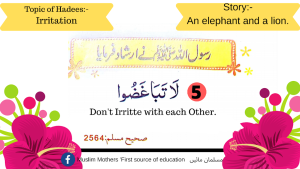
The Topic of the Hadees of the Day is Envy(Jealousy)Grudge (Irritation)
Hadith In English
❤ Kitab-Ul-Hadees 🌷
Day 5: Hadith #5 – Anger, Envy (Hasad), and Grudge (Bhugaz)/Irritation
Hadith Story and Worksheet on Controlling Negative Emotions
🌷 Assalaam-O-Alaikum Dear Students! 🌷
Welcome to an important lesson today! We are excited to share with you Hadith #5, which teaches us about three very dangerous emotional states that can harm our hearts, minds, and relationships. These three negative emotions – anger, envy, and grudge – are like diseases of the heart that can spread and cause serious damage to ourselves and others. Through this hadith and story, we will learn how to recognize these emotions, understand their destructive nature, and most importantly, how to overcome them with Islamic wisdom and strength.
Islam teaches us that a Muslim’s heart should be pure, filled with love, compassion, and gratitude. However, three emotions can poison our hearts and lead us away from the path of righteousness. Let’s understand each one:
Anger is a natural human emotion. We all feel angry sometimes. However, when anger becomes uncontrolled and we express it in harmful ways, it becomes a serious problem. Uncontrolled anger can lead us to:
✗ Say hurtful words to others ✗ Act aggressively toward people ✗ Make decisions we later regret ✗ Damage relationships ✗ Lose the respect of others ✗ Distance ourselves from Allah’s guidance
The Prophet Muhammad (PBUH) warned us about anger. He said in many hadiths that anger is from Shaitan (Satan) and that we should seek refuge from it. The Prophet taught us that true strength is not in controlling our outward actions alone, but in controlling our anger and negative emotions.
How Anger Affects Children and Adults:
When we (or children) become angry about every little thing, we develop a habit of being quick to react. Over time, this habit becomes part of our personality. We start:
Reacting harshly to minor inconveniences
Shouting at family members for small mistakes
Breaking things when frustrated
Losing friends due to aggressive behavior
Creating an unhappy atmosphere at home and school
Developing stress and health problems
The Teaching Method: Read the hadith about anger to understand this first stage, then discuss with your child why controlling anger is important. You can also refer to the story about anger that teaches children through narrative.
Envy is when we wish that others did not have something good. It goes beyond simply wanting something for ourselves – it means we want to take away what others have or prevent them from enjoying it. Envy is more dangerous than anger because:
✗ It grows silently in our hearts ✗ Others may not see it on the surface ✗ It eats away at our own peace and happiness ✗ It makes us focus on what others have instead of being grateful for our own blessings
The Prophet Muhammad (PBUH) said: “Do not envy one another, do not inflate prices on one another, do not hate one another, do not turn away from one another, and do not undercut one another; but be you, O servants of Allah, brothers unto one another.” (Reported by Muslim)
The Progression of Envy:
Envy typically develops in stages:
First Stage: We see someone has something nice (a new toy, good grades, nice clothes, a talent)
Second Stage: We wish WE had it instead
Third Stage: We start to feel irritated that THEY have it
Fourth Stage: We might try to make them feel bad about their possession
Fifth Stage: We secretly hope something bad happens to their blessing so it no longer benefits them
How Envy Destroys Happiness:
The worst part of envy is that it destroys OUR OWN happiness more than anyone else’s. When we are envious:
We cannot enjoy our own blessings
We spend time wishing we had what others have
We become ungrateful to Allah
We lose the ability to genuinely celebrate with others
We develop stress and anxiety
We become unhappy even when good things happen to us
Example for Children: If your friend gets a toy you wanted, and you become envious:
You cannot play with your other toys happily
You cannot enjoy playing with your friend
You spend time feeling sad instead of being grateful for what YOU have
The toy your friend has doesn’t belong to you, but your sadness DOES belong to you!
The Teaching Method: Teach children about the difference between jealousy (wanting something) and envy (not wanting others to have it). Use the hadith and story to show how destructive this emotion is and how it prevents us from appreciating Allah’s gifts.
A grudge is when we hold onto hurt feelings or anger toward someone for a long time. It’s an irritation or resentment that builds up and becomes part of our relationship with that person. When someone has a grudge, they:
✗ Hold onto past hurts ✗ Cannot forgive others ✗ Keep bringing up old mistakes ✗ Hope for revenge or justice ✗ Refuse to give the person another chance ✗ May actively try to harm the other person
Why is Grudge the Most Dangerous Stage?
Grudge is the most destructive because it combines all three emotions:
Anger – We are still angry about what happened
Envy – We might wish they hadn’t succeeded or prospered
Active Harm – We may actually try to hurt them or damage their reputation
The Prophet Muhammad (PBUH) taught us: “Do not cut off relations with one another, do not harbor enmity toward one another, and do not turn your backs on each other, O servants of Allah!”
What Happens When We Hold a Grudge:
When we hold a grudge against someone:
We become obsessed with their wrongdoing
We cannot move forward in our own lives
Every interaction with them is negative and painful
We lose out on potential friendships and good relationships
Our own health suffers from stress and negative emotions
We become a person full of bitterness instead of mercy
Most importantly, we distance ourselves from Allah’s mercy
Allah (SWT) teaches us in the Quran: “Let not those among you who are endued with grace and plenty swear not to give (help) to their kinsmen, and those in want, and those who have left their homes in the cause of Allah: let them forgive and overlook, do you not wish that Allah should forgive you? For Allah is Oft-forgiving, Most Merciful.” (Quran 24:22)
The Teaching Method: Help children understand that holding a grudge means we haven’t forgiven others. Teach them the beauty of forgiveness through the hadith and story. Show them that letting go of grudges actually makes US happier and freer.
The Prophet Muhammad (Peace be upon him) said: “Anger (Ghadhab) destroys good deeds just as vinegar destroys honey.” Another hadith states: “The strong person is not the one who throws his adversaries to the ground. Rather, the strong person is the one who controls himself when he is angry.” (Reported by Bukhari)
Concerning envy, the Prophet (PBUH) said: “Verily, envy destroys good deeds like fire consumes wood.” And: “Do not envy one another, do not inflate prices on one another, do not hate one another, and do not harbor enmity toward one another; and be not jealous of one another. And be you, O servants of Allah, brothers unto one another.” (Reported by Muslim)
About grudges and holding enmity, Allah (SWT) says in the Quran: “Let those who were made enmity to each other unite. Whoever abandons his enmity and pardons has his reward with Allah.” (Quran 42:40)
This hadith is crucial for every Muslim, especially children, because:
It shows the consequences of negative emotions: The comparison to vinegar destroying honey and fire consuming wood shows that these emotions damage our good deeds. No matter how much good we do, if we are angry, envious, or hold grudges, our hearts become dark.
It teaches us that true strength is emotional control: The Prophet teaches us that being strong is NOT about physical power. It’s about controlling ourselves when we feel strong negative emotions.
It emphasizes brotherhood: Islam is built on love, compassion, and brotherhood. These three emotions (anger, envy, grudge) directly contradict Islamic values.
It shows us the way to Allah’s mercy: When we let go of these emotions and forgive others, Allah forgives us and blesses us.
Setting: A Muslim village where three brothers live with their family. They grew up together and were once very close, but over time, three dangerous emotions have entered their hearts.
Characters:
Adil (Age 12): The oldest brother, kind-hearted but struggles with anger
Karim (Age 10): The middle brother, who has become envious of others’ success
Bilal (Age 8): The youngest brother, who holds grudges from past conflicts
PART 1: THE BEGINNING – THREE EMOTIONS TAKE ROOT
Once, their father planted a beautiful garden that produced the best fruits and vegetables in the village. It was their family’s pride and their source of happiness and provision. However, one day, their neighbor Hassan planted an even larger garden with better tools and more water access.
When the three brothers saw this, three different emotions took root in their hearts:
Adil’s Anger: When his father mentioned how well Hassan’s garden was doing, Adil became immediately angry. “How is that possible?” he shouted. “Our garden is the best! Hassan must have done something dishonest!” He became angry about little things – the way the wind blew, the amount of rain, anything that affected their harvest. His anger made him harsh with his siblings.
Karim’s Envy: Karim couldn’t stop thinking about Hassan’s garden. “It’s not fair!” he complained. “Why does HE have a better garden? Why does HE have better tools? I wish something would happen to his garden.” He couldn’t enjoy their own garden anymore. When guests praised their vegetables, Karim became irritated. He secretly hoped Hassan’s garden would fail.
Bilal’s Grudge: Two years before, Hassan had accidentally damaged part of their garden wall. It wasn’t intentional, and Hassan had apologized and helped fix it. But Bilal couldn’t let it go. He remembered this incident constantly and used it as an excuse to hate Hassan. “He’s always trying to hurt us,” Bilal would say, even though Hassan had done nothing wrong since then.
THE CRISIS:
One day, a terrible flood came to the village. Hassan’s large garden was completely destroyed. Their family’s smaller garden survived because it was built on higher ground. This was their chance to be happy again, right? But it wasn’t.
What Actually Happened to Each Brother:
Adil: Instead of feeling happy about being saved, Adil remained angry. He complained that the damage to the village walls meant more work for everyone. He snapped at his family. He was so angry about the flooding situation that he couldn’t enjoy their garden’s survival or help the neighbors in need.
Karim: Even though their garden survived and they now had the only good harvest, Karim couldn’t enjoy it. He was still thinking about how unfair it all was, how Hassan had lost his garden, how his dreams were destroyed. Instead of feeling grateful for their blessing, Karim felt bitter. He couldn’t eat, couldn’t sleep well, and his heart felt heavy despite their good fortune.
Bilal: When Hassan came to ask for help after the flood, Bilal refused! “This is what you deserve,” he said cruelly. “You damaged our garden before, and now your garden is destroyed. This is justice!” His refusal to forgive meant he was being cruel when Hassan needed help most.
THE TRANSFORMATION:
Their father saw what was happening. He called his three sons and took them to sit under a big tree. He said:
“My sons, look at what has happened. We were blessed with a good garden, but three emotions have stolen your happiness:
Adil, your anger has made you bitter even in our good fortune. You cannot see the blessings because you are focused on what makes you angry.
Karim, your envy has destroyed your peace. Even when we have plenty, you cannot be happy because you are focused on what others have. You have become ungrateful to Allah.
Bilal, your grudge has made you a cruel person. You refused to help someone in need because of something they did long ago.
These three emotions destroy the heart like vinegar destroys honey. They are like fire consuming wood. Do you feel happy? Do you feel at peace? No. And it’s not because of what happened to Hassan. It’s because of what happened inside YOUR hearts.
But I teach you now the cure for these three diseases:
For Anger (Adil): Control yourself when you feel angry. Remember the Prophet’s teaching: Real strength is controlling your anger, not expressing it. When you feel angry, make wudu, pray, take deep breaths, and remember that Allah is watching and will reward you for controlling your emotions.
For Envy (Karim): Be grateful for what you have. Remember that Allah gives to everyone differently, and each person’s test and blessing is unique. When you see someone with something nice, instead of wishing they didn’t have it, wish them happiness. Be grateful for YOUR blessings.
For Grudge (Bilal): Forgive others, even when they hurt you. Holding a grudge only hurts you more. Look at Hassan – his garden is destroyed. He lost everything. Do you really want to add to his pain by refusing to help him? Forgiveness is a strength, not a weakness. It’s the Islamic way.
I am going to help Hassan rebuild his garden. I want all of you to come with me. This is how we overcome these negative emotions – through mercy, compassion, and forgiveness.”
THE RESOLUTION:
The three brothers learned their lesson deeply that day. As they helped Hassan rebuild and clean up:
Adil worked hard without complaining. He controlled his frustration and spoke kindly to everyone, including his brothers. He discovered that without anger, he actually had energy and happiness.
Karim started noticing what he had rather than what he didn’t have. As he helped Hassan, he realized that seeing others happy actually brought him joy. He became grateful for his own family’s blessing.
Bilal helped Hassan without judgment. Hassan thanked him for the forgiveness and the help, and they became friends again. Bilal realized that holding a grudge had only made him miserable.
THE LESSON:
When the garden finally bloomed again – both theirs and Hassan’s – all four families celebrated together. The village was stronger because the brothers had overcome their three emotional diseases.
Their father reminded them: “When you control anger, you are strong. When you are grateful instead of envious, you are rich. When you forgive instead of holding grudges, you are free. This is the path the Prophet taught us.”
From that day on, the three brothers understood that these negative emotions were weapons Shaitan (Satan) used against them. They made a pact to help each other control these emotions and to always choose forgiveness, gratitude, and mercy – the values that Islam teaches.
After reading the hadith and story, discuss these important questions with your child:
Why do you think anger destroys good deeds like vinegar destroys honey? Answer: Because when we are angry, we say and do harmful things that undo all the good we’ve done. An angry person hurts others and themselves.
Can you give an example of when you felt angry? What happened? Answer: Help your child reflect on a real situation. Discuss what they could do differently next time.
What is the difference between wanting something and being envious of someone? Answer: Wanting something means you wish you had it. Being envious means you don’t want others to have it. Envy is worse because it focuses on taking away from others rather than gaining for yourself.
How did Karim’s envy make him unhappy even though their garden survived the flood? Answer: Because he was focused on what Hassan had lost and what they were missing, not on the blessing they received. He couldn’t enjoy their harvest.
Why did Bilal refuse to help Hassan after the flood? Answer: Because he was holding a grudge from something Hassan did years before. He thought the flood was punishment and didn’t have mercy.
What did Bilal learn by helping Hassan rebuild his garden? Answer: He learned that holding a grudge only hurt himself. By forgiving Hassan and helping him, he felt better and gained a friend back.
What does the father mean when he says “anger makes you weak, envy makes you poor, and grudges make you imprisoned”? Answer:
Anger makes you weak because you lose control of yourself
Envy makes you poor in spirit because you’re never satisfied
Grudges imprison you because you can’t move forward
What is the cure for anger according to the hadith and story? Answer: Control yourself. Make wudu, pray, take deep breaths, remember Allah. Real strength is controlling anger.
What is the cure for envy? Answer: Be grateful for what you have. Wish happiness for others. Remember that Allah gives to each person what they need.
What is the cure for holding grudges? Answer: Forgive others. Understand that holding a grudge only hurts you. Choose mercy and compassion like the Prophet taught.
These three emotions – anger, envy, and grudges – are very common in children (and adults!). The good news is that they can be controlled and overcome with practice and Islamic guidance. Here are practical strategies:
1. TEACHING YOUR CHILD TO CONTROL ANGER
Recognize Anger Early: Help your child notice the signs of anger before they lose control:
Feeling hot or flushed
Clenched fists or tight chest
Speaking louder or wanting to shout
Feeling restless or wanting to hit something
Teach Anger Management Techniques:
Breathing exercises: “Take deep, slow breaths. Count to 5 as you breathe in, hold for 5, breathe out for 5.”
Make wudu: Performing ablution cools the anger and brings peace.
Prayer: Encourage your child to pray when angry. The Prophet said prayer is the best cure.
Change position: If standing, sit down. If sitting, lie down. Movement changes our emotional state.
Drink water: Water is calming and the Prophet recommended it.
Take a break: Remove your child from the situation temporarily.
Speak softly: Speaking gently instead of shouting helps control anger.
Model Emotional Control: Let your child see YOU controlling your own anger. When you get frustrated:
Acknowledge it: “I’m feeling frustrated right now.”
Show the technique: “Let me take some deep breaths.”
Explain it: “I’m choosing to control my anger because it’s better for everyone.”
Praise the Effort: When your child controls their anger, praise them specifically:
“Masha’Allah! I saw that you got frustrated, but you took a deep breath instead of shouting. That’s real strength!”
“You controlled your anger! That’s what the Prophet taught us.”
2. TEACHING YOUR CHILD TO OVERCOME ENVY
Cultivate Gratitude: This is the opposite of envy.
“Let’s count 5 things we’re grateful for today.”
“Thank Allah specifically for your blessings.”
“Remember, Allah gave us exactly what WE need.”
Teach Contentment:
Read surahs about gratitude from the Quran
Share stories of people who were content with what they had
Remind your child: “Your blessing is your blessing. Someone else’s blessing is their blessing.”
Help Them Celebrate Others’ Success:
When someone does well, practice saying “Alhamdulillah, I’m happy for them!”
Explain: “When our friend is happy, we should be happy too. This is Islamic brotherhood.”
“Wanting good for others is a sign of a kind heart.”
Focus on Their Own Blessings:
Help them see what makes THEM special
Encourage their unique talents
Remind them: “You have blessings others don’t have. Be grateful!”
Teach Comparison Awareness:
“People show their best on social media and to others. You don’t see their full picture.”
“Everyone has challenges, even people who seem to have everything.”
“Comparing yourself to others steals your joy.”
3. TEACHING YOUR CHILD TO FORGIVE AND LET GO OF GRUDGES
Discuss Forgiveness:
“Holding a grudge is like carrying a heavy rock in your heart.”
“When you forgive, you put down the rock and feel lighter.”
“Allah forgives us, so we should forgive others.”
Practice Forgiveness at Home:
When siblings argue, help them forgive each other
Model forgiveness: “I forgive you for what happened. Let’s move forward.”
Teach them: “Real strength is forgiving someone who hurt you.”
Address Past Conflicts:
If your child is holding a grudge against a friend or sibling:
Ask: “How long will you carry this hurt?”
Suggest: “What if you forgave them? Would you feel better?”
Plan: “Would you like to talk to them about it?”
Teach the Hadith About Forgiveness:
The Prophet said: “The best charity is forgiveness.”
“Allah loves those who forgive.”
“Paradise is for those with merciful hearts.”
Create Opportunities for Reconciliation:
Facilitate meeting between the child and the person they have a grudge against
Help them express their feelings and listen to the other person
Guide them toward forgiveness
SPECIFIC ACTIVITIES AND EXERCISES
Activity 1: The Emotion Wheel Draw a wheel with different emotions. When your child feels a negative emotion, they point to it and you help them:
Name the emotion
Understand what triggered it
Practice the cure
Activity 2: Gratitude Jar Each day, have your child write one thing they’re grateful for. Read them together. This fights envy and builds gratitude.
Activity 3: Forgiveness Letters If your child has a grudge, help them write a forgiveness letter (they may or may not send it). This helps them process the hurt and let it go.
Activity 4: Scenario Role-Play Create situations and role-play how to respond:
Someone gets something you wanted
Someone makes you angry
Someone hurt you in the past
Practice the Islamic response
Activity 5: Hadith Memorization Memorize the hadith together: “Anger destroys good deeds just as vinegar destroys honey.” Repeat it when anger begins to build.
WHEN TO BE CONCERNED
If your child shows these signs, seek additional help from a counselor or Islamic scholar:
Frequent explosive anger that leads to harm
Persistent envy leading to destructive behavior
Inability to forgive, leading to isolation from others
Cruel behavior toward others
Obsession with revenge
REMEMBER
Controlling these emotions is a lifelong journey for all of us. Be patient with your child. Praise every effort. Show them through your own behavior that the Islamic way of controlling anger, being grateful, and forgiving is the way to peace and happiness.
As the father in the story said: “When you control anger, you are strong. When you are grateful instead of envious, you are rich. When you forgive instead of holding grudges, you are free.”
May Allah help all of us overcome these three emotional diseases and fill our hearts with mercy, gratitude, and peace. Ameen.
It is the first stage of sickness. Where a person gets angry about every little thing about everyone. He can’t control his angriness and hurt others with his/her behavior. Read hadith and the story about anger here.
jealousy vs Envy(Hasad):-
It is the second stage and in This stage, a person starts to have inner feelings of angriness and jealousy/envy. He can’t control his/her feeling. He lives in a pity condition. He feels hate every time. He can’t see others happy and content. He can’t watch the blessings and luxuries of others. And In this feeling, he loses his own happiness. Because he prays for others that they May lose all that they have. He becomes more unthankful of Allah and others. Read Hadith and the story about envy here.
Grudge(irritation):-
This is the stage where a sick man becomes more harmful. He tries to hurt others. He makes plans to give losses to others. And he digs pits for others and falls into them.
May Allah escape all of us from this.
Please read this to your kids.
Explain it with translation.
Ask them to write in their Hadith book in beautiful calligraphic design.
Revise it for three days and memorize it with code, story, and name.
Listen total Ahadees we cover, from children.
Here is the link to Hadees with translation and story for kids. It has a full video with Hades, translation, and story. Just play for them. And later help them to write, learn and discuss Hadees.
You can also tell the story of an Old woman who used to throw garbage out of her house at Holy Prophet SAW.
. I’m providing the link to this story. This is a very interesting story with very good morals. Play it. If you wish to tell another story, Then choose and read.
All the members, Please cooperate with me and submit your kid’s activities here within three days to encourage them and motivate all members. Jazak Allah.
May Allah make it easy for all of us. Ameen.
Hadith Video in English
Hadith in Urdu
اسلام علیکم پیاری بہنوں! ہمارا آج کی حدیث کا موضوع بغض ہے اور ہماری یہ حدیث پچھلی دو حدیثوں کے سلسلہ کی ایک کڑی ہے پیچھے ہم دو احادیث میں غصہ اور حسد کے بارے میں پڑھ چکے ہیں اور آج کی حدیث بغض ہے یہ ایک ایسا سلسلہ ہے جس میں سب سے پہلے غصہ انسان کے لیے بہت بری چیز ہے غصے کے ساتھ ساتھ پھر انسان کو دوسروں کے ساتھ حسد محسوس ہوتا ہے کہ کسی کو کوئی چیز ملی تو کیا ملی اور جب یہ بیماری بڑھتی ہے تو اس سے ہمارے اندر بغض پیدا ہوتا ہے اور بغض وہ ہے جس میں انسان اپنا نقصان نفع نہیں سوچتا بلکہ صرف اگلے کا نقصان سوچتا ہے بچوں میں یہ تینوں چیزیں وقت کے ساتھ ساتھ بہت زیادہ بڑھتی جا رہی ہیں اور اس کے ساتھ ساتھ بڑوں میں یہ چیزیں بہت عام سی چیز ہیں تو یہ تینوں چیزیں بہت خطرناک ہیں اور شیطان کی طرف سے ہیں ان پر قابو پانابہت ضروری ہے میری آپ سب سے درخواست ہے کہ بچوں کو بار بار یہ احادیث روائز کروائیں اور اس کے ساتھ ساتھ کہانیاں سنائیں اور چاہے آپ خود یہ کہانیاں ان کو بار بار سنائیں یا پھر ان کو ویڈیو لگا کر دیں
اور بچوں سے ان پر عمل کروانے کی کوشش کریں چھوٹی چھوٹی سی ایکٹیویٹیز کروائیں اور ہماری آج کی کہانی بہت پیاری ہے بچوں کو بہت اچھے اچھی لگے گی آپ بچوں کو سنائیں اور انشاء اللہ بچوں میں اس سے بہت اچھی عادت پیدا ہوگی ہیں
Or you can join our online classes to learn about Islam.
List of courses/ Classes we have
Online Quran classes for beginners
Online Quran recitation and Memorisation classes
Islamic education for children
Seerah course
Ramzan boost course
Faith boost course
Rights of parents course
Prayer for kids course
How was your experience visiting our site? If this course help you? Please leave your thoughts. You can ask questions in the Question tab if you have any questions. If you want to connect with us via Email,
Welcome to our online hadith courses. This is a 30-short hadith with stories course(Teaching method). We have free stories, and videos to teach these hadiths online. You can also get a soft worksheets book to get more benefits from this course.
Teaching methods and videos of the hadith and story are added. You can choose English or Urdu and start to teach. Let’s start today’s Hadith.
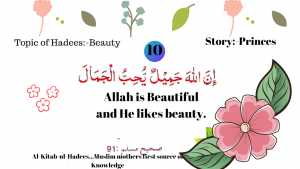
This is a very beautiful hadith of the beautiful name of Allah (Asma-ul-husna). This hadith is also important to teach kids to live clean and neatly. And also care about the keep clean the things around them.
Humans are the best creation of Allah. And Allah created them on his best creativity. No one is ugly or bad looking. And one black, white or brown has any priority on each other.
If we look in to nature, every thing is so beautiful, managed, organized, neat and clean.
So when we talk about beauty, it does not mean we can beautify our self. Beauty is in our personality, our soft talk, kind words, neat and clean wear up, our body should be clean, things around us should be arranged and managed.
We are going to teach our children through this hadith that, wearing neat clothes and combing hair daily, brushing teeth, nice talk, kind words, humble body language is our real beauty. We should be organized. including after learning this hadith and beautiful attribution os Allah Subhan was Talh, If we would do it as Sunnah and for the sake of Allah we will get a reward from Allah for it.
Here is a story of a princess who was a really beautiful, having all facilities of life.
یہ حدیث اللہ کی صفت سکھانے کے ساتھ ساتھ بچوں کو صاف ستھرا رہنا سیکھاتی -اس کے ساتھ ساتھ بچوں کو ماحول کو صاف رکھنا اور خوبصورتی کا احساس رکھنا پیدا کرے گی -آج لوگ کپڑے بدلنا ور بال بنانا تک دنیاوی کام سمجھتے ہیں.جب کہ اگر اگر ہم سنت کی نیت سے اور الله کو خوش کرنے کی نیت سے سب کچھ کریں گے تو اس پر اجر بھی ملی گا. لہذا آج کی حدیث اور کہانی بچوں کے لیے بہت اہم ہے
حدیث اس کا ترجمہ ،تفسیر اورسیرت /اخلاقی کہانی اس ویڈیو میں جمع کر دی گئی ہے
براہ مہربانی بچوں کو ویڈیو لگاکر دکھاتے ہوۓ ساتھ بیٹھیں اور ان کی توجہ اہم نقاط پر ڈالیں.اس کے بعد حدیث لکھنے میں بچوں کی مدد کریں ور حدیث یاد کروائیں اس کا ساتھ ساتھ پچھلی احادیث بھی دوہرائیں
بچوں کی حدیث کی تصویر گروپ میں نام کے ساتھ پوسٹ کریں. تا کہ اس سیشن کے آخر میں وہ سرٹیفکیٹ حاصل کر سکیں .اگر بچوں کی حادیث سناتے ہوۓ ویڈیو بجھنا چاہیں تو وہ بھی بیجھ سکتے ہیں
This is a short course of hadith and stories from My 30 short hadith with stories course. My hadith course is very much liked and appreciated by parents and students. Online group classes are available online for all time zones.
Recommended age for the class Hadith for kids is for all. These classes are available in English and Urdu. If you want to enroll your child in our classes contact us via.
Easy Tafseer for kids with interesting stories you can see that course in my hadith course tab.
Prayer for kids course is a short course to teach about taharat, Gusal, wudu, times of prayers, number and names of prayers, pillars and conditions, and prayer method. Search as Prayer for kids course on the search bar.
I’m very grateful to Allah that He made me do this work. I’m just thinking while typing that the topic of the last hadith is provoking me to start to learn and teach Qur’an more deeply.
Hadith on learning and teaching Quran is a very important hadith for kids.. Quran is a complete and perfect Book. It’s the word of Allah. We get rewarded for reciting and learning the holy Quran. but this book also teaches us to live a successful life in this world and hereafter.
As Shytan challenged that I will mislead these stones of Adam A.S Allah Surbhanwa Tallah promised to guide us, as human beings. So Allah revealed many books, Quran is the last book among them.
So with the help of today’s story and hadith, we will teach the virtue and importance of learning and teaching Quran to our kids.
Our children need to understand the Quran in such a way that they would able to read this Holy book in such a way that they run to this book whenever they would have any questions regarding any aspect of their life. This book should be their handbook.
While looking for the story of this hadith, I studied the life of the companions of Prophet Muhammad. It amused me that, They were a true lover and Alim of this book. I think we should compile and read all the stories to our kids about their love and deep knowledge of the Quran. But here I selected one story about the love of Abu Baqer R.A for the Quran.
So let’s come to the story Of Hazarat Abu Baqer R.A about the love for the Quran.
Video of the Story of Abu Bakar R.A in English
اردو بچوں کے لیے
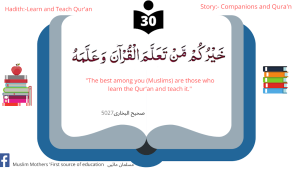
اسلام علیکم ۔ محترم والدین جیسا کہ آپ جانتے ہیں کہ یہ حدیث ہمارے کورس۔ ” 30 چھوٹی احادیث کہانیوں کے ساتھ “ کی آخری حدیث نمبر 30 ہے۔ ”تم میں سے بہترین وہ ہے جو قرآن سیکھے اور سکھائے۔ صحیح البخاری 5027. “
اس حدیث کا موضوع ہے۔ قرآن سیکھنے اور سکھانے کی فضیلت یہ اللہ کا کرم اور شکر ہے کہ اس نے اس قابل بنایا کہ حدیث کورس کا اتنا عمدہ کام کرنے کا موقع ملا۔ اور والدیں اور بچوں نے اس کو بہت پسند کیا۔ اس کورس پر بہترین طریقے سے کام کر کے کئی بچوں کے اخلاق و کردار سنوارے گئے۔ اور اس کورس میں۔ ہر انواع موضوعات کو شامل کرنے کی کوشش کی گئی۔ پھر بھی ابھی بہت کچھ سکھانا باقی ہے۔ جو ان شاللہ ہمارے ڈیزائن کردہ دوسرے کورسس اور آن لائن کلاسس کے زریعے بھی ہو رہا ہے۔ اور اس کورس میں بھی ان شاءاللہ وسعت کی جائے گی۔ آج کی حدیث کا موضوع بھی اللہ کے کرم سے آخری حدیث کی مناسبت سے عمدہ ہے۔
ساری عمر سیکھنا اور سکھانا انسان کی زمہ داری اور فرض ہے۔ مگر قرآن کا حق ہے کہ اس کو سیکھا جائے اور سکھایا ہے جائے ۔ اس سلسے میں صحابہ کرام کی زندگیاں اور ان کا کردار ہمارے لئے بہترین نمونہ ہے۔ جب اس حدیث کے موضوع کی مناسبت سے میں نے کہانی کی تلاش میں صحابہ کرام رضوان اللہ علیہم کی سیرت پڑھی۔ تو ان کا علم کا حاصل کرنے کا شوق و جذبہ، قرآن سے محبت، اور اس کے مطابق عملی زندگی کے واقعات مجھے حیرت انگیز کر گئے۔ دل چاہا تمام کہانیاں بچوں کو سنا دی جائیں
لیکن اس کورس کے تقاضے کے مطابق صرف ایک کہانی ہی سنائی جا سکتی تھی۔ تو میرا انتخاب ابو بکر صدیق رضی اللہ تعالیٰ عنہ کی قرآن سے محبت کی کہانی بنا۔ چلیں یہ کہانی بچوں کو وڈیو کی صورت میں دکھاتے ہیں یا پھر آپ پڑھ کر سنا لیں۔
گروپ میں بھی دوبارہ سیشن شروع ہو چکا ہے جہاں پر ہفتہ وار عملی کام اور حدیثیں کہانیوں کے ساتھ شیر کی جاتی ہیں. چاہیں تو ابھی جوائن کر سکتے ہیں شکریہ
کہانی اور حدیث کا ترجمہ اور تفسیر نیچے دیا جا رہا ہے.بچوں کو وڈیو دکھائیں اور ساتھ ساتھ ان کے سوالوں کا جواب بھی دیں. اگر اس واقعہ کو تفصیل سے پڑھنا ہے تو آاپاردو کہانیوں والے سیکشن میں موجودلنک میں پڑھ سکتے ہی
Written story Companions and their love for Quran In Urdu
Here is the link to the stories of companions of the Holy Prophet SAW about learning, teaching, and understanding the Quran Stories
After watching This video or reading the story, don’t forget to write Hadith in the Hadees book. Or solve your Hadith worksheet from the hadith workbook about this hadith.
You can share the picture of the Hadith and other activities you did for this Hadith. So that your kids would get the certificate of completing their Ahadith. May Allah make it easy for you.
How many of you would like to start a new session like Quran learning for kids? How many of you would like to just get videos of those stories of Seerah and their companions?
Or we could do some activities to understand many things in Qur’an. I did and intended to do more activities on birds and animals mentioned in Qur’an with crafts and many other resources. Or we could start something other.
Note: -Spread this Hadith with your family and friend so that more people would get benefit from it.
Hadith with stories course consists of 30 short hadith for children with interesting stories you can see that course in my hadith course tab.
Prayer for kids courses is short courses to teach about taharat, Gusal, wudu, times of prayers, number and names of prayers, pillars and conditions of prayer and method of prayer. Search as Prayer for kids course on the search bar.
Kindness to Parents
Ramzan Boost course
Faith boost course in December to say NO MARYY CHRISTMAS
Enrolments Available
Tafseer for kids’ group classes is available online for all time zones. Recommended age for the class Tafseer for kids is 9+. These classes are available in English and Urdu. If you want to enroll your child in our classes contact us via.
Welcome to our special lesson today! We are excited to share with you one of the most important hadiths about eating manners in Islam. This hadith teaches us how to eat with respect, gratitude, and good behavior – something that touches every part of our daily lives as Muslim children and adults.
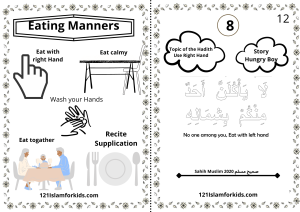
Another Hadith is.. The Prophet Muhammad (Peace be upon him) said: “Eat with your right hand and drink with your right hand, for the Shaitan eats with his left hand and drinks with his left hand.”
This beautiful hadith teaches us several important lessons about Islamic etiquette and our relationship with Allah. The right hand in Islamic tradition is considered the hand of honor, purity, and respect. When the Prophet Muhammad (PBUH) instructs us to eat with our right hand, he is not just giving us a physical instruction – he is teaching us about Islamic values, respect for ourselves, and maintaining cleanliness.
THE IMPORTANCE OF THE RIGHT HAND IN ISLAM:
Purity and Cleanliness: In Islamic tradition, the left hand is specifically designated for personal hygiene and cleaning. The right hand is reserved for eating, greeting, giving and receiving gifts, and other noble acts. This separation helps maintain cleanliness and respect.
Obedience to the Prophet: Following the Sunnah (the teachings and practices of Prophet Muhammad PBUH) is a fundamental part of being a Muslim. When we eat with our right hand, we are directly following his example.
Avoiding Evil Influence: The mention of Shaitan (Satan) eating with the left hand reminds us that we should distance ourselves from evil and base our actions on goodness and purity.
Respect and Dignity: Using the right hand for eating shows respect for the food, respect for ourselves, and acknowledgment of Allah’s blessings upon us.
OTHER EATING MANNERS IN ISLAM:
Beyond using the right hand, Islam teaches us many other important eating manners:
✓ Say Bismillah Before Eating: Always say “Bismillah” (In the name of Allah) before beginning to eat. This is a form of gratitude and remembrance of Allah.
✓ Wash Your Hands Before Eating: Cleanliness is part of Islamic faith. Always wash your hands thoroughly before eating.
✓ Sit While Eating: Eating while sitting is more dignified and helps with proper digestion. Standing and eating hastily is discouraged.
✓ Eat with Others: The Prophet (PBUH) enjoyed eating with family and friends. Sharing meals brings people together.
✓ Don’t Waste Food: Islam strongly discourages wasting food. We should take only what we can eat and be grateful for every bite.
✓ Don’t Talk While Chewing: Keep your mouth closed while chewing to maintain cleanliness and respect.
✓ Eat Moderately: The Prophet (PBUH) taught us not to overeat. We should eat until we are satisfied, not until we are completely full.
✓ Say Alhamdulillah After Eating: After finishing your meal, always say “Alhamdulillah” (All praise is due to Allah) to express gratitude.
✓ Use Your Right Hand to Give and Receive: When giving or receiving something from others, use your right hand as a sign of respect.
Setting: A Muslim household where good manners are valued
Main Character: Ali, a 9-year-old boy who is generally well-behaved and obedient
The Problem: Ali had fallen into a bad habit of using his left hand for eating, despite his parents’ constant reminders. His parents had noticed that when he ate with his left hand, other negative behaviors would follow – he would eat hastily, forget to say Bismillah, not sit properly, and often waste food. It was as if this one bad habit was opening the door to many other impolite behaviors.
The Struggle: The more Ali continued with this habit, the worse things became. He started experiencing:
Constant hunger, never feeling satisfied even after eating large amounts
Losing concentration in his studies because he was always thinking about food
Becoming irritable and upset with his family
Forgetting all the beautiful manners his parents had taught him
His stomach would hurt, and he wasn’t feeling well
His parents realized something had to change. They recognized that this wasn’t just about eating – it was about building character and following the teachings of Islam.
The Solution: Ali’s parents took him to visit a respected Islamic teacher and counselor. The teacher sat with Ali and explained to him:
“Dear Ali, do you know that our beloved Prophet Muhammad (PBUH) taught us to eat with our right hand? This isn’t just a rule – it’s a way of showing respect to yourself, to your food, and to Allah. When we follow this teaching, we invite blessings (barakah) into our lives. When we ignore it, we invite confusion and frustration.”
The teacher then taught Ali the complete way to eat according to Islamic manners:
Always say “Bismillah” before eating
Sit down while eating
Eat with your right hand
Eat slowly and mindfully
Chew your food properly
Don’t waste any food
Say “Alhamdulillah” after finishing
The Transformation: As Ali began to practice these manners consistently:
He started feeling satisfied and content after meals
His concentration improved in school
He felt calmer and more respectful
His family relationships became more peaceful
His health improved, and his stomach problems disappeared
He noticed how much happier everyone was around him when he practiced good manners
The Lesson: Ali realized that the Shaitan (negative influences and bad habits) had been making him miserable through that one bad habit. But now that he was following the Prophet’s (PBUH) teachings, he felt at peace, healthy, and happy. He understood that good manners are not restrictions – they are gifts from Allah that help us live better lives.
Moral of the Story: Good Islamic manners, especially eating manners, are blessings from Allah. When we follow them, we experience blessings in our health, our relationships, and our hearts. When we ignore them, we invite problems. Ali learned that being obedient to Islamic teachings brings joy and satisfaction in all areas of life.
After learning about this hadith and the story of Ali, let’s think about these important questions:
Why did the Prophet Muhammad (PBUH) teach us to eat with the right hand? Answer: To maintain cleanliness, purity, and respect. The right hand is for noble actions, and the left hand is for personal hygiene.
What happened to Ali when he didn’t follow the Prophet’s teachings? Answer: He felt hungry all the time, couldn’t concentrate, had stomach problems, and forgot other good manners.
How did Ali’s life change when he started eating with the right hand and following proper eating manners? Answer: He felt satisfied, healthier, calmer, and his relationships with family improved.
Can you think of other ways we use our right hand in Islam? Answers: Giving and receiving gifts, greeting others with handshakes, writing, eating, drinking, etc.
What does it mean when we say the Shaitan eats with his left hand? Answer: It means that following bad habits and ignoring Islamic teachings is like inviting Shaitan into our lives. But when we follow the Sunnah, we keep ourselves pure and away from evil influences.
What other eating manners did you learn from the story? Answers: Saying Bismillah before eating, sitting while eating, not wasting food, saying Alhamdulillah after eating, eating slowly, etc.
How can you practice these manners starting today? Answer: Each student should think about how they will apply at least one eating manner in their next meal.
Teaching eating manners is one of the most important aspects of raising well-mannered Muslim children. Here are some practical tips to help you teach and reinforce these behaviors at home:
1. Model the Behavior Yourself Children learn best by observing. Always eat with your right hand, say Bismillah and Alhamdulillah, sit while eating, and practice all the manners you want your child to learn. When children see you doing these things consistently, they naturally want to imitate you.
2. Make It Practical and Gradual Don’t expect perfection immediately. Start with one or two habits – perhaps saying Bismillah before eating and using the right hand. Once these become automatic, add more manners gradually.
3. Explain the “Why” Behind the Rules Children are more likely to follow rules when they understand the purpose. Explain that:
Bismillah reminds us that food is a blessing from Allah
Using the right hand shows respect and maintains cleanliness
Sitting while eating is more dignified and helps digestion
Not wasting food respects Allah’s blessings
4. Praise and Encourage When you notice your child practicing good eating manners, praise them specifically: “Masha’Allah! I saw you say Bismillah before your meal today. That shows you remember Allah’s blessings.” Positive reinforcement is much more effective than criticism.
5. Create a Family Mealtime Culture Make mealtimes special by:
Eating together as a family when possible
Having meaningful conversations
Creating a calm, respectful atmosphere
Avoiding screens and distractions during meals
6. Be Patient with Younger Children Very young children (3-5 years old) may need more reminders and gentle guidance. Use simple language and be consistent. Don’t show frustration – patience is key.
7. Use Reminders Without Shaming Instead of: “You’re eating like Shaitan,” try: “Remember, the Sunnah of the Prophet (PBUH) is to eat with our right hand. Let’s use our right hand, okay?”
8. Incorporate Islamic Stories Share stories like “The Hungry Boy” regularly. Children remember lessons better when they’re attached to stories and characters they can relate to.
9. Let Them Help in Food Preparation When children help prepare meals, they develop a better appreciation for food. This naturally leads to them wanting to eat mindfully and not waste.
10. Connect to the Quran and Sunnah Help your child understand that eating manners are not just “mom’s rules” or “dad’s rules” – they are teachings from our beloved Prophet (PBUH) and part of Islamic culture for centuries.
11. Address Challenges Kindly If your child is struggling with a particular manner (like using the right hand if they are naturally left-handed), work with them patiently. Some children may need occupational therapy, and that’s okay. The goal is to gradually improve behavior, not create stress or shame.
12. Celebrate the Progress When your child has been consistently practicing good eating manners for a week or month, celebrate that achievement. You might say, “Alhamdulillah, I’ve noticed how well you’ve been eating! I’m so proud of your good manners.”
One important concept to teach children is Barakah – which means blessing, abundance, and increase of goodness from Allah.
When we follow the teachings of the Prophet Muhammad (PBUH), especially something as simple as eating manners, we invite Barakah into our lives. This means:
✓ The food satisfies us more even if we eat less ✓ We feel healthier and stronger ✓ Our minds are clearer and we can focus better ✓ Our family relationships improve ✓ We feel Allah’s presence and blessings in our daily activities ✓ We develop good character and self-discipline
Conversely, when we ignore these teachings, we lose the Barakah. We feel:
Constantly hungry and unsatisfied
Restless and confused
Weak and unhealthy
Disconnected from our Islamic identity
Frustrated and unhappy
This is a powerful lesson for children: Following Islam isn’t restrictive – it’s the key to happiness and blessings in life.
This Hadith course consists of hadith with storytelling via a zoom live session with kids with activities, memorization revision, and assessment. The course is also available on WhatsApp. If you want to learn About this course read this. Hadith Introduction and tips to Teach 30 short Hadith with Stories.
بچوں کی حدیث کی تصویر گروپ میں نام کے ساتھ پوسٹ کریں. تا کہ اس سیشن کے آخر میں وہ سرٹیفکیٹ حاصل کر سکیں
Written Story in Urdu.اگر بچوں کی احادیث سناتے ہوۓ ویڈیو بجھنا چاہیں تو وہ بھی بیجھ سکتے ہیں.شکریہ
Some manners activities book and cards are presented down. They are made for Muslim kids and very helpful Have a look at them. Jazak Allah.
May Allah make it easy for all of us. Ameen. Books recommended by me.
Enrolments Available
This is a short course of hadith and stories from My 30 short hadith with stories course. My hadith course is very much liked and appreciated by parents and students. Online group classes are available online for all time zones. Recommended age for the class Hadith for kids is 7+. These classes are available in English and Urdu. If you want to enroll your child in our classes contact us via.
Other courses we have
Easy Tafseer for kids with exciting stories you can see that course in my hadith course tab.
Prayer for kids course is a short course to teach about taharat, Gusal, wudu, times of prayers, number and names of prayers, pillars and conditions, and prayer methods. Search as Prayer for kids course on the search bar.