Tag: Muslim homeschool

  • The Amazing Night Journey: A Story of Consolation and Connection

    The Amazing Night Journey: A Story of Consolation and Connection

    Isra and Mieraj free story for kids

    This is the true, incredible Isra and Mieraj free story for kids of a night when Prophet Muhammad (peace and blessings be upon him) journeyed faster than lightning across the Earth and then ascended higher than any human being before or since. It was a spectacular miracle given to him by Allah, who wanted to show His beloved Prophet the greatest wonders of the universe.

    Part 1: The Year of Heavy Hearts

    Every hero faces a difficult time, and for Prophet Muhammad, this journey happened during the hardest year of his life. People called it the ‘Am al-Huzn’ (The Year of Sorrow).

    He had lost his gentle, supportive wife, Khadijah (may Allah be pleased with her), who was his rock. Then, his kind uncle, Abu Talib, who protected him from the bad leaders in Makkah, also passed away.

    With his two protectors gone, the people who hated Islam became bolder and crueler. The Prophet traveled to the city of Ta’if, hoping to find new friends, but they rejected him and treated him awfully. Heartbroken, exhausted, but still holding strong to his faith, the Prophet returned to Makkah.

    Allah, in His infinite mercy, saw the heavy sadness in the Prophet’s heart. He planned this spectacular journey, known as Al-Isra’ wal-Mi’raj, for three wonderful reasons: to comfort him, to affirm his status, and to give his followers the most beautiful gift of all—the five daily prayers.

    A Heart Made Ready

    Just before the journey, while the Prophet was sleeping, the Angel Jibril (Gabriel) arrived. Jibril gently woke him up and performed a sacred washing of the Prophet’s heart with the pure, blessed water of Zamzam. This cleansed his heart and filled it with special wisdom and extra faith, making him ready in every way to meet the Divine Presence.

    Part 2: Al-Isra’—The Night Journey

    The first part of the miracle is called Al-Isra’, meaning “The Night Journey.” It was the instant, miraculous trip from Makkah all the way to Jerusalem.

    The Lightning Steed

    The Prophet was introduced to a magnificent creature called Al-Buraq. Its name means “lightning” in Arabic!

    Al-Buraq was a beautiful, fast, white animal with wings. It was so incredibly fast that its stride reached as far as its eye could see—much, much faster than a bullet train! Imagine riding a creature made of pure light.

    Prophet Muhammad mounted the Buraq, with Angel Jibril alongside him, and the journey began. Along the way, they paused briefly at:

    Mount Sinai (Tur Sina): Where Prophet Musa (Moses) had spoken to Allah.

    Bethlehem: Where Prophet Isa (Jesus) was born.

    Arrival at Al-Aqsa

    All the Prophets sent by Allah throughout history—from Adam to Isa—were gathered there. Jibril guided Prophet Muhammad to the front to lead all of them in prayer. This was a profound moment that confirmed, for everyone, that Prophet Muhammad was the leader and seal of all Prophets.

    In what seemed like the blink of an eye, they arrived in Jerusalem at Al-Masjid Al-Aqsa (The Farthest Mosque). This is the second-holiest site in Islam, and it is the Muslims’ first Qibla (direction of prayer).

    After the prayer, Jibril offered the Prophet two vessels: one filled with wine and one filled with milk. The Prophet chose the milk. Jibril smiled and said: “You have chosen the natural way, the religion of Islam.” This pure choice proved he had a pure and noble soul.

    Part 3: Al-Mi’raj—The Ascension

    The second, even more spectacular part of the miracle is called Al-Mi’raj, meaning “The Ascension.” This was the journey through the Seven Heavens.

    A heavenly ladder, or Mi’raj, appeared. The Prophet (SAW) and Jibril (AS) climbed up, up, up! As they began to rise, at the entrance of each new heaven, an angel would ask Jibril:

    “Who is it?”

    “Jibreel.”

    “Who is with you?”

    “Muhammad (Peace be upon him).”

    “Has he been sent for?”

    “Yes, he has been sent for.”

    Only then was the gate opened, and they were allowed to cross.

    As they passed through each of the Seven Heavens, the Prophet (SAW) was greeted by his brothers, the previous Prophets. It was like a family reunion!

    Meeting Our Previous Prophets

    HeavenProphet Met💬 Key Highlight
    1st HeavenProphet Adam (AS)The Father of Humanity welcomed his righteous son. However, Prophet Muhammad observed a remarkable sight: Prophet Adam would look to his right and smile, but then look to his left and weep. When asked, Prophet Adam explained that the people on his right were the souls of his offspring destined for Paradise (Jannah), which made him happy. The people on his left were the souls of his offspring destined for Hellfire (Jahannam), which caused him to weep with sorrow.
    2nd HeavenProphet Isa (AS) & Yahya (AS)Cousins who shared a kind greeting.
    3rd HeavenProphet Yusuf (AS)The Prophet known for his amazing beauty.
    4th HeavenProphet Idris (AS)A righteous Prophet who greeted him.
    5th HeavenProphet Haroon (AS)The brother of Prophet Musa (AS) welcomed him.
    6th HeavenProphet Musa (AS)The Prophet who talked to Allah (SWT).
    7th HeavenProphet Ibrahim (AS)The Friend of Allah (Khalil-ullah) welcomed him.

    The Friend of Allah, he was resting against Al-Bait Al-Ma’mur.

    Extraordinary Sights in the Seventh Heaven

    The seventh sky was extra special as Prophet Muhammad (Peace be upon him) saw some amazing things there.

    The Bait Al Ma’mur


    In front of the Prophet’s eyes was a magnificent structure called the Bait Al Ma’mur, which means The Much Visited House. This is a place of worship for the Angels! Seventy thousand angels visit it every single day to worship Allah, and once they leave, they never return—a new group comes the next day!

    Sidrat-ul-Muntaha


    The journey continued to the Sidrat-ul-Muntaha (The Lote Tree of the Utmost Boundary). This magical tree, a piece of Paradise, had leaves as big as an elephant’s ears and berries as large as earthenware pitchers. Golden butterflies fluttered around it, illuminating the tree with wonderful, indescribable colors.

    This tree marks the absolute limit of creation. The Angel Jibril stopped here and told the Prophet, “If I take one more step, the Divine Light will destroy me.”

    Prophet Muhammad then continued alone, ascending higher than any creation before him, into the sublime presence of Allah.

    The Great Gift and Mercy

    In the Divine Presence, Allah spoke to the Prophet and bestowed the greatest gift upon his followers: the obligation of fifty daily prayers.

    On his descent, the Prophet met Prophet Musa (Moses) in the Sixth Heaven. Musa was a wise advisor and knew the people would struggle with fifty prayers.

    Musa said, “Muhammad, your followers are not going to be able to handle fifty prayers a day! Go back and ask Allah for a reduction.”

    Out of deep love and care for his followers, the Prophet went back and forth between Musa and Allah, asking for mercy, until the number was finally reduced to five daily prayers.

    Feeling ashamed to ask for another reduction, the Prophet finally accepted the five. Allah then declared this amazing truth: “They are five (in number) but fifty (in reward). My Word is not changed.”

    This is why we only pray five times a day, but receive the reward as if we prayed fifty times!

    The Final Gifts from Allah

    During this amazing conversation, Allah gave the Prophet three final things for his followers:

    • The Command: To offer the five daily salah.
    • The Promise: That any person who does not associate partners with Allah and worships Him alone will be taken out of the hellfire.
    • The Gift: The last two verses of Surah Al Baqarah (a source of great protection).

    (Did you know? Prophet Muhammad did not see Allah, as it is not possible for anyone to see Him. He only got the honor of speaking to Allah the Almighty.)

    Part 4: The Next Morning

    The Prophet was quickly brought back to Al-Masjid Al-Aqsa, mounted the Buraq, and returned to Makkah before the sun came up. The entire journey—the flight to Jerusalem, the trip through the Heavens, and the return—all took place in a single night.

    More Wonders Revealed

    On the journey, more wonders were shown to the Prophet:

    The Real Form of Jibreel: With the command of Allah, Angel Jibreel revealed himself to the Prophet in his grand, true form. Jibreel was a magnificent angel with six hundred wings! Each wing was so big that it covered the entire distance from the east to the west, glittering with rubies and sparkling pearls. It was a breathtaking sight.

    Kauthar – The River of Paradise: The Prophet was also shown the magnificent river of ‘Kauthar’ in Paradise. It is a beautiful river with pearls and rubies glittering on its banks. Only the most obedient and sincere followers of the Prophet will get to take a sip of this refreshing water on the Day of Judgement.

    A Glimpse of the Hereafter: Prophet Muhammad also saw a glimpse of Heaven and Hell. He witnessed people getting punished for different wrongdoings, which helped him convince his followers to do good deeds and earn a place in Heaven.

    The Test of Truth

    When the Prophet told the leaders of Makkah about his Night Journey, they mocked him. “How could you travel to Jerusalem and back in one night?” they demanded.

    They challenged him: “Describe Al-Masjid Al-Aqsa to us!” The Prophet had only seen the mosque briefly in the dark. But Allah, in His favor, made the entire structure appear before the Prophet’s eyes, and he described it perfectly—the windows, the doors, the features—without missing a single detail. Yet, still, they refused to believe.

    But the believers stood firm, especially Abu Bakr. When the mockers ran to Abu Bakr, he immediately replied, “If he said it, then he has spoken the truth.” Because of his rock-solid faith, the Prophet gave Abu Bakr the title of As-Siddiq (The Truthful).

    5 Gifts of Mi’raj to Practice & Learn

    These are the treasures the Prophet (SAW) brought back for us:

    1. Our Five Daily Prayers: This is your direct connection to Allah (SWT). Make sure you pray them on time!
    2. The Last Two Verses of Surah Al-Baqarah: Read them often for protection and blessing.
    3. The Promise of Forgiveness: Allah will forgive all major sins of the believers, as long as we never commit Shirk (worshipping anyone or anything besides Allah).

    ✅ Do’s and ❌ Don’ts of Rajab

    Use this sacred month to boost your good deeds and avoid bad habits!

    ✅ DO’s (Increase Good Deeds)❌ DON’TS (Avoid Sins)
    Ask for Forgiveness (Istighfar)DON’T Fight or Argue (even with your siblings!)
    Increase Tasbeehat and Azkar (Remembering Allah)DON’T Scold or Use Bad Words
    Do Voluntary Fasting (like Mondays/Thursdays)DON’T Treat Mi’raj as a Celebration (Just increase your regular good deeds!)
    Recite Salawaat (Blessings on the Prophet SAW)DON’T Do Bid’ah (Innovations not taught by the Prophet)

    Let’s honor the Miraculous Night by protecting the gift of Salah!

    📝6. Activities and exercise:

    Simple Quiz: Al-Isra’ wal-Mi’raj and Rajab


    Questions:
    What does the word “Al-Isra’” refer to in the Night Journey?

    • What was the name of the fast, miraculous creature that carried the Prophet (SAW) from Makkah to Jerusalem?
    • In which of the Seven Heavens did the Prophet Muhammad (SAW) meet his father, Prophet Adam (AS)?
    • What is the name of the boundary in the Heavens that Angel Jibril (AS) could not pass?
    • What was the single greatest gift that the Prophet (SAW) brought back for his Ummah from the Mi’raj?
    • What was the initial number of prayers commanded by Allah (SWT) before the number was reduced?
    • What is the title given to Abu Bakr (RA) because he immediately believed the Prophet’s story?
    • What is the one major sin that Allah (SWT) excludes from the general forgiveness granted to the Ummah after the Mi’raj?
    • Which of the Four Sacred Months did the Isra’ and Mi’raj take place in?
    • Name one recommended ‘Do’ (good practice) that we should increase in the Sacred Month of Rajab.

    Isra and Mieraj story (MCQs)

    Choose the best answer for each question!

    During which difficult period in the Prophet’s life did the Isra’ and Mi’raj take place?

    a) The Year of Victory b) The Year of Sorrow c) The Year of Migration d) The Year of Harvest

    What was done to the Prophet Muhammad’s heart before the journey began, to prepare him? a) It was filled with honey. b) It was opened and washed with Zamzam water. c) It was given a new shield. d) It was made to fly.

    Which holy city did the Prophet (SAW) travel to during the ‘Al-Isra” part of the journey, where he led all the Prophets in prayer? a) Madinah b) Damascus c) Jerusalem (Al-Quds) d) Cairo

    When Jibril (AS) offered the Prophet (SAW) two vessels, one with wine and one with milk, which did the Prophet choose? a) Wine b) Water c) Honey d) Milk

    Which Prophet did Prophet Muhammad (SAW) meet in the 2nd Heaven, along with Prophet Yahya (AS)? a) Prophet Musa (AS) b) Prophet Isa (AS) c) Prophet Haroon (AS) d) Prophet Yusuf (AS)

    Which Prophet strongly advised Prophet Muhammad (SAW) to ask Allah for a reduction in the number of daily prayers? a) Prophet Adam (AS) b) Prophet Ibrahim (AS) c) Prophet Musa (AS) d) Prophet Idris (AS)

    What is one of the three great ‘gifts’ brought back from the Mi’raj for the Ummah, besides Salah and Surah Al-Baqarah verses? a) A new book of revelations. b) Forgiveness of major sins (except Shirk). c) A new way of trading. d) The secret to eternal youth.

    How did the disbelievers in Makkah react when the Prophet (SAW) first told them about his Night Journey?

    a) They immediately believed him. b) They celebrated with him. c) They mocked and ridiculed him. d) They asked him to repeat it.

    Which of these is a ‘DON’T’ (something to avoid) during the Sacred Month of Rajab? a) Asking for forgiveness. b) Increasing remembrance of Allah (Dhikr). c) Engaging in fights or arguments. d) Doing voluntary fasting.

    What is the number of prayers we pray daily, and what is the reward we receive for them, as confirmed by Allah (SWT)? a) 5 prayers, reward for 10. b) 5 prayers, reward for 50. c) 10 prayers, reward for 5. d) 50 prayers, reward for 5.

    Purpose of Our Isra and Mieraj free story for kids:

    Every year, as the sacred month of Rajab arrives, we embark on an extraordinary journey with our children in our online classes! We believe in bringing the incredible story of Al-Isra’ wal-Mi’raj – The Night Journey – to life in a way that is engaging, easy to understand, and deeply meaningful for young hearts.

    Through captivating storytelling, interactive activities, thought-provoking worksheets, and fun quizzes, we explore the profound lessons from this miraculous event.

    This story isn’t just about a journey through time and space; it’s about Allah’s immense love and support for His Prophet, the importance of Salah (our daily prayers) as a direct gift from Allah, and the power of unwavering faith demonstrated by companions like Abu Bakr As-Siddiq (RA).

    It teaches us about perseverance through hardship, the mercy of Allah, and the unity of all Prophets under Islam.

    Join our vibrant community to continue this learning adventure!


    🔥 Follow Up & Engage:

    • 📲 Join Our WhatsApp Community: Get exclusive access to free short courses, daily reminders, and connect with fellow learners!
    • 🖼️ Visit Our Gallery: See amazing visuals and illustrations from the story!
    • 📝 Get Worksheets: Download fun and educational activities to reinforce learning!
    • 💬 Comment Your Thoughts: Share what you loved most about the Prophet’s amazing journey!
    • Read more Islamic stories

  • What are the 4 obligatory acts of Wudu? How to perform Wudu?

    What are the 4 obligatory acts of Wudu? How to perform Wudu?

    In this article, we will cover the Fard of wudu, the Sunnah of wudu, and the Complete wudu method.

    What is fard of Wudu?

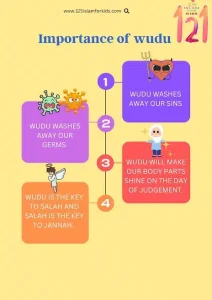
    Wudu, also known as ablution, holds significant importance in Islam as it is a ritual purification process that Muslims perform before certain acts of worship. It involves specific actions and intentions aimed at purifying the body and mind. Understanding the method and obligatory aspects of wudu, known as fard, is crucial for practicing Muslims. This brief note will explore the concept of wudu, the method of performing it, and the fard obligations associated with it.

    Wudu is an integral part of the Islamic faith and is performed by Muslims to purify themselves before engaging in acts of worship, such as the five daily prayers (Salah), recitation of the Quran, and other religious rituals. It symbolizes spiritual and physical cleanliness, and by performing wudu, Muslims aim to attain a state of purity to establish a deeper connection with Allah.

    Method of fard Wudu

    The method of performing wudu consists of several sequential steps that must be followed in order. The process typically begins by making a clear intention in the heart to perform wudu solely for the sake of worship and to seek purification. Then, the individual begins by washing their hands up to the wrists three times, ensuring that water reaches every part of the hand, including the fingers.

    The next step involves rinsing the mouth and nose three times, using a small amount of water. This includes taking water into the mouth, swishing it around, and spitting it out, as well as inhaling water slightly into the nostrils and then expelling it. It is recommended to use the right hand for these actions.

    After that, the face is washed three times, from the hairline to the chin and from ear to ear, ensuring that water reaches all parts of the face. This step is followed by washing the right arm up to the elbow three times, starting with the right hand, and then repeating the same process for the left arm.

    Next, the individual wipes their head with wet hands, moving them from the front of the head to the back, and then bringing them back to the front. It is recommended to use the index fingers to wipe the inner edges of the ears, and the thumbs to wipe the back of the ears.

    Lastly, the person washes their feet, starting with the right foot and ensuring that water reaches all parts, including between the toes, up to the ankles. This is done three times, and the same process is repeated for the left foot.

    During the entire wudu process, it is essential to maintain the proper order and ensure that each part is washed or wiped the required number of times. It is also recommended to begin each action with the right side of the body.

    When it comes to the fard obligations of wudu, there are four main aspects that must be fulfilled for the wudu to be considered valid. These fard elements are washing the face, washing the arms up to the elbows, wiping a quarter of the head, and washing the feet up to the ankles. These actions must be performed in the specified manner and in the correct order. Neglecting any of these obligations or performing them incorrectly can invalidate the wudu.

    It is important to note that while wudu is obligatory for certain acts of worship, such as Salah, it is also highly recommended to perform wudu at other times to maintain a state of cleanliness and spiritual readiness. Muslims may perform wudu before reciting the Quran, entering the mosque, or engaging in supplications.

    The fard obligations of Wudu


    The fard obligations of wudu refer to the essential components that must be fulfilled for wudu to be considered valid. These obligations are necessary and cannot be omitted or neglected. Here are the fard elements of wudu:

    1. Making the intention: It is recommended to make a specific intention in the heart to perform wudu solely for the sake of worship and seeking purification.
    2. Washing the face: It is obligatory to wash the entire face once during wudu. This includes washing from the hairline to the chin and from one earlobe to the other, ensuring that water reaches all parts of the face.
    3. Washing the arms up to the elbows: Both arms, including the hands, must be washed up to and including the elbows. Each arm should be washed from the fingertips up to the elbows, ensuring that water reaches all areas.
    4. Wiping a quarter of the head: Instead of washing the entire head, it is obligatory to wipe a quarter of the head. This is done by wetting the hands and passing them over a portion of the head, starting from the forehead and moving toward the back.
    5. Washing the feet up to the ankles: Both feet, including the ankles, must be washed once during wudu. Starting with the right foot, water should be poured over the entire foot, ensuring that all areas, including between the toes, are washed. The washing should continue up to and including the ankles.

    These fardh obligations are essential and must be performed in the proper sequence and manner for wudu to be considered valid. Neglecting any of these obligations or performing them incorrectly can invalidate the wudu. It is important to note that each obligation should be fulfilled in its entirety, ensuring that water reaches all required areas.

    By fulfilling the fardh obligations of wudu, Muslims fulfill the basic requirements of this ritual purification, ensuring cleanliness and readiness for acts of worship. These obligations serve as a reminder of the importance of physical and spiritual purity in Islamic practice, establishing a sense of discipline and reverence in the performance of wudu.


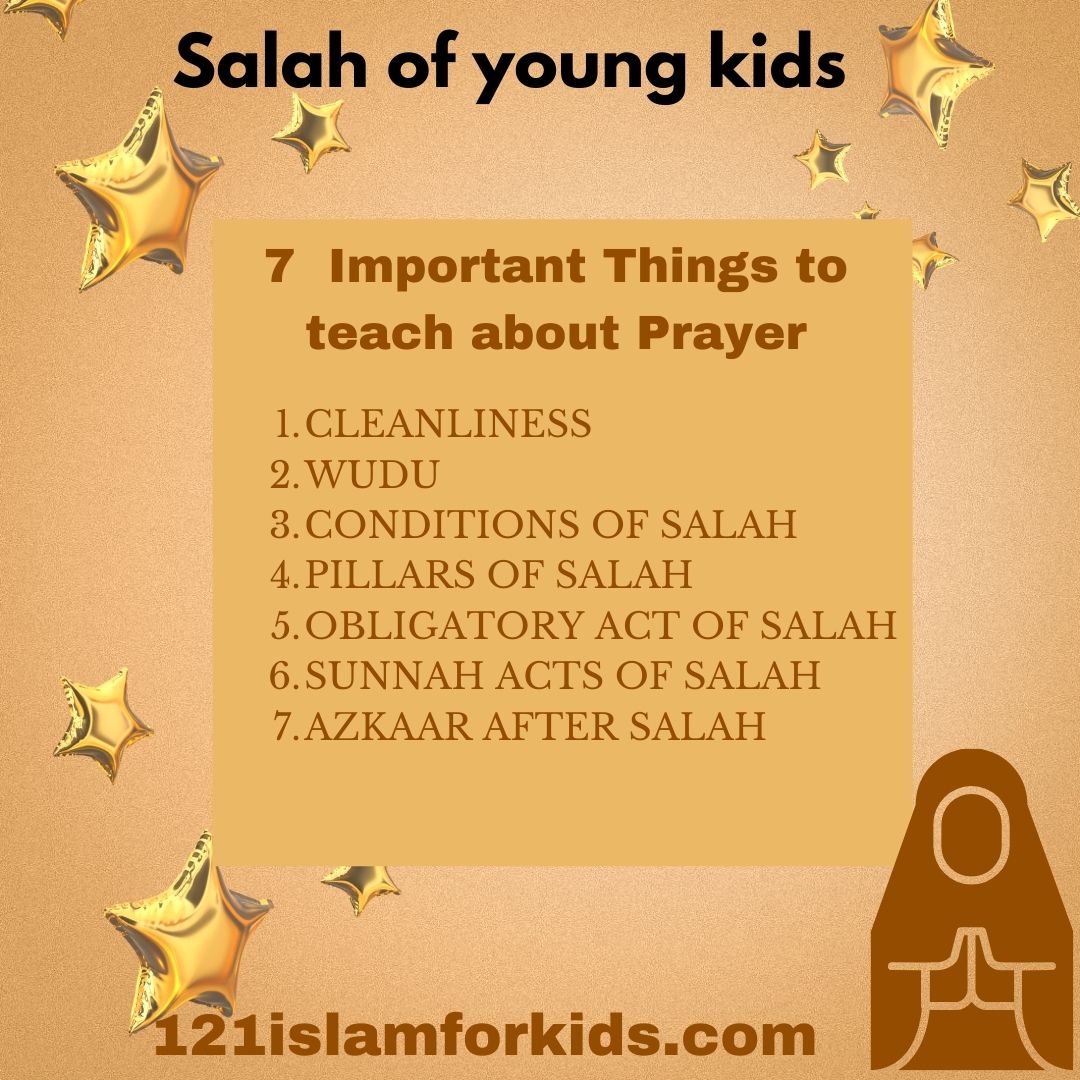
    The Sunnah of Wudu: Cleanliness

    The sunnah of wudu refers to the recommended actions and practices that Prophet Muhammad (peace be upon him) performed while performing ablution. While not obligatory, adhering to the Sunnah acts of wudu holds great merit and rewards in Islamic tradition. These acts provide additional blessings and spiritual benefits to the individual performing them. Here are some examples of the Sunnah practices of wudu:

    1. Beginning with the name of Allah: Before starting wudu, saying “Bismillah” (In the name of Allah) is encouraged as a way of seeking blessings and invoking the name of Allah.
    2. Using the Siwak: Using a Siwak, a traditional tooth stick or a toothbrush made from certain plants, for cleaning the teeth is highly recommended before starting wudu. It helps maintain oral hygiene and is considered a virtuous act.
    3. Starting with the right: Following the practice of Prophet Muhammad SAW, it is recommended to begin wudu actions, such as washing hands and rinsing the mouth, with the right side of the body.
    4. Washing the limbs thoroughly: Taking care to ensure that each part of the limbs being washed during wudu is fully wet and properly cleansed is a Sunnah practice. This includes making sure that water reaches all areas, such as between the fingers and toes.
    5. Lengthening the actions: Prophet Muhammad SAW would often prolong certain aspects of wudu, such as rinsing the mouth and nose and wiping the head, to ensure thorough cleansing.
    6. Wiping the ears: After wiping the head, it is recommended to wipe the inner and outer parts of the ears with the index fingers, as Prophet Muhammad would do during his wudu.
    7. Observing the order: Maintaining the proper sequence of actions in wudu, as mentioned in the method of wudu, is part of the Sunnah. It includes following the order of washing the face, then the arms, wiping the head, and finally washing the feet.
    8. Conserving water: While performing wudu, Prophet Muhammad SAW emphasized the importance of using a moderate amount of water and avoiding wastage. Muslims are encouraged to be mindful of water conservation during ablution.
    9. Supplicating after fard wudu: After completing wudu, it is recommended to supplicate and make specific prayers, seeking the blessings and purification that wudu provides.

    Conclusion

    In conclusion, wudu is an essential ritual of purification in Islam, serving as a means to achieve physical and spiritual cleanliness. The method of performing wudu involves a specific sequence of actions, each with its own purpose and significance.

    The fard obligations of wudu must be fulfilled for it to be valid. By observing the practice of wudu, Muslims strive to attain a state of purity and readiness for acts of worship, enhancing their spiritual connection with Allah. Wudu serves as a reminder of the importance of cleanliness and the need to approach worship with a purified body and mind. It is a beautiful and symbolic practice that reflects the meticulousness and devotion of Muslims in their pursuit of spiritual growth and closeness to the Divine.

    By adhering to the method and fulfilling the fard obligations of wudu, Muslims uphold a fundamental aspect of their faith, fostering a sense of discipline, humility, and reverence in their worship.

    Read More here

    The method of Five prayers in a day for Muslim children

    30 short Hadiths course

    Quran tafsir for kids

    Parenting In Islam