
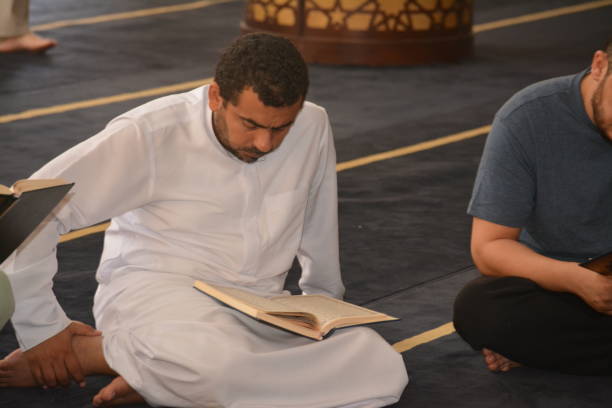
It is truly heartwarming to hear children recite the Quran—their little voices carrying words of mercy, purity, and guidance. Each verse, though brief, holds a world of meaning. Alhamdulillah, they begin to carry the light of Allah’s words in their hearts.
And yet, a quiet question often stirs in a parent’s heart…
The lips move with confidence, but does the heart follow? Do they pause to feel the oneness of Allah in Al-Ikhlas? Do they sense the protection and care of Allah in Al-Falaq and An-Naas? Or do the words remain somewhere between memory and understanding?
These surahs are short, yet profound. When a child begins to truly grasp them, they start to notice kindness, feel gratitude, and turn to Allah with trust and love. Memorisation is a gift, but understanding—patient, gentle, heartfelt—turns recitation into a lifelong companion, quietly shaping the heart, one verse at a time.
Memorisation as well as understanding the words of Allah Is a Blessing.
Juz 30 is often the first part of the Quran children memorise. Its rhythm and brevity make it accessible, and memorisation itself is a blessing.
But Allah did not reveal the Quran only to be memorised. He revealed it to be understood, believed, and lived—even at a child’s level.
When a child recites Qul Huwa Allahu Ahad, do they know who Allah is?
When they seek refuge in Al-Falaq and An-Naas, do they feel safe turning to Allah—or are they simply repeating familiar sounds?
Children may not voice these questions, but their hearts are shaped by the answers they receive, whether spoken or unspoken.
Children Are Capable of Understanding More Than We Assume
A common misconception is that tafsir is too advanced for children. But trust me when explained by a loving teacher, it helps them get answers to many questions they may have. Children are naturally curious. When Quranic verses are explained with clarity, simplicity, and care, they absorb them deeply.
Taught gently:
● Tawheed becomes clarity, not confusion
● Akhirah becomes hope, not fear
● Accountability becomes responsibility, not anxiety
Juz 30, in particular, addresses belief, action, and consequence in a way that can be shared with children without overwhelming them.
What Juz 30 Can Quietly a Child
When children understand what they recite, these short surahs begin to influence how they think, feel, and respond to the world:
● Surah Al-Ikhlas helps a child understand who Allah truly is
● Surah Al-Ma’un teaches that worship includes caring for others
● Surah Az-Zalzalah introduces accountability with honesty and balance
● Surah Al-Kawthar nurtures gratitude and dignity
● Surah Al-Falaq and An-Naas give emotional safety and reliance on Allah
These lessons often appear subtly—in a child’s choices, fears, and questions.
Why Children Often Forget What They Memorise
Many parents notice that despite memorising several surahs, children struggle to connect those words to daily life.
This is not due to a lack of effort—it is a lack of context. Memorisation without meaning is difficult to retain.
Even small steps toward understanding, such as a Juz 30 Tafsir for Kids can help children connect the meaning of Quran with its recitation, allowing Quranic lessons to stay with them far beyond the prayer mat.
Creating Space for Reflection and Growth
Children learn in different ways. Some need repetition. Some need time. Some need gentle reminders rather than constant correction.
Learning that allows space—rather than pressure—helps children develop a thoughtful relationship with the Quran, one built on understanding rather than obligation.
What Matters Most in Teaching the Quran to Children
Children do not need complex explanations. They need:
● Truth without confusion
● Guidance without pressure
Above all, they need to feel that the Quran speaks to them personally.
When a child begins to feel:
Allah knows me. Allah cares for me. Allah is near.
…the Quran becomes personal—and personal learning lasts.
Tafsir in Kids makes Lasting Impact
When even a small part of what children recite begins to make sense, the Quran slowly moves from the tongue to the heart.
That shift—from sound to meaning—is often where a lifelong relationship with the Quran begins.