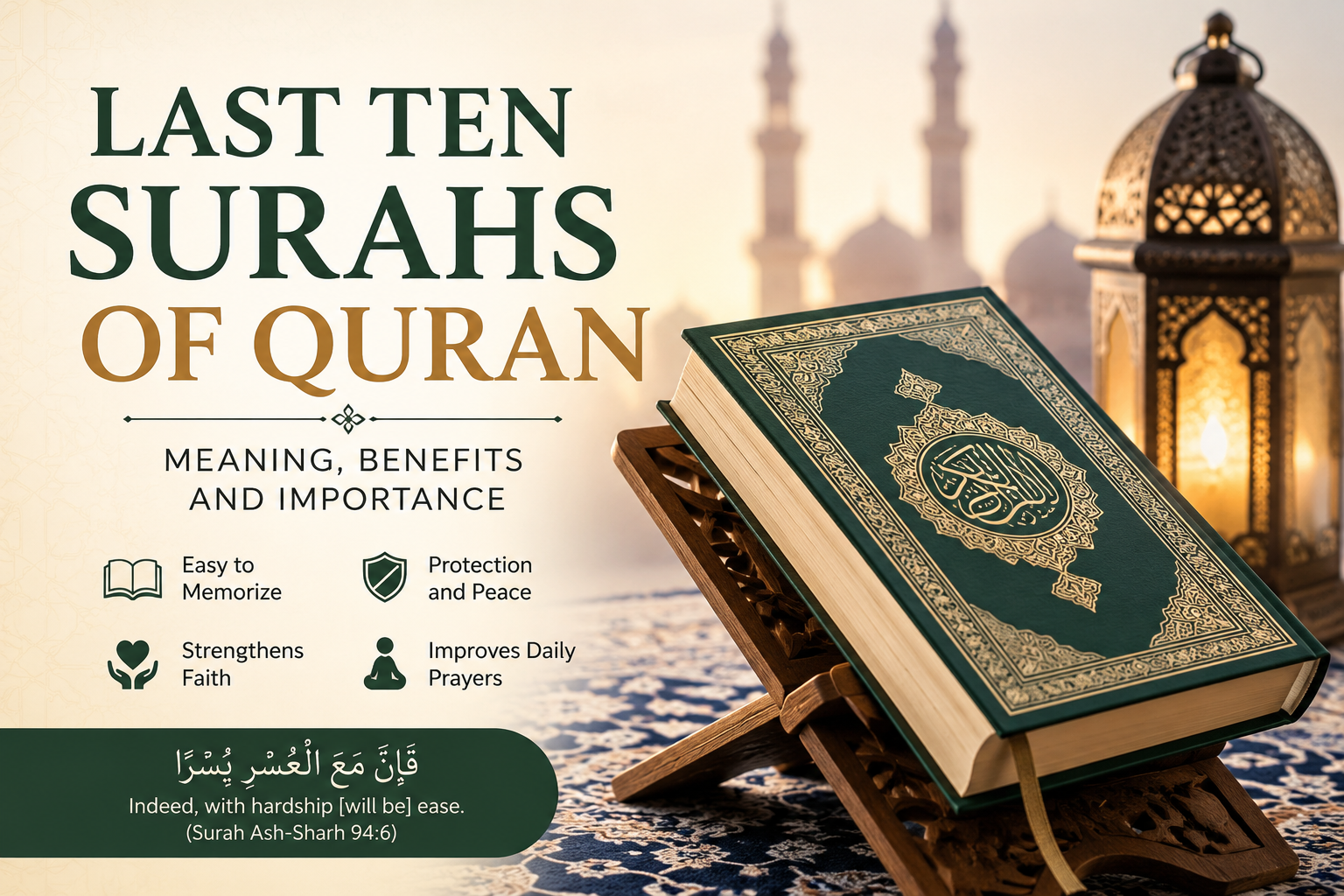
The last ten surahs of Quran hold a special place in the hearts of Muslims around the world. These short yet powerful chapters are easy to memorize, deeply meaningful, and frequently recited in daily prayers. Found in the 30th Juz of the Holy Quran, these surahs provide guidance about faith, protection, sincerity, worship, and the Day of Judgment.
Many Muslims begin their Quran memorization journey with these chapters because of their short length and strong spiritual messages. Understanding the meaning and importance of the last ten surahs can help strengthen faith and improve connection with Allah.
The last ten surahs of the Holy Quran are:
These surahs are located at the end of the Quran and are often recited in Salah due to their short verses and beautiful teachings.
The last ten surahs of Quran contain essential lessons about Tawheed (oneness of Allah), good character, worship, gratitude, and seeking protection from evil.
These surahs are important because they:
Many Islamic scholars recommend memorizing these surahs from an early age because they are easy to learn and rich in meaning.
Surah Al-Fil reminds believers about Allah’s power and protection over the Kaaba. It tells the story of Abraha and his army of elephants who intended to destroy the sacred house of Allah but were defeated by Allah’s command.
Allah protects His religion and sacred places from harm.
Surah Quraysh highlights the blessings Allah gave to the tribe of Quraysh, including safety and provision.
Muslims should always show gratitude to Allah for peace, food, and security.
This surah warns against hypocrisy and neglecting the poor and needy. It emphasizes the importance of kindness and sincere worship.
True faith includes caring for others and performing prayers sincerely.
Surah Al-Kawthar is the shortest surah in the Quran, yet it carries a powerful message. Allah promises abundance and blessings to Prophet Muhammad (PBUH).
Always remain thankful and devoted to Allah.
This surah teaches Muslims to remain firm in their beliefs and avoid compromising their faith.
Islam encourages respect for others while maintaining strong faith and worship of Allah alone.
Surah An-Nasr speaks about the victory and success granted by Allah and reminds believers to seek forgiveness and praise Him.
Success should lead to humility, gratitude, and repentance.
This surah discusses the fate of Abu Lahab, one of the strongest opponents of Islam.
Pride and hatred against truth lead to destruction.
Surah Al-Ikhlas explains the oneness of Allah in a simple yet profound way.
Allah is One, eternal, and unlike anyone or anything.
Many hadith mention the great rewards of reciting Surah Al-Ikhlas regularly.
This surah teaches believers to seek Allah’s protection from jealousy, darkness, magic, and harm.
Allah is the ultimate protector from all external evils.
Surah An-Nas focuses on seeking refuge in Allah from Shaytan and harmful whispers.
Turning to Allah protects the heart and mind from evil influences.
Reciting the last ten surahs of Quran regularly brings many spiritual benefits.
These surahs remind Muslims about Allah’s power, mercy, and guidance.
Due to their short length, they are perfect for children and beginners learning the Quran.
Surah Al-Falaq and Surah An-Nas are commonly recited for protection from evil and anxiety.
Many Muslims recite these surahs during Salah because they are concise and meaningful.
The teachings promote kindness, sincerity, gratitude, and trust in Allah.
Memorizing the last ten surahs of Quran is common among Muslims worldwide because they are simple to learn and frequently used in worship.
Parents often teach these surahs to children first to help them:
These surahs also help new Muslims begin their Quran learning journey confidently.
Listening repeatedly helps improve pronunciation and memorization.
Knowing the translation makes memorization easier and more meaningful.
Recite the surahs during daily prayers and before sleeping.
Focus on mastering one chapter before moving to the next.
The last ten surahs of Quran are short but deeply impactful chapters that provide guidance, protection, and spiritual comfort. From Surah Al-Fil to Surah An-Nas, each surah carries valuable lessons about faith, gratitude, worship, sincerity, and seeking Allah’s protection.
Whether you are beginning your Quran journey or strengthening your connection with Islam, memorizing and understanding these surahs can bring immense rewards and peace to your life. Regular recitation of these powerful chapters helps Muslims stay connected to Allah and apply Quranic teachings in everyday life.
© Copyright 2026 121 islam for kids. All rights reserved.