Tag: islamic stories

  • The Girl Who Chose Allah: The Story of Maryam (A.S.)

    The Girl Who Chose Allah: The Story of Maryam (A.S.)

    Maryam A.S as a role model for girls and women

    Imagine being the only woman mentioned by name in the entire Quran. Out of all the billions of women in history, Allah chose one—Maryam bint Imran—to be a permanent sign for humanity. Her life wasn’t a fairy tale; it was a journey of massive challenges and social pressure. Because of her loyalty and faith, Maryem A.S as a role modle of teen age girls and women remains the ultimate example of what it means to be truly brave.

    A Different Kind of Childhood

    It all started before she was even born. Her mother, Hannah, made a beautiful promise to Allah: “I want this child to be devoted only to You”. In those days, only boys were usually dedicated to temple service, but when Maryam was born, Allah accepted her with “goodly acceptance”.

    Maryam grew up in a private room called a Mihrab. She wasn’t out chasing trends; she was focused on her connection with her Creator. Her uncle, Prophet Zakariya, would visit her and find her with fresh fruits that weren’t even in season. When he asked where they came from, her answer was simple: “It is from Allah. He provides for whoever He wills”.

    The Lesson for You: Maryam didn’t wait until she was “old” to be pious. Her strength started in her teens. She knew that her worth wasn’t defined by people, but by Allah.

    The News from the Angel: “Kun” (Be)

    As she grew into a young woman, Maryam was known for her Batool nature—she was completely devoted and pure. One day, the Angel Jibril appeared in the form of a man. Her first reflex was modesty: “I seek refuge in Allah from you!”.

    It was at this incredible moment that Allah honors her character in the Quran:

    {And [the example of] Mary, the daughter of ‘Imraan, who guarded her chastity, so We blew into [her garment] through Our angel [i.e. Gabriel], and she believed in the words of her Lord and His scriptures and was of the devoutly obedient.}

    Jibril explained he was a messenger to give her news of a holy son. Maryam was shocked and asked, “How is it possible? I’m unmarried. And I’m a very pure lady. I don’t have any relation with any man…”.

    Jibril replied with the ultimate secret of the universe: “This is how… Allah says ‘kun’ (Be) and all things happen”. When Allah decrees something, He doesn’t need a “reason” or a “process.” He just says “Be,” and it is. Maryam trusted Allah’s plan instantly. She said “yes” to a destiny she knew would be almost impossible to explain to others.

    Bravery in the Wilderness

    When it was time to give birth, Maryam was alone. The pain was so intense and the fear of social judgment was so heavy that she cried out, “I wish I had died before this and was forgotten!”.

    If you’ve ever felt overwhelmed, Maryam felt that too. But Allah didn’t leave her. He gave her a stream of water and told her to shake the palm tree for fresh dates. Even in her weakest moment, Allah asked her to take action—to shake the tree.

    The Lesson for You: Faith doesn’t mean you never feel pain. It means that when you do, you turn to Allah and keep moving, even if you’re just “shaking the tree” with your last bit of strength.

    Facing the “Haters” with a Fast of Silence

    The hardest part was going home. Carrying a baby while unmarried was a social death sentence. But Allah gave her a specific order: You will not say anything. He commanded her to tell the people through signs: “Indeed, I have vowed a fast of silence to the Most Merciful, so I will not speak today to any human”.

    When she walked into town, the crowds gathered to mock her. She didn’t argue or try to defend herself. She remained silent with dignity and simply pointed to her baby.

    Then, the miracle happened. Baby Isa spoke from the cradle: “Indeed, I am the servant of Allah. He has given me the Scripture and made me a prophet… and He has made me kind to my mother”. Allah protected her reputation because she had protected her relationship with Him.

    The Perfect Mother: The Honor of “Ibne Maryam”

    Maryam raised her son to be a perfect human being—a Prophet who was kind and wise. Their bond was so powerful that in the Quran, Prophet Isa (A.S.) is almost always called “Ibne Maryam” (the Son of Maryam).

    In a world that usually names children after their fathers, Allah honored Maryam by linking a great Prophet’s name to hers over 23 times. This shows that a

    The Prophet Muhammad (peace be upon him) also confirmed her perfection in these famous Hadiths:

    “Many men reached the level of perfection, but no woman reached such a level except Maryam, the daughter of Imraan, and Asia, the wife of Pharaoh.”

    “The best of the women of the world are: “Maryam Bint ‘Imraan, Khadeejah Bint Khuwaylid, Faatimah Bint Muhammad, and Asia, the wife of Pharaoh.”

    Maryem A.S as a role modle of teen age girls and women shows us that a girl who trusts Allah is stronger than any challenge the world can throw at her.woman’s identity and her role as a mother are deeply respected in Islam.

    Conclusion: A Legacy of Faith for Today’s Girls

    Maryam (A.S.) isn’t just a figure from ancient history; her entire life story, from her devoted childhood to her unwavering strength as a mother, shines as a beacon for us all. She teaches us that true beauty lies in inner strength, that modesty is empowering, and that loyalty to Allah will always be rewarded, even in the face of the greatest challenges. Her incredible journey, crowned by the miracle of Prophet Isa (A.S.) speaking from the cradle, reminds every girl and woman that with faith, anything is possible.

    Want to learn more about the amazing miracles and teachings of Prophet Isa (A.S.) in Islam? Dive deeper with our special “Faith Boosting Course for Children about Isa (A.S.) in Islam” and unlock more incredible stories that will strengthen your child’s belief!

  • Story of Surah Humazah (104) “Lost and Found”: Ali’s Story”

    Story of Surah Humazah (104) “Lost and Found”: Ali’s Story”

    Islamic stories for children: Surah Humazah

    Islamic stories for children are powerful tools for teaching important life lessons. This Islamic story about Surah Humazah demonstrates the dangers of arrogance and pride through the journey of a young boy named Ali. Read on to discover how this Islamic children’s story conveys essential moral values.Once upon a time, in a bustling city, there lived a young boy named Ali. Ali belonged to a wealthy family, known far and wide for their riches. However, despite their wealth, Ali’s family was famous for their arrogance, greed, and tendency to mock others.

    Ali grew up surrounded by opulence and luxury. He attended the finest schools, wore the most fashionable clothes, and had every material possession he desired. But along with the luxuries, Ali developed a sense of entitlement and superiority over others.

    As Ali grew older, his arrogance and greed only intensified. He would often boast about his family’s wealth, ridiculing those less fortunate than him. He would mock people for their clothes, their homes, and their lifestyles, never once considering the struggles they might be facing.

    Despite his parents’ attempts to instill values of kindness and humility in him, Ali remained stubborn and proud. He saw no value in being humble or compassionate when he could flaunt his wealth and belittle others instead.

    One day, as Ali was walking through the bustling marketplace, he overheard a group of people talking about a poor family who had lost everything in a fire. Instead of feeling sympathy, Ali sneered at the news, commenting callously about how it served them right for being poor.

    However, as fate would have it, tragedy struck Ali’s family soon after. A series of unfortunate events led to the loss of their wealth and status. Overnight, Ali went from living in luxury to facing poverty and hardship.

    At first, Ali refused to accept his new reality. He clung to his pride and arrogance, believing that his wealth would somehow return to him. But as days turned into weeks and weeks into months, Ali realized the true value of humility and compassion.

    With nothing left to his name, Ali was forced to rely on the kindness of others. He encountered people who showed him compassion and generosity, despite his past behavior. Slowly, Ali began to understand the pain he had caused others with his words and actions.

    Determined to change his ways, Ali set out to make amends for his past behavior. He volunteered at local charities, helping those in need with whatever little he had to offer. He apologized to those he had mocked and ridiculed, seeking forgiveness for his past mistakes.

    Over time, Ali’s sincerity and humility won the hearts of those around him. He may have lost his wealth, but he gained something far more valuable – the respect and admiration of his peers.

    From that day forward, Ali dedicated himself to a life of kindness, compassion, and generosity. He understood that true wealth was not measured in material possessions but in the goodness of one’s heart. And so, Ali’s journey from arrogance to humility served as a powerful lesson for all who knew him, reminding them of the importance of empathy and understanding in a world too often driven by greed and pride.

    Read More Stories

    Explore more Islamic stories for children on our website to deepen your understanding of Quranic lessons and Islamic values.

    Our Courses and Classes

    Enroll in our structured Islamic courses and classes designed specifically for children to learn the Quran, Islamic history, Surahs, Hadith, and moral lessons in an engaging and interactive way.

    Join Our YouTube Channel

    Subscribe to our YouTube channel for educational videos, animated Islamic stories, Quranic lessons, and engaging content that helps children learn and understand Islamic values and teachings in a fun and memorable way.

    Key Lessons from the Surah Humazah Story

    This Islamic story for children based on Surah Humazah teaches us several important lessons about humility and character. The main themes include the dangers of materialism, the value of compassion, and the power of personal transformation. By reading children’s Islamic stories like this one, young learners develop a better understanding of Islamic teachings and moral values.

  • Free Quranic story: Surah Ash-Shams 91: Reflection for children

    Free Quranic story: Surah Ash-Shams 91: Reflection for children

    This is the story of Prophet Saleh and Surah Ash Shams. This is a very interesting story crafted for children to explain the surah easiest way. Let’s start our story.

    Surah Ash shams reflection

    “The Illuminated Hearts”:

    surah ash shams,

    One bright afternoon, Grandma Aisha sat with her grandchildren in the cozy living room. The scent of freshly baked cookies filled the air as the children gathered around, eager for stories from their wise grandmother.

    Grandma Aisha: “My little treasures, today I’ll share a tale from Surah Ash-Shams, a chapter filled with wisdom and lessons for our hearts. Allah, the Most Merciful, begins this surah with a series of oaths, each carrying a profound message.”

    Lina, the youngest, asked with wide eyes: “Why so many oaths, Grandma?”

    Grandma Aisha smiled: “Each oath emphasizes recognizing Allah’s creation. The sun, the moon, the day, the night, the sky, and the earth all bear witness to the perfection of Allah’s design. Just as these creations follow a divine order, we too must understand the order in our lives.”

    Ahmed, a spirited boy, said, “But Grandma, what’s the order for us?”

    Grandma Aisha: “That’s a wonderful question, Ahmed. The order for us is to keep our souls pure. Allah, in His infinite wisdom, has gifted us with a soul and a conscience. Just like we clean our bodies daily, we must purify our hearts from negativity, greed, and arrogance.”

    Layla, the thoughtful one, pondered: “How can we purify our souls, Grandma?”

    Grandma Aisha, chuckling: “Well, my dear, just like we clean our rooms, we clean our hearts. Acts of kindness, helping others, and being grateful are like windows to our souls. And when we let the light of goodness in, our hearts become pure and bright.”

    Inspired by their grandmother’s words, the children shared stories of their acts of kindness, from helping neighbors to sharing toys.

    As the sun dipped below the horizon, Grandma Aisha began weaving the tale of the people of Thamud. She spoke of their remarkable skills, intelligence, and prosperity. However, among them was a wise and compassionate prophet named Saleh.

    A Tale of Surah Ash-Shams and the People of Thamud.”

    Grandma Aisha: Once upon a time, in a faraway land, there were people known as the Thamud. These were clever and skilled individuals, like their forefathers.

    Layla: Forefathers? Who were they?

    Grandma Aisha:

    The people of Aad, where prophet Hud was sent. So the saved people of Aad were now known as Thamood. They accepted the message of Prophet Hud and were on the right path then. But as time went by, they forgot to be thankful for the wonderful things Allah had given them.

    The people of Thamud were bestowed with remarkable skills and unique blessings by Allah. Endowed with exceptional intelligence and craftsmanship, they built grand structures and carved dwellings into the mountains, showcasing their architectural prowess. Their skills in agriculture and irrigation allowed them to cultivate the arid lands, turning barren spaces into flourishing gardens.

    Blessed with strength and ingenuity, the people of Thamud thrived in a society marked by prosperity and innovation, enjoying the fruits of their God-given talents. However, these blessings came with a divine expectation of gratitude and righteous conduct, a lesson that echoes through the story of Thamud in the Quran

    In this land, Allah sent a special messenger named Prophet Saleh to guide the people back to the right path. He came with a message of goodness and kindness, urging them to be grateful for Allah’s blessings.

    Now, Allah decided to test the Thamud with a remarkable miracle—a magical she-camel. This wasn’t just any camel; it had a special schedule for drinking water, and it was a sign of Allah’s incredible power.

    Prophet Saleh (PBUH) told the Thamud about the importance of taking care of this unique camel and respecting the signs of Allah. He warned them not to harm the camel or face severe consequences.

    But, oh dear! There were some people among the Thamud who didn’t listen. They became proud and rebellious, thinking they knew better than Allah’s messenger. They decided to harm the she-camel, a symbol of goodness.

    Qudar, driven by arrogance and defiance, plotted to harm the she-camel. One fateful day, as the she-camel quenched its thirst, Qudar took a bow and arrow, aiming for the defenseless creature. The arrow struck, causing severe harm to the miraculous camel.

    Upon this wicked act, a divine punishment was set in motion. The skies darkened, and a thunderous sound echoed through the valley. Allah’s wrath descended upon the people of Thamud in the form of a violent earthquake and a powerful scream from the heavens.

    The once-prosperous town of Thamud lay in ruins. The defiant and corrupt were destroyed, while those who followed Prophet Saleh and upheld righteousness were saved. Qudar, the one who harmed the she-camel, faced a fitting punishment as he was seized by the angel of death.

    The story of Thamud and Prophet Saleh serves as a powerful reminder of the consequences of arrogance, defiance, and corruption. It emphasizes the importance of gratitude, obedience to divine guidance, and the severe repercussions for those who choose the path of wickedness.

    So, dear children, let’s be like the heroes in this story. Be kind, be grateful for the blessings around you, and always listen to the good advice given by those who guide you on the right path. In doing so, you’ll live a magical and happy tale filled with goodness and success.

    As Grandma Aisha concluded the story, the room fell silent, the weight of the tale sinking in. The children, now aware of the importance of goodness and humility, carried the lessons of Surah Ash-Shams in their hearts.

    More Reads

    If you want to get the step-by-step teaching method of Surah ash Shams please visit this link.

    If you want to read more stories Please visit this link.

    If you want to get videos on these lessons please visit this link.

    If you want to get Urdu stories and content please visit this link.

    If you want to enroll your child or yourself in our online classes get updates in this link.

  • New Short story for kids “Who is Allah”? Surah ‘Al-Ikhlas’

    New Short story for kids “Who is Allah”? Surah ‘Al-Ikhlas’

    Surah Ikhlas is a short but excellent and powerful Surah of the Quran. Surah Ikhlas is an introduction to Allah.

    This is a story crafted to teach our children ”Who is Allah’

    Reflection to Surah ‘Al-Ikhlas’

    surah ikhlas

    “Who is Allah”?

    Once upon a time, in a small village nestled between mountains and fields, three inseparable friends lived: Ahmed, Fatima, and Ali. Their days were filled with laughter and exploration as they ventured into the wonders of their surroundings. One sunny afternoon, while sitting beneath a large tree, they noticed an elderly man making his way toward them. His serene smile and wise eyes captivated their attention.

    The old man introduced himself as Sheikh Mustafa, and he could sense the children’s eagerness to learn. He decided to share a profound story about the importance of monotheism and the rejection of polytheism, using the enlightening Surah Al-Ikhlas as a guiding light.

    Sheikh Mustafa began, “Dear children, have you ever heard about the concept of monotheism? It means believing in the Oneness of Allah and recognizing that there is no deity worthy of worship except Him.”

    Ahmed, Fatima, and Ali exchanged puzzled glances, expressing their curiosity. Sheikh Mustafa smiled and continued, “Surah Al-Ikhlas beautifully encapsulates the essence of monotheism. It teaches us that Allah is One, and there is nothing and no one comparable to Him. He is absolutely unique, with no partners, children, or equals.”

    The children’s eyes widened in awe as they absorbed the profound teachings. Sheikh Mustafa explained, “Surah Al-Ikhlas invites us to reflect on the fact that Allah is eternal, and He exists independently, while everything else in the universe relies upon Him. He is the Creator, Sustainer, and Lord of all that exists.”

    Amazed by this revelation, Ahmed, Fatima, and Ali began to understand the significance of monotheism in their lives. Sheikh Mustafa further clarified, “Polytheism, on the other hand, refers to the belief in multiple deities or associating partners with Allah. It is a deviation from the truth and leads to confusion and spiritual emptiness.”

    As Sheikh Mustafa concluded his explanation, the children felt a newfound appreciation for the importance of monotheism. They recognized that embracing the concept of Oneness in their hearts and rejecting polytheism would bring them closer to Allah and fill their lives with purpose and tranquility.

    Ahmed, Fatima, and Ali wholeheartedly pledged to recite Surah Al-Ikhlas every day, understanding that it served as a reminder of their commitment to monotheism. It became a cherished part of their daily routine, reinforcing their belief in the uniqueness of Allah and the rejection of false gods.

    As the years passed, the trio faced challenges and uncertainties, but the message of Surah Al-Ikhlas remained steadfast within them. It reminded them to stay true to the path of monotheism, to turn to Allah in times of need, and to shun any form of polytheism.

    The story of Ahmed, Fatima, and Ali serves as an enlightening example for children and adults alike, emphasizing the significance of understanding and embracing monotheism while rejecting polytheism. Surah Al-Ikhlas teaches us that Allah is the One and Only, deserving of our utmost devotion and worship. It instills in us a deep sense of gratitude, love, and reliance on Allah’s guidance and mercy.

    So, my dear children, always remember the profound teachings of Surah Al-Ikhlas. Let it resonate in your hearts, illuminating your journey through life. Embrace the beauty of monotheism and reject any false paths. May Surah Al-Ikhlas inspire you to seek the Oneness of Allah and find solace in His love and guidance.

    Surah Ikhlas Tafseer

    More Islamic Stories in a video on Channel (English)

    More Islamic Story in a video on Channel (Urdu)

    Islamic courses online ~ Surah Al-Ikhlas in 11 easy steps (121islamforkids.com)

    More Islamic / Quranic stories

    Stories in Urdu

    Our online courses and classes for kids and beginners

    Stories Books

  • The Blessed Path Story to the reflection of surah Ad-Duha

    The Blessed Path Story to the reflection of surah Ad-Duha

    Here is a story about the reflection of the Surah Duha. We are crafting these stories of Islam for children to teach them short surahs of the Quran in a very easy and interesting method. Read the story and let us know, How’s the story?

    Title: The Blessed Path (Stories of Islam)

    stories of islam

    Once upon a time in a small village, there lived a boy named Ahmed. He was born into a family that had always been known for their strong faith and good fortune. From the day he was born, blessings seemed to follow him everywhere. His family believed that Allah had chosen Ahmed for something special.

    As a child, Ahmed was a source of joy and comfort for his family. He was always smiling, helping his parents with chores, and showing kindness to everyone he met. His parents, especially his grandmother, often told him stories from the Quran about Allah’s love and blessings.

    Ahmed grew up with a strong connection to his faith, feeling that Allah’s blessings were always with him. He would often reflect on Surah Ad-Duha, which he learned from his grandmother. The verses about being found as an orphan, being guided, and becoming self-sufficient resonated with him deeply. He felt a sense of gratitude for all the blessings he had received throughout his life.

    However, as Ahmed entered his teenage years, he faced some challenges. He struggled in school, faced peer pressure, and sometimes made choices he later regretted. He began to question whether Allah was still pleased with him. The blessings that had once seemed so abundant appeared to dwindle, and he felt distant from Allah.

    One evening, as Ahmed sat alone by the village pond, his grandmother approached him. She could see the worry in his eyes and the weight on his shoulders. She sat beside him and said, “Ahmed, my dear, I know you’ve been going through some difficult times, but I want you to remember something important.”

    Ahmed looked at his grandmother with curiosity. She continued, “Allah’s blessings are not always visible, but they are always there. Just like the morning sun rises after the darkness of night, Allah’s mercy and blessings will shine on you again. It’s a test of your faith and patience.”

    Ahmed thought about the words of his grandmother and the verses of Surah Ad-Duha. He realized that just as the Prophet Muhammad (peace be upon him) faced challenges and then received the comforting message of Surah Ad-Duha, he too was going through a test of his faith.

    With renewed determination, Ahmed turned back to his faith. He prayed and sought forgiveness for his mistakes. He worked hard in school and surrounded himself with positive influences. Slowly but surely, he began to see the blessings return to his life.

    Years passed, and Ahmed became a young man known for his wisdom and resilience. He never forgot the lesson his grandmother taught him, and Surah Ad-Duha remained close to his heart. He understood that Allah’s blessings may come in different forms, but they are always present for those who have faith and patience.

    Ahmed’s story became an inspiration for the entire village, reminding them that even in the darkest of times, Allah’s blessings and support are never far away.

    How’s This story? Do you want to get more stories like this? Leave a kind comment

    A new Islamic Story in a video on Channel

    Islamic courses online ~ Surah Ad-Duha in 11 easy steps (121islamforkids.com)

    More Islamic / Quranic stories

    Stories in Urdu

    Our online courses and classes for kids and beginners

    Stories Books

  • “The Divine Promise:-A Tale of Surah At-Tin”

    “The Divine Promise:-A Tale of Surah At-Tin”

    “The Divine Promise: The Story of Surah At-Tin”

    It is a series of Quranic Stories presented by 121 Islam for kids-A tale from the Quran “The Fruitful Journey” is a divine message for children from Surah At-Tin:

    quranic stories

    Once upon a time, in a small village nestled between mountains, there lived a young boy named Adam. Adam was known for his kind heart and inquisitive nature. One sunny day, as he sat under a fig tree near his house, he noticed the beautiful fruits hanging from its branches. He plucked a fig and marveled at its sweetness. Little did Adam know that this fig would become a symbol of an important lesson he was about to learn.

    As Adam grew older, he developed a deep love for nature. He spent hours exploring the olive groves that surrounded his village, fascinated by the resilience and beauty of the olive trees. He would often climb the trees and admire their lush green leaves and the golden olives they bore. The olives became a reminder for him of the bounties and blessings bestowed upon him by Allah.

    One day, Adam’s father took him on a journey to a nearby mountain known as Mount Sinai. As they ascended, Adam was captivated by the breathtaking scenery surrounding him. Upon reaching the peak, his father shared the story of Prophet Musa (Moses) and how Allah had revealed the Torah to him on that very mountain. Adam felt a sense of awe and realized the significance of the mountain as a symbol of divine revelation.

    Years passed, and Adam embarked on a pilgrimage to the holy city of Makkah. As he stood in the sacred precincts, he felt a profound sense of security and peace enveloping him. The city’s ancient walls whispered stories of the Prophet Ibrahim (Abraham) and the journey of faith he embarked upon. Adam understood that Makkah symbolized the haven and sanctuary provided by Allah to believers.

    As Adam grew older, he began to ponder the stages of human life. He realized that Allah had created mankind in the best form and shape, with unique abilities and intellect. Reflecting on this, he recognized the responsibility that came with being human. He understood the need to appreciate the blessings bestowed upon him and utilize his abilities for the greater good.

    As time went on, Adam experienced the inevitable cycle of life. He witnessed loved ones growing old and eventually returning to a state of weakness and helplessness. This humbling reality reminded him of the temporary nature of worldly existence. It made him realize the importance of humility, gratitude, and seeking Allah’s pleasure throughout life’s journey.

    In the later stages of his life, Adam found solace in his unwavering faith and his commitment to righteous deeds. He understood that true success lies in believing in Allah and acting righteously. This understanding became a guiding light for him, as he sought to leave a lasting impact on the world through acts of kindness and compassion.

    As Adam reached the end of his life, he was comforted by the knowledge that those who believe and do righteous deeds will be rewarded with an uninterrupted and eternal reward from Allah. He passed away peacefully, leaving behind a legacy of faith and good deeds that inspired generations to come.

    And so, the story of Adam and his journey through the stages of human life, guided by the lessons of Surah At-Tin, continued to be shared and cherished. It served as a reminder for people to appreciate the blessings around them, reflect on the temporary nature of life, and strive for faith and righteous actions in the pursuit of eternal rewards.

    Surah At-Tin’s step-by-step teaching method

    Video stories

    More Quranic stories

    Story Books

    Islamic Kids Best website |Free books download

    Quran Tafsir

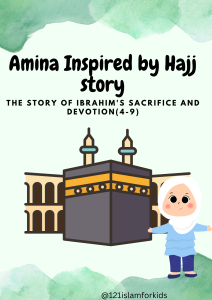
  • ‘Amina Inspired by Hajj story’: New story. 4-9 yrs

    ‘Amina Inspired by Hajj story’: New story. 4-9 yrs

    A series of Hajj stories for children.

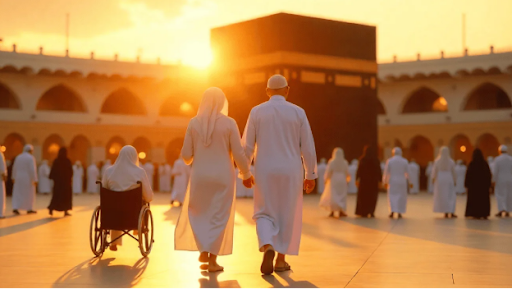
    Once upon a time, a young girl named Amina lived in a small village nestled among green hills. Amina was full of curiosity and always had a twinkle in her eyes. She loved hearing stories and learning about different cultures and traditions. One day, Amina’s grandmother, Amira, decided to share a special account with her—the story of Hajj.

    hajj

    Amira gathered Amina and her friends around her, and with a smile, she began to tell the tale. “Long ago, in a faraway land, a kind and humble man named Ibrahim lived. He loved and believed in one God, whom he called Allah.”

    “Once, Allah spoke to Ibrahim in a dream and asked him to build a special house, called the Kaaba, as a place of worship. Ibrahim and his son Ismail journeyed to a barren desert to fulfill Allah’s command. Together, they built the Kaaba, a sacred place for all people to come and worship Allah.”

    Amina’s eyes widened with excitement as she imagined the enormous structure being constructed in the middle of a vast desert.

    Amira continued, “After building the Kaaba, Ibrahim, and Ismail faced a great trial. Allah asked Ibrahim to sacrifice his beloved son Ismail to test his faith and devotion. Although it was a difficult request, Ibrahim and Ismail submitted to Allah’s will. As Ibrahim was about to sacrifice his son, Allah replaced Ismail with a ram, sparing his life.”

    Amina and her friends listened attentively, captivated by the story.

    Amira smiled and said, “As a reward for Ibrahim’s unwavering faith, Allah caused a miraculous spring, known as Zam Zam, to gush forth in the desert near the Kaaba. This blessed water became a source of nourishment and sustenance for people visiting the Kaaba in the years to come.”

    “Around the Kaaba, a bustling city called Mecca grew, and people from different lands began to visit during the pilgrimage of Hajj. They would walk around the Kaaba seven times as a symbol of unity and devotion to Allah. They would also drink from the sacred well of Zam Zam, remembering the trust of Ibrahim and the miracle bestowed upon them.”

    Amina’s eyes sparkled with wonder as she imagined the busy city of Mecca and the blessed water of Zam Zam flowing abundantly.

    Amira concluded, “Hajj is a time of reflection, unity, and spiritual growth. People come from different countries, speak different languages, and have different cultures, but they all come together as one family, devoted to Allah. It teaches us the importance of love, peace, and equality.”

    The story of Hajj, the miracle of Zam Zam, and the sacrifice of Ibrahim inspired Amina and her friends. They promised always to remember the lessons it taught—to be steadfast in the faith, to trust in Allah’s wisdom, and to cherish the unity of humankind.

    From that day forward, whenever Amina looked up at the sky and saw a flock of birds flying in perfect formation, or saw water flowing gracefully like a spring, she would be reminded of the incredible journey of Hajj, the blessed water of Zam Zam, and the unwavering devotion of Ibrahim and Ismail to Allah.

    50 Hajj Art and Craft Ideas| A great Event of Islam|

    I Went for Hajj 

    Hajj Essentials And Umrah Essentials Guide Book

    Yan’s Hajj: The Journey of a Lifetime

    Ant’s Amazing Journey to Hajj

    How To Deal With Fear The Islamic Way: Islamic Book For Kids & Toddlers:

    What are the 5 Pillars of Islam: Islamic Books for Kids

    Islamic Kids Best website |Free books download

    Islamic stories free reading