Tag: islamic parenting

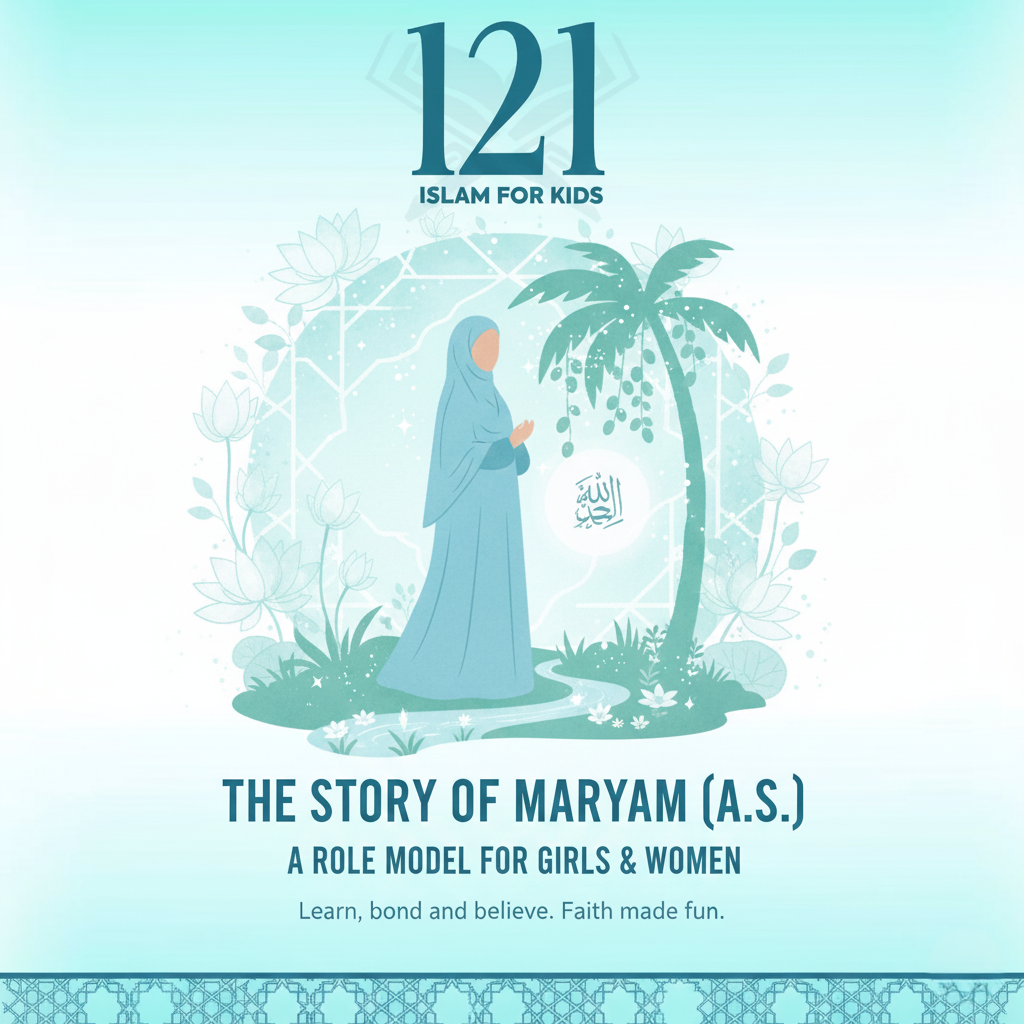
  • The Girl Who Chose Allah: The Story of Maryam (A.S.)

    The Girl Who Chose Allah: The Story of Maryam (A.S.)

    Maryam A.S as a role model for girls and women

    Imagine being the only woman mentioned by name in the entire Quran. Out of all the billions of women in history, Allah chose one—Maryam bint Imran—to be a permanent sign for humanity. Her life wasn’t a fairy tale; it was a journey of massive challenges and social pressure. Because of her loyalty and faith, Maryem A.S as a role modle of teen age girls and women remains the ultimate example of what it means to be truly brave.

    A Different Kind of Childhood

    It all started before she was even born. Her mother, Hannah, made a beautiful promise to Allah: “I want this child to be devoted only to You”. In those days, only boys were usually dedicated to temple service, but when Maryam was born, Allah accepted her with “goodly acceptance”.

    Maryam grew up in a private room called a Mihrab. She wasn’t out chasing trends; she was focused on her connection with her Creator. Her uncle, Prophet Zakariya, would visit her and find her with fresh fruits that weren’t even in season. When he asked where they came from, her answer was simple: “It is from Allah. He provides for whoever He wills”.

    The Lesson for You: Maryam didn’t wait until she was “old” to be pious. Her strength started in her teens. She knew that her worth wasn’t defined by people, but by Allah.

    The News from the Angel: “Kun” (Be)

    As she grew into a young woman, Maryam was known for her Batool nature—she was completely devoted and pure. One day, the Angel Jibril appeared in the form of a man. Her first reflex was modesty: “I seek refuge in Allah from you!”.

    It was at this incredible moment that Allah honors her character in the Quran:

    {And [the example of] Mary, the daughter of ‘Imraan, who guarded her chastity, so We blew into [her garment] through Our angel [i.e. Gabriel], and she believed in the words of her Lord and His scriptures and was of the devoutly obedient.}

    Jibril explained he was a messenger to give her news of a holy son. Maryam was shocked and asked, “How is it possible? I’m unmarried. And I’m a very pure lady. I don’t have any relation with any man…”.

    Jibril replied with the ultimate secret of the universe: “This is how… Allah says ‘kun’ (Be) and all things happen”. When Allah decrees something, He doesn’t need a “reason” or a “process.” He just says “Be,” and it is. Maryam trusted Allah’s plan instantly. She said “yes” to a destiny she knew would be almost impossible to explain to others.

    Bravery in the Wilderness

    When it was time to give birth, Maryam was alone. The pain was so intense and the fear of social judgment was so heavy that she cried out, “I wish I had died before this and was forgotten!”.

    If you’ve ever felt overwhelmed, Maryam felt that too. But Allah didn’t leave her. He gave her a stream of water and told her to shake the palm tree for fresh dates. Even in her weakest moment, Allah asked her to take action—to shake the tree.

    The Lesson for You: Faith doesn’t mean you never feel pain. It means that when you do, you turn to Allah and keep moving, even if you’re just “shaking the tree” with your last bit of strength.

    Facing the “Haters” with a Fast of Silence

    The hardest part was going home. Carrying a baby while unmarried was a social death sentence. But Allah gave her a specific order: You will not say anything. He commanded her to tell the people through signs: “Indeed, I have vowed a fast of silence to the Most Merciful, so I will not speak today to any human”.

    When she walked into town, the crowds gathered to mock her. She didn’t argue or try to defend herself. She remained silent with dignity and simply pointed to her baby.

    Then, the miracle happened. Baby Isa spoke from the cradle: “Indeed, I am the servant of Allah. He has given me the Scripture and made me a prophet… and He has made me kind to my mother”. Allah protected her reputation because she had protected her relationship with Him.

    The Perfect Mother: The Honor of “Ibne Maryam”

    Maryam raised her son to be a perfect human being—a Prophet who was kind and wise. Their bond was so powerful that in the Quran, Prophet Isa (A.S.) is almost always called “Ibne Maryam” (the Son of Maryam).

    In a world that usually names children after their fathers, Allah honored Maryam by linking a great Prophet’s name to hers over 23 times. This shows that a

    The Prophet Muhammad (peace be upon him) also confirmed her perfection in these famous Hadiths:

    “Many men reached the level of perfection, but no woman reached such a level except Maryam, the daughter of Imraan, and Asia, the wife of Pharaoh.”

    “The best of the women of the world are: “Maryam Bint ‘Imraan, Khadeejah Bint Khuwaylid, Faatimah Bint Muhammad, and Asia, the wife of Pharaoh.”

    Maryem A.S as a role modle of teen age girls and women shows us that a girl who trusts Allah is stronger than any challenge the world can throw at her.woman’s identity and her role as a mother are deeply respected in Islam.

    Conclusion: A Legacy of Faith for Today’s Girls

    Maryam (A.S.) isn’t just a figure from ancient history; her entire life story, from her devoted childhood to her unwavering strength as a mother, shines as a beacon for us all. She teaches us that true beauty lies in inner strength, that modesty is empowering, and that loyalty to Allah will always be rewarded, even in the face of the greatest challenges. Her incredible journey, crowned by the miracle of Prophet Isa (A.S.) speaking from the cradle, reminds every girl and woman that with faith, anything is possible.

    Want to learn more about the amazing miracles and teachings of Prophet Isa (A.S.) in Islam? Dive deeper with our special “Faith Boosting Course for Children about Isa (A.S.) in Islam” and unlock more incredible stories that will strengthen your child’s belief!

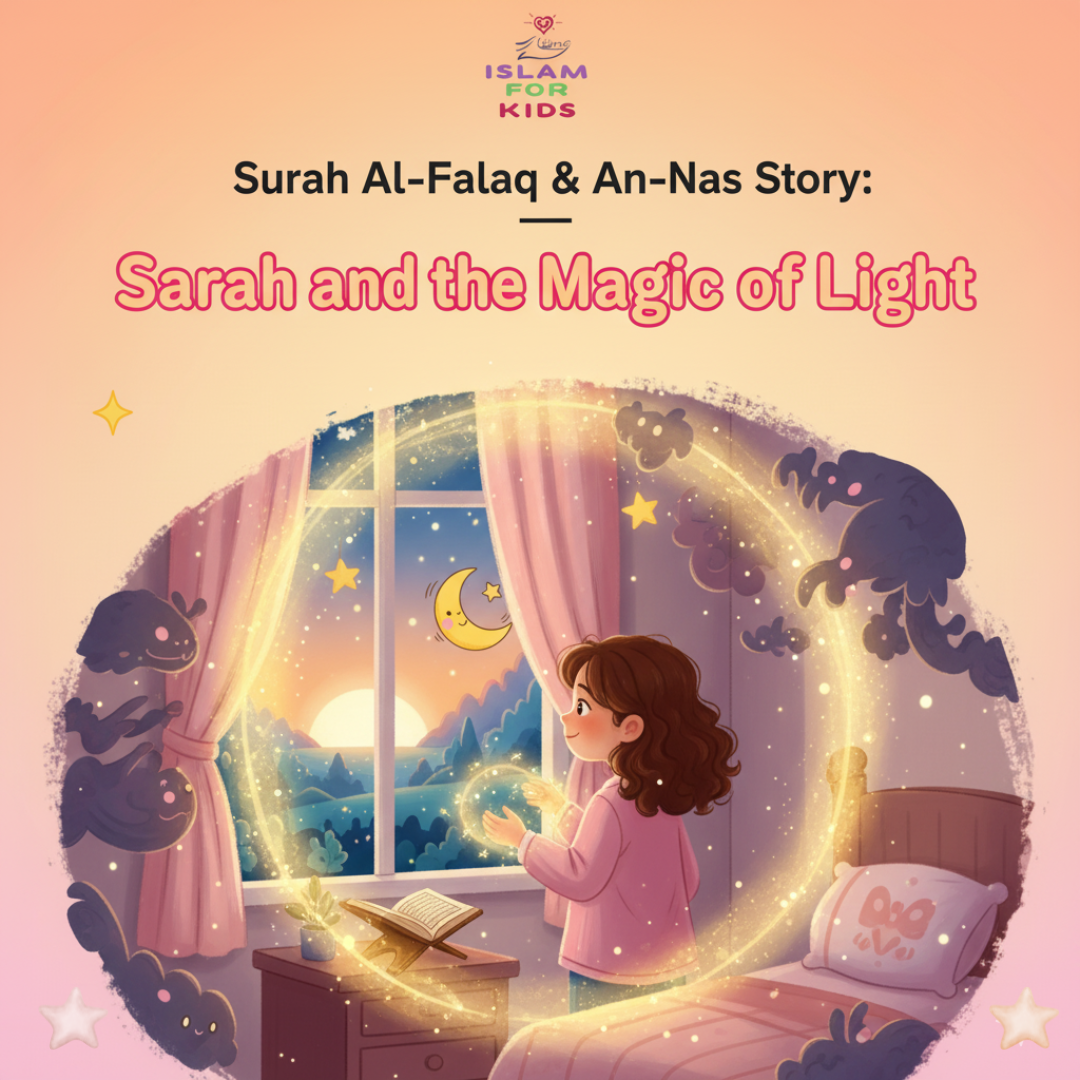
  • Surah Al Falaq & Surah An Nass Story: Sarah and the Magic of Light

    Surah Al Falaq & Surah An Nass Story: Sarah and the Magic of Light

    Surah Al-Falaq and An-Naas for kids are two of the most important short chapters in the Quran, teaching children about protection and seeking refuge in Allah. This beautiful story about Sarah brings these divine lessons to life.

    Sarah and the Magic of Light

    Once upon a time, in a small village surrounded by tall mountains, there lived a cheerful girl named Sarah. She loved to play with her friends and spend time with her family. But there was something unusual about the village—everyone believed that strange things happened after dark. People whispered about shadows moving in the night, mysterious winds, and unknown fears.

    Sarah didn’t believe these stories. She thought they were just old tales to scare children. But one night, something happened that changed her mind.

    It was a cold, stormy night. Sarah had gone to bed, but she woke up suddenly, feeling scared. She looked around her room and saw strange shadows moving on the walls. The wind howled outside, and it felt like the whole house was shaking. Sarah’s heart pounded, and she felt a chill down her spine.

    She remembered how her grandmother once told her about people who could get jealous and do bad things, and how sometimes, when the night is quiet, evil thoughts creep into people’s hearts. Sarah pulled her blanket up to her chin, trying to calm herself. But the shadows seemed to get closer, and her fear grew.

    Suddenly, she remembered the special Surahs her grandmother had taught her—Surah Al-Falaq and Surah An-Naas. Her grandmother always said that these were “the magic words” that protected everyone from harm and chased away any bad thoughts or fears.

    Without wasting any more time, Sarah sat up in bed and began to softly recite:

    “Say: I seek refuge in the Lord of the dawn, from the evil of what He created…”
    (She was reciting Surah Al-Falaq.)

    As she recited, she imagined a beautiful light rising from the horizon, like the sun at dawn, pushing away the darkness. Slowly, she felt the fear in her heart begin to fade. She continued with Surah An-Naas, reciting:

    “Say: I seek refuge in the Lord of mankind, the King of mankind, the God of mankind…”

    As she said these words, she imagined a shield of light surrounding her, keeping her safe from any bad whispers or evil that might try to scare her. By the time she finished, Sarah felt a warmth in her heart. The shadows on the walls no longer looked frightening, and the storm outside seemed quieter.

    She smiled to herself, realizing that the “magic” wasn’t in the shadows or the stories, but in the power of the Surahs and her trust in Allah’s protection. She remembered her grandmother’s words: “Whenever you feel scared or something bad happens, recite these Surahs, and trust that Allah will protect you.”

    The next morning, Sarah woke up with a bright smile. She ran to her grandmother and told her everything that happened. Her grandmother nodded wisely and said, “My dear, you’ve learned something very important. The world can be full of darkness, but the light of Allah’s words will always keep you safe. Never forget these Surahs—they are your shield against all evil.”

    From that day on, whenever Sarah or her friends felt scared, she would remind them to recite Surah Al-Falaq and Surah An-Naas. And just like magic, their fears would disappear, and they would feel safe again.

    The Lesson from Surah Al-Falaq and An-Naas for KidsWhenever you face fear, darkness, or difficult times, remember the power of Surah Al-Falaq and Surah An-Naas. Reciting these Surahs can help you overcome any evil, protect you from harm, and give you strength to stay brave—because Allah is always there to protect you.

    The village still had its spooky stories, but Sarah knew that as long as she trusted in Allah and recited the special Surahs, no shadow, no storm, and no evil could harm her.

    Surah Al-Falaq and An-Naas teaching method.

    More Islamic stories for children

    You Tube videos

    Don’t forget to Leave your thought and suggestions in comment box.

  • halloween story for muslim kids

    halloween story for muslim kids

    Halloween story for muslim kids: This is a powerful Islamic tale about courage, faith, and choosing truth over tradition. Learn about Islamic values and why Muslim families choose alternatives to Halloween. For more Islamic stories for kids, visit our collection.

    Chapter One: The Whispering Wind – A Halloween Story for Muslim Kids

    Zara loved mysteries. At twelve years old, she carried a notebook everywhere, its corners bent from adventures and its pages crowded with questions only a true Truth Seeker would ask. Her little brother Sami, eight and endlessly curious, had just started his own notebook, a tiny blue one with a sticker that read: “Seek the truth; Allah will guide you.” They both wore matching green backpacks with a crescent moon emblem that their Baba had sewn on.

    It was late October in Crescent Springs, the small town where trees curled like question marks and autumn leaves skittered along sidewalks like playful cats. Everywhere they walked, the world was dressed in orange and black. There were plastic skeletons in windows, fake cobwebs on bushes, and grinning pumpkins with candles inside. A cool wind weaved through the streets, carrying whispers of an approaching night when costumes would hide faces and strangers would knock on doors for candy.

    “Zara,” Sami said as a gust pulled at his scarf, “are we going to trick-or-treat this year? Everyone in my class is talking about it.”

    Zara glanced at the pumpkin on the porch next door. The carved eyes were triangles, the mouth jagged like teeth. It was supposed to be funny, but it made the shadows look sharp. “I don’t know,” she said. “We have to learn more first. Remember what Mama says? ‘A Muslim’s heart seeks truth, not trends.’ Let’s be Truth Seekers.”

    Sami straightened. “Truth Seekers!”

    They bumped fists and marched forward, their steps making soft drumbeats on the sidewalk.

    At the corner, the wind seemed to speak. Not like a voice, but like a hush that carried meaning. Zara paused. “Did you hear that?”

    “Hear what?” Sami tucked closer to her.

    “It sounded like… ‘Ask why.’”

    Sami’s eyes grew round. “Ask why what?”

    “Why Halloween,” Zara said, “and what it really is. If we’re going to make good choices, we need to understand. That’s what Truth Seekers do.”

    They agreed to begin their quest that afternoon. They would ask people they trusted, compare what they learned to Islamic values, and then decide together. No rushing. No copying what everyone else did. Truth first.

    Chapter Two: The Library Lantern – Halloween Story for Muslim Kids

    The town library smelled like paper and adventure. Sunlight poured through tall windows, making dust glimmer like tiny stars. Mrs. Noor, the librarian, waved from behind her desk. She wore a sky-blue hijab and had a smile as warm as tea.

    “What brings the Truth Seekers today?” she asked.

    “We’re investigating Halloween,” Zara said. “We want to know its origins and what it means. We want to know if it fits with who we are as Muslims.”

    Mrs. Noor’s eyes softened with pride. “That’s a noble quest.” She led them to a quiet corner where the history books lived. “Once, Halloween began as a festival where people believed the spirits of the dead could visit the living. They tried to scare away what they feared with costumes and fires. Over time, it changed shapes—ancient beliefs mixed with later customs until it became a night of make-believe, fear, and treats.”

    Sami tilted his head. “But it’s just fun now, right?”

    Mrs. Noor considered. “Fun isn’t always harmless, dear. Ask: What message is the fun carrying? What does it cheer for? What does it teach your heart to love?”

    Zara wrote in her notebook: Origins: ancient beliefs; fear celebrated; spirits; costumes to confuse and scare. “How does that fit with Islamic values, Mrs. Noor?”

    “Islam teaches tawhid—worship of Allah alone,” Mrs. Noor said. “We don’t mimic practices that started in beliefs we don’t share. We don’t celebrate fear or make friends with what frightens hearts. Our Prophet, peace and blessings be upon him, taught us to be truthful, to avoid imitating what goes against our faith, and to hold tight to our identity. And remember: the Qur’an teaches us to be people of truth and sincerity.”

    Sami scribbled: Be truthful. Don’t copy what’s wrong. Choose what pleases Allah.

    Mrs. Noor pulled out a small lantern from her desk drawer and switched it on. A soft, steady light glowed. “Truth is like this,” she said. “It doesn’t need to be scary. It shines quietly. That’s why we carry the lantern of knowledge. Now, what else will you explore?”

    “The jack-o’-lanterns,” Zara said, looking at the grinning pumpkin on a library poster. “Why do they look so… angry?”

    Mrs. Noor nodded. “In many stories, the jack-o’-lantern was meant to frighten or trick. It invites fear, and fear grows quickly when fed. As Muslims, we prefer courage born of trust in Allah. We don’t decorate our homes with fear.”

    Zara drew a lantern beside her notes, its light like a gentle promise.

    Chapter Three: The Candy Question – halloween story for muslim kids

    On their way home, they passed kids trying on costumes in a shop window—a pirate, a ghost, a witch with a crooked hat. A sign advertised “Trick or Treat Night! Knock on doors—fill your bag—no limits!”

    “‘Trick or treat,’” Sami read aloud, tasting the words. “It sounds like a game.”

    Zara curled her finger under the words on the sign. “‘Trick’ means a lie or a threat. It’s like saying, ‘Give me candy, or else.’ Even as a joke, it teaches the heart something wrong.”

    “Is it… cheating?” Sami asked quietly.

    “It can be,” Zara said. “When we pretend to be someone else to get treats, or use a threat to get what we want, that isn’t truth. Islam teaches honesty. We don’t pretend our way into gifts, and we don’t pressure people to give us things.”

    They rounded a corner and found Baba fixing Mr. Larkin’s fence. Baba looked up, his hands dusted with wood shavings, his eyes smiling. “Truth Seekers, what mystery today?”

    “Halloween,” Zara said. “We’re gathering clues.”

    Baba leaned on the fence. “Good. Do you know what the Prophet, peace be upon him, taught us? Whoever cheats is not from us. And the Qur’an warns us against falsehood. A Muslim’s honor is in truth. Even if the world points one way, we walk the path of Allah.”

    Sami’s fingers tightened on his notebook. “So ‘trick or treat’ is like… sneaking a prize?”

    “Or pressuring for it,” Baba said kindly. “And when fear becomes decoration, the heart can become numb to it. But your hearts are made for remembrance, for courage, for mercy.” He tapped their backpacks gently. “Keep seeking. The truth is a friend who never misleads.”

    Chapter Four: The Club of Truth Seekers – Halloween Story for Muslim Kids

    That evening, Zara and Sami gathered with their two best friends, Ayaan and Layla, in the backyard. They had made a club sign with copper letters: The Truth Seekers. A tiny solar lamp glowed in the center of their circle like a campfire.

    Ayaan adjusted his glasses. “I did some research, too,” he said. “Did you know that many Halloween games came from trying to predict the future? In Islam, we don’t play with that. We trust Allah and leave the unseen to Him.”

    Layla shivered. “I don’t like the scary decorations. They make my little sister cry.”

    Zara spread their notes like treasure maps. “We’ve learned: Halloween started with ideas we don’t share. The jack-o’-lantern’s job is to spread fear. ‘Trick or treat’ teaches a form of cheating—getting something by pressure or pretending. Islam calls us to truth, courage, and a strong identity.”

    Sami lifted his chin. “So what now?”

    “We make a choice,” Zara said. “But first, one more clue. We need to visit someone very wise.”

    “Teacher Hafsa?” Ayaan guessed.

    Zara grinned. “Teacher Hafsa.”

    Chapter Five: The Mentor on the Hill – Halloween Story for Muslim Kids

    Teacher Hafsa lived near the top of Crescent Hill where the wind drew soft lines through the trees. Her porch was a mosaic of potted herbs, and the air always smelled like mint and rain.

    She welcomed them with warm milk and honey. “Truth Seekers,” she said, her voice a gentle bell. “Your faces look serious. Tell me, what weighs on your minds?”

    Zara explained everything. When she mentioned the lantern, Teacher Hafsa’s eyes twinkled. “Light is a beautiful friend,” she said. “But it must burn in the heart, not just on the porch.”

    “We’re deciding about Halloween,” Layla said. “We want to be strong Muslims. But we also don’t want to feel left out.”

    Teacher Hafsa nodded slowly. “A wise person once said, ‘If you follow the crowd, you’ll get no further than the crowd.’ Islam teaches us to be leaders in goodness. The Prophet, peace and blessings be upon him, taught truth, bravery, and kindness. He taught us to avoid imitating people in what goes against our faith.”

    Sami traced a circle on his cup. “Sometimes, when the whole class is excited, I feel a pull. Like the wind.”

    “That pull is real,” Teacher Hafsa said. “It is called peer pressure. But you were given something stronger: your iman—your faith. Every time you choose Allah’s pleasure over people’s approval, your faith grows. And your heart becomes a home for courage.”

    Ayaan raised a hand. “Teacher, what should we say if someone asks us why we don’t do Halloween?”

    “Say it with kindness and confidence,” she replied. “You can say: ‘We’re Muslims, and we don’t celebrate Halloween because it started with beliefs we don’t follow. We don’t decorate with fear, and we don’t go door-to-door asking for treats with tricks. We choose truth, courage, and remembrance of Allah.’ Then invite them to join you for something better.”

    “Something better?” Sami leaned forward.

    Teacher Hafsa smiled. “Plan a Night of Light. Fill it with knowledge, games of honesty, service to neighbors, and gratitude to Allah. Light candles of kindness—figuratively speaking—by doing good deeds. Replace fear with remembrance.”

    The Truth Seekers looked at one another, eyes bright.

    Chapter Six: The Challenge – Halloween Story for Muslim Kids

    News of their plan spread quickly. Some kids laughed. “A Night of Light? That sounds boring,” said Dylan from Zara’s class. “Halloween has costumes and piles of candy.”

    Zara felt a tremor in her heart. “Come and see before you decide,” she said calmly. “We believe light can outshine fear.”

    Others were kinder but confused. “Why say no to Halloween?” asked Maya. “It’s just pretend.”

    Zara answered the way Teacher Hafsa taught: “Because our faith teaches us not to copy what began with other beliefs, and not to make fun out of fear or cheating. We choose what brings us closer to Allah.”

    That night, the Truth Seekers gathered supplies. They made invitations with a gold star and a line of Qur’an in beautiful calligraphy: “And say: The truth has come, and falsehood has vanished. Indeed, falsehood is ever bound to vanish.” They planned games of honesty, a story circle, and a service project—baking bread rolls to share with a shelter nearby. Instead of masks, they made name badges with qualities they wished to grow: Courage, Kindness, Honesty, Patience.

    But the wind had one more test.

    On the morning of their event, the sky turned the color of old pennies. The wind whooshed through town, toppling a rack of fake spiderwebs onto the sidewalk. A carved jack-o’-lantern rolled off a porch and thudded near Zara’s shoes. It rocked and stopped, staring with its jagged grin.

    Sami picked it up. “It’s heavy,” he said. “And it smells like… burnt fear.”

    Zara ran her fingers over the carved lines. “It wants us to think fear is fun,” she whispered. “But we know better. We won’t build our joy on fear.” She set the pumpkin gently aside, as if returning a storybook to the wrong shelf.

    They went to Teacher Hafsa’s to set up, but a new challenge awaited. A flyer had blown across their welcome banner and stuck there, flapping. Zara peeled it off. “Costume Contest Tonight! Grand Prize: Tower of Candy!”

    A gasp moved through their group.

    Ayaan scratched his head. “That’s a lot of candy.”

    Sami rubbed his stomach. “A lot.”

    For a moment, silence curled around them. Choice is always quiet at first; it waits for the heart to speak.

    Zara lifted the lantern from the library and turned it on. Its steady glow cut through the windy gray. “Truth Seekers,” she said, “we know what to do. We don’t need prizes that pull us away from our values. We’ll make our own joy with what pleases Allah.”

    Layla smiled bravely. “Night of Light,” she said. “Let’s make it beautiful.”

    Chapter Seven: The Night of Light – Halloween Story for Muslim Kids

    The community hall hummed as families arrived. Warm lights pooled on the floor like friendly puddles. A banner sparkled: Night of Light—Truth, Courage, Kindness.

    Station One: The Honesty Trail. Children followed a path of cards with true-or-false questions about prophets and good manners. Each right answer earned a bead to thread onto a bracelet named Sadiq—Truthful.

    Station Two: The Courage Corner. Kids told a story of a time they chose right over easy, then stepped through a paper arch decorated with the words: “Fasbir—Be patient.” A small bell chimed for each step of bravery.

    Station Three: The Kindness Kitchen. Families kneaded dough and shaped rolls. Flour dusted noses and laughter drifted like cinnamon. A sign read: “Feed the hungry; Allah loves the doers of good.”

    Station Four: The Lantern Lab. Children made lanterns from paper and string, decorating them with verses about light. No scary faces, only patterns of stars and the word Noor—Light.

    At the story circle, Teacher Hafsa invited everyone to sit. The Truth Seekers took turns sharing their journey—their library clues, their notes about origins, the meaning behind scary decorations, and the problem with “trick or treat.”

    Sami stood before the circle, his voice steady. “Trick-or-treating sounds sweet, but the words ‘trick or treat’ teach us something wrong. It means: give me what I want, or I’ll do something bad. That’s pressure. That’s a kind of cheating. And dressing up to pretend you’re someone else to get more candy is also like cheating. Islam teaches us to be honest and brave, not to scare or pretend for prizes.”

    The room was quiet. Then a small hand went up. It was Maya. “So what do you do instead?”

    “We do this,” Zara said, sweeping her arm at the glowing room. “We celebrate truth. We help others. We replace fear with the remembrance of Allah. We enjoy treats given with love, not demanded with tricks.”

    Teacher Hafsa closed with a du’a, asking Allah to fill their hearts with light, keep them firm on the straight path, and make them leaders in goodness. The children whispered ameen, and the lanterns seemed to glow brighter.

    Chapter Eight: The Dark Street – Halloween Story for Muslim Kids

    After the event, Zara, Sami, Ayaan, and Layla carried baskets of warm bread rolls to the shelter. The streets beyond the hall were dark except for plastic decorations—glowing eyes in windows, crooked smiles carved into pumpkins, figures dressed like monsters.

    At one house, a tall figure in a long cloak stood very still beside a jack-o’-lantern. The pumpkin’s smile blazed. The figure whispered, “Trick or treat… trick or treat…”

    Sami squeezed Zara’s hand. “Should we cross the street?”

    Zara lifted her chin. “We’ll pass with kindness and courage.”

    As they drew near, the cloaked figure took a step. “Trick or—”

    “Peace be upon you,” Zara said clearly. “We’re sharing bread with neighbors tonight. Would you like some?”

    The figure paused. “What?” The cloak shifted—underneath was Dylan, their classmate. His face was painted to look like a skull, but his eyes were just eyes, surprised and a little embarrassed. “You’re… not trick-or-treating?”

    “No,” Zara said gently. “We don’t celebrate Halloween. We don’t like fear decorations, and we don’t ask for treats with tricks. We’re Muslims. We choose truth and kindness.”

    Dylan scratched his cheek, smearing the paint. “I didn’t think about the words. ‘Trick or treat’… it is kind of weird.” He glanced at their basket. “What’s this?”

    “Warm bread,” Sami said, offering a roll. “We baked them to share.”

    Dylan took one, blinking. “Thanks.” He looked at the pumpkin, then back at them. “You know, my little sister is scared of these decorations. Maybe… I’ll turn the candle off.”

    He blew into the jack-o’-lantern. The light went out, and the grin looked less fierce, more like a puzzle that had lost its answer.

    Zara smiled. “Good night, Dylan. May your night be peaceful.”

    They walked on. Behind them, more porch lights flicked off, as if courage were contagious. The wind’s whisper changed. It no longer said “Ask why.” Now it said, “Walk true.”

    Chapter Nine: The Classroom Test – Halloween Story for Muslim Kids

    Monday brought a crisp blue sky and the kind of sunshine that makes pencils feel lighter. In homeroom, Mrs. Ramos invited everyone to share their weekend. Costumes danced across the room—pirates and superheroes and one person who said they were a “walking burrito,” which made everyone laugh.

    When it was Zara’s turn, she stood with steady feet. “We hosted a Night of Light. We learned about the origins of Halloween and why we don’t celebrate it as Muslims. We made lanterns, baked bread for the shelter, and shared stories of courage.”

    A few kids shifted in their seats. Dylan raised his hand. “I saw them on Saturday,” he said. “They gave me bread. It was… really good.” A ripple of laughter gently warmed the room.

    Maya tilted her head. “I still don’t get why jack-o’-lanterns are a problem. They’re just pumpkins, right?”

    Zara nodded, thoughtful. “Pumpkins are great. Pumpkin soup, pumpkin pie—yum! But carving scary faces and lighting them to make fear look fun—that’s the part we don’t want to celebrate. We want our hearts to love what is pure and brave, not what is creepy or dark.”

    Mrs. Ramos smiled kindly. “Thank you for explaining with respect, Zara. And thank you for listening with respect, everyone. Different families celebrate different things, and kindness is the bridge between us.”

    At recess, a boy named Lucas jogged over. “Hey, uh… if I don’t want to do Halloween anymore, my friends might laugh at me.” He stared down at his shoelaces. “What should I do?”

    Sami piped up, voice bright. “Join the Truth Seekers!”

    Zara chuckled. “You don’t need a club to be brave. Start with one step. Tell one friend your reason. If they laugh, it’s okay. Courage grows each time you choose truth.”

    Lucas nodded slowly. “Maybe… I’ll try.”

    Chapter Ten: The Hallway Door – Halloween Story for Muslim Kids

    After school, the Truth Seekers stopped by the library to return a stack of picture books they’d borrowed for the Night of Light. The hallway outside the library was dim. A door at the end—the old auditorium—stood slightly open. Cold air drifted through the crack, and something tapped inside, tap-tap, like a finger on a window.

    Sami swallowed. “What’s that?”

    Ayaan pushed his glasses up. “Probably a loose shutter.”

    “Or a raccoon,” Layla whispered.

    Zara looked at the small lantern hanging from her backpack. She clicked it on. Warm light pooled at their feet. “Let’s see,” she said, voice calm.

    They walked as one, the lantern a moving moon. Inside the auditorium, the wind had pushed a prop—an old wooden scarecrow—onto a platform. Its straw hands knocked against the wall with each gust. Tap. Tap. Tap.

    “That is extremely not a raccoon,” Sami said, half laughing.

    Layla exhaled. “Is this where we run away screaming?”

    Zara lifted the lantern higher. “We don’t run from shadows,” she said, quoting Baba. “We bring light to them.”

    They worked together to secure the window latch. The wind quieted, the tapping stopped, and the scarecrow sagged into stillness, just wood and straw again—not a monster, just a pile of parts.

    “I guess fear is like that,” Ayaan said, thoughtful. “Big when the room is dark. Smaller when a light is on.”

    “And truth is the best light,” Zara added.

    They left a note for the janitor about the loose latch and stepped back into the sunlit hallway, feeling taller than when they entered.

    Chapter Eleven: The Visit – Halloween Story for Muslim Kids

    That evening, Baba announced a surprise. “We’re visiting Grandma Safiya.”

    Grandma Safiya’s house was a museum of kindness. The living room held a globe with little stickers marking places she had helped after storms and floods. The kitchen smelled like orange blossoms and fresh bread.

    She welcomed the Truth Seekers with a hug each. “I heard about your Night of Light,” she said, eyes shining. “Tell me everything.”

    They did, all the way from the library lantern to the dark street. Grandma listened with the patience of trees and the curiosity of a child.

    “When I was little,” she said at last, “some neighbors celebrated Halloween. My father explained we don’t join, because it comes from ideas we don’t believe and it plays with fear. He told me, ‘Daughter, your laughter is a trust from Allah. Don’t tie it to shadows.’ So we made our own traditions—family service nights, poetry, and extra Qur’an recitation in the evenings.”

    She brought out a box from the top shelf. Inside were paper lanterns painted by hand—swirls of gold and sky blue, tiny stars and the word Noor in flowing script. “These are from our first Night of Light,” she said. “Decades ago!” She handed each of them a lantern. “Keep the tradition. Improve it. And remember, saying ‘no’ is only half the story. The other half is the beautiful ‘yes’ you build in its place.”

    Chapter Twelve: The Debate – Halloween Story for Muslim Kids

    A week later, Mrs. Ramos announced a class debate: “Traditions: Keep, Change, or Replace?” Students chose sides and prepared arguments. Dylan and Maya led the “Keep Halloween” team, while Zara and Ayaan led the “Replace with Light” team. The rules were simple: speak with respect, use evidence, and listen.

    Maya began. “Halloween is part of our town’s culture. It’s creative and fun.”

    Zara smiled. “Creativity and fun are wonderful. We’re not against those. We’re asking: what’s the root of this tradition? Halloween began with beliefs we don’t share, and it still celebrates fear. We choose to replace it with something better that matches our values—truth, courage, kindness.”

    Dylan said, “But costumes are exciting. You get to be someone else for a night.”

    Ayaan replied, “Islam teaches honesty. Pretending to be someone else to gain more treats—or using the phrase ‘trick or treat,’ which threatens a trick if you don’t get a treat—teaches the wrong lesson. We can be creative without dishonest play or pressure.”

    Another student argued, “It’s harmless!”

    Layla, from the audience, raised her hand. “My little sister had nightmares from the decorations. Fear can be sticky. We don’t want to make fear our friend.”

    Mrs. Ramos nodded. “Thoughtful points from both teams. Remember: traditions shape hearts. Choose the ones that help you grow.”

    Afterward, several classmates gathered around the Truth Seekers. A girl named Bree whispered, “My family doesn’t do Halloween either. I used to feel alone. Thank you for making something better.”

    Chapter Thirteen: The Storm and the Sign – Halloween Story for Muslim Kids

    November rolled in with rain that drummed on roofs and tapped on windows like polite knuckles. One afternoon, a storm knocked out power in part of Crescent Springs. The Truth Seekers met at the masjid to check on neighbors and pass out flashlights.

    Inside, Imam Kareem greeted them. He had heard of their project and wanted to share a hadith about identity. “The Prophet, peace and blessings be upon him, said the believer is strong and courageous. We do not imitate practices that go against our faith. We stand firm, even when the wind pushes.”

    As they left the masjid, the streetlight flickered on and off. In the gutter, a torn Halloween banner drifted, its letters broken: TR CK OR TRE T. The missing letters made the message honest by accident.

    Sami grinned. “Look, it says ‘Tr ck or tre t.’ Even the storm took the trick away.”

    Zara laughed. “Maybe that’s our sign.” She looked at her friends. “Let’s make a town tradition: an annual Night of Light with service, stories, and honest games. Not just for Muslims—for everyone who wants kindness without fear.”

    “Let’s do it,” Ayaan said.

    “Let’s make invitations,” Layla added.

    Sami bounced. “And bread! Definitely bread.”

    Chapter Fourteen: The Promise – Halloween Story for Muslim Kids

    Winter came soft and white. The Truth Seekers grew their club—not to be exclusive, but to be inclusive of goodness. They visited the shelter once a month, started a reading circle at the library, and launched a “Kindness Quest” board at school where kids pinned notes about honest, brave choices.

    Sometimes, people still asked about Halloween. Zara would smile and say, “We’re Muslim. We say no to Halloween because its roots and rituals don’t fit our faith. We don’t make friends with fear or with cheating. But we say a big yes to light, truth, courage, and kindness.”

    On a clear night, the wind returned—not cold now, but friendly. It slid along rooftops and through trees, whispering like a lullaby for the town.

    Sami listened. “What does it say?”

    Zara closed her eyes. “It says, ‘Walk true, lantern hearts.’”

    Epilogue: The Lantern Hearts

    Years later, people would still talk about the first Night of Light. They would tell how a group of children asked questions and followed their faith, how they met a wise mentor and faced challenges with courage, how they turned from fear to service and from tricks to truth.

    They would remember how jack-o’-lanterns once tried to make fear look friendly, but lantern hearts made courage look brighter. They would smile at how “trick or treat” lost its shine when honesty became the sweeter prize.

    And parents would whisper to their children at bedtime, “Be a Truth Seeker. Ask why. Learn well. Choose what pleases Allah. Let your heart be a lantern that lights your path and warms every home you enter.”

    The wind would nod along the rooftops, and the children, wrapped in blankets of faith, would drift to sleep with brave smiles—because they knew who they were, and Whose they were.

    The End.

    Key Lessons from the Halloween Story for Muslim Kids

    • This halloween story for muslim kids shows how to always seek truth through research and asking wise people before making decisions about traditions
    • This halloween story for muslim kids teaches that courage comes from choosing what pleases Allah over peer pressure and following the crowd
    • True Muslims don’t imitate traditions that conflict with Islamic beliefs and values
    • The halloween story for muslim kids demonstrates how our identity as Muslims is strengthened when we choose faith over fitting in with popular culture
    • Fear should never be made into entertainment—Islam teaches us to cultivate courage and trust in Allah
    • The phrase ‘trick or treat’ promotes dishonesty and pressuring others for rewards
    • When we say ‘no’ to what contradicts our faith, we can say ‘yes’ to beautiful alternatives that honor Allah

    Interactive Activities for Young Readers of This Halloween Story for Muslim Kids

    • Truth Seeker Journal: Create your own truth seeker notebook and write down three questions about traditions or beliefs you’d like to understand better
    • Lantern of Light Craft: Make your own paper lantern decorated with stars and the word ‘Noor’ (Light) to remind you of choosing knowledge over fear
    • Family Discussion Time: Talk with your parents or guardians about why your family celebrates or doesn’t celebrate different holidays
    • Kindness Challenge: Bake treats or make cards to share with neighbors—not for tricks, but from pure kindness
    • Prophet Stories Reading: Read stories about the Prophet Muhammad (peace be upon him) and how he showed courage and honesty

    This halloween story for muslim kids teaches children about Islamic values and why Muslims choose alternatives to Halloween.

    For more Islamic stories in English, visit our Islamic Stories Collection where you’ll find engaging faith-based narratives for children.

    To learn more about why Halloween is forbidden in Islam from a children’s perspective, we recommend reading this article: Why Muslims Should Not Celebrate Halloween which provides a comprehensive guide for young Muslims and their families.
  • How to teach 5 Rights of Parents in Islam? Online Islamic Courses

    How to teach 5 Rights of Parents in Islam? Online Islamic Courses

    The Rights of Parents in Islam: A Comprehensive Understanding through Online Islamic Courses.

    online islamic courses

    Introduction online course Rights of Parents:

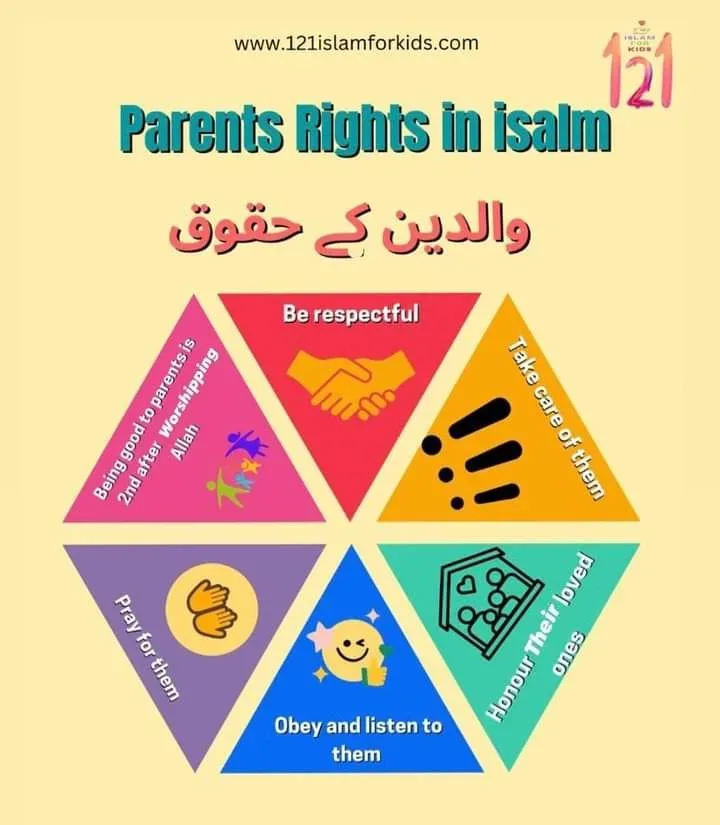
    Islam places great emphasis on the rights and respect due to parents. The Quran, hadiths (sayings of Prophet Muhammad, peace be upon him), and scholarly opinions provide a comprehensive framework for understanding and fulfilling these rights. Let us delve into the various aspects of the rights of parents in Islam, supported by references from the Quran, hadiths, and notable quotes.

    Kindness and Respect:

    The foundation of parental rights lies in showing kindness and respect to parents. Allah commands in the Quran: “And your Lord has decreed that you not worship except Him, and to parents, good treatment. Whether one or both of them reach old age [while] with you, say not to them [so much as], ‘uff,’ and do not repel them but speak to them a noble word” (Quran 17:23).

    Prophet Muhammad (pbuh) further emphasized this in a hadith: “Paradise lies beneath the feet of mothers.” This highlights the elevated status of mothers and emphasizes the importance of respecting and caring for them.

    Obedience and Compliance:

    Islam emphasizes obedience to parents unless they command something against Islamic teachings. The Quran states: “But if they (both) strive with you to make you join in worship with Me others of which you have no knowledge, then obey them not” (Quran 29:8). This verse highlights the exception to obedience when it comes to matters of shirk (associating partners with Allah).

    Prophet Muhammad (pbuh) affirmed the significance of obedience to parents in a hadith: “The pleasure of Allah is in the pleasure of the parents, and the anger of Allah is in the anger of the parents.” This underscores the importance of seeking parental satisfaction as a means to earn Allah’s pleasure.

    Financial Support:

    Children have a responsibility to provide financial support to their parents when needed. Allah says in the Quran: “And do well to parents, and near of kin, and orphans, and the needy, and the neighbor from among your own people” (Quran 2:83). This verse emphasizes the duty to support parents alongside other obligations.

    Dua and Prayers for Parents:

    Islam encourages children to make dua (supplication) and pray for the well-being, forgiveness, and guidance of their parents. The Quran mentions: “And lower to them the wing of humility out of mercy and say, ‘My Lord, have mercy upon them as they brought me up [when I was] small’” (Quran 17:24).

    Honor their loved Ones:

    In Islam, honoring the relatives of parents is highly encouraged. Muslims are urged to maintain good relations with their extended family, treating them with kindness, respect, and support. Visiting and assisting relatives, especially after the passing of parents, is considered a virtuous act.

    Prophet Muhammad (pbuh) affirmed the significance of praying for parents in a hadith: “When a person dies, all their deeds come to an end except three: Sadaqah Jariyah (ongoing charity), beneficial knowledge, or a righteous child who prays for them.”

    Conclusion:

    The rights of parents in Islam encompass various aspects such as kindness, respect, obedience, financial support, and prayers. The Quran, hadiths, and Islamic scholars provide guidance on fulfilling these rights, emphasizing the importance of cherishing and honoring parents.

    As Muslims, it is our duty to understand and fulfill these rights, recognizing that the love and care we receive from our parents is a blessing from Allah. By upholding these rights, we contribute to building strong family bonds, fostering a harmonious society, and earning the pleasure of Allah.

    In the words of Imam Ahmad ibn Hanbal, a renowned Islamic scholar, “The best of deeds after the obligatory acts are those done to please one’s parents.”

    May Allah bless us all with the ability to fulfill the rights of our parents and strengthen the ties of kinship.

    Teaching Methods for Online Islamic Courses.

    Exploring the kindness towards Parents in Islam to Children, including Duas and Activities:

    Introduction to Parental Rights

    Dua: Begin each session with a dua seeking Allah’s blessings and guidance to understand parental rights.

    Activity: Discuss real-life scenarios where children can identify examples of fulfilling parental rights.

    Assessment: Ask children to write or draw about a time when they showed kindness and respect to their parents.

    Understanding Parental Responsibilities

    Dua: Teach children specific duas for seeking Allah’s forgiveness for any shortcomings towards their parents.

    Activity: Have children create a “Parental Responsibilities” chart listing tasks they can help their parents with.

    Assessment: Ask children to write a short paragraph on why it is important to obey and respect parents.

    Practicing Kindness and Respect

    Dua: Teach children duas for seeking Allah’s blessings on their parents and seeking forgiveness for any mistakes.

    Activity: Role-play scenarios demonstrating acts of kindness, respect, and helpfulness towards parents.

    Assessment: Ask children to create a poster illustrating ways to show kindness and respect to parents.

    Communication and Appreciation

    Dua: Teach children duas for seeking Allah’s blessings on their parents’ health, happiness, and wellbeing.

    Activity: Guide children in writing thank-you letters or cards expressing gratitude to their parents.

    Assessment: Have children share a story or personal experience where they communicated effectively with their parents.

    Seeking Parents’ Guidance

    Dua: Teach children duas for seeking Allah’s guidance and wisdom to understand and follow their parents’ advice.

    Activity: Engage children in a discussion about seeking parents’ opinions and advice in decision-making.

    Assessment: Ask children to create a collage or drawing representing a valuable lesson learned from their parents.

    Honoring Parents in All Circumstances

    Hadith: Teach them one short hadith about the father and one about Mother.

    Activity: Tell them a story about the rights of the Father and mother in stories. (Two hadiths are included in our hadith course)

    Assessment: Have children write a reflective journal entry about a time when they overcame a challenging situation by honoring their parents. (We have worksheets on it)

    Dua for Parents

    Dua: Teach children a special dua for their parents’ well-being, forgiveness, and success.

    Activity: Have children create personalized dua cards for their parents, expressing love and prayers for them.

    Assessment: Ask children to share a dua they made for their parents and explain why they chose those specific words.

    Conclusion and Recap

    Dua: End the course with a dua seeking Allah’s blessings for parents and their children.

    Activity: Encourage children to reflect on the lessons learned and set goals for applying them.

    Assessment: Ask children to create a “Rights of Parents” pledge, committing to fulfill their parents’ rights.

    By incorporating duas and engaging activities, children will develop a deeper understanding of the rights of parents in Islam and actively apply them in their lives. These methods will instill a sense of gratitude, respect, and love for parents, fostering a strong bond within the family.

    Enrol now for this course or get a PDF of this Course Here

    Hadith about Mothers’ Respect in Islam with a story and a worksheet.

    Hadith about fathers’ respect in Islam with a story and a worksheet

    Have a look at online Islamic courses

    The book used in this Course, Islamic Studies Grade 05

    Free Books

    Videos

  • What are the 4 obligatory acts of Wudu? How to perform Wudu?

    What are the 4 obligatory acts of Wudu? How to perform Wudu?

    In this article, we will cover the Fard of wudu, the Sunnah of wudu, and the Complete wudu method.

    What is fard of Wudu?

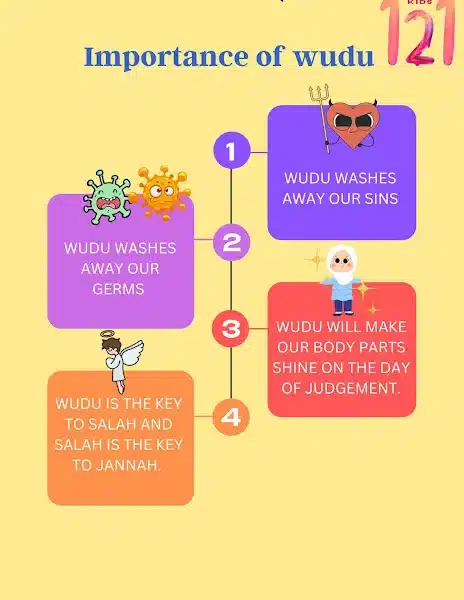
    Wudu, also known as ablution, holds significant importance in Islam as it is a ritual purification process that Muslims perform before certain acts of worship. It involves specific actions and intentions aimed at purifying the body and mind. Understanding the method and obligatory aspects of wudu, known as fard, is crucial for practicing Muslims. This brief note will explore the concept of wudu, the method of performing it, and the fard obligations associated with it.

    Wudu is an integral part of the Islamic faith and is performed by Muslims to purify themselves before engaging in acts of worship, such as the five daily prayers (Salah), recitation of the Quran, and other religious rituals. It symbolizes spiritual and physical cleanliness, and by performing wudu, Muslims aim to attain a state of purity to establish a deeper connection with Allah.

    Method of fard Wudu

    The method of performing wudu consists of several sequential steps that must be followed in order. The process typically begins by making a clear intention in the heart to perform wudu solely for the sake of worship and to seek purification. Then, the individual begins by washing their hands up to the wrists three times, ensuring that water reaches every part of the hand, including the fingers.

    The next step involves rinsing the mouth and nose three times, using a small amount of water. This includes taking water into the mouth, swishing it around, and spitting it out, as well as inhaling water slightly into the nostrils and then expelling it. It is recommended to use the right hand for these actions.

    After that, the face is washed three times, from the hairline to the chin and from ear to ear, ensuring that water reaches all parts of the face. This step is followed by washing the right arm up to the elbow three times, starting with the right hand, and then repeating the same process for the left arm.

    Next, the individual wipes their head with wet hands, moving them from the front of the head to the back, and then bringing them back to the front. It is recommended to use the index fingers to wipe the inner edges of the ears, and the thumbs to wipe the back of the ears.

    Lastly, the person washes their feet, starting with the right foot and ensuring that water reaches all parts, including between the toes, up to the ankles. This is done three times, and the same process is repeated for the left foot.

    During the entire wudu process, it is essential to maintain the proper order and ensure that each part is washed or wiped the required number of times. It is also recommended to begin each action with the right side of the body.

    When it comes to the fard obligations of wudu, there are four main aspects that must be fulfilled for the wudu to be considered valid. These fard elements are washing the face, washing the arms up to the elbows, wiping a quarter of the head, and washing the feet up to the ankles. These actions must be performed in the specified manner and in the correct order. Neglecting any of these obligations or performing them incorrectly can invalidate the wudu.

    It is important to note that while wudu is obligatory for certain acts of worship, such as Salah, it is also highly recommended to perform wudu at other times to maintain a state of cleanliness and spiritual readiness. Muslims may perform wudu before reciting the Quran, entering the mosque, or engaging in supplications.

    The fard obligations of Wudu


    The fard obligations of wudu refer to the essential components that must be fulfilled for wudu to be considered valid. These obligations are necessary and cannot be omitted or neglected. Here are the fard elements of wudu:

    1. Making the intention: It is recommended to make a specific intention in the heart to perform wudu solely for the sake of worship and seeking purification.
    2. Washing the face: It is obligatory to wash the entire face once during wudu. This includes washing from the hairline to the chin and from one earlobe to the other, ensuring that water reaches all parts of the face.
    3. Washing the arms up to the elbows: Both arms, including the hands, must be washed up to and including the elbows. Each arm should be washed from the fingertips up to the elbows, ensuring that water reaches all areas.
    4. Wiping a quarter of the head: Instead of washing the entire head, it is obligatory to wipe a quarter of the head. This is done by wetting the hands and passing them over a portion of the head, starting from the forehead and moving toward the back.
    5. Washing the feet up to the ankles: Both feet, including the ankles, must be washed once during wudu. Starting with the right foot, water should be poured over the entire foot, ensuring that all areas, including between the toes, are washed. The washing should continue up to and including the ankles.

    These fardh obligations are essential and must be performed in the proper sequence and manner for wudu to be considered valid. Neglecting any of these obligations or performing them incorrectly can invalidate the wudu. It is important to note that each obligation should be fulfilled in its entirety, ensuring that water reaches all required areas.

    By fulfilling the fardh obligations of wudu, Muslims fulfill the basic requirements of this ritual purification, ensuring cleanliness and readiness for acts of worship. These obligations serve as a reminder of the importance of physical and spiritual purity in Islamic practice, establishing a sense of discipline and reverence in the performance of wudu.


    The Sunnah of Wudu: Cleanliness

    The sunnah of wudu refers to the recommended actions and practices that Prophet Muhammad (peace be upon him) performed while performing ablution. While not obligatory, adhering to the Sunnah acts of wudu holds great merit and rewards in Islamic tradition. These acts provide additional blessings and spiritual benefits to the individual performing them. Here are some examples of the Sunnah practices of wudu:

    1. Beginning with the name of Allah: Before starting wudu, saying “Bismillah” (In the name of Allah) is encouraged as a way of seeking blessings and invoking the name of Allah.
    2. Using the Siwak: Using a Siwak, a traditional tooth stick or a toothbrush made from certain plants, for cleaning the teeth is highly recommended before starting wudu. It helps maintain oral hygiene and is considered a virtuous act.
    3. Starting with the right: Following the practice of Prophet Muhammad SAW, it is recommended to begin wudu actions, such as washing hands and rinsing the mouth, with the right side of the body.
    4. Washing the limbs thoroughly: Taking care to ensure that each part of the limbs being washed during wudu is fully wet and properly cleansed is a Sunnah practice. This includes making sure that water reaches all areas, such as between the fingers and toes.
    5. Lengthening the actions: Prophet Muhammad SAW would often prolong certain aspects of wudu, such as rinsing the mouth and nose and wiping the head, to ensure thorough cleansing.
    6. Wiping the ears: After wiping the head, it is recommended to wipe the inner and outer parts of the ears with the index fingers, as Prophet Muhammad would do during his wudu.
    7. Observing the order: Maintaining the proper sequence of actions in wudu, as mentioned in the method of wudu, is part of the Sunnah. It includes following the order of washing the face, then the arms, wiping the head, and finally washing the feet.
    8. Conserving water: While performing wudu, Prophet Muhammad SAW emphasized the importance of using a moderate amount of water and avoiding wastage. Muslims are encouraged to be mindful of water conservation during ablution.
    9. Supplicating after fard wudu: After completing wudu, it is recommended to supplicate and make specific prayers, seeking the blessings and purification that wudu provides.

    Conclusion

    In conclusion, wudu is an essential ritual of purification in Islam, serving as a means to achieve physical and spiritual cleanliness. The method of performing wudu involves a specific sequence of actions, each with its own purpose and significance.

    The fard obligations of wudu must be fulfilled for it to be valid. By observing the practice of wudu, Muslims strive to attain a state of purity and readiness for acts of worship, enhancing their spiritual connection with Allah. Wudu serves as a reminder of the importance of cleanliness and the need to approach worship with a purified body and mind. It is a beautiful and symbolic practice that reflects the meticulousness and devotion of Muslims in their pursuit of spiritual growth and closeness to the Divine.

    By adhering to the method and fulfilling the fard obligations of wudu, Muslims uphold a fundamental aspect of their faith, fostering a sense of discipline, humility, and reverence in their worship.

    Read More here

    The method of Five prayers in a day for Muslim children

    30 short Hadiths course

    Quran tafsir for kids

    Parenting In Islam

  • Story 24 Urdu|”A Story of Friendship and Faith”

    Story 24 Urdu|”A Story of Friendship and Faith”

    “The Power of Good Companions: A Story of Friendship and Faith”

    میرے پیارے طلباء ، یہاں ایک بہت ہی خوبصورت کہانی کے ساتھ ہماری اگلی حدیث ہے۔

    Hadees:حدیث

    الْمَرْءُ مَعَ مَنْ أَحَبَّ

    انسان اس کے ساتھ ہے جس سے وہ محبت رکھتا ہے

    میرے پیارے طلباء ، اس حدیث میں ہمارے نبی صلی اللہ علیہ وسلم نے فرمایا ہے کہ اچھے دوست بنائیں کیونکہ آپ آخرت میں اپنے دوستوں کے ساتھ رہیں گے۔ لہذا اگر آپ اچھے دوست بنائیں گے تو وہ آپ کے نیک اعمال میں اضافہ کریں گے اور آپ جنت میں چلے جائیں گے ، لیکن اگر آپ برے دوست بنائیں گے تو وہ آپ کو دوزخ کی آگ میں لے جائیں گے۔

    ہر کوئی اس کے ساتھ زیادہ وقت گزارنا پسند کرتا ہے جس سے وہ محبت کرتا ہے ، نئے دوست بنانا اور اپنے دوستوں کے ساتھ کھیلنے اور تفریح ​​کے لئے زیادہ سے زیادہ وقت گزارنا پسند کرتا ہے۔ ہمیں اپنے دوستوں کو منتخب کرنے میں بہت محتاط رہنا چاہئے کیونکہ ہر ایک اچھا دوست نہیں بن سکتا۔ ہمارے تمام کلاس فیلو اور ہمارے پڑوسی ہمارے بہترین دوست نہیں بن سکتے ہیں۔ ہمیں اچھے دوست بنانا چاہئے ، کیونکہ ہم ان سے بہت ساری اچھی چیزیں سیکھیں گے۔

    تاہم ، ایک برا دوست ہماری اچھی عادات کو خراب کر سکتا ہے۔ اچھے دوست وہ ہوتے ہیں جو ہمیں اچھی چیزیں سکھاتے ہیں ، برے کاموں سے روکتے ہیں اور جو کسی پریشانی میں ہماری مدد کرتے ہیں۔ اگر اس دنیا میں ہمارے اچھے دوست ہیں تو اللہ ان شاء اللہ جنت میں ہمارے اچھے دوست کی صحبت فراہم کرے گا۔

    کہانی

    غار کے ساتھی

    ہمارا نبی صلی اللہ علیہ وسلم اس دنیا کے بہترین انسان تھے اور ان کے بہت سے اچھے  دوست تھے ۔ ان کے تمام ساتھی بہت ہی سچے مومن تھے اور انہوں نے زندگی کے ہر لمحے میں ہمارے نبی صلی اللہ علیہ وسلم کی مدد کی۔

    صحابہ میں حضرت ابوبکر صدیق رضی اللہ عنہ بہترین ساتھی تھے۔ وہ پیغمبر اکرم صلی اللہ علیہ وسلم کو بہت پسند کرتے تھے اور زندگی کی ہر مشکل میں ان کے ساتھ تھے۔ وہ اسلام سے پہلے آپ   صلی اللہ علیہ وسلم کے دوست تھے اور وہ سب سے   پہلے مسلمان بھی تھے۔

    جب ہمارے نبی صلی اللہ علیہ وسلم نے لوگوں کو اسلام قبول کرنے کے لئے بلایا تو مکہ مکرمہ میں ہر ایک محمد صلی اللہ علیہ وسلم کا دشمن بن گیا۔ بہت سے لوگوں نے آپ   صلی اللہ علیہ وسلم کی نافرمانی کی اور آپ  صلی اللہ علیہ وسلم کی راہ میں بہت سی روکاوٹیں  پیدا کیں۔   حضرت ابوبکر صدیق رضی اللہ عنہ  آپ   صلی اللہ علیہ وسلم کی حمایت میں نے ان کے ساتھ کھڑے ہوئے۔

    حضرت ابوبکر صدیق رضی اللہ عنہ بہت دولت مند تھے ، ان کا بہت اچھا کاروبار تھا اور انہوں نے اپنے دوست اور اللہ کے لئے اپنا سارا مال اور وقت وقف کردیا۔

    حضرت ابوبکر صدیق رضی اللہ عنہ کی بہترین قربانی اس وقت  دی   جب    پیغمبر اکرم صلی اللہ علیہ وسلم نے مدینہ جانے کا فیصلہ کیا ۔ کفار مکہ ہمارے نبی صلی اللہ علیہ وسلم کے بدترین دشمن بن گئے اور انہوں نے ہمارے نبی صلی اللہ علیہ وسلم کو قتل کرنے کا فیصلہ کیا۔ چنانچہ اللہ کے حکم سے پیغمبر اکرم صلی اللہ علیہ وسلم نے مدینہ جانے کا فیصلہ کیا۔ اس سفر کے دوران حضرت ابوبکر صدیق رضی اللہ عنہ آپ صلی اللہ علیہ وسلم کے ساتھ تھے ۔

    حضرت ابوبکر صدیق رضی اللہ عنہ دو اونٹ لے آئے اور وہ  رات کے وقت آپ صلی اللہ علیہ وسلم کے سا تھ مکہ مکرمہ سے چلے گئے۔ انہوں نے ایک غار میں پناہ لی۔ اس غار کا نام غار ثور ہے۔  غار ثور کئی سالوں سے بند تھا۔ ۔ حضرت ابوبکر صدیق رضی اللہ عنہ نے خود غار صاف کیا۔ غار میں بہت سارے سوراخ تھے جن میں بہت سے نقصان دہ کیڑے تھے۔ حضرت ابوبکر صدیق رضی اللہ عنہ نے اپنی قمیض پھاڑ کر  اس سے کچھ ٹکڑے لئے اور غار میں سوراخ بند کردیئے۔

     کفار   مکہ انہیں تلاش     کرتے   غار   تک  پہنچے۔ وہ غار کے باہر کھڑے تھے جہاں ہمارے نبی صلی اللہ علیہ وسلم  اور  حضرت ابوبکر صدیق رضی اللہ عنہ چھپے ہوئے تھے لیکن اللہ نے اپنے بندوں کو بچایا۔ اللہ نے وہاں ایک فاختہ بھیجی اور وہ  اس  گھونسلے میں بیٹھ گی اور انڈے دے  دیئے۔۔ پھر مکڑی نے جال بنانا شروع کیا۔ غار کا دروازہ اب مکڑی کے جال کے ساتھ بند کردیا گیا تھا۔ کافروں کا خیال تھا کہ اس گندی اور بند غار میں کوئی یہاں نہیں ہوسکتا ہے اور اس لئے وہ وہاں سے چلے گئے۔

    دونوں دوست بچ گئے اور انہوں نے غار میں کچھ آرام کرنے کا فیصلہ کیا۔

    حضرت ابوبکر صدیق رضی اللہ عنہ نے اپنے بہترین دوست سے کچھ آرام کرنے کو کہا۔ تو ہمارے نبی صلی اللہ علیہ وسلم  نے ان کی گود میں سر رکھا اور لیٹ گئے۔ اچانک وہاں ایک بچھو ظاہر ہوا۔ حضرت ابوبکر صدیق رضی اللہ عنہ نے اپنے دوست کو پریشان نہ کرنے کا فیصلہ کیا اور اس بچھو پر ہاتھ رکھ  دیا- 

    وہ بچھو حضرت ابوبکر صدیق رضی اللہ عنہ  کو کاٹتا رہا۔ یہ بہت تکلیف دہ  تھا اور ان کی آنکھوں  سے آنسو  بہنے لگے ۔ جب درد ناقابل برداشت ہو گئی   تو کی آنکھوں سے ایک قطرہ آنحضرت صلی اللہ علیہ وسلم پر پڑا۔ حضور صلی اللہ علیہ وسلم اٹھ  گئے اورحضرت ابوبکر صدیق رضی اللہ عنہ کی طرف دیکھا۔ حضرت ابوبکر صدیق رضی اللہ عنہ کا    ہاتھ زخمی تھا اور اس بچھو کے کاٹنے سے  وہ     بہت    تکلیف       میں تھے۔ 

    آنحضرت صلی اللہ علیہ وسلم نے حضرت ابوبکر صدیق رضی اللہ عنہ سے پوچھا ، “تم نے مجھے کیوں نہیں بتایا؟”

    حضرت ابوبکر صدیق رضی اللہ عنہ نے جواب دیا ، “میں آپ کو پریشان نہیں کرنا چاہتا تھا۔”

    حضور نبی کریم صلی اللہ علیہ وسلم نے اپنا تھوک زخموں پر لگایا اور درد کم ہوگیا ۔ حضرت ابوبکر صدیق رضی اللہ عنہ خوش تھے کہ انہوں نے اپنے دوست کو راحت بخشی۔

    یہ دوستی کی ایک حقیقی مثال ہے۔ یہ اخلاص ہے۔

    وہ ہر آزمائش اور زندگی کے ہر قدم میں ایک دوسرے کے ساتھ تھے۔

    اور موت کے بعد ان کی قبریں بھی ایک  ہی جگہ پر ہیں۔ اور اللہ کی نعمت سے جنت میں ایک دوسرے کے ساتھ رہیں گے۔ ان شاء اللہ.

    اگر ہم جنت میں پیغمبر اکرم صلی اللہ علیہ وسلم کے ساتھ رہنا چاہتے ہیں تو ہمیں ان سے پیار کرنا چاہئے اور اس کی سنت پر عمل کرنا چاہئے۔ ہمیں بطور دوست بہترین لوگوں کا انتخاب کرنا چاہئے۔ ہمیں اپنے دوستوں کے ساتھ اچھی چیزیں بانٹنا اور دین کی طرف لانا چاہئے۔

    مجھے امید ہے کہ آپ اس کہانی کو اپنے دوستوں کے ساتھ شیئر کریں گے۔ تاکہ وہ آپ کے بہترین دوست بھی بن سکیں۔

    یا راب ، ہمیں اچھے دوست مہیا کریں۔ آمین۔

    This story has been written for our Hadith with stories course designed for kids in English and Urdu. We also have prepared worksheets for kids. Visit the following links to read more about the course.

    30 short hadith with stories course Introduction

    Read This hadith with the introduction and explanation in Urdu and English

    Read This story in Urdu

    Buy our hadith workbook

    Worksheet for This hadith

    hadees
  • How to start Muslim homeschooling? 8 steps guide

    How to start Muslim homeschooling? 8 steps guide

    muslim homeschool

    Starting Muslim homeschooling can be a rewarding experience for both parents and children. As a parent, you have the opportunity to provide your child with a tailored education that aligns with your values and beliefs. Here is a detailed guide on how to start a Muslim homeschooling program:

    The first step in starting a Muslim homeschooling program is to research the legal requirements in your state or country. Laws and regulations can vary widely from one location to another. In the United States, for example, homeschooling is legal in all 50 states, but the specific requirements can vary depending on where you live. To ensure that you are in compliance with the law, start by researching the homeschooling laws and regulations in your area.

    Step 2: Goals and objectives

    Define Your Educational Goals and Objectives The next step is to define your educational goals and objectives. As a Muslim homeschooling parent, you have the flexibility to tailor your child’s education to your values and beliefs. Start by considering the subjects that are important to you and your family, such as Islamic Studies, Arabic Language, and Quranic Studies. You may also want to consider other subjects, such as Math, Science, and Social Studies.

    Step 3: Curriculum (Get Books)

    Choose a Curriculum Once you have defined your educational goals and objectives, the next step is to choose a curriculum. There are many options available online, including secular curricula that can be adapted to a Muslim homeschooling program, as well as specialized Muslim curricula.

    There are many curriculums and books available for Muslim homeschooling families. Here are some popular options:
    1. The Islamic Education Series: This is a comprehensive Islamic curriculum that covers all aspects of Islamic studies for children from kindergarten through grade 12. It is published by the International Islamic Publishing House.
    2. Noorart: Noorart offers a variety of Islamic curriculums and textbooks for children of all ages. Their curriculums cover Quran, Islamic studies, the Arabic language, and more.
    3. Islamic School Book: This is a series of textbooks published by the Islamic Services Foundation that cover Islamic studies, the Quran, and the Arabic language for children in grades 1-12.
    4. I Love Islam: (Get Books) This is a comprehensive Islamic curriculum for children from kindergarten through grade 5. It is published by the Islamic Services Foundation.
    5. A Guide to Islamic Studies: This is a comprehensive curriculum for Islamic studies for children from kindergarten through grade 12. It is published by the Muslim American Society.
    6. The Seerah Trail: (Get Book)This is a unique Islamic curriculum that teaches the life of the Prophet Muhammad (peace be upon him) through a trail format. It is designed for children aged 7-11.
    7. Learning Roots: (Get Books) Learning Roots offers a variety of Islamic books and resources for children of all ages. Their books cover topics such as Quran, Islamic studies, and Arabic language.

    These are just a few of the many curriculums and books available for Muslim homeschooling families. It’s important to research and find a curriculum that fits your family’s needs and goals.
    Some popular Muslim homeschool curricula include:

    Be sure to research the different curricula available to find the one that best meets your needs and goals.

    Step 4: Plan Your Lessons

    Plan your lessons With your curriculum in hand, it’s time to plan your lessons. Start by breaking down the curriculum into manageable units and then plan the lessons for each unit. Be sure to allocate enough time for each subject and use a variety of teaching methods to keep your child engaged.

    Step 5: Get the Necessary Resources

    To effectively homeschool your child, you will need the necessary resources. This may include textbooks, workbooks, educational software, and other materials. Many resources are available online, or you may be able to find them at local homeschooling stores or Islamic bookstores. ( View or Buy)

    When it comes to homeschooling, there are several resources that are necessary to ensure a successful and effective learning experience. Here are some essential homeschool resources:

    1. Curriculum: A curriculum is the backbone of homeschooling. It provides a structured framework for learning and ensures that the child is learning what they need to know. There are many options for homeschool curriculums, including religious-based curriculums, secular curriculums, and online curriculums.
    2. Learning Materials: Learning materials include textbooks, workbooks, worksheets, and other materials that are used to teach specific subjects. These materials are often part of the curriculum, but they can also be purchased separately or found online.
    3. Supplies: Homeschooling requires various supplies, such as pencils, paper, art supplies, and manipulatives for math. Having the necessary supplies on hand is important for ensuring that the child has everything they need to complete their work.
    4. Technology: In today’s world, technology is an essential part of homeschooling. Computers, tablets, and educational software can enhance the learning experience and provide a wealth of information and resources.
    5. Support: Homeschooling can be challenging, and having a support system is essential. This can include other homeschooling families, online groups, co-ops, and tutors.
    6. Field Trips: Field trips provide a hands-on learning experience and are an essential part of homeschooling. Trips to museums, historical sites, and other educational destinations can help bring learning to life.
    7. Assessment Tools: Assessment tools, such as tests, quizzes, and progress reports, are essential for tracking the child’s progress and ensuring that they are meeting learning objectives.

    These resources are essential for successful homeschooling. However, it’s important to remember that every family’s needs are different, and what works for one family may not work for another. It’s important to do research and find the resources that work best for your family’s unique needs and goals.

    Step 6: Join Muslim Homeschooling Group

    Joining a Muslim homeschooling group can provide valuable support and resources for both parents and children. These groups may offer online forums, in-person meetings, and other resources to help you connect with other Muslim homeschooling families. Some popular Muslim homeschooling groups include:
    • Muslim Homeschoolers Unite
    • Muslim Homeschooling Resources
    • Muslim Homeschool Network

    Some Muslim homeschool groups on Facebook

    There are many Muslim homeschooling groups on Facebook that offer support and resources to Muslim homeschooling families. Here are some of the popular Muslim homeschooling groups on Facebook:
    1. Muslim Homeschoolers Unite: This is a global community of Muslim homeschooling parents and educators. The group offers support, resources, and advice on Muslim homeschooling.
    2. Muslim Homeschooling Resources: This group is a resource hub for Muslim homeschooling parents. The group shares free resources, curriculum ideas, and tips for Muslim homeschooling.
    3. Muslim Homeschool Network: This group is for Muslim homeschooling parents and students. The group shares advice, resources, and support for Muslim homeschooling families.
    4. Muslimah Homeschool: This is a group for Muslim women who homeschool their children. The group offers support, resources, and advice on Muslim homeschooling.
    5. Islamic Homeschooling: This group is for Muslim homeschooling parents who are interested in using an Islamic curriculum. The group shares curriculum ideas, resources, and advice on Islamic homeschooling.
    6. Muslim Homeschooling Moms: This is a group for Muslim homeschooling moms to share their experiences, advice, and resources on Muslim homeschooling.
    7. Islamic Homeschooling for Little Muslims: This group is for Muslim homeschooling parents with young children. The group shares ideas, resources, and advice on teaching Islam to young children.

    These are just a few of the many Muslim homeschooling groups on Facebook. Joining a group can provide valuable support and resources for both parents and children.

    Step 7: Keep Records and Create a Portfolio (Get)

    Keeping records and creating a portfolio is essential for documenting your child’s progress and meeting legal requirements. Your portfolio should include samples of your child’s work, a record of lessons, and any assessments or evaluations.

    Step 8: Decorating and managing (view or buy)

    Decorating and managing a homeschooling space can be an important part of creating a productive and inspiring learning environment. Here are some tips for Muslim homeschool decor and management:

    1. Create a dedicated homeschool space: Designate a specific area in your home for homeschooling. This could be a separate room or a corner of a larger room. Having a dedicated space helps create a sense of structure and routine.
    2. Incorporate Islamic art and decor: Including Islamic art and decor in your homeschooling space can help create a sense of connection to Islamic culture and values. This could include Islamic calligraphy, paintings, or even decorative items such as prayer rugs or Islamic-themed wall hangings.
    3. Keep it organized: A well-organized homeschooling space can help create a calm and focused environment. Invest in storage solutions such as shelves, bins, and drawers to keep materials organized and easily accessible.
    4. Create a schedule: Having a schedule helps create structure and routine in your homeschooling day. Create a schedule that includes time for prayer, breaks, and different subjects. This can help keep your homeschooling day on track and ensure that you cover all necessary subjects.
    5. Utilize technology: Technology can be a valuable tool for homeschooling. Consider incorporating educational apps, online resources, and virtual field trips into your curriculum.
    6. Take breaks: It’s important to take regular breaks to avoid burnout and maintain focus. Encourage your child to take breaks throughout the day, and use this time to relax and recharge.
    7. Keep it comfortable: Creating a comfortable learning environment is important for ensuring that your child can focus and learn effectively. Make sure the space is well-lit, and consider adding comfortable seating or a cozy rug to create a warm and inviting atmosphere.

    These tips can help create an effective and inspiring Muslim homeschooling space. Remember to personalize your homeschooling space to fit your family’s unique needs and preferences.

    In summary, starting a Muslim homeschooling program requires careful planning and preparation. Research the legal requirements in your area, define your educational goals and objectives, choose a curriculum, plan your lessons, get the necessary resources, join a Muslim homeschooling group, keep records, and create a portfolio. With dedication and commitment, you can provide your child with a quality education that aligns with your values and beliefs.

    Here are some book suggestions for a Muslim homeschool library:

    1. “The Seerah of the Prophet Muhammad” by Ibn Kathir – This book provides a comprehensive account of the life of the Prophet Muhammad, including his teachings and character.
    2. The Quran (get)” – The Quran is the central religious text of Islam and is essential for Muslim education. Consider having a copy of the Quran in your homeschool library for reference and study.
    3. “Stories of the Prophets” by Ibn Kathir ( view books)– This book provides a collection of stories about the Prophets in Islam, including Adam, Noah, Abraham, Moses, and Jesus.
    4. “1001 Inventions: Muslim Heritage in Our World” by Salim Al-Hassani – (Get Book)This book explores the contributions of Muslim scholars and inventors to science, technology, and culture throughout history.
    5. “The Islamic Golden Age” by Jonathan Bloom and Sheila Blair – This book provides an overview of the Islamic Golden Age, a period of cultural, scientific, and artistic flourishing in the Muslim world from the 8th to the 14th century.
    6. “The Complete Idiot’s Guide to Understanding Islam” by Yahiya Emerick –(Get Book)This book provides an introduction to Islam, including its beliefs, practices, and history.
    7. “The Prophet’s Ramadan Handbook” by Dr. Taqi Hashmi and Dr. Abidullah Ghazi – This book provides guidance for observing Ramadan, including the history and significance of the holy month, fasting practices, and daily devotions.
    8. “The Muslim Family Guide to Successful Homeschooling” by Dr. Nafiisah Chowdhury – This book provides guidance and advice for Muslim families who are homeschooling their children. (Get Parenting Book)

    These books are a great starting point for a Muslim homeschool library, but there are many other books and resources available as well. It’s important to choose materials that align with your family’s values and goals for education.

    Here are some Muslim children’s books available on Amazon:

    1. “My First Quran Storybook” by Saniyasnain Khan
    2. “Allah Gave Me Two Hands and Feet” by Fatima D’Oyen
    3. “Under My Hijab” by Hena Khan
    4. “Ilyas & Duck and the Fantastic Festival of Eid-al-Fitr” by Omar Khawaja
    5. “The Story of the Elephant: Surah Al-Feel” by Hajera Memon
    6. “A to Z of Akhlaaq: Moral Values for Children” by Sr. Nafees Khan
    7. “Zaki’s Ramadan Fast” by Shaima Abdullah
    8. “What is Jannah?” by Shahada Abdul Haqq
    9. “The Adventures of Hakim: 2” by Wafa’ Tarnowska
    10. “The Perfect Gift” by J. Samia Mair

    Please note that this is just a small sample of the many Muslim children’s books available on Amazon, and there are many more titles and authors to explore.

    Muslim Parenting books to read

    Muslim children books

    121 Islam for Kids Online Classes for kids

    Online Quran classes for kids

    Online Quran Tafseer and Translation for Kids

    Online Hadith course for kids

    Islamic stories for kids

  • Story 20Urdu| What is the best Virtue in Islam?

    Story 20Urdu| What is the best Virtue in Islam?

    Welcome to Our Hadith Classes Online. You are going to Start a free short course for your child. After this course, your children would have their own mini -Kitab -UL-Hadess (For a Description of this Free online course scroll down)

    Here is the “First Hadees and story of Our hadith with stories course for kids.

    The virtues of A blind Sahabi Abdullah Bin Umm Maktoum R.A Story and Hadith on Virtues.

    عبداللہ ابن ام مکتوم کی کہانی اور حدیث نیکی کیا ہے؟

    السلام علیکم پیارے بچو! پیارے بچو کیسے ہیں آپ سب؟ امید ہے کہ اللہ ہاک کے فضل سے آپ سب ٹھیک ہوں گے اور سیرتِ نبوی صلی اللہ علیہ و آلہ و سلم پر ۔ عمل کرنے کی پوری کوشش کر رہے ہوں گے. ہماری آج کی حدیث اور اس سے متعلقہ کہانی بڑی دلچسپ ہے-آئیے شروع کرتے ہیں-آج کی حدیث کا موژضوع ہے نیکی ۔-حدیث ہے کہ۔۔۔۔. 

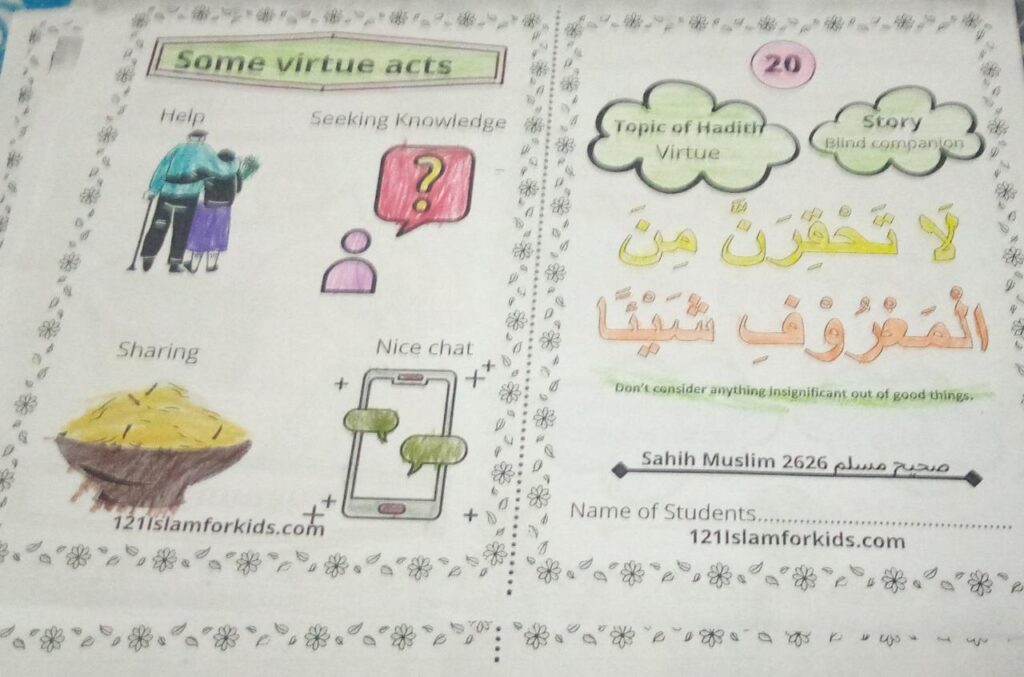
    “کسی بھی نیکی کو حقیر مت جانو”

    Hadith Classes Online

    یہ حدیث اس بات کی وضاحت کرتی ہے کہ ہر نیکی کا ایک اپنا مقام ہے. ہمیں چھوٹی نیکیوں کو چھوڑ کر بڑی نیکی تلاش کرنے میں اپنا وقت ضائع نہیں کرنا چاہیے. میں جانتی ہوں تمام بچے اچھے کام کرنا چاہتے ہیں. لیکن وہ یہ نہیں جانتے کہ کب اور کیسے انہیں اس پہ بڑا ثواب مل سکتا ہے. کیا آپ جانتے ہیں کہ ہمارے پیارے نبی کریم صلی اللہ علیہ و آلہ و سلم نے فرمایا

    “اگر تم راستے سے کوئی رکاوٹ ہٹا دو تاکہ کسی کو اس سے تکلیف نہ پہنچے، یا اپنے والدین کو دیکھ کر مسکراؤ تاکہ وہ خوش ہوں تو یہ بھی نیکی ہے “

    Hadith Classes Online

    آج میں آپ کو ایک بڑے نیک صحابی عبداللہ ابن مخدوم کی کہانی سناؤں گی، وہ ایک بڑے عمدہ اور بہترین صحابی تھے. وہ نابینا تھے مگر نیکی کے کاموں کے بڑے شوقین تھے. انہیں علم حاصل کرنے کا بھی بہت شوق تھا

    ایک مرتبہ آپ صلی اللہ علیہ و آلہ و سلم غیر مسلموں کو دین اسلام کی تبلیغ کرنے میں مشغول تھے، محفل میں بہت بڑے بڑے رتبے والے سردار موجود تھے، عین اسی وقت عبداللہ ابن مخدوم تشریف لائے اور آپ صلی اللہ علیہ و آلہ و سلم سے کوئی سوال پوچھا. 

    آپ صلی اللہ علیہ و آلہ و سلم بات کرنے میں مصروف تھے لہٰذا انہوں نے توجہ نہ فرمائی اور اپنا رخ غیر مسلموں سرداروں کی جانب موڑ لیا. 

    اللہ پاک بہترین جاننے والا ہے. کہ کون علم جاننے کا بہترین شوق رکھتا ہے اور کون محفل میں بری نیت سے بیٹھا ہے.  

    اللہ پاک نے آپ صلی اللہ علیہ و آلہ و سلم کا صحابی کو نظر انداز کرنا ناپسند کیا. اور ابن مخدوم سے اپنی محبت کے اظہار کے لیے ایک سورہ “عبس” نازل کی. 

    اس کے بعد آپ صلی اللہ علیہ و آلہ و سلم حضرت عبداللہ سے اور بھی زیادہ محبت کرنے لگے. کیونکہ اب وہ جان گئے تھے کہ اللہ تعالیٰ عبداللہ سے محبت کرتے ہیں. اور صحابہ میں ان کا درجہ بڑا بلند ہے. 

    پیارے بچو، اس کے بعد غزوہ بدر کا موقع تھا، اللہ پاک نے بتایا کہ جو اس جنگ کے لیے جائے گا اسے زیادہ اجر ملے گا اس شخص کی نسبت جو گھر بیٹھا رہا.  عبداللہ نے خواہش کی کہ کاش وہ بھی جا سکیں، لیکن انہیں اجازت نہ ملی کیونکہ وہ نابینا تھے. اب پھر اللہ نے آیات نازل فرمائیں کہ بچے، عورتیں اور معذوروں کو جنگ کے لیے مجبور نہ کیا جائے گا. لیکن عبداللہ اصرار کرتے رہے

    نبی کریم صل اللہ علیہ و آلہ و سلم نے ان سے پوچھا کہ عبداللہ تم وہاں کیا کرو گے؟ تم دشمن کو دیکھ نہیں سکتے اس لیے تم لڑائی نہیں کر سکو گے-وہ کہنے لگے کہ میں اسلام کا پرچم اٹھاؤں گا اور اسے گرنے نہیں دوں گا یہاں تک کہ وفات پا جاؤں 

    آپ صلی اللہ علیہ و آلہ و سلم مسکرائے- مگر اجازت نہ دی. عبداللہ بہت افسردہ ہوئے

    لیکن ایک دوسری جنگ، جنگ قادسیہ میں انہیں یہ موقع مل گیا. وہ بہت خوش ہوئے. وہ جنگ کے لیے تیار ہوئے، وہ جھنڈا تھامے ہوئے تھے جب انہیں شہید کر دیا گیا

    پیارے بچو، آپ دیکھ سکتے ہیں کہ وہ نابینا تھے لیکن انہوں نے اپنی کمزوری کو اپنی نیکی کے راستے میں نہیں آنے دیا. وہ مسلسل نیکی کرنے کی کوشش کرتے رہے، اللہ پاک ان سے بہت خوش ہوئے. 

    ان شاء اللہ ہم بھی ان کی طرح نیکیاں اکٹھی کرنے کی کوشش جاری رکھیں گے

    ہم مسکرائیں گے، خوش رہیں گے، اپنی چیزیں دوسروں کے ساتھ بانٹ کر استعمال کریں گے، علم سیکھیں گے، اور جنت حاصل کرنے کے لیے بہت ساری نیکیاں کریں گے. 

    اب اس حدیث کو لکھیں اور اپنے بزرگوں اور دوستوں کے ساتھ شئیر کریں. 

    اور اپنی کسی نیکی کے متعلق وڈیو بنا کر بھیجنا نہ بھولیں. 

    والسلام!

    Video of this story

    Worksheet for This Hadith

    Hadith Classes Online

    This story in English


    Read More Stories with hadith in English

    Read more Stories with Hadith in Urdu

    Enrolments Available

    This is a short course of hadith and stories from My 30 short hadith with stories course. My hadith course is very much liked and appreciated by parents and students. Online group classes are available online for all time zones. Recommended age for the class Hadith for kids is 7+. These classes are available in English and Urdu. If you want to enroll your child in our classes contact us via.

    Other courses we have

    • Easy Tafseer for kids with exciting stories you can see that course in my hadith course tab.
    • Prayer for kids course is a short course to teach about taharat, Gusal, wudu, times of prayers, number and names of prayers, pillars and conditions of prayer, and method of prayer. Search as Prayer for kids course on the search bar.
    • Ramzan boost course we do start 2 weeks before Ramzan.
    • Faith boos course In December to say No To Marry Christmas.
    • Kindness to Parents

    If you want to start this course with me then leave a comment, Email me or enroll your child here.

    Download your free copy of 30 short Hadith book pdfs in Urdu/Eng from the Posts tab.

    Worksheet for this Hadith and story. (Buy This worksheet book here)

  • Surah Al_Qaria| 8 Easy Steps to understand with Mind Map

    Surah Al_Qaria| 8 Easy Steps to understand with Mind Map

    Surah AL-Qaria| Word meanings and Tafsir with various activities. Step-by-step guide for teachers. Quran house of tafsir for kids.
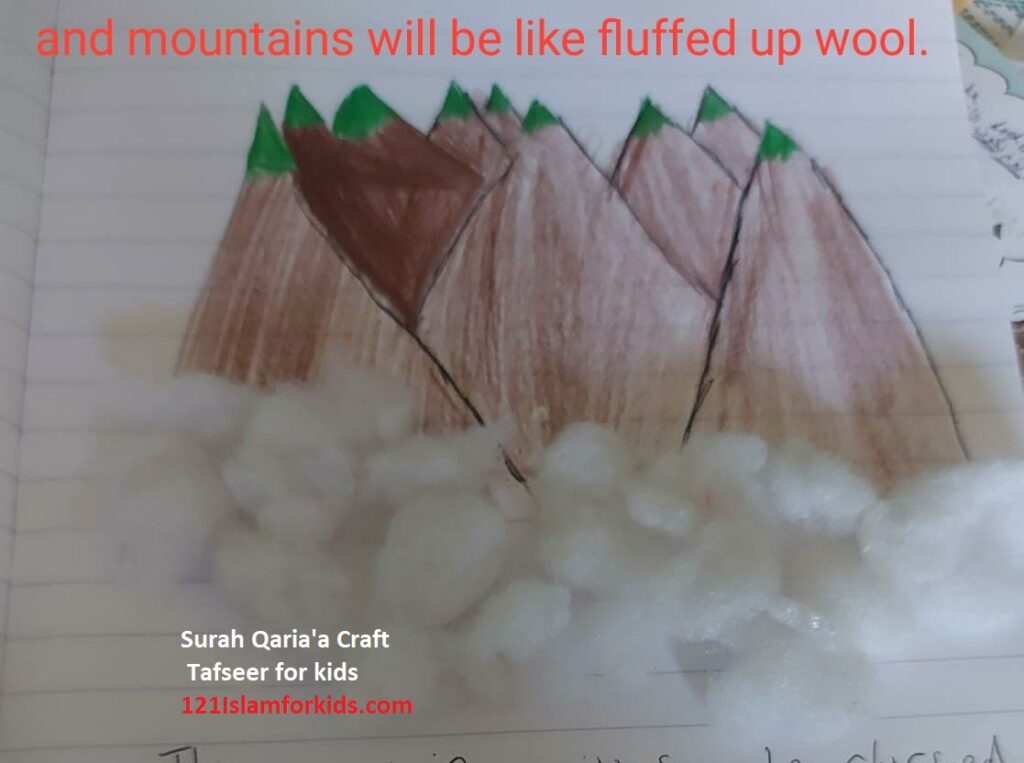
    Introduction of Surah Al-Qaria

    Surah Al-Qari’ah is the 101st chapter of the Qur’an, the holy book of Islam. It is a relatively short surah, consisting of 11 verses. The word “Al-Qari’ah” translates to “The Striking Hour” or “The Catastrophe” in English.
    The surah begins with a vivid description of the Day of Judgment, emphasizing the tremendous impact it will have on all of creation. It highlights the profound consequences and the ultimate accountability of every individual for their deeds in this world. The surah serves as a reminder of the transient nature of life and the importance of preparing for the afterlife.

    Surah Al-Qari’ah addresses the universal concept of divine justice, explaining that every person’s deeds, no matter how small or insignificant they may seem, will be weighed and evaluated on the Day of Judgment. The surah emphasizes the importance of righteous deeds and warns against the consequences of neglecting one’s spiritual responsibilities.
    It also illustrates the contrast between those whose good deeds outweigh their bad deeds, leading to success and eternal happiness, and those whose bad deeds outweigh their good deeds, resulting in a loss and eternal punishment. The surah concludes by emphasizing the perpetual existence of Paradise and Hellfire as the ultimate destinations for human souls.
    Overall, Surah Al-Qari’ah serves as a profound reminder of the Day of Judgment, the accountability of human actions, and the importance of leading a righteous life in preparation for the eternal life to come.

    Very Easy and amazing method of Tafseer for kids. This Surah is in the last juz of Quran. We teach from three books of tafseer for kids. 1. My first Quran with pictures, my first Quran storybook, and 3 Islamic education grade 3 and grade 4 by Daruslam. This is a step-by-step guide of Surah AL-Qaria with word meanings and tafsir and various activities.

    These are our online group classes for Muslim kids. All the work done in the classes of tafseer for kids has been shared in this post. let’s see step by step.

    Verse by Verse Translation

    Verse 1: “The Striking Hour has come!”

    Verse 2: “What is the Striking Hour?”

    Verse 3: “And what can make you know what the Striking Hour is?”

    Verse 4: “It is a Day when people will be like scattered moths,”

    Verse 5: “And the mountains will be like fluffed wool.”

    Verse 6: “Then as for the one whose scales are heavy [with good deeds],”

    Verse 7: “He will have a pleasant life.”

    Verse 8: “But as for the one whose scales are light,”

    Verse 9: “His refuge will be an abyss.”

    Verse 10: “And what can make you know what that is?”

    Verse 11: “It is a Fire, intensely hot.”

    This verse-by-verse translation provides a basic understanding of Surah Al-Qari’ah. It is important to note that the full interpretation and deeper meanings of the surah can be further explored through studying the context, teachings, and commentary from Islamic scholars.

    Step by Step teaching method of Surah Al-Qaria

    Step 1. Recitation and Introduction of Sura Al-Qari’ah

    Al-Qari’ah is the name of the Day of Judgement. The purpose revelation of this surah is that it will be revealed to the infidels of Makkah to keep away from their stubbornness and unjustified behavior which was the biggest obstacle to their conversion to Islam. This story is a picture of the day of judgment. It tells how the action scaled would be scaled.

    Step 2. Word-to-word Translation

    quran house

    We start Surah with recitation and then we do word-to-word translation. With the picture book we explain the verses and do some activities. so We do word to word translation in 2 or 3 days. So that we can do other activities during this. Children have to start memorizing the surah and word meanings step by step.

    Step 3. Infographic and Full translation sura Qari’aa‘.

    During verse by verse translation children also do infographics. During this surah first they drew the resurrection scene in two parts. And then action scale and their reward.

    Infographic helps in memorizing translation and its also good for long term memory.

    With the help of drawings, children draw images of the Qur’an in their hands but hearts and minds. Which is the favorite activity of the children.

    Step 4. Chapter of Sura/Tafseer For kids

    Then we did a chapter of surah for detailed commentary of Surah Qari’a. We have already done some tafseer with the picture book during word-to-word translation. Now we just read and explain a bit more.

    Children were eager to know about the day of judgement when their good and bad deeds would be scaled. How big would be action book? How people would react? How body parts will speak? Where people would be gathered.

    There were a lot of questions from the children. In the chapter on surah we also get some points to make mind map.

    Step 5. Discussion/exercise

    On this day, We recite and complete memorization. Because the lesson that is memorized by repetition is imprinted in the subconscious of the children forever.

    We do revision of word-to-word translation, Tafseer and the topic of the surah again and then we do exercises related the sora Qari’a from book۔

    In storytime a story ‘Musa A.S ad burning bush was told to the children. The purpose of the selecting this story was to strength their faith on the day of judgment. Children would learn that standing in front of Allah is not unbelievable.

    Even in this world, Prophet happened to talk with Allah. So we will also stand in front of Allah with our actions. Another story ‘Prophet Uzayr’s donkey was Also told. This story was related with the belief that how we will be alive again after death.

    Step 7. Activities we did in the class

    During the all lessons of the Surah we did some activities. Like….

    Activity 1. Paper activity to explain verse no 4. Small pieces of paper were placed on their palms. Then they blow those pieces. What happens? All the pieces were scattered here and there.

    The purpose of this activity was to tell the children that on the Day of Resurrection, people will scattered like those papers.

    Activity 2. This activity was making a craft or drawing to show the lightness of heavy, high mountains. The mountains would fly like fluffed cotton. So we used cotton to show how mountains would look like that day.

    Activity 3. Actions scale was prepared. And children had to add their good and bad deeds for a week. And end the of the week they got their action scale. Now they were able to judge which scale is heavy

    Step 8. Mind map of the Sorah Qari’a۔

    So we do mind map after completing the Surah. We collect our information and points from the Surah to make mind map. We also do use mind maps from LiveIslam.org here are some points from the mind map. Theme of this sorah is the preparation of the Day of Judgement. This surah consists of eleven verses.

    Surah Al-Qari’ah is a Makki Surah that was revealed before the Hijrah .(The children were made to understand that there is a difference between Maki and Madani Qur’an So our leading scholars say that the Makki Qur’an is that which was revealed before the migration and madni Quran after the migration. )

    Many thanks to God who helped me as a teacher to teach children the sura of the Qur’an. Thank God that the children also learned from the Qur’an and participated in all the activities.s I pray that the Qur’an becomes a part of the character of these children. Amen

    English stories for Muslim kids
    This is a story from my Hadith with stories course
    click for Surah Kauther tafseer

    Hadith with stories course

    Also watch video of Tafseer of Surah Alfateha for kids

    Resources

    My First Quran Picture Book

    My First Quran Stories Book

    Islamic education By Molvi Abdula Aziz Grade 6

    Lectures videos in English

    Lectures videos in Urdu

    Courses

    Quran classes:

    We have online quran tajweed, recitation, and Quran Hifz classes for children. One-on-one classes with Qualified teachers.

    Quran Tafseer classes:

    Short and Easy to understand Quran translation and tafseer will be taught to the young learners. Infographics, mindmaps, work by word tajweed and meanings, stories, and duas are included in these classes.

    Hadith with Stories course consists of 30 short hadith 

    It’s a personality development course for children with interesting stories. 30 short hadiths would be taught with stories. We have worksheets to solve after learning hadiths for implications.

    Prayer for kids course :

    A short course to teach about taharat, Gusal, wudu, times of prayers, number and names of prayers, pillars, conditions of prayer, and method of prayer.

    Kindness to Parents:

    1-week course to teach the rights of parents with practical work. Dua and how to be kind to parents is included in this course.

    6 articles on the Muslim faith:

    Faiths/Muslim beliefs would be taught one by one with the help of mind maps and stories in the Quran.

    Islamic dress code:

    Islamic rules of dressing, Aurah/covering body rules, and modesty dressing will be included in this one-week course.

    Ramzan Boost course:

    1 month before Ramzan we start this course. Everything about fasting rules and supplication with the Ramzan checklist and daily to-do list is included in this course.

    Faith boosts course in December to say NO MARYY CHRISTMAS:

    Stories of faith by the Quran will be added in this course with basic articles of faith in this course.

    Enrolments Available

    All courses Are available to start as in one on one classes. Please have a look at our group courses continued here.

    Email
    Facebook.
    Youtube Urdu Channel
    Youtube English Channel
    If this teaching method is helpful for you? leave a comment.

    Follow me