Tag: Muslim kids

  • More Than a Story: How to teach Children the Divine Console of Al-Isra’ wal-Mi’raj

    More Than a Story: How to teach Children the Divine Console of Al-Isra’ wal-Mi’raj

    More Than a Story: Teaching Our Children the Divine Console of Al-Isra’ wal-Mi’raj

    As parents, we strive to equip our children with faith that is not only robust but also deeply personal. Few events in Islamic history offer a more profound foundation for this than the miraculous Night Journey and Ascension of Prophet Muhammad (peace and blessings be upon him): Al-Isra’ wal-Mi’raj.

    This isn’t just a tale of travel; it is a demonstration of Divine love, reassurance, and the immense honor bestowed upon our Prophet during his darkest hour. Teaching it correctly provides children (ages 9-14) with essential lessons in perseverance, reliance on Allah, and the status of the salah (prayer).

    Al-Isra’ wal-Mi’raj free story for kids

    The Context: When Faith Was Faltering

    Before diving into the miracle, it’s vital that children understand the human side of the Prophet’s journey. This event took place during the ‘Am al-Huzn’ (The Year of Sorrow), following the devastating losses of his beloved wife Khadijah and his protector, uncle Abu Talib.

    When teaching this: Emphasize the human struggle. This shows our children that even the greatest people face immense hardship. Allah planned this journey specifically to console His Messenger and show him that his struggles were seen and honored. This frames the entire miracle not as a show of power, but as an act of profound mercy.

    Core Lessons: Highlights for Your Child

    To make this story stick, focus on the following key narrative highlights:

    1. The Lightning Steed and the Assembly of Prophets

    • The Buraq: Introduce the magnificent creature, Al-Buraq, whose name means ‘lightning.’ This instantly captures a child’s imagination.
    • The Imam of Prophets: The Prophet’s first stop was Al-Masjid Al-Aqsa in Jerusalem, where he led all the previous Prophets—from Adam to Isa—in prayer. This moment officially confirmed his status as the leader of all mankind, validating the entirety of his mission to every other prophet’s mission.

    2. Jibril’s True Form and the Limit of Creation

    • The Angel’s Appearance: On the journey, the Prophet witnessed Angel Jibril in his true, magnificent form—an angel with six hundred wings, spanning the horizon. This reveals the unbelievable scope of creation that exists beyond our world.
    • Sidrat-ul-Muntaha: When they reached the Lote Tree of the Utmost Boundary, Jibril stopped, stating that he could not advance further without being annihilated by the Divine Light. The Prophet continued alone. This highlights the unique honor and closeness the Prophet attained with Allah (SWT).

    3. The Mercy of the Five Daily Prayers

    This is the single greatest gift of the Mi’raj. Allah initially commanded fifty prayers daily. Through the advice of Prophet Musa (Moses), the Prophet repeatedly sought mercy until the number was reduced to five. Allah declared: “They are five (in number) but fifty (in reward).”

    Teaching Point: Explain that we perform five acts of prayer, but receive the reward for fifty. This illustrates Allah’s unparalleled mercy and establishes the salah as our direct, personal connection to the Divine, a true gift from the Heavens.

    How We Approach Miracles in 1-to-1 Online Teaching

    At our 1-to-1 Islam for Kids Institute, we believe foundational stories must be taught through personalized, interactive methods. Simply reading the facts is not enough.

    Our success in online education is built on:

    • Contextualization: We link the events of Al-Isra’ wal-Mi’raj directly to the seerah (Prophet’s biography), helping children understand why the miracle happened when it did.
    • Visual Engagement: We utilize digital illustrations and guided discussions (perfect for a one-on-one setting) to help students visualize Al-Buraq, the Seven Heavens, and the Sidrat-ul-Muntaha.
    • Application: We use activities and personalized worksheets to help students connect the story to their own salah practice and their efforts to avoid Shirk (associating partners with Allah)—two of the core gifts received during the Mi’raj.

    This one-on-one attention ensures the learning is not passive, leading to high performance in both knowledge retention and practical application of Islamic values.

    Your Invitation: Bring This Story to Life

    We encourage you to read the full, amazing narrative of Al-Isra’ wal-Mi’raj to your children tonight. It is a story of hope, resilience, and reward.

    To help you turn this narrative into a memorable educational experience, we invite you to join our FREE Storytelling Session on the Night Journey!

    We’ll provide interactive activities, engaging discussion prompts, and custom-designed worksheets you can use at home.

    Click the link below to join our WhatsApp community and secure your free spot:

    WhatsApp: +30 693 138 2944

    Let us work together to give our children a deep, loving appreciation for the wonders of Islam.

  • 6 Articles of Faith in Islam: Pillar 3 – Belief in Divine Books

    6 Articles of Faith in Islam: Pillar 3 – Belief in Divine Books


    Belief in Divine Books


    6 Articles of Faith in Islam: Pillar 3 – Belief in Divine Books

    Lesson 3: Belief in Divine Books

    Introduction to the Belief in Divine Books

    Allah ﷻ is the Creator of the entire universe — including human beings. Just like every machine or device comes with a manual that explains how it works, what it should do, and what it must avoid — human beings were also given a “manual” by Allah!

    These special manuals are known as the Divine Books — revealed by Allah to guide mankind. They help us understand how to live a happy and good life!

    Purpose of the Divine Books

    The Divine Books were revealed with clear and important purposes:

    To Teach Us About Our Creator

    The books explain who Allah is, His beautiful names and amazing attributes, His mercy, His power, and why He is the only one we should worship.

    To Teach Us How to Worship Allah

    They guide us on acts of worship like prayer (Salah), fasting (Sawm), giving charity (Zakat), and how to live as good Muslims, pleasing to Allah.

    To Show Us What Is Right and Wrong

    The books clearly show us the difference between what is good (halal) and what is not good (haram), what is kind and what is mean, and what is true and what is false.

    To Prepare Us for the Hereafter

    The Divine Books include special knowledge that we could never discover on our own. They tell us about:

    • Angels
    • Heaven (Jannah) and Hell (Jahannam)
    • The Day of Judgment
    • Life after death
    • The rewards and lessons in the grave

    To Establish Laws and Morals for Society

    These Books taught us about being fair (justice), being honest, how families should live together, rules for our communities, and how to be good to everyone around us.

    To Continue the Message of the Prophets

    After a Prophet passed away, his people still needed guidance. So Allah made sure His message stayed with us through His Book!

    Remember, these books were not just meant to be read, but to be understood and followed in our daily lives!

    Muslim Belief in Divine Books

    As Muslims, we believe in all the books that Allah sent to His Prophets before the Qur’an.

    Key Points to Understand

    All Divine Books Were from Allah

    These books include the Tawrah, Zabur, Injeel, and many others. They all came from Allah!

    Table of Major Divine Books in Islam

    Book Name Prophet It Was Revealed To Language Main Topics Covered
    Tawrah (Torah) Prophet Musa (A.S.) Hebrew Laws for Bani Isra’il (Children of Israel), guidance about worship, justice, family life
    Zabur (Psalms) Prophet Dawood (A.S.) Hebrew Beautiful praises of Allah, duas (supplications), advice about patience and faith
    Injeel (Gospel) Prophet Isa (A.S.) Aramaic Worship of one Allah, kindness, good character, helping the poor
    Qur’an Prophet Muhammad ﷺ Arabic Tawheed (Oneness of Allah), rules for life, worship, stories of Prophets, hereafter, morals

    Each Book Was Revealed to a Prophet

    Every Divine Book was sent down to a special Prophet chosen by Allah to guide his people.

    Each Book Was True at the Time of Revelation

    When they were first revealed, they contained Allah’s pure commands, truth, and perfect guidance.

    People Changed the Previous Books

    Over a long time, sadly, some people added things, took things out, or changed verses in the older books. So, the original message got lost or hidden.

    Qur’an Confirms and Completes All Previous Books

    The Qur’an doesn’t say the original messages of previous books were wrong. Instead, it corrects any changes and makes the guidance complete for everyone!

    What Is the Role of Previous Books Now?

    Muslim View Today

    We believe in the original books as they were revealed by Allah. But we do not follow the previous books now because:

    • They have been changed over time.
    • Their teachings were meant for a specific group of people or a specific time.
    • They have been replaced (abrogated) by the Qur’an, which is the final and complete guide.

    The Qur’an is the only book we follow now — it is final, complete, and protected by Allah from any changes!

    The Qur’an – The Final Book of Allah

    The last and most complete book revealed by Allah is the Qur’an, revealed to Prophet Muhammad ﷺ.

    Introduction to the Qur’an

    • The Qur’an is the Word of Allah, not written by any human being.
    • It was revealed over 23 years through the Angel Jibreel (A.S.).
    • It is in the beautiful Arabic language, and it has been preserved without any change since the time it was revealed!

    Purpose of the Qur’an

    The Qur’an has these important purposes:

    To Be the Final Guide for All Humanity

    Unlike previous books that were sent to certain nations, the Qur’an is for everyone — for all people, all races, and all times!

    To Correct the Changes in Previous Books

    People had changed the earlier books. The Qur’an came to confirm the truth and fix any falsehood that was added.

    To Establish a Clear Way of Life (Shari’ah)

    The Qur’an talks about everything — our personal lives, how we interact with others, good manners, how to govern, and how to connect with Allah. It’s a complete guide for living!

    To Connect People to Allah Directly

    The Qur’an speaks directly to our hearts, reminding us of Allah’s mercy, His fairness, and what He expects from us.

    Main Topics in the Qur’an

    The Qur’an teaches us about many important things, including:

    Tawheed

    The Oneness of Allah.

    Stories of the Prophets

    Amazing stories of the Prophets.

    Rules for Daily Life

    Like marriage, money, and being fair.

    Worship and Commands

    How to worship Allah and His commands.

    Good Character

    Developing good character and being kind.

    Jannah and Jahannam

    Heaven (Jannah) and Hell (Jahannam).

    Belief in the Unseen

    Like angels, and what happens in the grave and after death.

    Rights of the Qur’an Upon Us

    As Muslims, we owe the Qur’an five major rights:

    Belief

    We must believe that it is 100% the true word of Allah.

    Recitation

    We should read it regularly with proper tajweed (the correct way to read it).

    Understanding

    We must try our best to understand what Allah is saying to us.

    Acting Upon It

    We should practice its teachings in our daily lives.

    Spreading Its Message

    We should share the wonderful message of the Qur’an with others!


  • The Earth’s message: New Islamic story about Surah Zalzalah

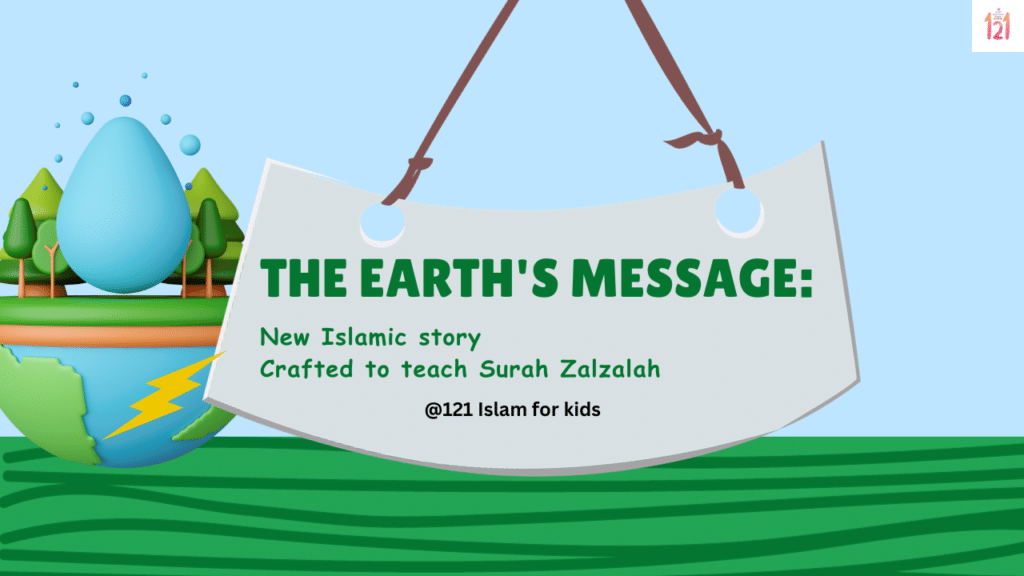
    The Earth’s message: New Islamic story about Surah Zalzalah

    These Islamic stories have been crafted to teach Surah Zalzalah. The story reflects the message and lesson we get from the translation and Tafseer of Surah Zalzlah.

    The Earth’s Message: Islamic stories

    Islamic stories,

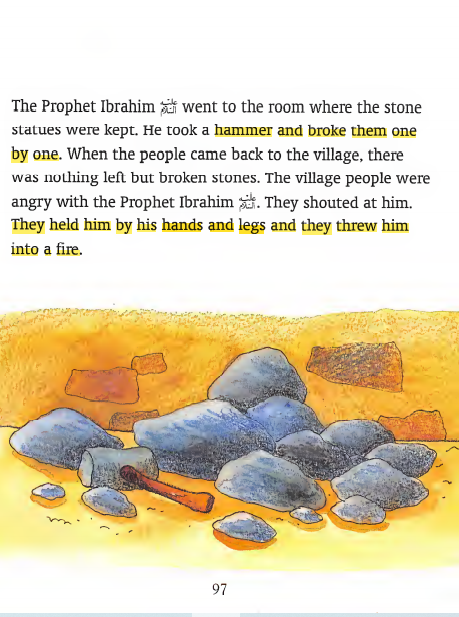
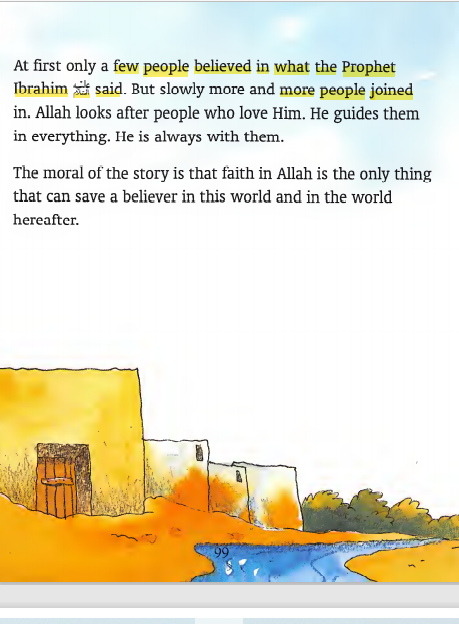
    Once upon a time in a quiet little village, there lived a young boy named Ahmed. Ahmed was a good-hearted child, but he had a habit of doing many small wrongs without thinking much about them. He would sometimes say unkind words to his friends, forget to follow the rules he had at home, and even take more candies from the jar than he was allowed. Ahmed didn’t stop there; he would also sneak some of the candies when no one was looking, thinking it was a clever trick.

    Ahmed was not always respectful of his surroundings either. As he walked through the village, he would kick stones and other things in his way harshly, showing little regard for the property of others. His friends would often remind him to be more considerate, but he didn’t pay much attention.

    One night, something extraordinary happened. Ahmed went to bed as usual, but that night he had a vivid dream. In his dream, the ground beneath him began to shake violently. It was as if the whole Earth was quaking! Ahmed was terrified and didn’t know what to do. He saw houses crumbling, trees swaying, and people crying out for help.

    As the dream continued, Ahmed found himself on a long and winding road. Along this road, he met strange creatures with shimmering wings. These were the angels, and they were carrying bundles of papers. Curious, Ahmed asked them what those papers were.

    The angels replied, “These are the records of your deeds, Ahmed. Every action, good or bad, is written on these papers. Today, the Earth is revealing the deeds of its inhabitants, and you will see yours too.”

    Ahmed’s heart sank as he watched the angels open one of his bundles. The first paper they pulled out had the words “Unkind Words” written on it. Ahmed remembered all the times he had spoken harshly to his friends and even used unkind words behind their backs, and he felt deeply ashamed.

    Then, the angels showed him another paper that read “Neglecting Chores.” Ahmed recalled all the times he had avoided helping his family, complaining and breaking some rules at home. He regretted his actions even more.

    As Ahmed continued on the road, he came across more and more papers, each revealing his small wrongs and hidden misdeeds. He felt weighed down by the guilt of his actions. It seemed like there was no end to these reminders of his mistakes.

    But just when Ahmed was about to lose hope, something wonderful happened. The angels showed him a tiny paper that read “Sharing Candies.” Ahmed remembered the times he had shared his candies with his little sister and friends. He also saw another paper that read “Helping a Friend in Need.” Ahmed remembered the day he had helped his friend fix his bicycle.

    He also saw another paper that read ‘’Fear of Allah when scrolling his phone’’

    There were so many papers with single words

    ‘apology‘ ‘waiting for turn’

    ‘gratitude’ ‘console’

    ‘smiley face’ ‘socialization’

    These small but kind deeds brought a smile to Ahmed’s face. As the angels continued to show him his good actions, Ahmed felt lighter and happier. The weight of his small sins began to fade away.

    Finally, Ahmed woke up from his dream, feeling both relieved and enlightened. He realized that every little deed, good or bad, mattered. His dream had shown him the importance of being mindful of his actions and their consequences.

    From that day on, Ahmed made a promise to himself to try his best to avoid small wrongs, hidden misdeeds, and unkind actions. He also decided to be more considerate of the feelings of others. He knew that even the tiniest acts of kindness could make a big difference, just like they had in his dream.

    As Ahmed grew older, he became known in his village for his kindness and helpfulness. He learned that by being mindful of his actions and striving to do good, he could not only make his own life better but also bring happiness to those around him.

    And so, the story of Ahmed teaches us all that every small deed matters, and even the smallest acts of kindness can have a big impact on our lives and the lives of others.

    How’s this story? Do you want to get more stories on short surahs of the Quran?

    Comment below

    A new Islamic Story in a video on Channel

    Islamic courses online ~ Surah Zalzalah in 7 easy steps (121islamforkids.com)

    More Islamic / Quranic stories

    Stories in Urdu

    Our online courses and classes for kids and beginners

    Stories Books

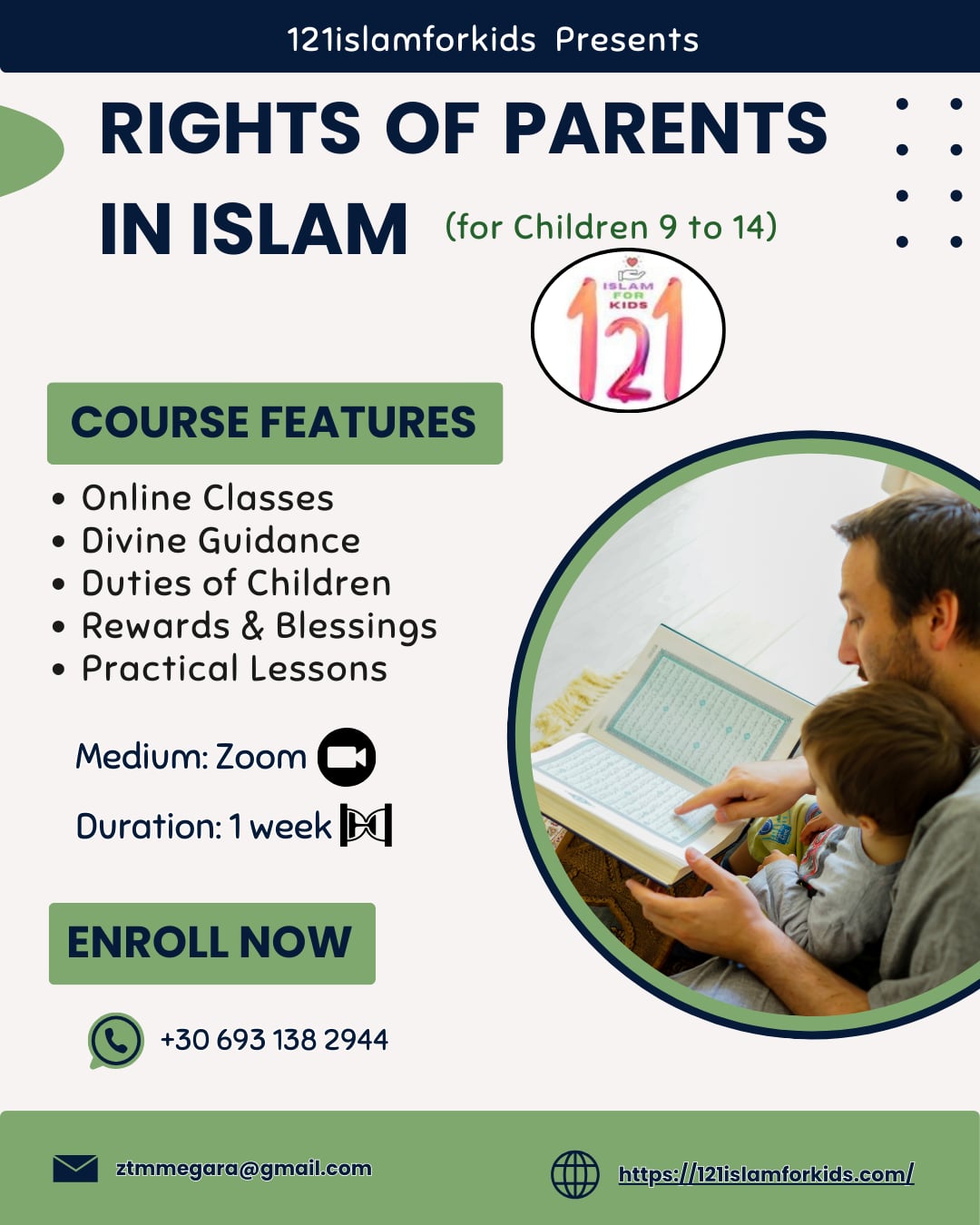
  • How to teach 5 Rights of Parents in Islam? Online Islamic Courses

    How to teach 5 Rights of Parents in Islam? Online Islamic Courses

    The Rights of Parents in Islam: A Comprehensive Understanding through Online Islamic Courses.

    online islamic courses

    Introduction online course Rights of Parents:

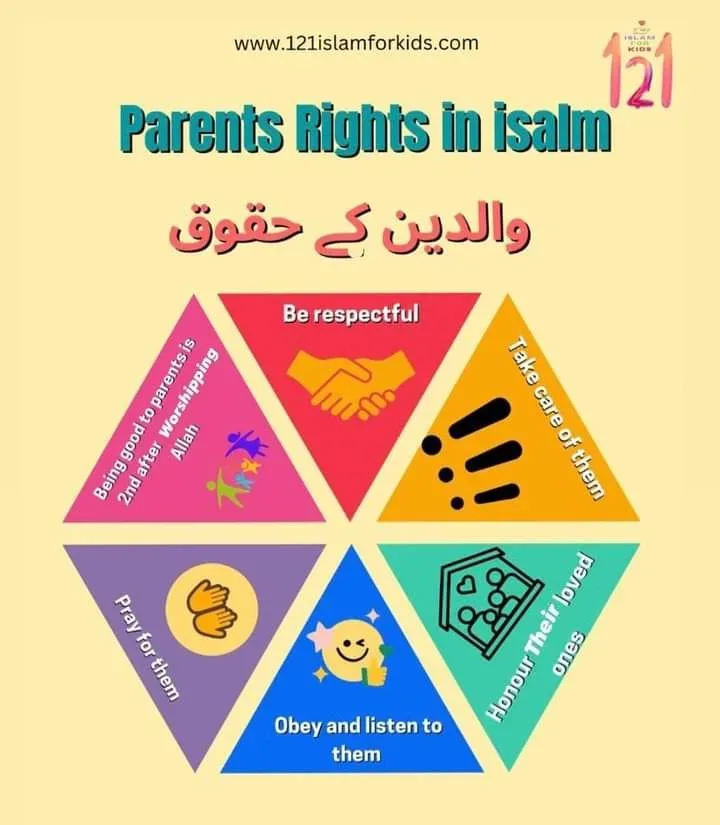
    Islam places great emphasis on the rights and respect due to parents. The Quran, hadiths (sayings of Prophet Muhammad, peace be upon him), and scholarly opinions provide a comprehensive framework for understanding and fulfilling these rights. Let us delve into the various aspects of the rights of parents in Islam, supported by references from the Quran, hadiths, and notable quotes.

    Kindness and Respect:

    The foundation of parental rights lies in showing kindness and respect to parents. Allah commands in the Quran: “And your Lord has decreed that you not worship except Him, and to parents, good treatment. Whether one or both of them reach old age [while] with you, say not to them [so much as], ‘uff,’ and do not repel them but speak to them a noble word” (Quran 17:23).

    Prophet Muhammad (pbuh) further emphasized this in a hadith: “Paradise lies beneath the feet of mothers.” This highlights the elevated status of mothers and emphasizes the importance of respecting and caring for them.

    Obedience and Compliance:

    Islam emphasizes obedience to parents unless they command something against Islamic teachings. The Quran states: “But if they (both) strive with you to make you join in worship with Me others of which you have no knowledge, then obey them not” (Quran 29:8). This verse highlights the exception to obedience when it comes to matters of shirk (associating partners with Allah).

    Prophet Muhammad (pbuh) affirmed the significance of obedience to parents in a hadith: “The pleasure of Allah is in the pleasure of the parents, and the anger of Allah is in the anger of the parents.” This underscores the importance of seeking parental satisfaction as a means to earn Allah’s pleasure.

    Financial Support:

    Children have a responsibility to provide financial support to their parents when needed. Allah says in the Quran: “And do well to parents, and near of kin, and orphans, and the needy, and the neighbor from among your own people” (Quran 2:83). This verse emphasizes the duty to support parents alongside other obligations.

    Dua and Prayers for Parents:

    Islam encourages children to make dua (supplication) and pray for the well-being, forgiveness, and guidance of their parents. The Quran mentions: “And lower to them the wing of humility out of mercy and say, ‘My Lord, have mercy upon them as they brought me up [when I was] small’” (Quran 17:24).

    Honor their loved Ones:

    In Islam, honoring the relatives of parents is highly encouraged. Muslims are urged to maintain good relations with their extended family, treating them with kindness, respect, and support. Visiting and assisting relatives, especially after the passing of parents, is considered a virtuous act.

    Prophet Muhammad (pbuh) affirmed the significance of praying for parents in a hadith: “When a person dies, all their deeds come to an end except three: Sadaqah Jariyah (ongoing charity), beneficial knowledge, or a righteous child who prays for them.”

    Conclusion:

    The rights of parents in Islam encompass various aspects such as kindness, respect, obedience, financial support, and prayers. The Quran, hadiths, and Islamic scholars provide guidance on fulfilling these rights, emphasizing the importance of cherishing and honoring parents.

    As Muslims, it is our duty to understand and fulfill these rights, recognizing that the love and care we receive from our parents is a blessing from Allah. By upholding these rights, we contribute to building strong family bonds, fostering a harmonious society, and earning the pleasure of Allah.

    In the words of Imam Ahmad ibn Hanbal, a renowned Islamic scholar, “The best of deeds after the obligatory acts are those done to please one’s parents.”

    May Allah bless us all with the ability to fulfill the rights of our parents and strengthen the ties of kinship.

    Teaching Methods for Online Islamic Courses.

    Exploring the kindness towards Parents in Islam to Children, including Duas and Activities:

    Introduction to Parental Rights

    Dua: Begin each session with a dua seeking Allah’s blessings and guidance to understand parental rights.

    Activity: Discuss real-life scenarios where children can identify examples of fulfilling parental rights.

    Assessment: Ask children to write or draw about a time when they showed kindness and respect to their parents.

    Understanding Parental Responsibilities

    Dua: Teach children specific duas for seeking Allah’s forgiveness for any shortcomings towards their parents.

    Activity: Have children create a “Parental Responsibilities” chart listing tasks they can help their parents with.

    Assessment: Ask children to write a short paragraph on why it is important to obey and respect parents.

    Practicing Kindness and Respect

    Dua: Teach children duas for seeking Allah’s blessings on their parents and seeking forgiveness for any mistakes.

    Activity: Role-play scenarios demonstrating acts of kindness, respect, and helpfulness towards parents.

    Assessment: Ask children to create a poster illustrating ways to show kindness and respect to parents.

    Communication and Appreciation

    Dua: Teach children duas for seeking Allah’s blessings on their parents’ health, happiness, and wellbeing.

    Activity: Guide children in writing thank-you letters or cards expressing gratitude to their parents.

    Assessment: Have children share a story or personal experience where they communicated effectively with their parents.

    Seeking Parents’ Guidance

    Dua: Teach children duas for seeking Allah’s guidance and wisdom to understand and follow their parents’ advice.

    Activity: Engage children in a discussion about seeking parents’ opinions and advice in decision-making.

    Assessment: Ask children to create a collage or drawing representing a valuable lesson learned from their parents.

    Honoring Parents in All Circumstances

    Hadith: Teach them one short hadith about the father and one about Mother.

    Activity: Tell them a story about the rights of the Father and mother in stories. (Two hadiths are included in our hadith course)

    Assessment: Have children write a reflective journal entry about a time when they overcame a challenging situation by honoring their parents. (We have worksheets on it)

    Dua for Parents

    Dua: Teach children a special dua for their parents’ well-being, forgiveness, and success.

    Activity: Have children create personalized dua cards for their parents, expressing love and prayers for them.

    Assessment: Ask children to share a dua they made for their parents and explain why they chose those specific words.

    Conclusion and Recap

    Dua: End the course with a dua seeking Allah’s blessings for parents and their children.

    Activity: Encourage children to reflect on the lessons learned and set goals for applying them.

    Assessment: Ask children to create a “Rights of Parents” pledge, committing to fulfill their parents’ rights.

    By incorporating duas and engaging activities, children will develop a deeper understanding of the rights of parents in Islam and actively apply them in their lives. These methods will instill a sense of gratitude, respect, and love for parents, fostering a strong bond within the family.

    Enrol now for this course or get a PDF of this Course Here

    Hadith about Mothers’ Respect in Islam with a story and a worksheet.

    Hadith about fathers’ respect in Islam with a story and a worksheet

    Have a look at online Islamic courses

    The book used in this Course, Islamic Studies Grade 05

    Free Books

    Videos

  • An Online Course on Islamic Dress Code in Quran for kids

    An Online Course on Islamic Dress Code in Quran for kids

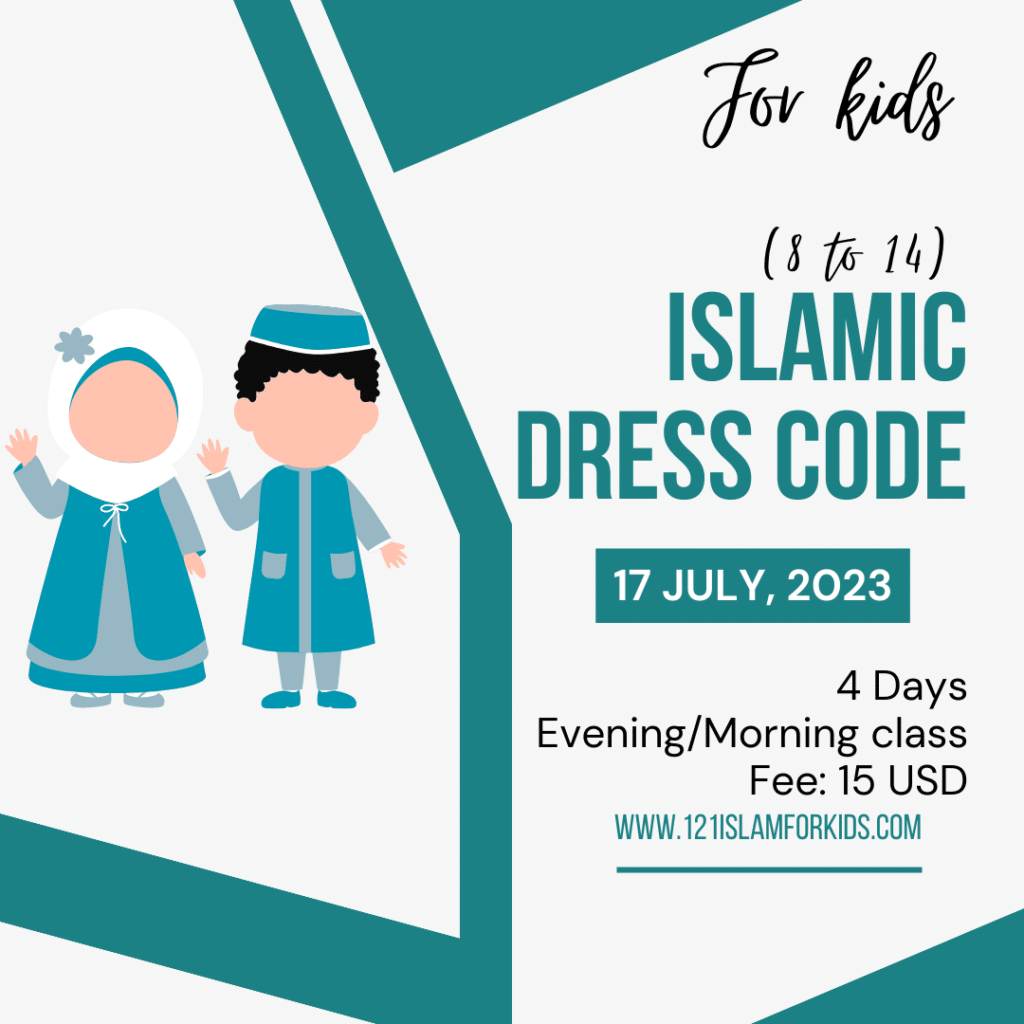
    Aurah in Islam refers to the parts of the body that should be covered in modesty. It encompasses both physical and behavioral aspects, emphasizing the importance of maintaining modesty in appearance and conduct. We proudly present a course on the Islamic dress code in Quran.

    Islamic Dress Rules for Men:

    1. Awrah: The awrahIslamic dress code in Quran for men is generally considered from the navel to the knee. It is recommended for men to cover this area, although it is not mandatory in all circumstances.
    2. Modesty: Men are encouraged to dress modestly, avoiding tight or revealing clothing. It is preferable to wear loose-fitting garments that do not cling to the body.
    3. Prohibition of Silk and Gold: Muslim men are advised against wearing silk and gold. These materials are considered more appropriate for women to wear.

    Islamic Dress Rules for Women:

    1. Hijab: The hijab refers to the modest dress code for Muslim women. It typically includes covering the body and hair, with the exception of the face and hands. The style of hijab may vary among different cultures and regions.
    2. Modesty in Clothing: Women are encouraged to wear loose and non-transparent clothing that conceals the shape of their bodies. The clothing should not attract unnecessary attention.
    3. Awrah: The awrah for women is generally considered the entire body, except for the (face in some cases) and hands. It is recommended that women cover their bodies with loose-fitting clothing.
    4. Jilbab or Abaya: The jilbab or abaya is a loose, flowing outer garment that covers the body. Muslim women commonly wear it to ensure modesty and fulfill the Islamic dress requirements.
    5. Prohibition of Makeup and Adornment in Public: Muslim women are advised not to excessively adorn themselves or wear makeup when in public, to avoid attracting unnecessary attention.

    It is important to note that interpretations of Islamic dress rules may vary among different scholars and cultures. While these guidelines provide a general understanding, individuals may consult their local scholars for specific rulings or variations based on their circumstances and cultural practices.

    The ultimate purpose of Islamic dress rules is to promote modesty, decency, and the preservation of dignity for both men and women. It is an expression of faith and a means of upholding Islamic values in personal appearance and conduct.

    Quranic verses and hadiths

    Certainly! Here are some Quranic verses and hadiths that discuss the concept of Islamic dress and the covering of the body:

    Quranic Verses:

    1. Surah An-Nur (24:31): “And tell the believing women to reduce [some] of their vision and guard their private parts and not expose their adornment except that which [necessarily] appears thereof and to wrap [a portion of] their headcovers over their chests and not expose their adornment except to their husbands…”
    2. Surah Al-A’raf (7:26): “O children of Adam, We have bestowed upon you clothing to conceal your private parts and as adornment. But the clothing of righteousness – that is best…”

    Hadiths:

    1. Hadith from Sahih Bukhari: Aisha (may Allah be pleased with her) narrated that Asma, the daughter of Abu Bakr (may Allah be pleased with him), came to the Prophet (peace be upon him) wearing thin clothing. The Prophet (peace be upon him) said to her, “O Asma, when a girl reaches the menstrual age, it is not proper that anything should remain exposed except this and this” – and he pointed to the face and hands.
    2. Hadith from Sahih Muslim: Ibn Abbas (may Allah be pleased with him) narrated that the Prophet (peace be upon him) said, “Allah does not accept the prayer of a woman who has reached puberty unless she wears a veil.”

    These verses and hadiths emphasize the importance of modesty and covering the body, particularly for women. They highlight the obligation to guard one’s private parts, dress in a manner that is not revealing, and use clothing as a means of righteousness and adornment. The specific details of Islamic dress may vary based on cultural customs and interpretations. Still, the underlying principle remains consistent – to dress in a manner that preserves modesty, dignity, and obedience to the commandments of Allah and the teachings of the Prophet Muhammad (peace be upon him).

    Teaching Methods Islamic dress code in Islam Modesty, and Covering the Body:

    Introduction to Modesty and Islamic Dress:

    Provide an overview of the importance of modesty in Islam and the significance of dressing in accordance with Islamic guidelines.

    Share Quranic verses and hadiths that emphasize the concept of modesty and the importance of covering the body.

    Understanding the Concept of Aurah:

    Explain the concept of aurah and its significance in Islamic teachings.

    Use visual aids, such as diagrams or illustrations, to depict the body areas that should be covered according to Islamic dress guidelines.

    Engage in class discussions to clarify any questions or misconceptions about aurah.

    Quranic Verses and Hadiths on Dressing Modestly:

    Provide a list of Quranic verses and hadiths that explicitly mention the importance of dressing modestly and covering the body.

    Discuss the context and implications of these verses and hadiths to deepen the student’s understanding.

    Exploring Different Styles of Islamic Dress:

    Introduce various styles of Islamic dress, such as hijab, abaya, niqab, and modest clothing from different cultures.

    Show visual examples of these styles and discuss their significance and variations across different regions.

    Practical Tips for Dressing Modestly:

    Offer helpful guidance on how to incorporate modesty in everyday attire.

    Provide suggestions for finding modest clothing that is fashionable, comfortable, and aligns with Islamic guidelines.

    Share tips on combining different clothing items to achieve modesty while maintaining personal style.

    The Importance of Intention:

    Emphasize the significance of intention in dressing modestly and adhering to Islamic guidelines.

    Encourage students to reflect on their intentions and develop a sincere desire to please Allah in their choice of clothing.

    Addressing Challenges and Misconceptions:

    Discuss common challenges and misconceptions related to Islamic dress, such as societal pressures, cultural influences, and stereotypes.

    Provide practical advice on how to overcome these challenges and navigate through them while maintaining one’s commitment to Islamic values.

    Promoting Positive Body Image and Self-Esteem:

    Highlight the positive aspects of modesty, such as promoting self-respect, dignity, and a healthy body image.

    Conduct activities and discussions that encourage students to appreciate their bodies as a gift from Allah and embrace their unique qualities.

    Role Models and Inspirational Stories:

    Share stories of exemplary Muslim individuals who embody modesty and adhere to Islamic dress guidelines.

    Discuss the impact of these role models on society and the importance of following their examples.

    Practical Application:

    Assign practical tasks, such as creating modest outfit ensembles, designing modest clothing sketches, or conducting a research project on modest fashion trends.

    Encourage students to reflect on their personal journey towards modesty and share their experiences with the class.

    Q&A Sessions and Discussions:

    Allocate time for Q&A sessions to address any specific questions or concerns raised by the students.

    Facilitate class discussions to encourage students to share their perspectives, experiences, and challenges related to Islamic dress and modesty.

    Conclusion and Recap:

    Summarize the key points covered in the course and reinforce the importance of adhering to Islamic dress guidelines.

    Provide additional resources, such as recommended readings or online platforms, for further exploration of the topic.

    By incorporating these teaching methods, students will develop a comprehensive understanding of Islamic dress, modesty, and the significance of covering the body. These methods will not only provide knowledge but also foster a sense of appreciation for the values and principles underlying Islamic dress.

    Resources and Activities:

    Course Sign up

    Other Courses

    Leave your thoughts about this course in the comment box

    islamic dress code in quran
  • A short course on 6 Articles of Faith in Islam:

    A short course on 6 Articles of Faith in Islam:

    Title: Exploring the 6 Articles of Faith in Islam: Online Course for Children

    6 articles of faith in islam

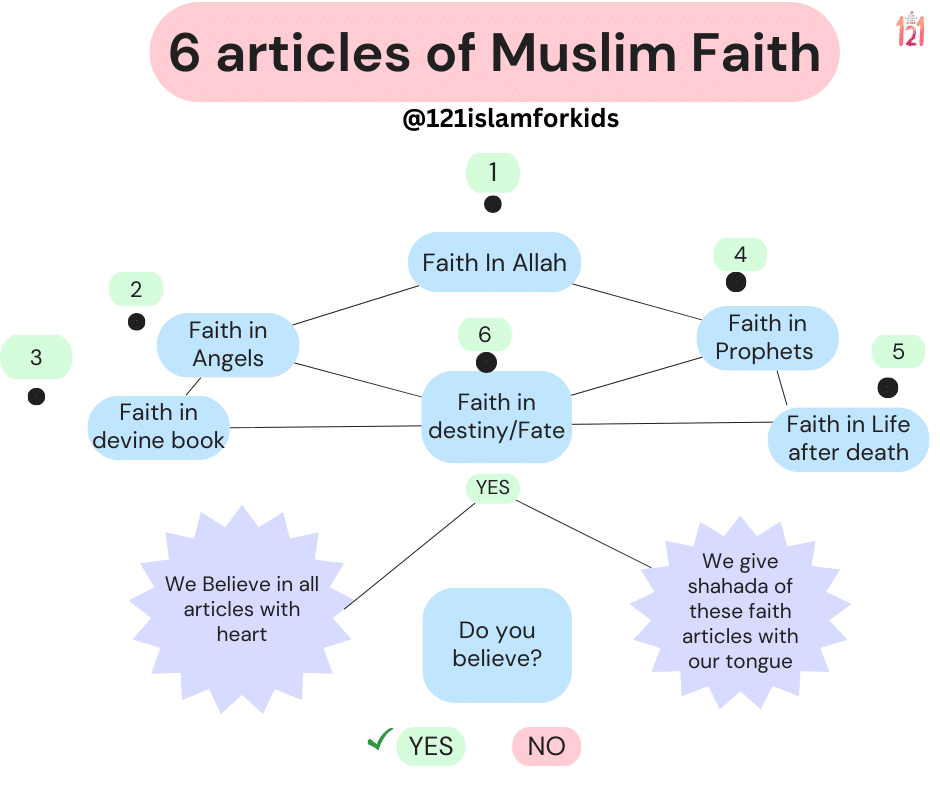
    The six articles of faith, also known as the pillars of iman, are the foundational beliefs that Muslims hold. Here is a detailed explanation of each article:

    Belief in Allah (God):

    Muslims believe in the oneness of Allah, that there is only one God.

    Allah is eternal, all-powerful, and the creator of the universe.

    Muslims believe in Allah’s divine attributes, such as His mercy, knowledge, and justice.

    They believe in worshipping and obeying Allah alone and recognizing Him as the ultimate authority. Read More

    Belief in Angels:

    Muslims believe in the existence of angels, who are spiritual beings created by Allah.

    Angels have no physical form and are invisible to humans.

    They carry out specific tasks assigned by Allah, such as delivering messages, recording deeds, and protecting individuals.

    Muslims believe in the archangel Jibril (Gabriel), who brought revelations from Allah to the prophets. Read more

    Belief in Prophets:

    Muslims believe in the prophets and messengers sent by Allah to guide humanity.

    They include well-known figures like Prophet Muhammad, Jesus, Moses, Abraham, and others.

    Prophets were chosen by Allah and were entrusted with delivering His message to people.

    Muslims believe that Prophet Muhammad is the final messenger and that his teachings and example (Sunnah) are to be followed.

    Belief in Divine Books:

    Muslims believe that Allah revealed divine books to guide humanity.

    The Quran is the central and final book of Islam, believed to be the direct word of Allah as revealed to Prophet Muhammad.

    Muslims also believe in the original scriptures sent to earlier prophets, such as the Torah revealed to Moses and the Injeel (Gospel) revealed to Jesus.

    The Quran is considered the most authentic and complete book, providing guidance for all aspects of life. Read more about this faith here.

    Belief in the Day of Judgment:

    Muslims believe in the Day of Judgment, also known as the Last Day or the Day of Resurrection.

    On this day, Allah will resurrect all individuals from their graves to be held accountable for their deeds.

    Muslims believe in the balance of justice, where each person’s good and bad deeds will be weighed.

    The righteous will be rewarded with Paradise (Jannah), while the wicked will face punishment in Hellfire (Jahannam).

    Belief in Divine Decree (Qadr):

    Muslims believe in Allah’s divine decree and predestination.

    They believe that everything happens according to Allah’s will and knowledge.

    This belief includes accepting that Allah has knowledge of all things past, present, and future.

    Muslims understand that while humans have free will, Allah’s ultimate plan and decree are always in effect.

    These six articles of faith form the foundation of Islamic belief. They guide Muslims in understanding the purpose of life, the relationship with Allah, and the principles and values that shape their actions and interactions with others. By adhering to these beliefs, Muslims strive to lead a righteous life, seeking Allah’s pleasure and aiming for eternal happiness in the Hereafter.

    Course Outline:

    Introduction to Islam

    Understanding the basics of Islam as a comprehensive way of life.

    Introducing the concept of the Seven Articles of Islam.
    Tawhid: Oneness of Allah

    Explaining the belief in the Oneness of Allah.

    Discussing the attributes of Allah and His role as the Creator.

    Engaging children through stories and interactive activities.

    Prophethood: Belief in Prophets and Messengers

    Introducing the concept of Prophets and Messengers in Islam.

    Highlighting the importance of Prophet Muhammad (PBUH) as the final Messenger.

    Learning about other Prophets and their significant contributions.

    Divine Books: Belief in Revealed Scriptures

    Understanding the importance of Divine Books in Islam.

    Discussing the Quran as the final and preserved revelation.

    Exploring the stories and lessons from various Prophets and scriptures.

    Angels: Belief in Angelic Beings

    Exploring the world of angels and their role in Islamic beliefs.

    Learning about popular angels like Jibril (Gabriel) and Mika’il (Michael).

    Understanding the concept of guardian angels and their presence in our lives.

    Day of Judgment: Belief in the Afterlife

    Discussing the belief in the Day of Judgment and life after death.

    Exploring the concept of accountability and the scale of deeds.

    Engaging children through thought-provoking discussions on the significance of righteous actions.

    Qadar: Belief in Divine Decree and Destiny

    Understanding the concept of Qadar, the divine decree.

    Discussing the balance between free will and predestination.

    Encouraging children to trust in Allah’s wisdom and guidance.

    Conclusion and Recap

    Summarizing the key teachings and principles of the Seven Articles of Islam.
    Providing an opportunity for children to ask questions and seek clarification.

    Encouraging reflection and application of the learned knowledge in daily life.

    Mind Map:

    Seven Articles of Islam
    |
    ---------------------------------------
    | | | | |
    Tawhid Prophethood Divine Angels Day of Judgment
    Books
    |
    Qadar

    By following this course outline and utilizing engaging teaching methods, interactive discussions, stories, and activities, children will develop a solid understanding of the Seven Articles of Islam in a fun and interactive online learning environment.

    Teaching Method of 6 Articles of Islam

    Crafts, Activities, and Assessments for Exploring the Seven Articles of Islam:

    Introduction to Islam

    Craft: Create an Islamic art collage using cut-out shapes and patterns.

    Activity: Share personal stories of how Islam is practiced in daily life.

    Assessment: Conduct a group discussion to assess children’s prior knowledge about Islam.

    Tawhid: Oneness of Allah

    Craft: Design and decorate “Allah is One” posters.

    Activity: Play a game where children identify and match attributes of Allah.

    Assessment: Ask children to draw or write about how they practice Tawhid in their lives.

    Prophethood: Belief in Prophets and Messengers

    Craft: Make paper puppets of Prophets and act out their stories.

    Activity: Create a timeline of major Prophets and their key messages.

    Assessment: Have children narrate a Prophet’s story and explain its moral lesson.

    Divine Books: Belief in Revealed Scriptures

    Craft: Decorate mini Quran bookmarks with Islamic calligraphy.

    Activity: Organize a “Quran Challenge” where children find verses related to specific topics.

    Assessment: Ask children to present their favorite Quranic verse and explain its meaning.

    Angels: Belief in Angelic Beings

    Craft: Construct angel wings using paper, feathers, and glitter.

    Activity: Role-play different scenarios where angels play a part in guiding individuals.

    Assessment: Have children create a comic strip depicting an angel’s role in their lives.

    Day of Judgment: Belief in the Afterlife

    Craft: Design and decorate “Jannah (Paradise)” and “Jahannam (Hell)” posters.

    Activity: Organize a mock trial where children discuss moral choices and consequences.

    Assessment: Conduct a reflective writing activity on how to prepare for the Day of Judgment.

    Qadar: Belief in Divine Decree and Destiny

    Craft: Create a “Trust in Allah” jar filled with positive affirmations and gratitude notes.

    Activity: Engage in a discussion on overcoming challenges and trusting Allah’s plan.

    Assessment: Ask children to share a personal story highlighting their trust in Allah’s decree.

    Conclusion and Recap

    Craft: Design a “Seven Articles of Islam” booklet with illustrations and summaries.

    Activity: Conduct a group quiz or crossword puzzle on the key concepts learned.

    Assessment: Assign children to create a presentation showcasing their understanding of the Seven Articles.

    By incorporating crafts, activities, and assessments, children will have hands-on experiences, engage their creativity, and reinforce their understanding of the Seven Articles of Islam. These interactive methods will make the learning process enjoyable, memorable, and effective.
    Our Islamic courses

    Our curriculum books

    Islamic Studies Grade 05

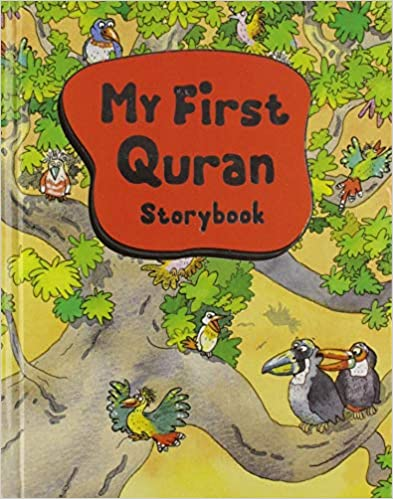
    My First Quran Stories Book

  • What are the 4 obligatory acts of Wudu? How to perform Wudu?

    What are the 4 obligatory acts of Wudu? How to perform Wudu?

    In this article, we will cover the Fard of wudu, the Sunnah of wudu, and the Complete wudu method.

    What is fard of Wudu?

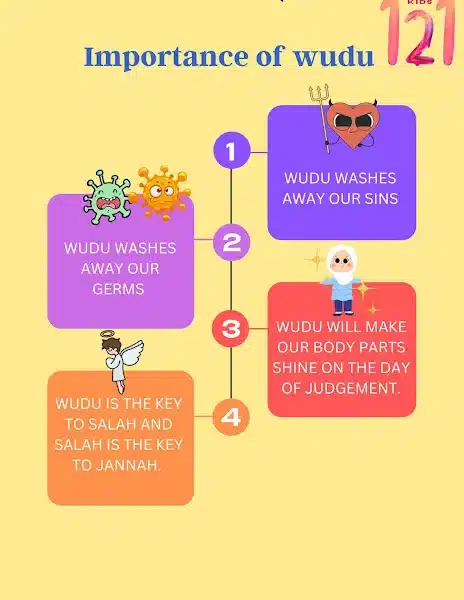
    Wudu, also known as ablution, holds significant importance in Islam as it is a ritual purification process that Muslims perform before certain acts of worship. It involves specific actions and intentions aimed at purifying the body and mind. Understanding the method and obligatory aspects of wudu, known as fard, is crucial for practicing Muslims. This brief note will explore the concept of wudu, the method of performing it, and the fard obligations associated with it.

    Wudu is an integral part of the Islamic faith and is performed by Muslims to purify themselves before engaging in acts of worship, such as the five daily prayers (Salah), recitation of the Quran, and other religious rituals. It symbolizes spiritual and physical cleanliness, and by performing wudu, Muslims aim to attain a state of purity to establish a deeper connection with Allah.

    Method of fard Wudu

    The method of performing wudu consists of several sequential steps that must be followed in order. The process typically begins by making a clear intention in the heart to perform wudu solely for the sake of worship and to seek purification. Then, the individual begins by washing their hands up to the wrists three times, ensuring that water reaches every part of the hand, including the fingers.

    The next step involves rinsing the mouth and nose three times, using a small amount of water. This includes taking water into the mouth, swishing it around, and spitting it out, as well as inhaling water slightly into the nostrils and then expelling it. It is recommended to use the right hand for these actions.

    After that, the face is washed three times, from the hairline to the chin and from ear to ear, ensuring that water reaches all parts of the face. This step is followed by washing the right arm up to the elbow three times, starting with the right hand, and then repeating the same process for the left arm.

    Next, the individual wipes their head with wet hands, moving them from the front of the head to the back, and then bringing them back to the front. It is recommended to use the index fingers to wipe the inner edges of the ears, and the thumbs to wipe the back of the ears.

    Lastly, the person washes their feet, starting with the right foot and ensuring that water reaches all parts, including between the toes, up to the ankles. This is done three times, and the same process is repeated for the left foot.

    During the entire wudu process, it is essential to maintain the proper order and ensure that each part is washed or wiped the required number of times. It is also recommended to begin each action with the right side of the body.

    When it comes to the fard obligations of wudu, there are four main aspects that must be fulfilled for the wudu to be considered valid. These fard elements are washing the face, washing the arms up to the elbows, wiping a quarter of the head, and washing the feet up to the ankles. These actions must be performed in the specified manner and in the correct order. Neglecting any of these obligations or performing them incorrectly can invalidate the wudu.

    It is important to note that while wudu is obligatory for certain acts of worship, such as Salah, it is also highly recommended to perform wudu at other times to maintain a state of cleanliness and spiritual readiness. Muslims may perform wudu before reciting the Quran, entering the mosque, or engaging in supplications.

    The fard obligations of Wudu


    The fard obligations of wudu refer to the essential components that must be fulfilled for wudu to be considered valid. These obligations are necessary and cannot be omitted or neglected. Here are the fard elements of wudu:

    1. Making the intention: It is recommended to make a specific intention in the heart to perform wudu solely for the sake of worship and seeking purification.
    2. Washing the face: It is obligatory to wash the entire face once during wudu. This includes washing from the hairline to the chin and from one earlobe to the other, ensuring that water reaches all parts of the face.
    3. Washing the arms up to the elbows: Both arms, including the hands, must be washed up to and including the elbows. Each arm should be washed from the fingertips up to the elbows, ensuring that water reaches all areas.
    4. Wiping a quarter of the head: Instead of washing the entire head, it is obligatory to wipe a quarter of the head. This is done by wetting the hands and passing them over a portion of the head, starting from the forehead and moving toward the back.
    5. Washing the feet up to the ankles: Both feet, including the ankles, must be washed once during wudu. Starting with the right foot, water should be poured over the entire foot, ensuring that all areas, including between the toes, are washed. The washing should continue up to and including the ankles.

    These fardh obligations are essential and must be performed in the proper sequence and manner for wudu to be considered valid. Neglecting any of these obligations or performing them incorrectly can invalidate the wudu. It is important to note that each obligation should be fulfilled in its entirety, ensuring that water reaches all required areas.

    By fulfilling the fardh obligations of wudu, Muslims fulfill the basic requirements of this ritual purification, ensuring cleanliness and readiness for acts of worship. These obligations serve as a reminder of the importance of physical and spiritual purity in Islamic practice, establishing a sense of discipline and reverence in the performance of wudu.


    The Sunnah of Wudu: Cleanliness

    The sunnah of wudu refers to the recommended actions and practices that Prophet Muhammad (peace be upon him) performed while performing ablution. While not obligatory, adhering to the Sunnah acts of wudu holds great merit and rewards in Islamic tradition. These acts provide additional blessings and spiritual benefits to the individual performing them. Here are some examples of the Sunnah practices of wudu:

    1. Beginning with the name of Allah: Before starting wudu, saying “Bismillah” (In the name of Allah) is encouraged as a way of seeking blessings and invoking the name of Allah.
    2. Using the Siwak: Using a Siwak, a traditional tooth stick or a toothbrush made from certain plants, for cleaning the teeth is highly recommended before starting wudu. It helps maintain oral hygiene and is considered a virtuous act.
    3. Starting with the right: Following the practice of Prophet Muhammad SAW, it is recommended to begin wudu actions, such as washing hands and rinsing the mouth, with the right side of the body.
    4. Washing the limbs thoroughly: Taking care to ensure that each part of the limbs being washed during wudu is fully wet and properly cleansed is a Sunnah practice. This includes making sure that water reaches all areas, such as between the fingers and toes.
    5. Lengthening the actions: Prophet Muhammad SAW would often prolong certain aspects of wudu, such as rinsing the mouth and nose and wiping the head, to ensure thorough cleansing.
    6. Wiping the ears: After wiping the head, it is recommended to wipe the inner and outer parts of the ears with the index fingers, as Prophet Muhammad would do during his wudu.
    7. Observing the order: Maintaining the proper sequence of actions in wudu, as mentioned in the method of wudu, is part of the Sunnah. It includes following the order of washing the face, then the arms, wiping the head, and finally washing the feet.
    8. Conserving water: While performing wudu, Prophet Muhammad SAW emphasized the importance of using a moderate amount of water and avoiding wastage. Muslims are encouraged to be mindful of water conservation during ablution.
    9. Supplicating after fard wudu: After completing wudu, it is recommended to supplicate and make specific prayers, seeking the blessings and purification that wudu provides.

    Conclusion

    In conclusion, wudu is an essential ritual of purification in Islam, serving as a means to achieve physical and spiritual cleanliness. The method of performing wudu involves a specific sequence of actions, each with its own purpose and significance.

    The fard obligations of wudu must be fulfilled for it to be valid. By observing the practice of wudu, Muslims strive to attain a state of purity and readiness for acts of worship, enhancing their spiritual connection with Allah. Wudu serves as a reminder of the importance of cleanliness and the need to approach worship with a purified body and mind. It is a beautiful and symbolic practice that reflects the meticulousness and devotion of Muslims in their pursuit of spiritual growth and closeness to the Divine.

    By adhering to the method and fulfilling the fard obligations of wudu, Muslims uphold a fundamental aspect of their faith, fostering a sense of discipline, humility, and reverence in their worship.

    Read More here

    The method of Five prayers in a day for Muslim children

    30 short Hadiths course

    Quran tafsir for kids

    Parenting In Islam

  • Story 20Urdu| What is the best Virtue in Islam?

    Story 20Urdu| What is the best Virtue in Islam?

    Welcome to Our Hadith Classes Online. You are going to Start a free short course for your child. After this course, your children would have their own mini -Kitab -UL-Hadess (For a Description of this Free online course scroll down)

    Here is the “First Hadees and story of Our hadith with stories course for kids.

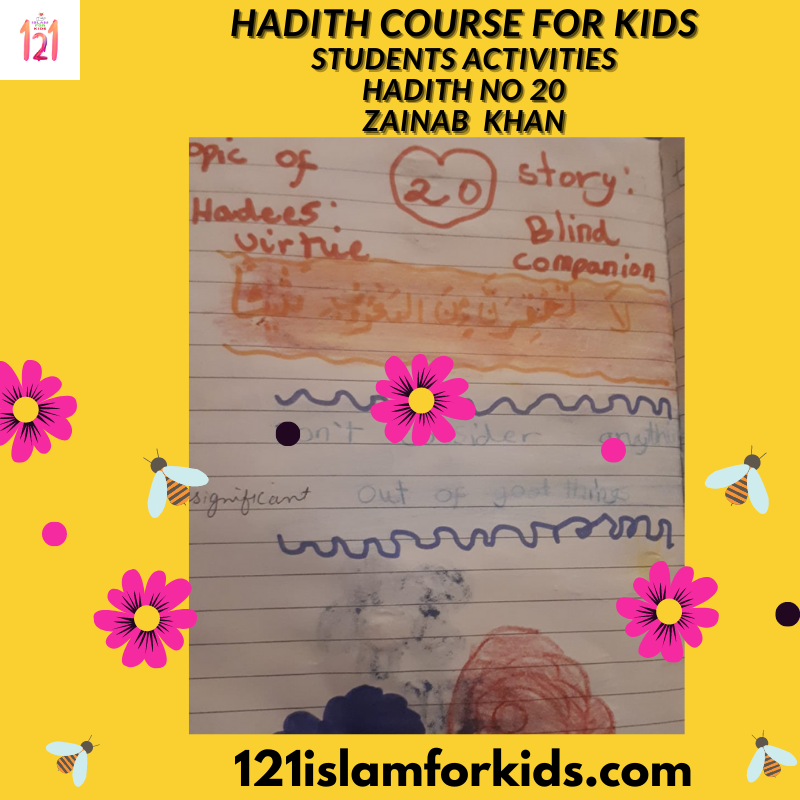
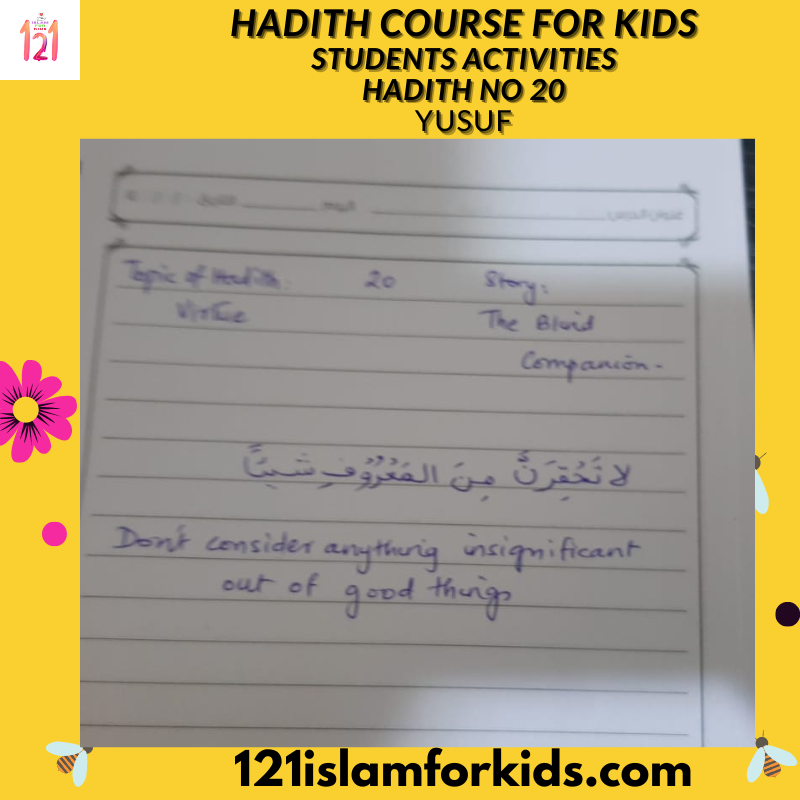
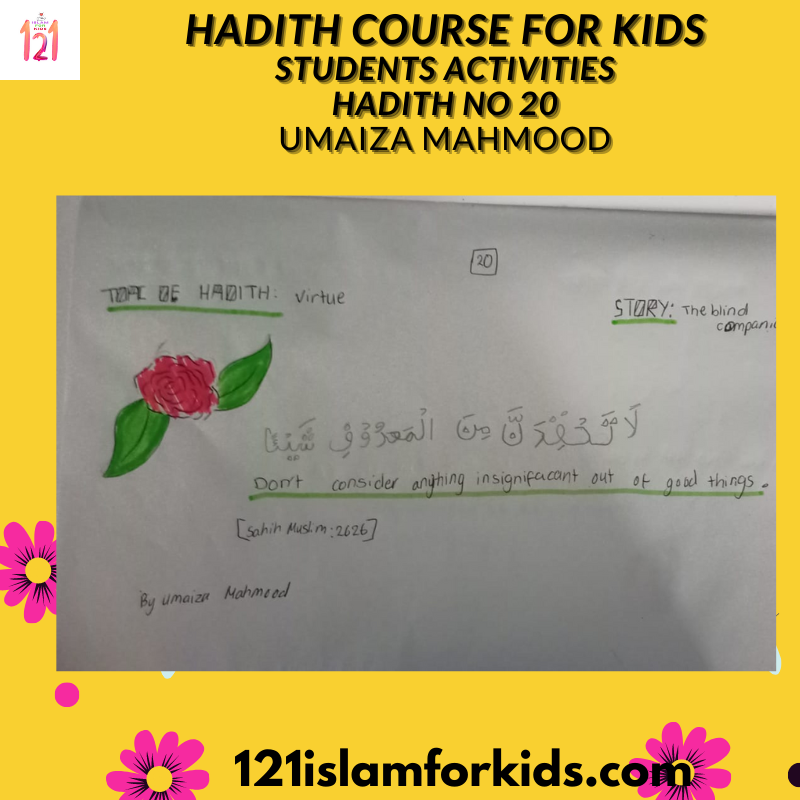
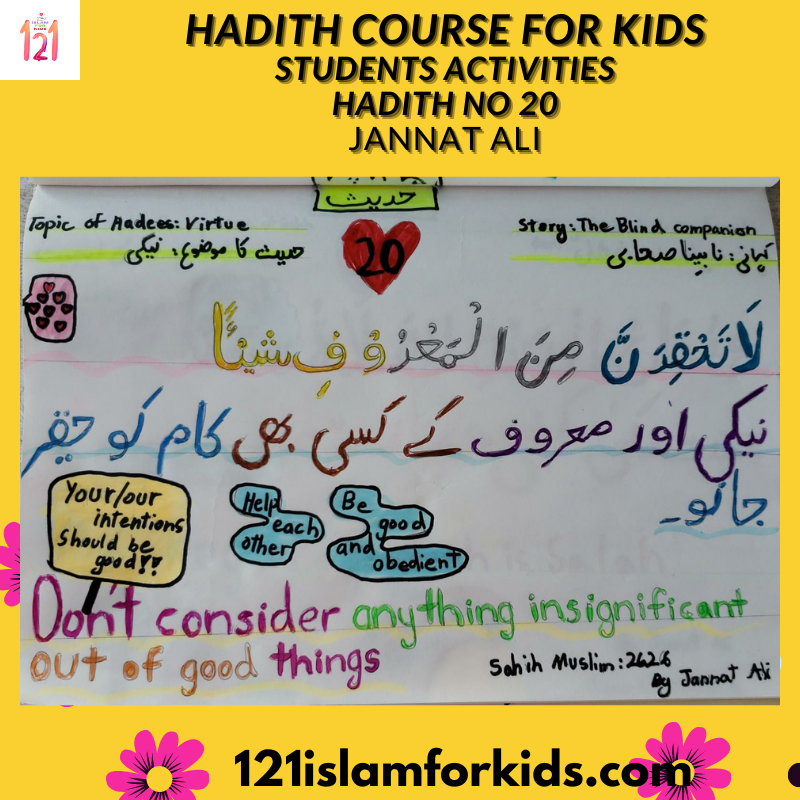
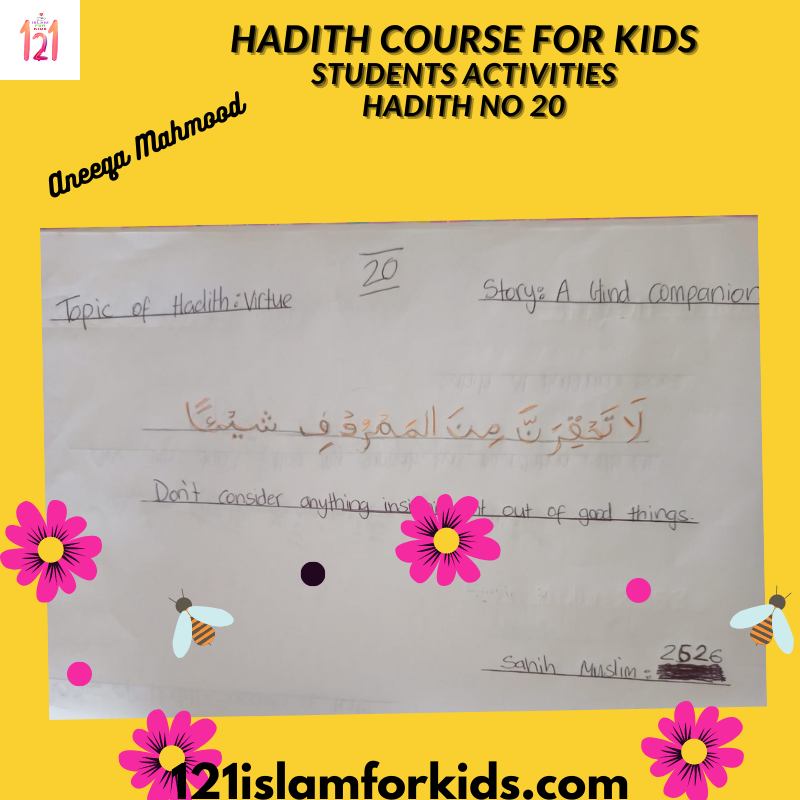
    The virtues of A blind Sahabi Abdullah Bin Umm Maktoum R.A Story and Hadith on Virtues.

    عبداللہ ابن ام مکتوم کی کہانی اور حدیث نیکی کیا ہے؟

    السلام علیکم پیارے بچو! پیارے بچو کیسے ہیں آپ سب؟ امید ہے کہ اللہ ہاک کے فضل سے آپ سب ٹھیک ہوں گے اور سیرتِ نبوی صلی اللہ علیہ و آلہ و سلم پر ۔ عمل کرنے کی پوری کوشش کر رہے ہوں گے. ہماری آج کی حدیث اور اس سے متعلقہ کہانی بڑی دلچسپ ہے-آئیے شروع کرتے ہیں-آج کی حدیث کا موژضوع ہے نیکی ۔-حدیث ہے کہ۔۔۔۔. 

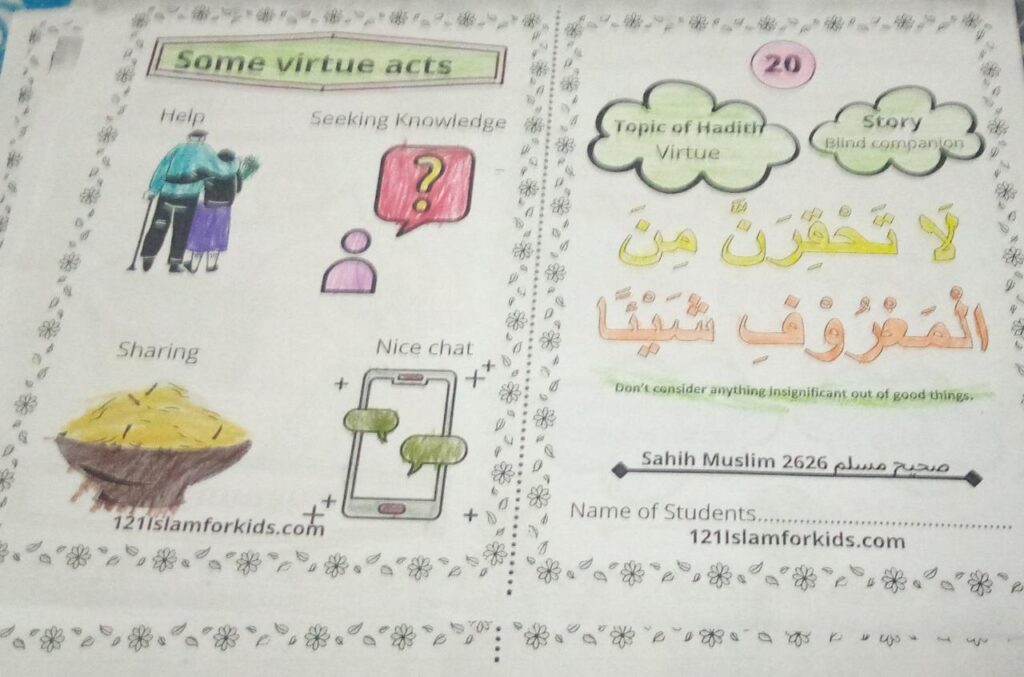
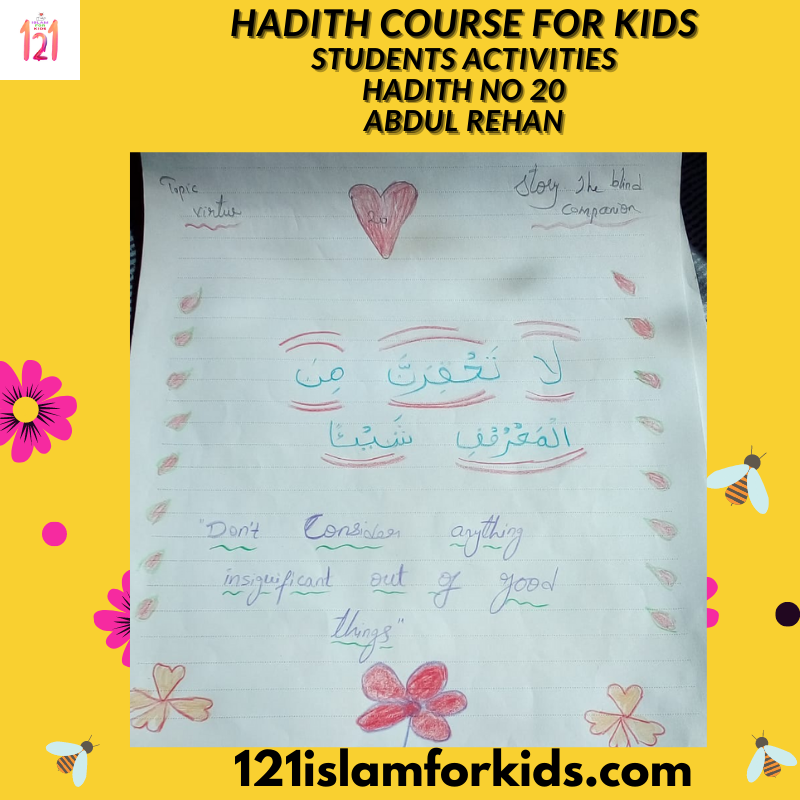
    “کسی بھی نیکی کو حقیر مت جانو”

    Hadith Classes Online

    یہ حدیث اس بات کی وضاحت کرتی ہے کہ ہر نیکی کا ایک اپنا مقام ہے. ہمیں چھوٹی نیکیوں کو چھوڑ کر بڑی نیکی تلاش کرنے میں اپنا وقت ضائع نہیں کرنا چاہیے. میں جانتی ہوں تمام بچے اچھے کام کرنا چاہتے ہیں. لیکن وہ یہ نہیں جانتے کہ کب اور کیسے انہیں اس پہ بڑا ثواب مل سکتا ہے. کیا آپ جانتے ہیں کہ ہمارے پیارے نبی کریم صلی اللہ علیہ و آلہ و سلم نے فرمایا

    “اگر تم راستے سے کوئی رکاوٹ ہٹا دو تاکہ کسی کو اس سے تکلیف نہ پہنچے، یا اپنے والدین کو دیکھ کر مسکراؤ تاکہ وہ خوش ہوں تو یہ بھی نیکی ہے “

    Hadith Classes Online

    آج میں آپ کو ایک بڑے نیک صحابی عبداللہ ابن مخدوم کی کہانی سناؤں گی، وہ ایک بڑے عمدہ اور بہترین صحابی تھے. وہ نابینا تھے مگر نیکی کے کاموں کے بڑے شوقین تھے. انہیں علم حاصل کرنے کا بھی بہت شوق تھا

    ایک مرتبہ آپ صلی اللہ علیہ و آلہ و سلم غیر مسلموں کو دین اسلام کی تبلیغ کرنے میں مشغول تھے، محفل میں بہت بڑے بڑے رتبے والے سردار موجود تھے، عین اسی وقت عبداللہ ابن مخدوم تشریف لائے اور آپ صلی اللہ علیہ و آلہ و سلم سے کوئی سوال پوچھا. 

    آپ صلی اللہ علیہ و آلہ و سلم بات کرنے میں مصروف تھے لہٰذا انہوں نے توجہ نہ فرمائی اور اپنا رخ غیر مسلموں سرداروں کی جانب موڑ لیا. 

    اللہ پاک بہترین جاننے والا ہے. کہ کون علم جاننے کا بہترین شوق رکھتا ہے اور کون محفل میں بری نیت سے بیٹھا ہے.  

    اللہ پاک نے آپ صلی اللہ علیہ و آلہ و سلم کا صحابی کو نظر انداز کرنا ناپسند کیا. اور ابن مخدوم سے اپنی محبت کے اظہار کے لیے ایک سورہ “عبس” نازل کی. 

    اس کے بعد آپ صلی اللہ علیہ و آلہ و سلم حضرت عبداللہ سے اور بھی زیادہ محبت کرنے لگے. کیونکہ اب وہ جان گئے تھے کہ اللہ تعالیٰ عبداللہ سے محبت کرتے ہیں. اور صحابہ میں ان کا درجہ بڑا بلند ہے. 

    پیارے بچو، اس کے بعد غزوہ بدر کا موقع تھا، اللہ پاک نے بتایا کہ جو اس جنگ کے لیے جائے گا اسے زیادہ اجر ملے گا اس شخص کی نسبت جو گھر بیٹھا رہا.  عبداللہ نے خواہش کی کہ کاش وہ بھی جا سکیں، لیکن انہیں اجازت نہ ملی کیونکہ وہ نابینا تھے. اب پھر اللہ نے آیات نازل فرمائیں کہ بچے، عورتیں اور معذوروں کو جنگ کے لیے مجبور نہ کیا جائے گا. لیکن عبداللہ اصرار کرتے رہے

    نبی کریم صل اللہ علیہ و آلہ و سلم نے ان سے پوچھا کہ عبداللہ تم وہاں کیا کرو گے؟ تم دشمن کو دیکھ نہیں سکتے اس لیے تم لڑائی نہیں کر سکو گے-وہ کہنے لگے کہ میں اسلام کا پرچم اٹھاؤں گا اور اسے گرنے نہیں دوں گا یہاں تک کہ وفات پا جاؤں 

    آپ صلی اللہ علیہ و آلہ و سلم مسکرائے- مگر اجازت نہ دی. عبداللہ بہت افسردہ ہوئے

    لیکن ایک دوسری جنگ، جنگ قادسیہ میں انہیں یہ موقع مل گیا. وہ بہت خوش ہوئے. وہ جنگ کے لیے تیار ہوئے، وہ جھنڈا تھامے ہوئے تھے جب انہیں شہید کر دیا گیا

    پیارے بچو، آپ دیکھ سکتے ہیں کہ وہ نابینا تھے لیکن انہوں نے اپنی کمزوری کو اپنی نیکی کے راستے میں نہیں آنے دیا. وہ مسلسل نیکی کرنے کی کوشش کرتے رہے، اللہ پاک ان سے بہت خوش ہوئے. 

    ان شاء اللہ ہم بھی ان کی طرح نیکیاں اکٹھی کرنے کی کوشش جاری رکھیں گے

    ہم مسکرائیں گے، خوش رہیں گے، اپنی چیزیں دوسروں کے ساتھ بانٹ کر استعمال کریں گے، علم سیکھیں گے، اور جنت حاصل کرنے کے لیے بہت ساری نیکیاں کریں گے. 

    اب اس حدیث کو لکھیں اور اپنے بزرگوں اور دوستوں کے ساتھ شئیر کریں. 

    اور اپنی کسی نیکی کے متعلق وڈیو بنا کر بھیجنا نہ بھولیں. 

    والسلام!

    Video of this story

    Worksheet for This Hadith

    Hadith Classes Online

    This story in English


    Read More Stories with hadith in English

    Read more Stories with Hadith in Urdu

    Enrolments Available

    This is a short course of hadith and stories from My 30 short hadith with stories course. My hadith course is very much liked and appreciated by parents and students. Online group classes are available online for all time zones. Recommended age for the class Hadith for kids is 7+. These classes are available in English and Urdu. If you want to enroll your child in our classes contact us via.

    Other courses we have

    • Easy Tafseer for kids with exciting stories you can see that course in my hadith course tab.
    • Prayer for kids course is a short course to teach about taharat, Gusal, wudu, times of prayers, number and names of prayers, pillars and conditions of prayer, and method of prayer. Search as Prayer for kids course on the search bar.
    • Ramzan boost course we do start 2 weeks before Ramzan.
    • Faith boos course In December to say No To Marry Christmas.
    • Kindness to Parents

    If you want to start this course with me then leave a comment, Email me or enroll your child here.

    Download your free copy of 30 short Hadith book pdfs in Urdu/Eng from the Posts tab.

    Worksheet for this Hadith and story. (Buy This worksheet book here)

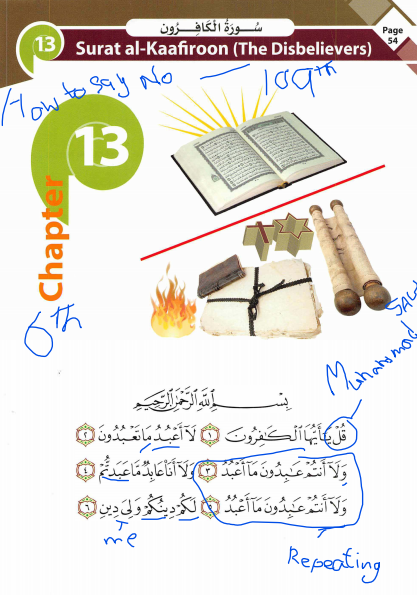
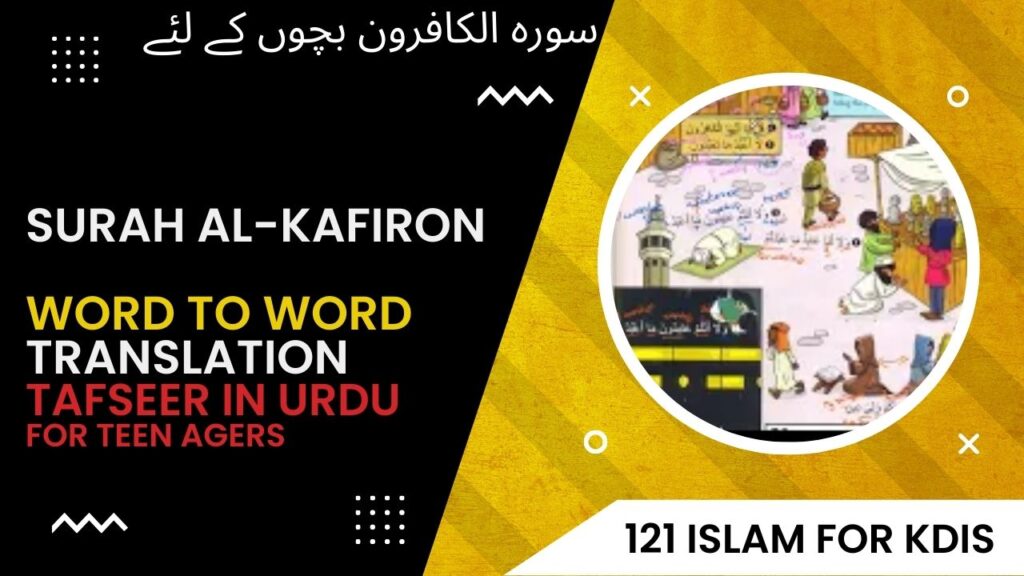
  • Surah-tu-Kafiron 109|How to say no to disbelievers As good Muslimchild?

    Surah-tu-Kafiron

    Introduction of Surah-tu-Kafiron

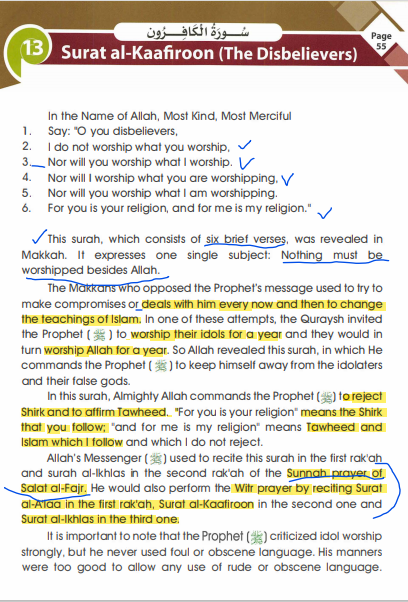
    Surah-tu-Kafiron is 109th Surah in Quran. This surah is the surah with rejects all types of shirk. It teach us that , Allah is only one creator. It teaches us how to say no to disbelievers if they invite us for any type of compromise or deal?

    It was revealed, when the Makens were failed to stop spreading Islam. They tried many tricks to stothe p prophet Muhammad SAW to stop preaching Islam. But Islam was spreading day by day.
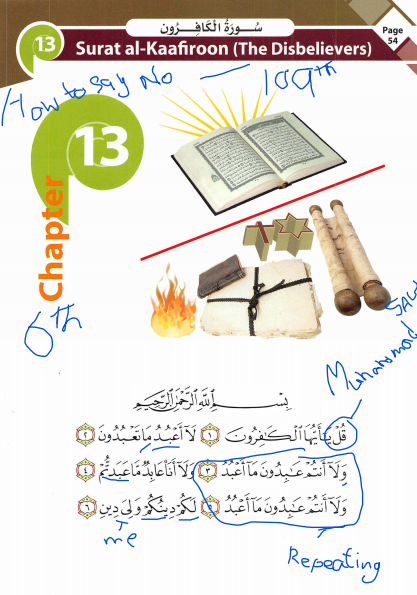
    In their attempt to earn the Prophet’s favour, the Quraysh people offered him riches, status, and beautiful women to marry if only he would stop preaching about Allah. When this did not work out, they proposed another solution. The Quraysh people told the Prophet that they will accept Allah as their god for one year and, in return, the Prophet (PBUH) will have to agree to pray to their gods in the next year.

    They offered that if what he brought was better, they will partake of it Allah is believed to be the one and only true god. And, the Quran is said to be a revelation from him. But Allah declared this was not acceptable deal. And you keep your Idols with you.
    Surah-tu-Kafiron

    Step 2. Verse by Verse word meanings

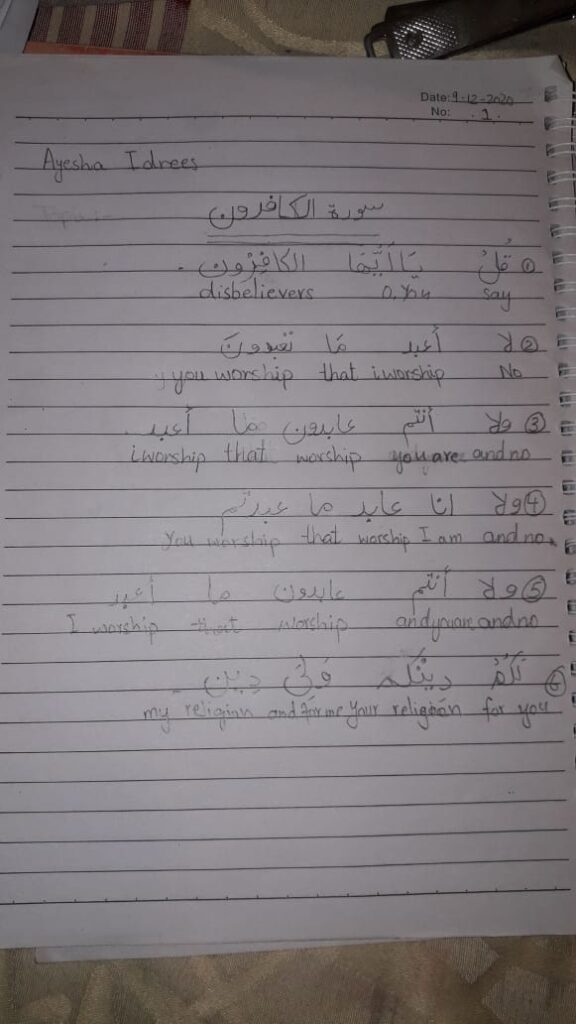
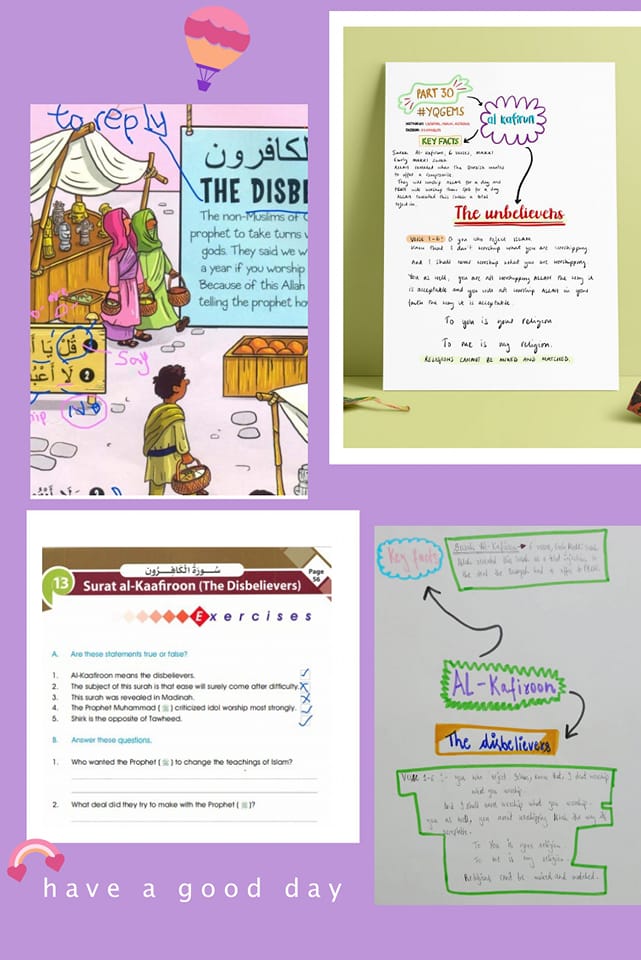
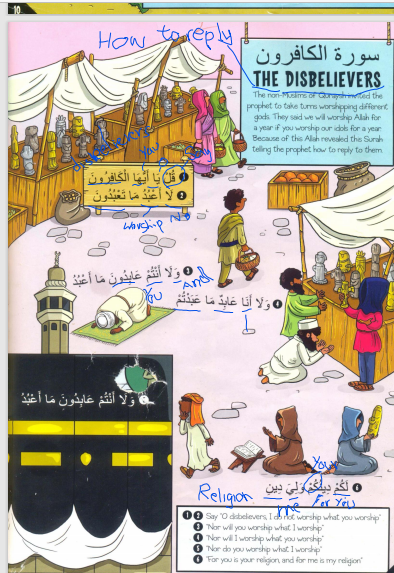
    We did word-to-word translation and then Full Translation was done where pictures helped us understand the theme of Surah. So kids have been taught the meaning of words. We have three options to write and learn word meanings.

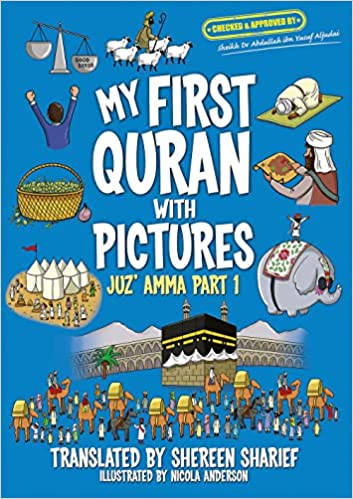
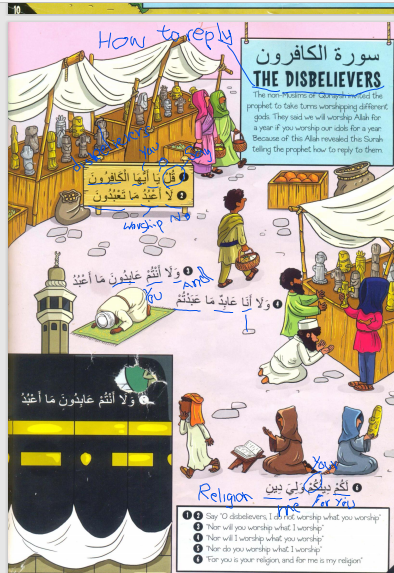
    1 write Word to word meanings on the book My First Quran with pictures. It makes sense. Connecting words with pictures make it easy for long-term memory.

    2. Take notes in your notebook. Children do write Arabic words before class or get printed and dispatch it with notes book.

    3. Write word meanings with an infographic in the notebook. It’s a bit time taking activity but for my students and me very interesting and help full.

    Step 3 Surah-tu-kafiron Translation and InfoGraphics

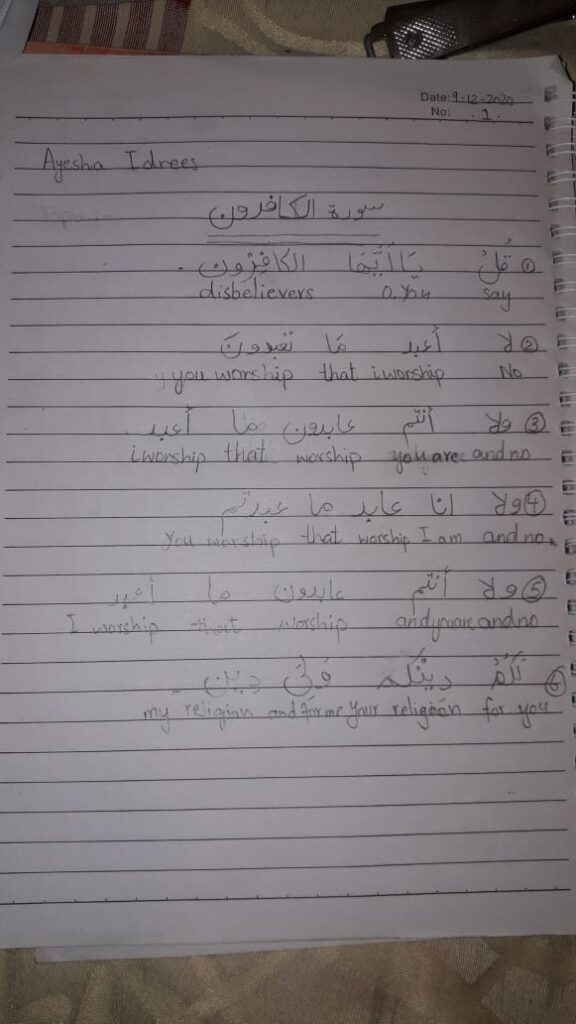
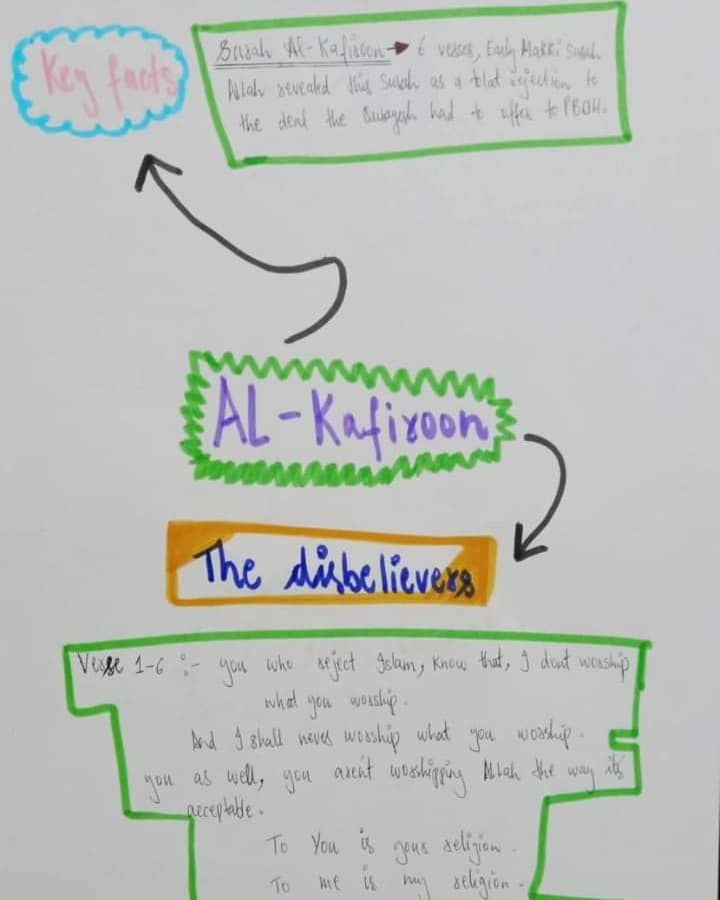
    After learning the word meanings of Surah-tu-Kafiron, children continue to memorize surah verse by verse with meanings, They do write verses with translation and infographics, As children do use My first Quran with pictures book to translation with infographics. Sometimes they also do infographics with their creativity and other activities in the classroom. Here are some pictures of infographics.

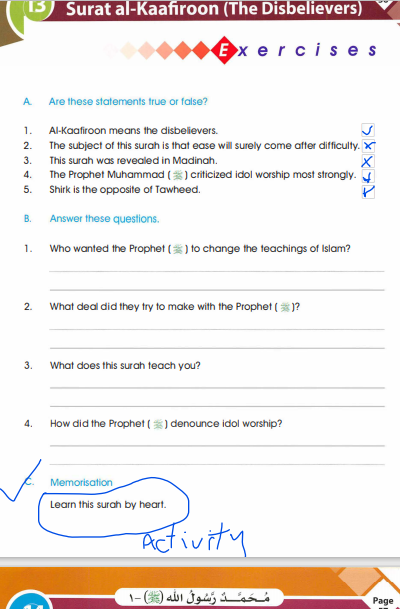
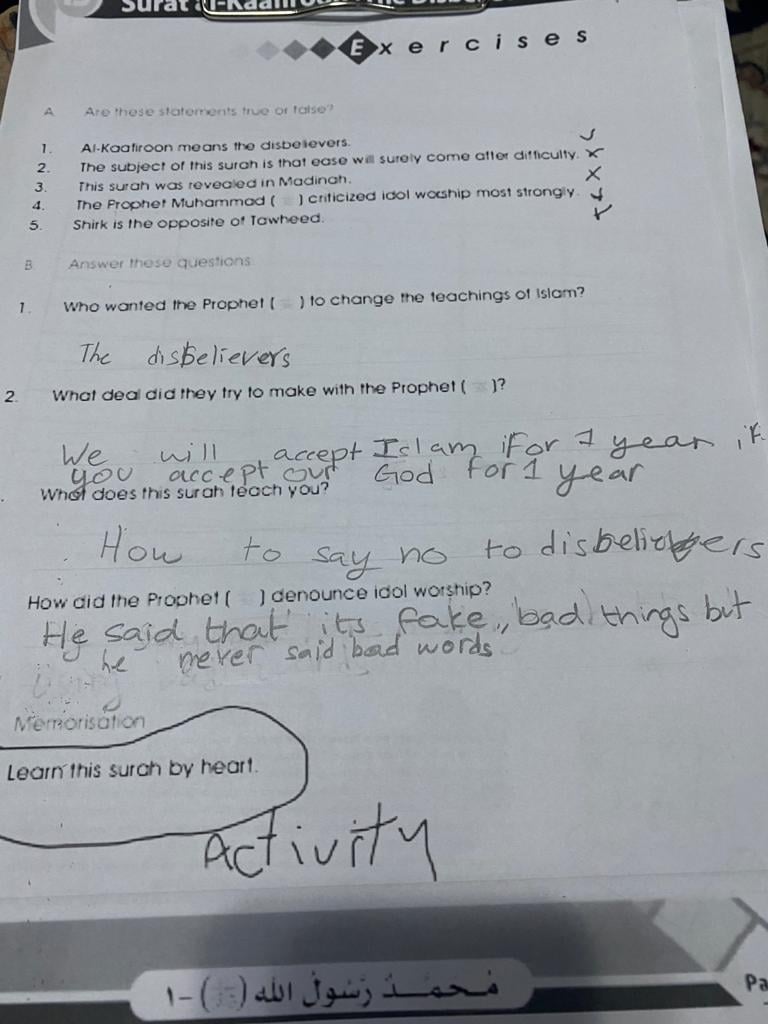
    Step 4 Tafseer and exercise, Discussion of Surah-tu-Kafiron

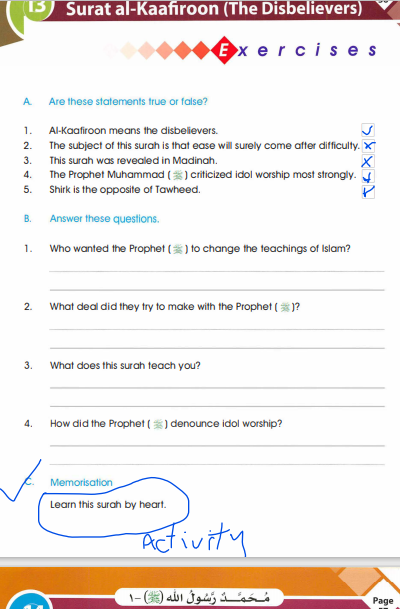
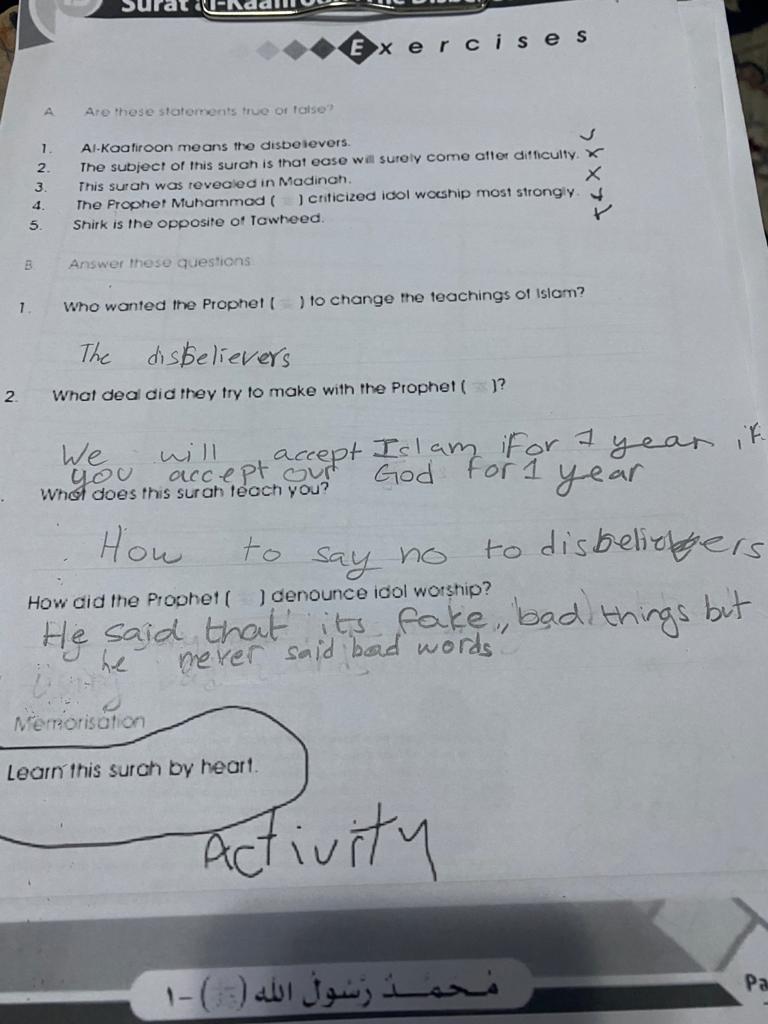
    The exercise was done. Where children recite sorah by heart with translation. Within this besides infographics were done verse by verse.

    Revision and Discussion discussion Why we should say NO to other gods? This talk can be seen in NO-Christmas

    Step 5 Stories related to Surah-tu-Kafiron

    The topic of Surah-tu-Kafiron is How to say NO to disbelievers.

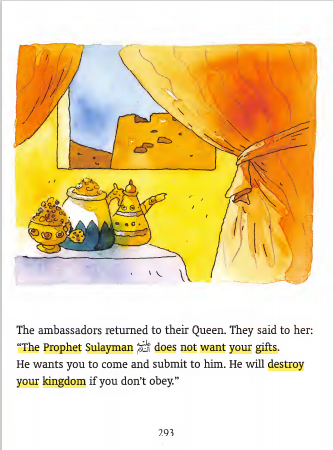
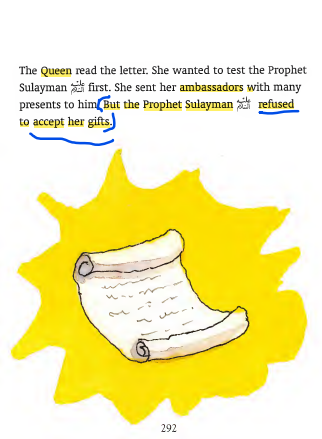
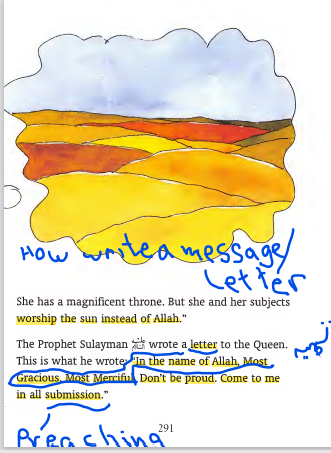
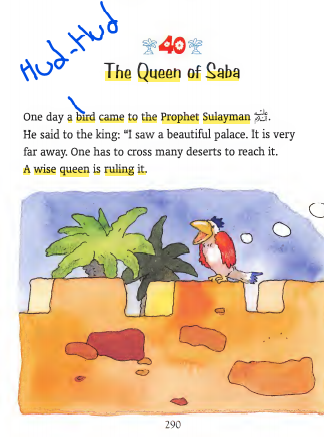
    1. Surah-tu-kafiron with story of Queen Saba and P.Sulemon.AS

    To teach how to say no to disbelievers when they invite us to do unIslamic RITUALS. The story of Queen SABA was the best. when she offered him gifts in answer to His letter. Nowadays children should be educated that how to say no to gifts from disbelievers that they offer them at their festivals. So this is a very effective story to tell the children.

    2. Story of Marayum AS and his son would be told.

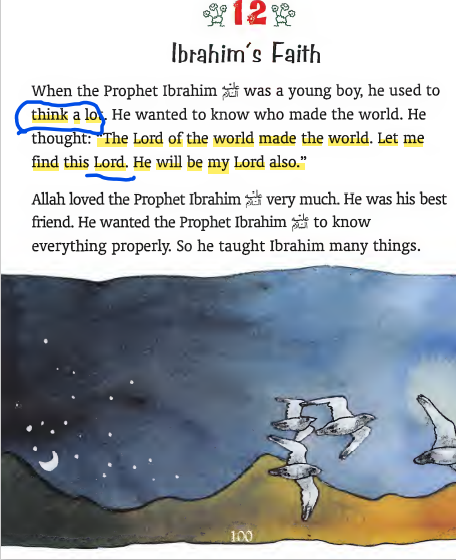
    3. Stories on Faith of Ibraheem and Ashab-i-kehf would be told to teach what we should if we are stuck in disbelievers?

    4. And stories “-In the beginning” and Allah’s creations would be told.

    These stories were told ‘My first Quran story book@. See the pictures downside in the gallery.

    Step 6 Mind Map

    Now it’s time for a mind map of the surah

    Sorah KAFRON theme is to see the real picture about his/her Deen and Allah. We must never compromise on God or our religion. We have to be clear about this for the rest of our lives. Surah Al-Kafirun teaches people to be firm in their faith. It suggests that the true followers should neither sacrifice the teachings of Islam for anyone nor allow others to ruin their relationship with Allah.

    It consists of six ayat. It was revealed in Makkah.

    The word kafiron means disbelievers and atheists.

    Step 8 Excellency of The Surah

    It is Sunnah to recite Surah-tu-Kafiron inSunnah prayer of Fajer and 2nd Rakah of witter. So today task is to memorize Surah-tu-Kafiron. We will also make a checklist to practice on it. In sha Allah.

    This Surah to teach on NOCHRISTMAS

    New Year and Christmas are on the way. This is the best way to teach Surat-tu-Kafiron to our children. Our two classes on this surah have been completed, Today is a day of discussion and overlook on this Surah. But did I told to you?

    What was the story I told to my students before starting this surah? The story was Why we should say NO to other gods? If one day someone would say to you, Please come to my place, I will give you a new mom, which would be more beautiful, more loving, she will fulfill your wishes, she would have more fun to do with you. But you have to leave your mother. what would be your answer?

    And if someone offers you to exchange his mom for one year. Would you like it? Of course the answer was We will never accept this offer. But she is more beautiful… No… She will have more fun… She will give you many yummy things…No. why Because we know she will not be our real mom.(It is true there is no example for Allah SWT)So this is what we should say when someone would invite us to make them happy, to attend the rituals of Non-Muslims, Even we should say no to the gifts of Non-Muslims like Prophet Salmon.

    We should deny Fake gods like Ibrahim AS… We should say No like Our Prophet SAW… Then in the Quran the picture there were shops of Idols. I asked them, can you imagine what it looks like? You can buy a good like shoes, a dress, your own colour your own choice. One child said it looks like a fish market…May Allah makes them a sadqa i jaria for all of us. Ameen.

    Tafseer for other Surahs

    Other courses we have

    Hadith with stories course consists of 30 short hadith for children with interesting stories you can see that course in my hadith course tab.
    Prayer for kids courses a short course to teach about taharat, Gusal, wudu, times of prayers, number and names of prayers, pillars and conditions of prayer, and method of prayer. Search as Prayer for kids course on the search bar.
    Kindness to Parents
    Ramzan Boost course
    Faith boost course in December to say NO MARYY CRISTMAS

    Enrolments Available

    Tafseer for kids’ group classes are available online for all time zones. Recommended age for the class tafseer for kids is 9+. These classes are available in English and Urdu. If you want to enroll your child in our classes contact us via.
    email: bhallitaha@gmail.com

    Facebook.

    You tube Urdu Channel

    You tube English Channel

    or leave a comment.

    Video Of Lectures in Urdu

    No photo description available.
    Image may contain: drawing

    Buy these books used in my classes.

    https://amzn.to/3dX3O4D

    All steps in view.

    Step 1 Introduction of Sora

    It is believed in the Muslim tradition that the Surah-tu-Kafron (disbelievers) was revealed in the city of Makkah when the Quraysh leaders were still trying to gain the support of the Prophet Muhammad (PBUH). In their attempt to earn the Prophet’s favour, the Quraysh people offered him riches, status, and beautiful women to marry if only he would stop preaching about Allah. When this did not work out, they proposed another solution.

    The Quraysh people told the Prophet that they will accept Allah as their god for one year and, in return, the Prophet (PBUH) will have to agree to pray to their gods in the next year. They offered that if what he brought was better, they will partake of it Allah is believed to be the one and only true god. And, the Quran is said to be a revelation from him.

    Step 2 We did word to word translation and then Full Translation was done where pictures helped us understand the theme of Surah. So kids have been taught the meaning of words as well as the example were told that if someone asks you to give us your mother for a year and take ours, no matter how rich and beautiful the other’s mother may be You will never accept this option because Allah who loves us 70 times more than our real mother.

    Step 3 Next day we did some Tafseer from the Book”Islamic Studies” it is a great read to understand the background of the Sorah and the reality of Allah. It is one-fourth of the Quran: According to Abdullah Ibn Abbas and Anas Ibn Malik, if anyone recites the Surah of disbelievers, it would be like reading a Quran. It is Sunnah to recite Surah-ul-Kafiron in Sunnah prayer of Fajer and 2nd Rakah of Witter. So today’s task is to memorize Surah-ul-Kafiroon.

    Step 4Revision and Discussion discussion Why we should say NO to other gods? If one day someone would say to you, Please come to my place, I will give you a new mom, which would be more beautiful, more loving, she will fulfill your wishes, she would have more fun to do with you. But you have to leave your mother.

    What would be your answer? And if someone offers you to exchange his mom for one year. Would you like it? Of course, the answer was we will never accept this offer. But she is more beautiful. No. She will have more fun. She will give you many yummy

    things. No. why? Because we know she will not be our real mom.(It is true there is no example for Allah SWT)So this is what we should say when someone would invite us to make them happy, to attend the rituals of Non-Muslims, Even we should say no to the gifts of Non-Muslims like Prophet Salmon.

    We should deny Fake gods like Ibrahim AS. We should say No like Our Prophet SAW. Then in the Quran picture, there were shops of Idols. I asked them, can you imagine what it looks like? You can buy a god-like shoes, dress, your own color your own choice.

    Step 5

    The exercise was done. Where children recite sorah by heart with translation. within this besides infographics were done verse by verse.

    Step 6

    Then also a story and various activities are conducted along with it. The topic of surah-ul-Kafron is how to say no to disbelievers. So the story of Saba Queen was best. When she offered him gifts from non-believers which they offer them at their festivals. Kids have much enjoyed Saba queen’s story. SurahulKafron teaches how we should behave during non-Muslim festivals

    The children were told why they would not celebrate Christmas and how to reject their Christian friends.

    Step 7 Mind Map

    Now it’s time for a mind map of the surah

    Surah KAFRON theme is to see the real picture about his/her Deen and Allah. We must never compromise on God or our religion. We have to be clear about this for the rest of our lives. Surah Al-Kafirun teaches people to be firm in their faith. It suggests that the true followers should neither sacrifice the teachings of Islam for anyone nor allow others to ruin their relationship with Allah.

    It consists of six ayat. It was revealed in Makkah.

    The word kafiron means disbelievers and atheists.