Tag: free islamic books

  • Islamic Online Education: A Guide to Best Curriculum(8 to 10)

    Islamic Online Education: A Guide to Best Curriculum(8 to 10)

    Islamic Online Education Curriculum for Children Aged 8 to 10: Building Strong Foundations for 21st-Century Muslims

    online education

    Introduction:

    The 121 Islam for Kids Online Institute is dedicated to providing comprehensive and age-appropriate Islamic education for Muslim children aged 8 to 10 years old. Our curriculum is designed to instill a strong understanding of core Islamic beliefs, principles, and values while also fostering respect for diversity and promoting good character and manners. With a focus on interactive and engaging methods, our program aims to empower children to become confident, compassionate, and responsible young Muslims.

    Online Education Curriculum Modules:

    Module 1: Basic Fiqh

    Objective: To introduce children to the fundamental principles of Islamic Jurisprudence (Fiqh) and guide them in applying Islamic teachings to their daily lives.

    1.1 Five Pillars of Islam:

    1.2 Wudu and Salah:

    • Explain the importance of cleanliness (Taharah) and how to perform Wudu (ablution).
    • Guide children through the steps of performing Salah and its importance in daily life.

    Module 2: Core Islamic Beliefs

    Objective: To provide children with a strong understanding of the foundational beliefs of Islam.

    2.1 Oneness of Allah (Tawheed):

    • Teach the concept of Tawheed and the importance of monotheism in Islam.
    • Introduce the 99 Names of Allah (Asma-ul-Husna) and their meanings.

    2.2 Belief in Angels, Prophets, Scriptures, Books, and Day of Judgment:

    • Introduce the concept of angels and their roles in Islam.
    • Teach about the important prophets and their books, including Prophet Muhammad (PBUH), and the divine scriptures.
    • Fate and Day of Judgment

    Module 3: Introduction to Other World Religions

    Objective:

    To promote interfaith understanding and respect for diversity while reinforcing the uniqueness of Islamic beliefs. You can read this topic in detail ‘Understanding Religion and Its Role in Our Lives – A Guide for Muslim Kids (8-10)’

    3.1 Comparative Religion:

    • Introduce children to the basics of major world religions, such as Christianity, Judaism, and Hinduism.
    • Emphasize similarities and differences between these religions and Islam.

    Module 4: Tafseer of Short Surahs

    Objective: To help children understand the meanings and lessons behind short surahs (chapters) from the Quran.

    4.1 Surah Al-Fatiha:

    • Explore the significance of Surah Al-Fatiha as the opening chapter of the Quran.
    • Explain the meanings and implications of the verses within this surah.

    4.2 Surah Al-Asr and Surah Al-Ikhlas:

    • Provide a detailed explanation of Surah Al-Asr and its relevance to time management and mindfulness.
    • Elaborate on the profound meanings of Surah Al-Ikhlas, emphasizing the concept of Tawheed.

    Module 5: Explanation of Hadiths with Stories and Worksheets

    Objective: To engage children with stories and activities that illustrate the wisdom and guidance found in Hadiths.

    5.1 30 short Hadiths:

    • Share Hadiths that highlight the topics of hadith with an explanation.
    • Encourage children to emulate the Prophet’s (PBUH) compassionate character.

    5.2 Story related to the topic

    • We will tell stories from Seerah and prophets stories related to the topic
    • We encourage students to discuss and reflect on the lesson learned from the story
    • We encourage students to share the hadith and story with others.

    5.3 Worksheets and Interactive Activities:

    • Provide interactive worksheets and activities to reinforce the understanding of Hadiths and their practical application.

    Module 6: Seerah of Prophet Muhammad (PBUH) and Other Prophets

    Objective: To introduce children to the life and teachings of Prophet Muhammad (PBUH) and other esteemed prophets.

    6.1 Seerah of Prophet Muhammad (PBUH):

    • Narrate key events from the life of Prophet Muhammad (PBUH), highlighting his character and teachings.
    • Emphasize the importance of following his example in daily life.

    6.2 Stories of Other Prophets:

    • Introduce stories of Prophet Ibrahim, Prophet Musa, Prophet Isa, and others, underscoring the common message of monotheism and morality.

    Module 7: Islamic Manners and Etiquettes

    Objective: To instill good manners, etiquette, and the importance of respecting elders and peers.

    7.1 Dress Code in Islam:

    • Teach the significance of modesty and appropriate Islamic dress for boys and girls.
    • Explain the concept of hijab and its various interpretations.

    7.2 Rights of Parents and Elders:

    • Highlight the respect and kindness that children should show towards their parents and elders.
    • Encourage children to be grateful for their caregivers’ efforts.

    7.3 manners – 121 Islam for Kids:

    • Promote kindness, honesty, and integrity in children’s interactions with others.
    • Emphasize the value of empathy and compassion in Islam.

    Conclusion:

    At the 121 Islam for Kids Online Institute, we are dedicated to providing an interactive and all-inclusive curriculum that will help shape young Muslim minds. Our program is designed to focus on fundamental Islamic values, ethics, and manners, which will help to establish a strong foundation in faith and character. We also aim to instill a sense of open-mindedness and respect towards diverse beliefs, thereby encouraging children to actively participate as responsible members of their communities and the world at large. Through our curriculum, we strive to equip the next generation with the knowledge and tools needed to uphold the principles of Islam and make positive contributions to society.

    How does this guide Islamic online education curricula? Let us know in the Comment box

    Do you want to add any other module to this list?

  • Story 13| Short story for kids|How to be grateful?

    Story 13| Short story for kids|How to be grateful?

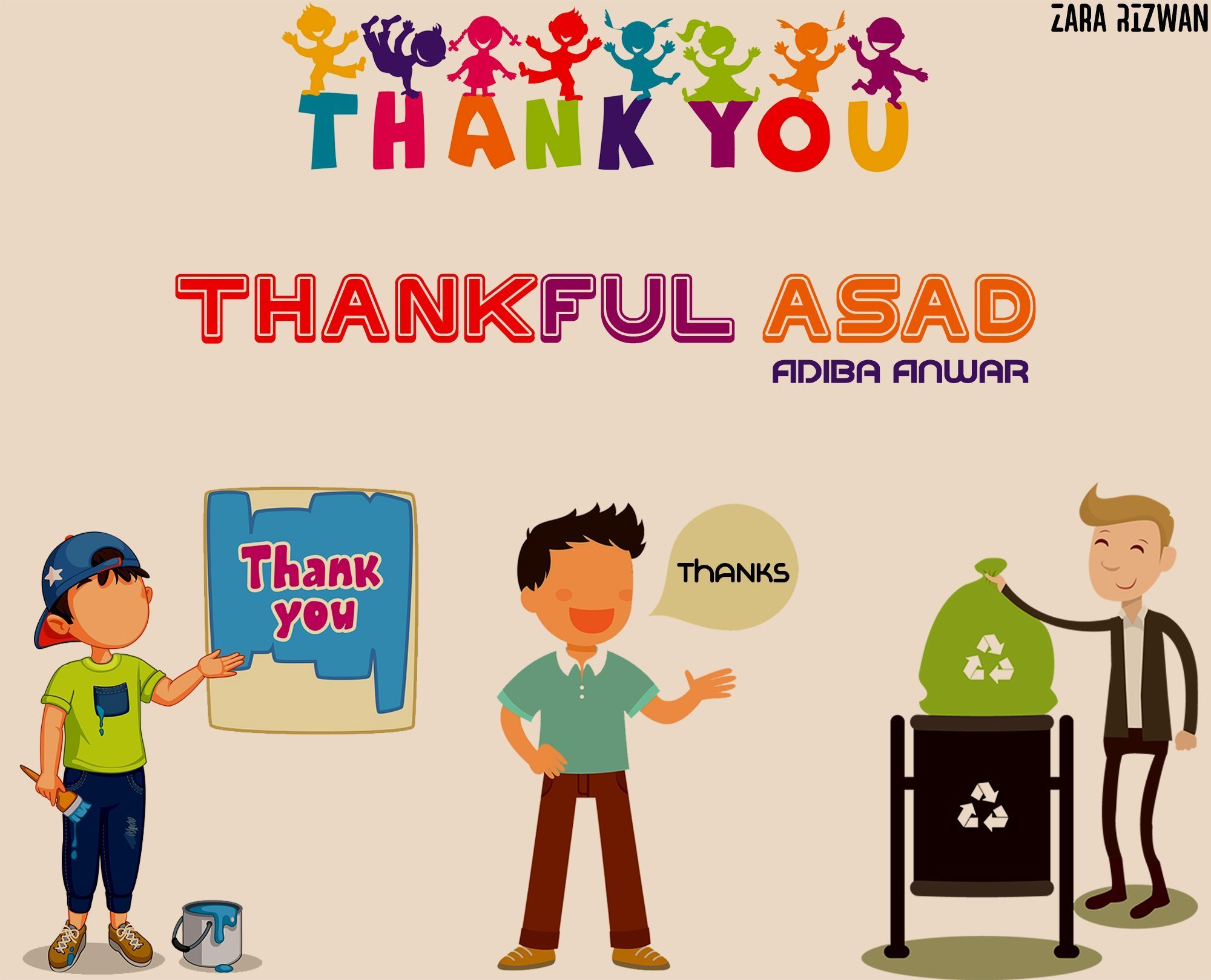
    This is a short story about a boy, Asad. This short story for kids will teach that, Give thanks to people, so that you may be in the habit of giving thanks. Being thankful to people increases love for one another and Allah is pleased too.

    Hadith

    Dear children, Prophet Muhammad صلی اللہ علیہ وسلم said:

    ‘He is not gratified of Allah, who is not grateful of people ‘
    short story for kids

    Story of Grateful Asad

    short story for kids

    Asad and Ahmed reached the school almost at the same time. Their vans were parked parallel to each other. Asad got out of his van and said a loud ‘JazakAllah khyara uncle, Ahmed looked at him with surprise.

    The same thing happened when the guard opened the gate for them. Ahmed just entered the school without paying attention while Asad stopped and greeted the gatekeeper with a big warm smile followed by a ‘thank you.

    Ahmed secretly admired his friend for being thankful to the driver and the gatekeeper and silently made a promise to himself to practice the same the next morning. He was engrossed in his thoughts when the bell rang. It was lunchtime already,

    The children were playing football when the ball accidentally hit Asad’s lunch box. The pasta was all on the ground. Luckily he had eaten most of it already but it still made a slimy mess all over the ground and Ahmed went out to eat their meal, his pasta fell to the ground where the cleaner came and cleaned up quickly.  So Asad thanked him and went to the classroom again, his teacher came and did the rest of the school work.  When he left, Assad called him Jazak Allah.  And the two of them went home after off time. 

     the next day when they came to school again. Asad did the same to say thank you and jazakAllah to everyone from the watchman to the canteen uncle. Ahmad noticed that during the playing game, Asad was used to saying thanks to friends for every bit of action. 

    When Ahmed asked him why you thank everyone or Jazak Allah even though there is nothing to thank him for.  It must be paid because it increases one’s love and the other rewards God.  Do you think to yourself if our teachers do not help us and do not explain to us, how can we get knowledge on whether it is necessary to call Jazakallah or not? 

    Likewise, if the cleaning uncle does not clean up, who will clean up the school as much as we mess it up, then thank them first.  Likewise, the watchman, canteen uncle and the driver’s uncle all help us, so we should thank them too.  This will make them happy and we will get a reward from Allah too. 

    Ahmed said, “You are saying the exact thing. I never thought that.”  Asad, How good are you from whom have you learned all this?  Asad said that I learned all this from my father and mother.  They say that we should thank all those who work for us in our homes.  We thank them when our Ami Jan makes food for us. Likewise, when Aba Jan comes to the market with our necessities and food, we thank him too. 

    Amy Jan says that if we get used to this, we will also thank Allah who gives us every blessing without saying. 

    Ahmed said, “Well then I will do the same today.”  But tell me another thing. Assad said, “Yes, Ahmed must ask. What do you want to ask?”  Ahmed said, “You call the teacher and friends Jizak Allah while you thank the sweeper Uncle and the watchman Uncle. What is the reason for this?”

    Asad said because both uncles are not Muslims so I say only thank you,  and It is not enough to thank the Muslims Therefore simply, they should say ‘Jazak Allah’ which means that Allah will reward them for it.  It is also a prayer and a reward.

      Ahmed said, “You have told me very well. You are my very good friend.”  Then both of them went home while talking to all these.

    Dear children, From today onwards you have to adopt this habit and be grateful to Allah as well as to people.  We also have to help others learn good things and get rewarded.  This hadith has to be forwarded by all of you.  Then we will meet with another lovely Hadith and story. 

    Written by Adiba Anwar

    This story has been written for my Hadith with stories course for kids. This is a free course available online for Parents to teach at home and for teachers as well. This course is available in English and Urdu.

    Video of this story in English

    Video of this story Asad in Urdu

    Worksheet

    hadith worksheet

    Workbook

    Our hadith workbook | Buy or view the workbook here

    Enrolments Available

    This is a short course of hadith and stories from My 30 short hadith with stories course. My hadith course is very much liked and appreciated by parents and students. Online group classes are available online for all time zones.

    Recommended age for the class Hadith for kids is for all. These classes are available in English and Urdu. If you want to enroll your child in our classes contact us via.

    Other courses we have

    • Online Quran classes for all levels.
    • Easy Tafseer for kids with interesting stories you can see that course in my hadith course tab.
    • Prayer for kids course is a short course to teach about taharat, Gusal, wudu, times of prayers, number and names of prayers, pillars and conditions, and prayer method. Search as Prayer for kids course on the search bar.
    • Ramzan boost course we do start 2 weeks before Ramzan.
    • Faith boos course In December to say No To Marry Christmas.
    • Kindness to Parents
    • Urdu classes for kids and beginners
    • Urdu Tutions for Matric and 0 levels/A level

    If you want to start this course with me then leave a comment, Email me, or enroll your child here.

    More short stories in English

    More Short Stories Urdu

    Facebook page.

    You tube Urdu Channel

    You tube English Channel