Tag: muslimparents

  • “Preparing for Ramadan: A Holistic Approach Inspired by the Prophet’s (SAW) Pre-Ramadan Habits”

    “Preparing for Ramadan: A Holistic Approach Inspired by the Prophet’s (SAW) Pre-Ramadan Habits”

    Before the month of Preparing for Ramadan, individuals, especially women, can adopt certain habits for both spiritual and physical growth. It’s important to note that the habits of Prophet Muhammad (SAW) are a source of inspiration for Muslims seeking a guide to living a balanced and fulfilling life.

    preparing for ramadan

    Preparing for Ramadan Habits

    Spiritual Habits before Ramzan:

    1. Increased Prayer and Dhikr (Remembrance of Allah):
    • Engage in extra prayers (Nafl) and increase your overall devotion.
    • Recite morning and evening supplications (duas) regularly.
    1. Reading and Reflecting on the Quran:
    • Establish a routine for reading and reflecting on the Quran.
    • Try to complete the recitation of the Quran at least once before Ramadan.
    1. Seeking Forgiveness and Repentance:
    • Repent for past mistakes and seek forgiveness from Allah.
    • Reflect on one’s actions and strive for self-improvement.
    1. Charity and Acts of Kindness:
    • Increase acts of charity and kindness towards others.
    • Volunteer in the community or contribute to charitable causes.
    1. Building Gratitude and Patience:
    • Practice gratitude for the blessings in your life.
    • Develop patience and tolerance through daily challenges.

    Physical Habits Before Ramzan:

    1. Balanced Diet and Hydration:
    • Adopt a balanced diet with a focus on nourishing foods.
    • Stay well-hydrated, especially during non-fasting hours.
    1. Regular Exercise:
    • Engage in light to moderate exercise to maintain physical health.
    • Include activities like walking, stretching, or yoga.
    1. Adequate Rest and Sleep:
    • Ensure sufficient and quality sleep to rejuvenate the body.
    • Develop a consistent sleep schedule.
    1. Stress Management:
    • Practice stress-reducing activities, such as deep breathing or mindfulness.
    • Identify and manage sources of stress in daily life.

    Prophet Muhammad’s (SAW) Habits Before Ramadan:

    Certainly! Here are some Hadiths about the pre-Ramadan habits of Prophet Muhammad (SAW):

    1. Increasing Fasting in Sha’ban:
    • Aisha (RA) reported: “I never saw the Messenger of Allah (SAW) fast for a whole month except in Ramadan, and I never saw him fast more than he did in Sha’ban.” (Sahih Muslim)
    1. Devotion to Prayer in Sha’ban:
    • Aisha (RA) narrated: “The Messenger of Allah (SAW) would increase his prayer during the month of Sha’ban.” (Sunan an-Nasa’i)
    1. Reflecting on Deeds:
    • Aisha (RA) reported: “The Prophet (SAW) used to fast all of Sha’ban. He said, ‘That is a month between Rajab and Ramadan which people neglect. It is a month in which deeds are presented before the Lord of the Worlds, so I like my deeds to be presented while I am fasting.’” (Sunan an-Nasa’i)
    1. Intensified Worship in Sha’ban:
    • Usamah bin Zaid (RA) reported: “I said, ‘O Messenger of Allah! I do not see you fasting any month as much as Sha’ban.’ The Prophet (SAW) replied, ‘That is a month to which people do not pay much attention, between Rajab and Ramadan. It is a month in which the deeds are taken up to the Lord of the worlds, and I like that my deeds be taken up when I am fasting.’” (Sahih al-Bukhari)
    1. Preparation for Ramadan:
    • Aisha (RA) narrated: “The Messenger of Allah (SAW) never fasted a full month apart from Ramadan, and I never saw him do more fasting in any month than he did in Sha’ban.” (Sunan Ibn Majah)

    These Hadiths highlight Prophet Muhammad’s (SAW) dedication to fasting, prayer, and spiritual preparation in the month of Sha’ban, as well as his emphasis on the importance of this month in preparing for Ramadan. They serve as guidance for Muslims to follow in preparing themselves spiritually for the blessed month of Ramadan.

    References to the habits of Prophet Muhammad (SAW) can be found in authentic Hadith collections, such as Sahih al-Bukhari and Sahih Muslim. Additionally, the Seerah (biography) of the Prophet provides insights into his daily life and practices. Scholars like Ibn Kathir and Ibn Hisham have documented these aspects in their works.

    Ramzan Habits and Activities of the Companions:

    1. Abu Bakr (RA):
      • Known for his exceptional generosity and charity.
      • Devoted to the service of Prophet Muhammad (SAW) and Islam.
      • Deeply committed to prayer and worship.
    2. Umar ibn al-Khattab (RA):
      • Emphasized justice and fairness during his caliphate.
      • Established various administrative reforms for the welfare of Muslims.
      • Regularly engaged in seeking knowledge and understanding Islam deeply.
    3. Uthman ibn Affan (RA):
      • Renowned for his piety and humility.
      • Sponsored the compilation of the Quran into a single book during his caliphate.
      • Instrumental in expanding Islamic territories through peaceful means.
    4. Ali ibn Abi Talib (RA):
      • Known for his knowledge and wisdom.
      • Famed for his bravery and valor in battles.
      • Committed to upholding justice and defending the oppressed.

    Habits and Activities of Imams and Scholars:

    1. Imam Abu Hanifa (Rahimahullah):
      • Founded the Hanafi school of Islamic jurisprudence.
      • Emphasized the importance of reasoning (ijtihad) in legal matters.
      • Encouraged the pursuit of knowledge and understanding.
    2. Imam Malik ibn Anas (Rahimahullah):
      • Established the Maliki school of Islamic jurisprudence.
      • Compiled the Muwatta, one of the earliest collections of Hadith.
      • Focused on the importance of community consensus (ijma) in legal rulings.
    3. Imam Ash-Shafi’i (Rahimahullah):
      • Founder of the Shafi’i school of Islamic jurisprudence.
      • Advocated for the systematic study of Islamic law.
      • Stressed the importance of evidence from the Quran and authentic Hadith in legal rulings.
    4. Imam Ahmad ibn Hanbal (Rahimahullah):
      • Founder of the Hanbali school of Islamic jurisprudence.
      • Known for his adherence to the Quran and Hadith in legal matters.
      • Endured persecution for his beliefs and principles.

    Read more about Ramzan

  • Best method to give charity in Islam? A complete Guide.

    It’s obligatory to give charity in Islam. But do you know what the is difference between Charity Sadqa Zakat? And what are the rules for giving charity? Here a a complete guide to giving charity in Islam.

    Introduction to give charity in Islam:

    give charity in islam

    Charity, known as “Sadaqah” in Islam, is a cornerstone of the faith, reflecting its core values of compassion, social justice, and community support. Giving charity holds profound meanings, is supported by numerous Quranic verses and Hadiths, and is guided by specific rules and principles. This article delves into the virtues and significance of charity in Islam, elucidating its meanings, exploring relevant Quranic verses and Hadiths, quoting renowned Islamic scholars, and providing a comprehensive understanding of the rules governing this noble act.

    I. The Meanings of Charity in Islam

    A. A Selfless Act of Giving

    Charity in Islam signifies a selfless act of giving to those in need without expecting anything in return. It embodies the spirit of benevolence and empathy toward others, promoting a sense of community and social welfare.

    B. A Means of Spiritual Growth

    Charity is a path to spiritual growth and closeness to Allah (God). By giving generously, Muslims alleviate the suffering of the less fortunate and purify their souls, seeking blessings and forgiveness.

    II. Quranic Verses on Charity

    The Quran contains numerous verses that emphasize the importance and virtues of giving charity:

    A. Surah Al-Baqarah (Chapter 2), Verse 267: “O you who have believed, spend from the good things which you have earned.”

    This verse calls upon believers to share their earnings for the greater good, stressing the significance of giving from what is earned honestly and ethically.

    B. Surah Al-Baqarah (Chapter 2), Verse 261: “The example of those who spend their wealth in the way of Allah is like that of a grain that sprouts seven ears, and in every ear, there are a hundred grains. Thus Allah multiplies the action of whomever He wills.”

    This verse illustrates the abundant rewards and blessings that charity brings, highlighting the exponential growth of virtuous deeds.

    III. Hadiths to give Charity in Islam

    The Hadith, comprising the sayings and actions of the Prophet Muhammad, further emphasizes the importance of charity:

    A. “Charity does not decrease wealth.” This Hadith conveys the notion that giving charity does not diminish one’s wealth. On the contrary, it brings spiritual and material rewards.

    B. “The believers in their mutual kindness, compassion, and sympathy are like one body.” This Hadith illustrates the interconnectedness of believers, emphasizing that their collective compassion is akin to a unified body.

    IV. Islamic Scholar Quotes on Charity

    Renowned Islamic scholars throughout history have expounded on the significance of charity:

    A. Imam Al-Ghazali: “Charity is a sign of faith, and whoever is not charitable has no faith.”

    Imam Al-Ghazali underscores that charity is a fundamental expression of faith, serving as an indicator of one’s belief.

    B. Ibn Qayyim Al-Jawziyya: “Charity given in secret extinguishes the wrath of the Lord.”

    Ibn Qayyim Al-Jawziyya elucidates that giving charity privately not only aids those in need but also pleases Allah, quelling divine displeasure.

    V. Rules of Giving Charity

    Rules of Giving Zakat in Islam

    Zakat is one of the Five Pillars of Islam and is a mandatory form of almsgiving. It is an act of worship and a means of wealth purification for Muslims. The rules of giving Zakat in Islam include:

    1. Nisab Threshold: Zakat is obligatory for Muslims who possess wealth and assets beyond a specific threshold known as Nisab. The Nisab amount is determined based on the current value of silver or gold and may vary over time.
    2. Eligible Recipients: Zakat must be given to specific categories of recipients, including the poor, the needy, those in debt, travelers in need, and others as defined in Islamic jurisprudence.
    3. Calculation: Zakat is typically calculated as a specific percentage (usually 2.5%) of one’s eligible assets, which can include savings, investments, and certain types of income. The calculation is based on the assets held for one lunar year.
    4. Intention and Sincerity: Giving Zakat should be done with the intention of fulfilling this religious obligation and seeking Allah’s pleasure. Sincerity is paramount.
    5. Distribution: Zakat should be distributed directly to the eligible recipients or through reliable charitable organizations. It should not be used for administrative or overhead expenses.
    6. Timing: Zakat can be given at any time during the year, but many Muslims choose to give it during the holy month of Ramadan.

    Rules of Giving Charity (Sadaqah) in Islam

    Charity, known as Sadaqah in Islam, is a voluntary act of giving to those in need and holds distinct rules from Zakat. These rules include:

    1. Voluntary Nature: Sadaqah is entirely voluntary, and there are no specific thresholds or requirements for giving. It can be done at any time and in any amount.
    2. Broad Eligibility: Sadaqah can be given to a wide range of recipients, including family, friends, neighbors, or any person in need. There are no strict criteria for eligibility.
    3. Intention and Sincerity: Just like Zakat, giving Sadaqah should be done with a sincere intention and solely for the sake of Allah, seeking His pleasure.
    4. Diversity of Forms: Sadaqah can take various forms, including financial donations, acts of kindness, volunteering, providing food, or assisting those in need through virtuous means.
    5. Anonymity: It is highly commendable to give Sadaqah privately, without revealing the identity of the giver. Anonymity ensures the utmost sincerity and humility.
    6. Regular Giving: Sadaqah can be given regularly and consistently, not limited to specific occasions or times of the year.

    Both Zakat and Sadaqah play crucial roles in fulfilling the social and spiritual obligations of Muslims, and they complement each other in addressing the needs of the less fortunate while purifying the wealth of those who give. While Zakat is a mandatory form of almsgiving, Sadaqah offers greater flexibility and serves as a voluntary act of kindness and compassion.

    You also like this about Charity

    Story with Hadith17| What is Best Charity in Islam|Abu Talha’sR.A great charity

    Hadith No 28 | What Is Best Charity In Islam? Great doner Usam R.A

  • Praying to be honest and kind: How to Pray? 10 Tip

    Praying to be honest and kind: How to Pray? 10 Tip

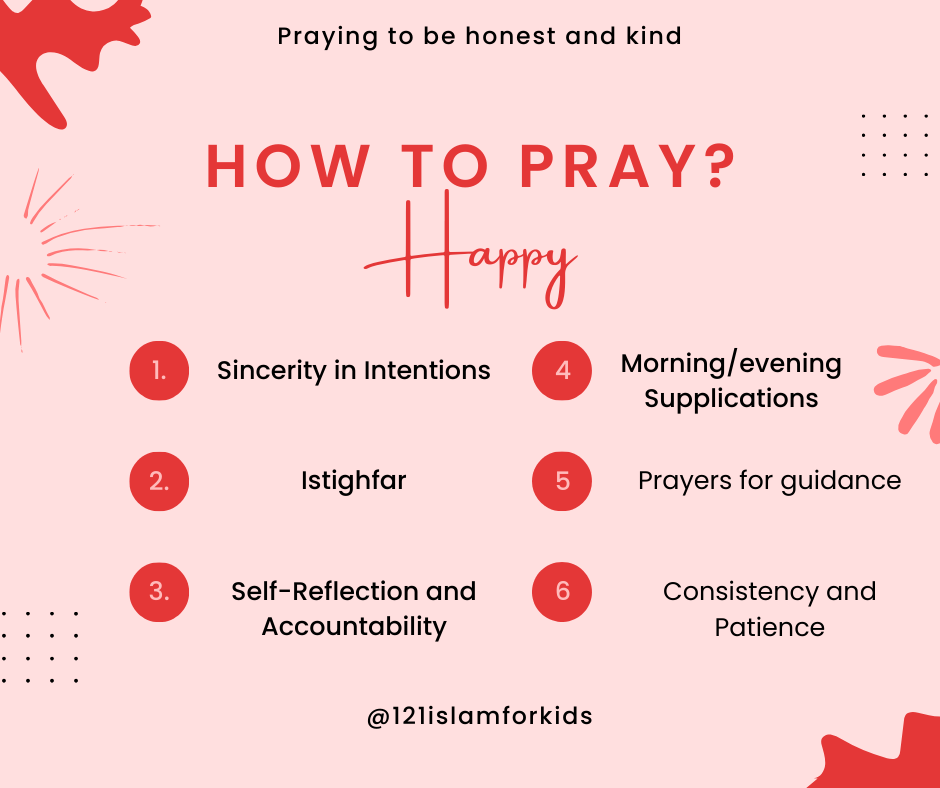
    Praying to be honest and kind is a noble intention. Let’s learn, How to Pray. You can incorporate this into your daily prayers and life by following these steps and using relevant supplications (duas): Let’s learn How to Pray.

    how to pray?

    Sincerity in Intention (Niyyah):

    Begin by making a sincere intention to be honest and kind in all your actions. Your intention should be solely for the sake of pleasing Allah and following the path of the Prophet Muhammad (peace be upon him).

    Morning and Evening Supplications:

    Incorporate the morning and evening supplications (adhkar) recommended by the Prophet Muhammad (peace be upon him) into your routine.

    For example, recite the following du’a in the morning and evening: “O Allah, I ask You for truthful speech and for a heart full of honesty and kindness.”

    Istighfar (Seeking Forgiveness):

    Seek forgiveness from Allah for any past dishonesty or unkindness.

    Use the supplication: “Astaghfirullaha Rabbi min kulli dhambin wa atubu ilayh” (I seek forgiveness from Allah, my Lord, for every sin, and I turn to Him).

    Self-Reflection and Accountability:

    Regularly evaluate your actions and words to ensure they align with honesty and kindness.

    Make a sincere effort to rectify any wrongdoings.

    Charity and Acts of Kindness:

    Engage in acts of charity and kindness toward others, as these actions promote honesty and kindness.

    Seek opportunities to help those in need.

    Prayers for Guidance:

    During your daily prayers (Salah), ask Allah for guidance to remain on the path of honesty and kindness.

    Make a personal supplication from your heart, expressing your desire to embody these qualities.

    Reading and Reflecting on Quranic Verses:

    Read Quranic verses and stories of the Prophet’s life emphasizing honesty and kindness.

    Reflect on their meanings and how you can apply them in your life.

    Seeking Knowledge:

    Learn about the Prophet Muhammad’s (peace be upon him) character and his interactions with others.

    Study Islamic ethics and morals to understand better how to practice honesty and kindness.

    Surround Yourself with Good Company:

    Associate with people who encourage and exemplify honesty and kindness.

    Positive peer influence can help reinforce these values.

    Consistency and Patience:

    Remember that personal growth takes time.

    Be patient with yourself and continue to pray, seek knowledge, and make a conscious effort to improve.

    By incorporating these steps and supplications into your life, you can strive to be a more honest and kind individual, following the teachings of Islam and the example set by Prophet Muhammad (peace be upon him).

    More Islamic / Quranic stories

    Stories in Urdu

    Our online courses and classes for kids and beginners

    Stories Books

  • Basic Beliefs in Islam: P3 Belief in angels:

    Basic Beliefs in Islam: P3 Belief in angels:

    This is a series of our course Basic Beliefs in Islam: This is part 3, Belief in Angels: Let’s see what is Muslim belief in Angels.

    basic beliefs in islam

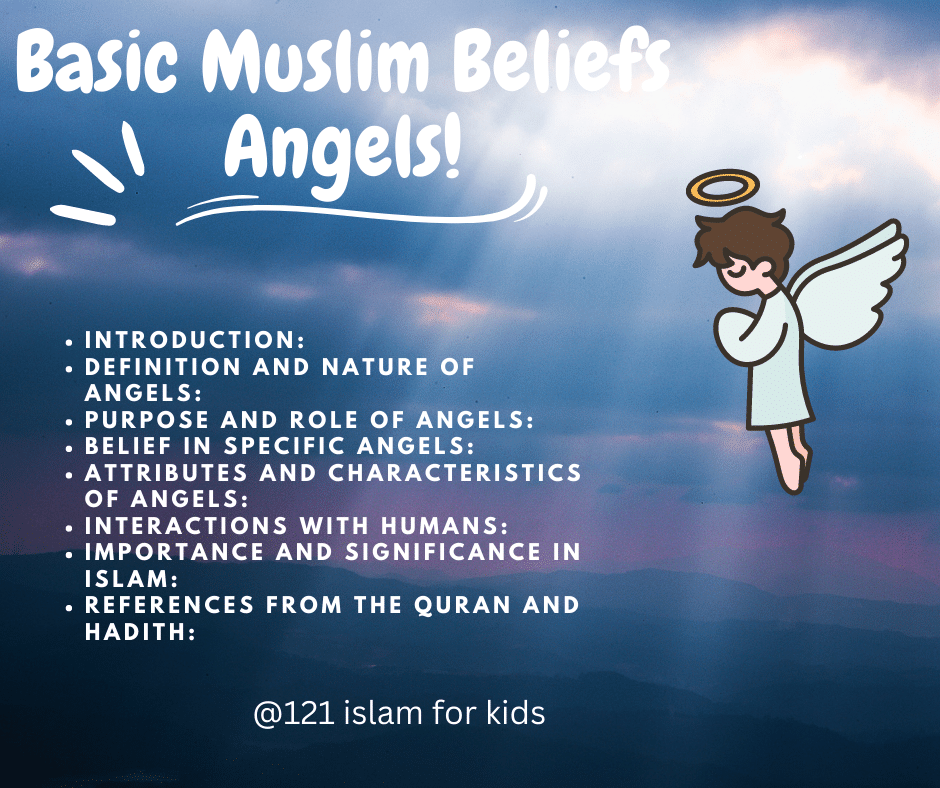
    Basic beliefs in Islam: Belief in Angels Mind Map:

    Main Topic: Islamic Belief in Angel

    1. Definition and Nature of Angels
      • Created by Allah
      • Spiritual beings made of light
      • Subservient to Allah’s commands
      • Invisible to humans
    2. Purpose and Role of Angels
      • Worship and glorify Allah
      • Carry out specific tasks assigned by Allah
      • Messengers between Allah and His creation
    3. Belief in Specific Angels
      • Jibril (Gabriel): Revelation and communication with prophets
      • Mikail (Michael): Responsible for natural provisions and sustenance
      • Israfil: Blowing the trumpet on the Day of Judgment
      • Izrail (Azrael): Angel of death
      • Raqib and Atid: Recording angels who document deeds
      • Munkar and Nakir: Questioning Angels in the Grave
    4. Attributes and Characteristics of Angels
      • Purity and obedience to Allah
      • No free will or ability to disobey
      • Unlimited knowledge and power
      • Vast in number, beyond human comprehension
    5. Interactions with Humans
      • Conveying messages from Allah to prophets
      • Assisting and supporting believers
      • Recording deeds and actions
      • Intervening in human affairs with Allah’s permission
    6. Importance and Significance in Islam
      • Affirming the unseen realm and the divine order
      • Serving as a reminder of Allah’s power and presence
      • Reinforcing the concept of accountability and divine justice
      • Inspiring awe, reverence, and gratitude toward Allah
    7. References from the Quran and Hadith
      • Quranic verses mentioning angels
      • Hadiths narrated by the Prophet Muhammad (peace be upon him) about angels
      • Examples of angelic interventions and interactions in Islamic history

    Conclusion: The Islamic belief in angels is a fundamental aspect of faith, affirming the unseen realm and the presence of Allah’s divine order. Angels play various roles, carrying out specific tasks assigned by Allah and serving as messengers between Allah and His creation. They possess unique attributes and characteristics, emphasizing their purity, obedience, and knowledge. Belief in angels reinforces accountability, divine justice, and the importance of a spiritual connection with Allah. References from the Quran and Hadith provide further evidence and guidance on the significance of angels in Islam.

    Definition and Nature of Angels

    Angels are special beings created by Allah from pure light. They obey Allah perfectly and have no choice but to follow His commands.

    Angels are messengers between Allah and people. The angel Jibril (Gabriel) brought the Qur’an to Prophet Muhammad, and other angels have different jobs like protecting people and recording our deeds.

    There are many angels, but we cannot count them. They watch over us, protect us, and help keep everything in the universe organized.

    Muslims should respect and honor angels by making duaa (prayers). However, we should only worship Allah, not the angels.

    Believing in angels is very important in Islam. The Qur’an and Hadith tell us many stories about angels and what they do.

    Muslims confirm their belief in angels in various ways:

    1. We learn about angels from the Qur’an, which is Allah’s holy message.
    2. The Hadith (sayings of Prophet Muhammad) also tells us about angels and their jobs.
    3. Islamic teachers explain the stories about angels to help us understand them better.
    4. Some Muslims feel the protection and guidance of angels through their dreams and personal experiences.
    5. Our faith in Allah gives us faith in the angels He created to help us.
    6. We see Allah’s mercy, protection, and guidance in our lives, which angels help deliver.
    7. Muslims all over the world believe in angels, and this shared belief confirms it is true.

    By understanding these beliefs, Muslims grow closer to Allah and appreciate His perfect plan.

    Names of some angels and their role

    1. Archangels:
      • Jibril (Gabriel): He is known as the angel of revelation and is responsible for delivering Allah’s messages to the prophets.
      • Mikail (Michael): He is associated with the distribution of provisions and sustenance from Allah.
    2. Guardian Angels:
      • Raqib and Atid: These angels are assigned to record the good and bad deeds of every individual.
    3. Recording Angels:
      • Kiraman Katibin: They are a group of angels who record every action, word, and thought of humans. They write the deeds in a person’s book of records.
    4. Angel of Death:
      • Izrail (Azrael): He is tasked with the responsibility of taking the souls of individuals at the time of their death.
    5. Angels of the Grave:
      • Munkar and Nakir: These angels visit the deceased in their graves to question them about their faith and deeds.
    6. Angels of Mercy and Punishment:
      • Ridwan: He is responsible for welcoming righteous believers into Paradise.
      • Malik: He is in charge of Hellfire and overseeing its punishments.
    7. Angels of Protection:
      • Muaqqibat: These angels are assigned to protect and accompany individuals, especially during critical moments.

    Different types of angels have different roles and names mentioned in Islamic tradition. Each one has an important job in Allah’s creation.

    Teaching Method Islamic Belief in Angels to Children:

    Introduction:

    • Start the lesson by introducing the topic of angels in Islam and their significance.
    • Explain that angels are spiritual beings created by Allah and play an important role in the unseen world.

    Definition and Nature of Angels:

    • Teach children that angels are made of light and are subservient to Allah’s commands.
    • Emphasize that angels are invisible to humans and exist in a realm beyond our perception.

    Purpose and Role of Angels:

    • Discuss the purpose of angels, which is to worship and glorify Allah.
    • Explain that angels also carry out specific tasks assigned by Allah, such as delivering messages to prophets.

    Belief in Specific Angels:

    • Introduce some prominent angels in Islam, such as Jibril (Gabriel), Mikail (Michael), Israfil, and Izrail (Azrael).
    • Explain their roles and responsibilities, making the concepts relatable to children.
    • Share stories from Islamic history that involve these angels to engage children’s interest.

    Attributes and Characteristics of Angels:

    • Discuss the qualities of angels, such as their purity, obedience to Allah, and vast knowledge.
    • Explain that angels do not have free will or the ability to disobey Allah.
    • Highlighting their power and vast numbers, which are beyond human comprehension.

    Interactions with Humans:

    • Explain that angels serve as messengers between Allah and His creation.
    • Discuss how angels deliver revelations to prophets, such as Jibril conveying the Quran to Prophet Muhammad (peace be upon him).
    • Teach children that angels record their deeds and actions, and will be present during the questioning in the grave.

    Importance and Significance in Islam:

    • Emphasize the importance of believing in angels as part of faith in Islam.
    • Explain that belief in angels affirms the unseen realm and the divine order established by Allah.
    • Discuss how angels remind us of Allah’s power, presence, and the concept of accountability.

    References from the Quran and Hadith:

    Different angels have different jobs. Some bring messages from Allah to the prophets, some record what we do, and some manage the weather. Each angel’s job is important and helps keep everything in the universe working perfectly.

    Duties of Angels in Islam

    We don’t know exactly how many angels exist. Allah created so many angels that no human can count them. Each person has angels with them to protect and watch over them.

    How Many Angels are There in Islam?

    Yes! Believing in angels is a very important part of being Muslim. The Qur’an and Hadith teach us that angels are real and they help Allah’s creation in many ways.

    Do Muslims Believe in Angels?

    • Share selected Quranic verses mentioning angels, such as Surah Al-Baqarah (2:97) and Surah Al-Anbiya (21:27).
    • Narrate age-appropriate hadiths from the Prophet Muhammad (peace be upon him) about angels and their interactions.
    • Relate examples from Islamic history where angels played significant roles, such as the Angel Jibril appearing to Maryam (Mary).

    Conclusion:

    • Summarize the key points covered in the lesson, emphasizing the belief in angels as an integral part of the Islamic faith.
    • Encourage children to reflect on the importance of angels in their lives and to appreciate Allah’s creation.
    • Remind them that belief in angels strengthens their connection with Allah and reinforces the concept of accountability.

    When teaching children about angels, use simple words, stories, and fun activities. This helps them understand and love learning about the unseen world and Allah’s perfect creation.

    This article is a series of our 6 articles in Islam course. Other articles on this course.

    A short course on 6 Articles of Faith in Islam:

    Article 1: Who is Allah? Towheed, first Article of Muslim Faith

    What is Monotheism? The largest monotheism Religions:

  • How to teach Surah Aser step by step? 9 Ways

    How to teach Surah Aser step by step? 9 Ways

    . This step-by-step teaching method of Surah Aser word meanings Translation, tafsir, and activities.

    surah aser

    Introduction

    Surah Al-Asr is the 103rd chapter of the Quran, the holy book of Islam. It is a short but powerful surah, consisting of only three verses, and is considered one of the most profound and impactful surahs in the Quran.

    The word “Asr” in Arabic means “time” and the surah emphasizes the importance of utilizing time wisely. It serves as a reminder to believers that time is a precious and finite resource and that they must use it wisely in the pursuit of their spiritual goals and in doing good deeds.

    The surah also emphasizes the importance of faith, good deeds, and patience. It reminds believers that these are the key ingredients for success in both this life and the hereafter.

    Surah Aser Word-by-word Meanings and Translation:

    Here are the Arabic words in Surah Al-Asr, along with their English translations:

    Verse 1: وَالْعَصْرِ (Wal-‘Asr) – By the time

    Verse 2: إِنَّ (Inna) – Indeed الْإِنسَانَ (al-insana) – mankind لَفِي (lafi) – is in خُسْرٍ (khusr) – loss,

    Verse 3: إِلَّا (Illa) – Except الَّذِينَ (alladhīna) – those who آمَنُوا (āmanū) – have believed وَعَمِلُوا (wa ‘amilū) – and done الصَّالِحَاتِ (al-ṣāliḥāti) – righteous deeds وَتَوَاصَوْا (wa tawāṣaw) – and advised each other بِالْحَقِّ (bi-al-ḥaqqi) – to truth وَتَوَاصَوْا (wa tawāṣaw) – and advised each other بِالصَّبْرِ (bi-aṣ-ṣabr) – to patience.

    Here’s the complete translation of Surah Al-Asr:

    Verse 1: وَالْعَصْرِ (Wal-‘Asr) –

    By the time

    Verse 2: إِنَّ الْإِنسَانَ لَفِي خُسْرٍ (Inna al-insana lafi khusr) –

    Indeed, mankind is in loss,

    Verse 3: إِلَّا الَّذِينَ آمَنُوا وَعَمِلُوا الصَّالِحَاتِ وَتَوَاصَوْا بِالْحَقِّ وَتَوَاصَوْا بِالصَّبْرِ

    (Illa alladhīna āmanū wa ‘amilū al-ṣāliḥāti wa tawāṣaw bi-al-ḥaqqi wa tawāṣaw bi-aṣ-ṣabr) –

    Except for those who have believed and done righteous deeds and advised each other to truth and advised each other to patience.

    “By the time, Indeed, mankind is in loss, Except for those who have believed and done righteous deeds and advised each other to truth and advised each other to patience.”

    Each word in Surah Al-Asr carries significance and contributes to the overall meaning of the chapter, emphasizing the importance of faith, good deeds, and mutual guidance toward truth and patience.

    Tafsir:

    Surah Al-Asr is a short but powerful surah that carries a deep message about the importance of time and the consequences of wasting it. Here’s a brief tafsir (explanation) of each verse:

    Verse 1: “By the time,

    The first verse of Surah Al-Asr highlights the importance of time and the value of every moment. The phrase “By the time” refers to the fleeting nature of time, and how quickly it passes by.

    Verse 2: Indeed, mankind is in the loss.”

    The verse then goes on to state that humanity is in a state of loss or ruin, emphasizing that time is a precious resource that should be used wisely to seek Allah’s pleasure and to do good deeds.

    Verse 3: “Except for those who have believed and done righteous deeds and advised each other to truth and advised each other to patience.”

    The third verse of Surah Al-Asr offers hope to those who have faith and do good deeds. It emphasizes that those who believe in Allah, perform righteous deeds, and encourage each other to truth and patience will be exempt from the state of loss mentioned in the first verse. The verse highlights the importance of working towards the betterment of humanity, promoting truth and justice, and encouraging each other towards good deeds and righteousness.

    “Indeed, Allah is with the patient.”

    The final verse of Surah Al-Asr emphasizes the importance of patience in the face of adversity. It reassures believers that Allah is with those who show patience and perseverance and that He will reward them in this life and the hereafter. The verse reminds us that life is full of challenges and difficulties, but with patience and faith in Allah, we can overcome them and attain success and happiness.

    Overall, Surah Al-Asr reminds us that time is a precious resource and that every moment should be used wisely to seek Allah’s pleasure and to do good deeds. It encourages us to have faith in Allah, perform righteous deeds, and encourage each other toward truth and patience. The surah is a powerful reminder of the ultimate purpose of our existence and the importance of working toward the betterment of humanity.

    Step by Step teaching method:

    Tajweed and Recitation:

    It is necessary to read Quran with perfect Tajweed. Children need to memorize this surah with good recitation and proper tajweed rules. So our quran teacher will start to teach them this surah in Quran class. We also provide Tajweed videos to children. Within 2 or 3 weeks, while we will complete the translation and tafsir of the surah and other activities, students will be able to recite this surah with good recitation. In sha Allah

    Word by word Translation of My first Quran with pictures book:

    From ”my first quran with Picture” book, we will do word-by-word translations of the Surah. Word-by-word translation will be done online from the soft book and children will write meanings on their copies or Quran notebooks. word by word translation and verse-by-verse translation are compulsory to memorize by heart. So daily revision and class work will make it easy to learn by heart. (More pictures in Gallery)

    Tafsir and explanation from Islamic education book

    Tafsir and explanation are done during word meanings and translation of the surah from the picture book. For the deep study, we get help from the book ‘Islamic Education’ by ‘Darusslam for more detail and complete understanding. The tafsir in this book is pretty easy and age-appropriate. You can download this book form here.

    Infographics:

    My first QUran with pictures has the best infographics for children. It is quite easy to draw the important graphics from the book. But we appreciate our children using their creativity. So children may draw, or create with the help of any app. Children may draw their imaginary understanding of the surah. Discussion on their creativity is the next part of our class lecture.

    Lesson and implication of this surah:

    There are 4 life goals that Allah emphasizes in this surah. We have learned from this surah that life is very short. We have to fulfill world duties, but for life hereafter is also. Our life should be spent on these purposes of life

    1. Faith in Allah
    2. Good deeds/actions
    3. Advice for good to others
    4. Advise patience to others

    Activities:

    The last verse of the surah is the central subject of the surah. This verse is about the whole deen. In this surah Allah, Subhan was Tallah informed us of the strategies of a successful life in this world and hereafter. So we will understand this topic with two activities.

    We will make an hourglass to see how time is passing ( see video or gallery)

    We will have an experiment with ice blocks. We will make a target to fulfill a task before melting a small block of ice.

    Revision and Exercise:

    Children will tell word meanings with full translation. Then the introduction of the surah will be revised. And we will have a discussion on the lesson and practical things we started to follow after learning this surah. Exercises from the Islamic education book will be solved by the children themself.

    Story:

    The stories of the Muslim faith hold immense importance for children as they provide a powerful medium to instill Islamic values, inspire good behavior, and nurture a strong sense of identity and love for Allah and His religion. These stories shape their character, moral compass, and understanding of Islam, equipping them with the knowledge and values needed to navigate the world as faithful and conscientious individuals. So we selected the story of Ibrahim’s faith for children from boo” My first quran stories book. Pictures are in the gallery.

    Time management story is also a good exposure for children. So We can select any other story about it.

    Mind map:

    We have mindmaps from Islamlive.org which we use in our class. It is a very helpful activity that after teaching everything about surah, children would sum up what they have learned from the Surah so You can see the mindmap prepared by our students in the picture. A video of the mindmap of Surah Aser will also be provided to students for deep understanding and long-term memory. (See Gallery)

    Excellency of Surah Al-Aser

    Surah Al-Asr is often recited in daily prayers and other Islamic rituals, and its message is considered relevant and applicable to all Muslims, regardless of their background or circumstance. Its concise yet powerful message continues to inspire and guide Muslims around the world.

    Resources

    My First Quran Picture Book

    My First Quran Stories Book

    Islamic education By Molvi Abdula Aziz Grade 6

    Lectures videos in English

    Lectures videos in Urdu

    Courses

    Quran classes:

    We have online quran tajweed, recitation, and Quran Hifz classes for children. One-on-one classes with Qualified teachers.

    Quran Tafseer classes:

    Short and Easy to understand Quran translation and tafseer will be taught to the young learners. Infographics, mindmaps, work-by-word tajweed and meanings, stories, and duas are included in these classes.

    Hadith with Stories course consists of 30 short hadith 

    It’s a personality development course for children with interesting stories. 30 short hadiths would be taught with stories. We have worksheets to solve after learning hadiths for implications.

    Prayer for kids course :

    A short course to teach about taharat, Gusal, wudu, times of prayers, number and names of prayers, pillars, conditions of prayer, and method of prayer.

    Kindness to Parents:

    1-week course to teach the rights of parents with practical work. Dua and how to be kind to parents is included in this course.

    6 articles on the Muslim faith:

    Faiths/Muslim beliefs would be taught one by one with the help of mind maps and stories in the Quran.

    Islamic dress code:

    Islamic rules of dressing, Aurah/covering body rules, and modesty dressing will be included in this one-week course.

    Ramzan Boost course:

    1 month before Ramzan we start this course. Everything about fasting rules and supplication with the Ramzan checklist and daily to-do list is included in this course.

    Faith boosts course in December to say NO MARYY CHRISTMAS:

    Stories of faith by the Quran will be added in this course with basic articles of faith in this course.

    Enrolments Available

    All courses Are available to start as in one on one classes. Please have a look at our group courses continued here.

    Email
    Facebook.
    Youtube Urdu Channel
    YYoutubeEnglish Channel
    If this teaching method is helpful for you? leave a comment.
  • Story 21 Eng|Hadith What is the Importance Of Salah?

    Kitab-Ul-Hadith

    lesson no 22

    Hadith No 21  (Alhamdolilah) 

    A story about the Importance of Salah

    Welcome to our Hadith Classes Online

    We will provide you free 30-short Hadiths course with the introduction, stories, videos tips to teach, and worksheets

    Hadith Classes Online

    Aslam-o-Alikum!

    My dear students

    Our today’s topic of hadith is ”The importance of Salah

    Today’s Hadith is Jamia Al-Tirmidhi Hadith no 4 on Salah

    Hadith Classes Online

    My dear students, Salah is the second pillar of Islam and it is Farz. We can’t leave it in any condition. Because we will be asked about this. And if we will miss some or many prayers, Allah will not be happy. Salah is our Jannah, because it protects us from many other sins. I will tell you a story in which you will learn how shaytan tries to keep us away from Slat. 

    Once there was an old man. He was very poise and a true believer in Allah. Because of his Ibadah, Good character, and helpful nature, he became a good friend of Allah and Allah protected him from the Shetan. In the start, Shaytan was not happy with him. And later he became his worst enemy. Shaytan tried his best to indulge him in any sin but failed. He came to him with many tricks. He tried to mislead him many times but failed. Shaytan was not happy. There was a feeling of heartburn in satan

     ‘This old man would go into Jannah? No no never

    He made a final decision that he will not let this old man offer prayers. I will snatch his key to Jannah. I have to stop this man from offering prayer. Hooon ….. because his Salah is protecting him from me.

    So he thought of a very powerful trick and he decided what to do to keep that old man away from Salaah. 

    One Day, He comes to the old man in the face from an angle. He praised the old man. He said to him that Allah is very happy with him. And Allah sent me to you to give you news of Jannah. The old man was happy and asked again if it is true.

     He (the devil) Said ‘ yes, this is true because you are very kind to others and you are serving humanity. Your good deeds raised your status in the eye of Allah

    Allah Also appointed me to tell you that you are a true believer. Allah is happy with you. Your struggle to help people and offer prayer on time was a trial and you succeeded in it. So Allah says that now you are free to fulfill your rights. You don’t need to offer prayers. Instead, you should spend more time helping my people. The old man was not happy with this. He remains silent. His heart was not ready to believe in it. Then He thought something and stood up saying,

    Aouzo billahhe minashaitan nirajeem.

    And shouted  ‘

     get away from here you Mardood Shaytan.

     You are here to mislead me. It was you who denied the fulfilling order of Allah and did not prostrate. You are a big enemy of humans. . Allah had never said to his prophets to leave any prayer ever, then how would give me permission to do this?

    Shaytan was frightened and ran away. Finally, He was defeated. He never tried to come to this old man again. Now Allah SWT was happier with this old man. He increased BARAKAH in the health and time of this old man. 

    May Allah protect us from shytan.

    My dear students here is a good lesson for us, every time when we intend to do Wudu and offer our Salah, shytan doesn’t let but his Salah was protecting him from shaytan. us to do this. He creates many hurdles. Some time gets late to reach our Salah on time. But we don’t have to give up. Instead, we should be steady in our actions. 

    Because Our Salah is our key to JANNAH.

    Now Do write this hadith in your Hadith book.

    And make a beautiful Prayer checklist.

    Share the story of this hadith with your grandparents, friends, and people around you. 

    And don’t forget to send me your videos and activities about this hadith and story. ( comment )

    Aslam-o-Alikum. 

    Video of our Hadith classes online

    Workbook

    Students activities

    To Download a Pdf of these 30 Hadiths in Urdu and English. Comment Below. (Or download from here )

    Search All 30 hadiths with stories, videos, and Pictures in the Search box or scroll down.

    Online classes Hadith courses and Islamic studies for kids are Available. If you are interested then contact me for details.

    Other courses we have

    Quran classes for kids Online( Bigger age under 7, Intermediate, Advance level)

    Tafseer for short Surahs

    Seerat classes with Mind Maps and story Reading
    Hadith with stories course consists of 30 short hadith for children with interesting stories you can see that course in my hadith course tab.
    Prayer for kids courses is short courses to teach about taharat, Gusal, wudu, times of prayers, number and names of prayers, pillars and conditions of prayer, and method of prayer. Search as Prayer for kids course on the search bar.
    Kindness to Parents
    Ramzan Boost course
    Faith boost course in December to say NO MARYY CHRISTMAS

    Enrolments Available

    Tafseer for kids’ group classes is available online for all time zones. Recommended age for the class Tafseer for kids is 9+. These classes are available in English and Urdu. If you want to enroll your child in our classes contact us via.
    email: bhallitaha@gmail.com

    Facebook.

    Youtube Urdu Channel

    Youtube English Channel

  • صلح حدبیہ اورسنتِ نبویﷺ کااتباع|Hadith no 19 with Great seerah story|hudaybiya Treaty

    صلح حدبیہ اورسنتِ نبویﷺ کااتباع|Hadith no 19 with Great seerah story|hudaybiya Treaty

    حدیث کاموضوع

    آج  کی

    کاموضوع ” اتباع سنت نبی صلی اللہ علیہ  وسلم” یے۔اس سلسلے میں آج ہم صلح حدبیہ اورسنتِ نبویﷺ کااتباع کی کہانی پڑ‍ھیں گے۔

    اللہ کے نبیﷺ نے فرمایا۔”جس نے میری سنت سے منہ موڑا، اس کا مجھ سے کوئی تعلق نہیں۔“اس حدیث کی روشنی میں ہم آج صلح حدیبیه کی کہانی پڑھیں گے

    نبی صلی اللہ علیہ  وسلم کے صحابہ نے صلح حدیبیہ کے موقع پر سنت نبوی پرعمل کرنے کے لئے ہم سب کے لئے ایک اچھی مثال قائم کی۔ وہ سنت پر عمل  کرنے میں تھوڑی سی تاخیربھی برداشت نہیں کر تے تھے- چنانچہ یہ کہانی سننے کے بعد ہم بھی ہر کام میں ہمیشہ اپنے اتباع سنت نبی کریں گے۔ان شا ء اللہ

    اتباع سنت نبی اور صلح حدیبیہ کی کہانی

    صلح حدبیہ اورسنتِ نبویﷺ کااتباع

    پیارے بچو، صلح حدبیہ اورسنتِ نبویﷺ کااتباع کی کہانی او طرح ہے کہ جب کعبہ مکہ میں بت پرستوں کی تحویل میں تھا۔ مسلمان خانہ کعبہ کو دیکھنے کے لئے ترس رہے تھے۔کہ ان کے لئے خدا کا گھر دیکھنا بہت حسرت کی بات تھی۔حضرت محمد صلی اللہ علیہ  وسلم نے اعلان کیا کہ وہ  اپنے صحابہ کے ساتھ غیر مسلح  ہو کرعمرہ  کے لیے مکہ مکرمہ جائیں گے

    اس ارادے سے وہ اپنے صحابہ کے ساتھ مدینہ سے روانہ ہوۓ۔ انہوں نے عمرہ کے بعد قربانی کے لئے اونٹ اور دوسرے جانورساتھ لئے تھے۔ جب حجاج کرام کا یہ قافلہ مکہ کے نواح میں پہنچا۔ تو حضور کو اطلاع ملی کہ مشرک انہیں شہر میں داخل نہیں ہونے دیں گے اور وہ انہیں ایسا کرنے سے روکنے کے لیے طاقت کا استعمال کریں گے۔ اس اطلاع نے مسلمانوں میں زبردست تشو یش  پیدا  کی۔ وہ مکہ کے شمال میں حد یبیہ نامی جگہ پر ایک کنویں کے قریب رک گئے۔

    حضرت محمد صلی اللہ علیہ  وسلم نے قریش کو پیغام بھیجا کہ وہ صرف عمرہ کی غرض سے آئے ہیں۔اورخانہ کعبہ کے روایتی سات چکر لگا نا چاہتے ہیں، جانوروں کی قربانی کرنا چاہتے ہیں اور پھر اپنے صحابہ کے ساتھ مدینہ واپس جانا چاہتے ہیں۔ قریش اس سے متفق نہیں تھے۔ اور بھی بہت سے پیغامات بھیجے گئے۔لیکن قریش نے کہا کہ وہ مسلمانوں کو مکہ میں داخل نہیں  ہونے دینگے۔آخر کار انہوں نے مسلمانوں کو ایک معاہدہ پیش کرنے پر رضامندی ظاہر کی۔

    پیارے بچو!یہ معاہدہ مسلمانوں کے بالکل خلاف لگتا تھا۔لیکن ہمارے نبی صلی اللہ علیہ  وسلم نے اسے قبول کر لیا۔ اس معاہدے کے مطابق مسلمان اس سال  واپس جائیں گے اور اگلے سال حج ادا کرنےکے لئے آئیں گے۔ حضرت محمد صلی اللہ علیہ  وسلم نے صحابہ کو حکم دیا کہ وہ اپنے بال کاٹ لیں اور اپنے جانوروں کو حد یبیہ کے اس مقام پر قربان کر دیں۔کیونکہ اللہ نے انکے عمرے کو قبول کر لیا تھا۔ لیکن صحابہ یہ کام کرنے کو تیار نہیں تھے۔ وہ مکہ ہر حال میں جانا چاہتےتھے۔

    چنانچہ جب ہمارے نبی صلی اللہ علیہ  وسلم نے دیکھا کہ یہاں کوئی بھی عمرے کی رسومات ادا کرنے کو تیار نہیں ہے۔تو وہ پریشان ہو گئے ۔  وہ اپنے خیمہ میں چلے گئے۔اور اداس بیٹھ گئے۔لیکن ہمارے نبی صلی اللہ علیہ  وسلم کی بیوی نے آپ صلی اللہ علیہ وسلم  کومشورہ دیا کہ،

    صحابہ کے دل ٹوٹ گئے ہیں۔وہ ابھی پریشان ہیں۔ اس لئے آپ کی بات نہیں مان رہے۔ لیکن صحابہ آپ سے بہت پیار کرتے ہیں۔ اس لئے آپ جا کر پہلے عمرہ کی\ رسم ادا کریں۔ اپنے بال کاٹ کر پہلے قربانی کرلیں۔ تاکہ صحابہ بھی آپ   صلی اللہ علیہ وسلم کے پیچھے چلیں ۔ جیسا کہ کبھی ایسا نہیں ہوا کہ صحابہ نبی صلی اللہ علیہ وسلم سنت کی پیروی نہ کریں۔

    چنانچہ جیسے ہی ہمارے نبی صلی اللہ علیہ وسلم نے رسومات ادا کرنا شروع کیں، صحابہ کو محسوس ہوا۔کہ وہ غلطی کر رہے  ہیں۔ انہوں نے جلدی سے سنت کی پیروی کی اور عمرے کےارکان  ادا  کیے ۔تو میرے پیارے بچوں، آپ دیکھ سکتے ہیں۔صحابہ واپس جا نے پر راضی نہیں تھے، لیکن انہوں نے کبھی سنت کی پیروی کرنے سے انکار نہیں کیا تھا۔ اسی لئے انہوں نےصلح حدبیہ اورسنتِ نبویﷺ کااتباع عمل کیا۔

    تو ہمارے لئے بھی سنت ایک طرز زندگی اور صحت مند معاشرے کا نظریہ ہے۔ ہمارے دن اور رات، ہمارے کھانے اور کپڑے، ہماری پارٹیاں اور ہمارا اجتماع سب کچھ سنت نبی کے مطابق ہونا چاہئے۔

    لیکن مجھے یہ کہنے سے ڈر لگتا ہے کہ صرف 50 فیصد لوگوں کو سنت کا اچھا علم ہے لیکن وہ بھی ان پر دل سے عمل نہیں کر رہے ہیں اور باقی 50 فیصد کو یہ بھی معلوم نہیں ہے کہ ہمارے  نبی صلی اللہ علیہ وسلم  نے کیسے زندگی گزاری ۔آئیے یہ  ارادہ کریں کہ ہم بھی سنت سیکھنے کی کوشش کریں گے۔ اور اتباع سنت میں صلح حدیبیہ میں صحابہ کی طرح عمل کریں گے

    ۔دوسروں کے ساتھ حدیث شیئر کریں۔ان شاء اللہ ہم سب سے اللہ قبول کرے گا.

    صلح حدبیہ اورسنتِ نبویﷺ کااتباع کی اردو کہانی وڈیو

    Video of this story in Englishصلح حدبیہ اورسنتِ نبویﷺ کااتباع

    This story with hadith in English

    Sunnah learning Worksheet

    Enrolments Available

    This is one of the hadith and story from My 30 short hadith with stories course. Online group classes are available online for all time zones. Recommended age for the class Hadith for kids is 7+. These classes are available in English and Urdu. If you want to enrol your child in our classes contact us via.

    Other courses we have

    • Easy Tafseer for kids with interesting stories you can see that course in my hadith course tab.
    • Prayer for kids course a short course to teach about taharat, Gusal, wudu, times of prayers, number and names of prayers, pillers and conditions of prayer and method of prayer. Search as Prayer for kids course on search bar.
    • Ramzan boost course we do start 2 weeks before Ramzan.
    • Faith boos course In December to say No To Marry Christmas.
    • Kindness to Parents

    Students home work

  • Summer 2022  Live stream for Urdu children. Tameer-i-Pakistan Programme.

    Summer 2022 Live stream for Urdu children. Tameer-i-Pakistan Programme.

    This live stream was just for Summer vacations. We are not going live daily. But we are still uploading our New videos in English and Urdu. And We are conducting some live courses as well as some classes. Scroll down for links.

    الحمدللہ اردو کے کچھ حروف پر کام مکمل ہو چکا ہے۔

    اس کے علاؤہ کچھ کہانیاں اور نظمیں بھی تیار ہو چکی ہیں۔

    ہر روز میرے چینل اور پیج پر ڈیڑھ گھنٹے کا لائو پروگرام آیا کرے گا۔

    اس میں عمر کے حساب سے درجہ بندی ہو گی۔

    8سال سے چھوٹے بچوں کو کہانیاں اور نظمیں سنا کر حروف کی پہچان، الفاظ سکھائے جائیں۔ گے۔ ساتھ ہی آرٹ اینڈ کرافٹ ہو گا جس میں بچوں کو حروف کی مناسبت سے ہاتھ کی کچھ سرگرمیاں کروائی جائیں گی۔ 8 سال سے اوپر بچوں کے لئے کہانیاں ہوں گی اور ساتھ ساتھ کچھ اسلامی موضوعات جیسے نماز کاطریقہ اور چھوٹی سورتوں کی تفسیر ہو گی۔ پیچ میں ہلکی پھلکی ورزش ہو گی۔

    اور سوال جواب بھی۔

    اس کے ساتھ ساتھ کچھ استاد بچوں کو سائنس اور ٹیکنالوجی کی تعلیم بھی دیا کریں گے ۔ایسے بچوں کے انٹرویو بھی کیا کریں گے۔ جو کہ تعلیم کے ساتھ ساتھ کچھ اچھی معیاری سرگرمیاں بھی کرتے ہوں گے۔

    یہ ایک مشکل پرجیکٹ ہے۔ اور فیس بک کی تاریخ میں پہلی دفعہ ایسا ہو گا۔

    اس سلسلہ میں Meryam Shahzad اور Ayub Akhtar

    کی ممنون ہوں انہوں نے کافی مواد فراہم کیا۔

    کافی لوگوں سے پیسے دے کر وڈیوز بنوائیں ۔

    کافی لوگوں نے اس میں فری کام کیا۔ کافی لکھاریوں نے اپنی تحاریر بھیجیں جن میں چند تیار ہو چکیں ہیں۔

    میری التجا ہے کہ اس کو کامیاب کرنے میں مدد کریں۔

    آپ سب بچوں سے اس پروگرام کو متعرف کروائیں۔ بچے چھٹیوں میں اس سے فائدہ اٹھا سکیں گے۔

    اگلے ہفتہ سے ان شا ء اللہ باقاعدہ آغاز ہو گا۔

    آپ میں سے جو اس پروگرام کو دیکھیں وہ اصلاح کی غرض سے مجھے بتائیں کہ میں اس میں کیا بہتر کر سکتی ہوں۔

    تنقید سے حوصلے ٹوٹ جاتے ہیں۔ مجھے معلوم ہے۔ ابھی اس میں بہت ساری کمیاں ہیں لیکن پہلا گرتا قدم پر دوسرے قدم کی کامیابی کا ضامن ہوتا ہے۔

    اس پروگرام میں بچے لائیو بھی آ سکیں گے۔ جس کے لئے باقاعدہ زوم لنک دیا جائے گا۔

    ساری اطلاعات ہمارے پیج پر موجود ہوں گی۔

    آپ اس پیج پر آ کر نوٹیفیکیشن آن کر لیں۔

    https://www.facebook.com/121Islamforkids

    channel

    https://www.facebook.com/121Islamforkids

    Join whatsapp Group females only

    To Download a Pdf of these 30 Hadiths in Urdu and English. Comment Below.(Or download from here )

    Search All 3o hadiths with stories, videos, and Pictures in the Search box or scroll down.

    Online classes of Hadith course and Islamic studies for kids are Available. If you are interested then contact me for details.

    Other courses we have

    Tafseer for short Surahs

    Hadith with stories course consists of 30 short hadith for children with interesting stories you can see that course in my hadith course tab.
    Prayer for kids courses short courses to teach about taharat, Gusal, wudu, times of prayers, number and names of prayers, pillars and conditions of prayer and method of prayer. Search as Prayer for kids course on the search bar.
    Kindness to Parents
    Ramzan Boost course
    Faith boost course in December to say NO MARYY CHRISTMAS

    Enrolments Available

    Tafseer for kids’ group classes is available online for all time zones. Recommended age for the class Tafseer for kids is 9+. These classes are available in English and Urdu. If you want to enroll your child in our courses contact us via.
    email: bhallitaha@gmail.com

    Facebook.

    Youtube Urdu Channel

    Youtube the English Channel

    or leave a comment.

    https://youtube.com/playlist?list=PLIWc_d03ngLvhsbZuRn6oD5fbfNgH2qJ3
  • “Ramadan Activity Book Pdf 36pages|With Free Video Lessons|Online Classes”

    “Ramadan Activity Book Pdf 36pages|With Free Video Lessons|Online Classes”

    application for fasting

    I have been in search of a good application for fasting for my kids. But found nothing which would be good for family activities. Then I decided to prepare one for myself.

    This is Teacher Adiba Anwar Teacher of Islamic education for kids and adults. I love to teach and create online lessons for Muslim children. We have designed a Ramadan activity book pdf for our students.

    After teaching for years, I was looking to get any Ramadan activity book pdf that could be used in online classes as well as which is printable. So that my students could get prints and solve the worksheets.

    Honestly speaking, there was no Ramzan activity book pdf that was going to fulfill our all needs. I was looking for supplications, Fasting information and rules, things to dos and don’t, Day by day good and bad deeds planner and a Daily Ibada checklist.

    For that purpose, I was able to prepare this Ramzan activity books pdf which is really amazing.

    It is a complete 36 pages book which is designed for Muslim children as well as revert Muslims.

    Ramadan activity book /application for fasting

    • What is Fast?
    • Excellency of Ramzan
    • Reward of Ibada
    • Does and don’t in Ramzan
    • Supplications
    • Good and bad deeds Tree
    • Sadqa types
    • How to stop fighting in Ramzan
    • Daily Ibada checklist
    • Wishing cards
    • Eid Day celebrations.

    There is a video of Ramdan activity book pdf downside. We have designed this activity book /child’s diary for our students. But it is available for other Homeschoolers, reverts Muslims, and parents as well. So we have recorded lectures and lessons of these classes as well in Urdu and English. These lessons would be available for free to your kids.

    You can just Buy our book. And day by day your child would watch video of every lesson and solve the worksheet/activity from our workbook.

    These Online lessons have another thing for you. We are also giving them an opportunity to our students that they will assess the knowledge they had learned from our lectures. So we have some questions for our students on our site.

    We uploaded some questions for our students day by day with lectures and They will answer in their own words. This will help them to review and learn more about Ramzan and fast. here is link for the questionnaire

    If you are looking for online lessons in Ramadan activity book pdf, Then you can also enroll your child in my online Ramadan special classes

    Other courses we have

    Online Quran class for beginner, intermediate and Memorization.

    Hadith with stories course consists of 30 short hadith for children with interesting stories you can see that course in my hadith course tab.
    Prayer for kids courses to teach about TAHARAT, Gusal, wudu, times of prayers, number and names of prayers, pillars and conditions of prayer, and method of prayer. Search as Prayer for kids course on the search bar.
    Kindness to Parents
    Ramzan Boost course
    Faith boost course in December to say NO MARYY CHRISTMAS

    Enrolments Available

    Tafseer for kids, group classes are available online for all time zones. Recommended age for the class Tafseer for kids is 9+. These classes are available in English and Urdu. If you want to enroll your child in our classes contact us via.
    email: bhallitaha@gmail.com

    Facebook.

    Youtube Urdu Channel

    Youtube English Channel

    or leave a comment.

    Here is the link to the online lessons. For English, lectures visit this Channel. Please Subscribe to the channel to get all videos right after we upload them.

    Here is a playlist of Our online lessons in Urdu. Please subscribe Urdu channel for getting upcoming videos.

    The Video of Our Ramzan diary about online lectures. What is inside this Book?

    Here are some worksheets shown in Pictures from our online lessons. You can download them for free. If you want to buy This worksheet book with Ramzan diary of a child then you can pay in the course sign u category and you will be emailed this book. comment for more details.

    Our student’s homework from online lessons

    Fasting Supplications we teach in online lessons

  • Story 18| Best story on status of mothers with Hadit.

    Story 18| Best story on status of mothers with Hadit.

    AslamoAlikum my dear students

    I hope you are all good with the Grace of Allah. Alhamdulillah. Today we are going to learn hadith no 18 with story form our hadith with stories course.

    Table of content

    1. Introduction of hadith
    2. Story of A companion of Prophet Muhammad SAW

    Dear students the topic of our today’s Hadith is Status of mothers in Islam.

    My dear students this hadith shows that disobeying our mother and parents is Haram. As like other haram things like eating pork and backbiting this deed is also disliked by Allah and our prophet SAW.

    My dear student, sometimes it happens we react to our mother very badly, sometimes we argue with her and sometimes when our mother advises us to do something or avoid anything we disobey her.

    But this hadith clearly tells us it is a very bad habit. You know in the Quran Allah said even if we say Uff!!! In response to any action of her, it  is also disliked by Allah.   

    In our last hadith we already learnt that looking towards parents with smiling faces is also a sadqa. 

    So I hope you will never do anything which will make your mother angry or sad.

    Otherwise maybe Allah SWT will get angry with us like this young boy.

    The Story about status of mothers

    A disobedient son

    He was a very good boy. But he got sick in his youth. When he was about t o die, People asked him to say shahada so that he would feel good. But strangely he can’t do it. He tried again but failed. He was in a lot of pain. But no one could do anything.

    Then a Sahabi came to Muhammad SAW and said.,’ Ya rasool ALlah, there is a boy, who is about to die but he can’t read shahad. Our Prophet asked, did this man offer Salah, in his life. Answer was yes.

    Then Prophet SAW went to see that young boy. The boy was very sick. Prophet Muhammad Saw advised him to recite Shahada with Him. But he said, I can’t recite as words would not come to his tongue.

    Then the Prophet called his mother who was angry with him. The Prophet asked women to forgive his dying son. Woman said no, never. He was a good Muslim. He was very kind to others. But not with me. He always disobeyed me and used harsh words to me.

    Prophet SAW said, o kind lady forgive him. Do you bear this if some one would throw him in fire. She said no never. He is my beloved son. I cant see this. The Prophet replied to her that if you would not forgive him, Allah SWT would definitely throw him in hellfire.

    Then she forgave the boy. Now that boy recites the Shahada and dies.

    My dear student, every mother works hard to raise children, she prays for us, she can’t sleep when we are sick. In return we should respect her. 

    Let’s make a wish that we will never argue with our mother and always try to follow her instructions. 

    Lets pray for our parents,

    رَّبِّ ارْحَمْهُمَا كَمَا رَبَّيَانِي صَغِيرًا 

    Rabir Hamhuma kama rabbayani sagheera.

     Write this hadith and learn it. Don’t forget to follow and share it.

    Aslamoalikum.

    Adiba Anwar

    Video of Hadith and story in English

    Also watch Hadith status of mothers in Urdu here.

    Video of the hadith in Urdu

    Written story is available in Urdu as well. Comment to get pdf of 30 short hadiths with Graphics
    Enrol your child for this online course zoom class
    Worksheets for this Hadith and story
    You can buy This worksheet Book from our courses sign up cost only 5$
    Buy this activity book

    https://youtu.be/9lManMMTxJg

    My Students Activities

    https://youtu.be/wl3NXMSm8gA
    https://youtu.be/_gTXDpv9m60
    https://youtu.be/SQMu5jU2htQ